 Blaine Siding
 Windows Take a Different Kind of Beating Out on Semiahmoo
Semiahmoo sits right where the marine air off the water meets the wind and rain that roll through Whatcom County most of the year. Homes on the spit and along the surrounding shoreline deal with a combination most inland houses never see: salt-laden air working on metal hardware and finishes, driving rain that gets pushed sideways into window frames during winter storms, and a moss and mildew season that can stretch from October well into spring. Old or poorly installed windows in this environment don't fail gracefully — they fog between the panes, they let cold air whistle through the sash, and the frames start showing rot or corrosion years before they would in a drier, calmer part of the state.
Energy-efficient windows done right in this setting aren't just about a lower heating bill, though that matters. They're about keeping water and salt air out of the wall cavity, keeping the frame material stable through constant wet-dry cycles, and choosing hardware and finishes that won't corrode or seize up after a few winters on the water.
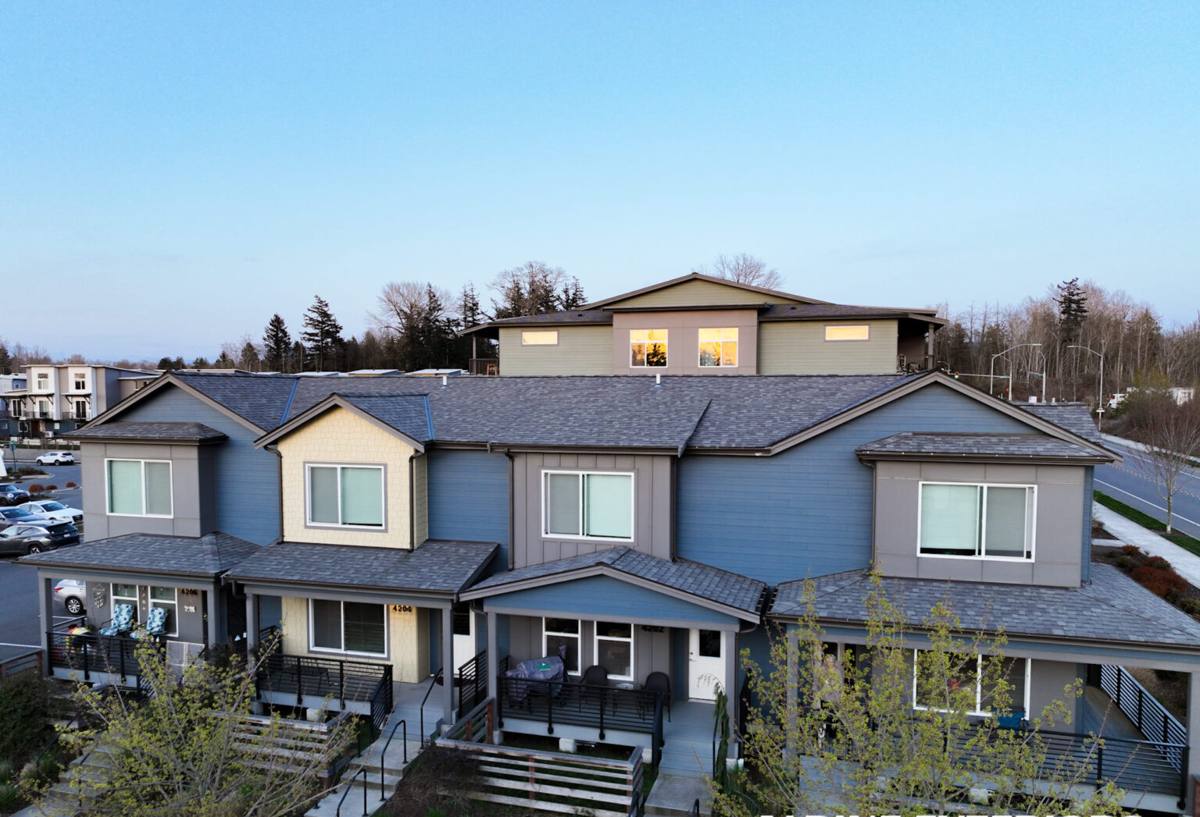
What "Energy-Efficient" Actually Means for a Coastal Whatcom County Home
Energy-efficient windows get marketed with a lot of numbers, but only a few actually matter for a house like yours near Blaine:
- U-factor — how well the window resists heat loss. Lower is better for our cool, wet winters. This is the single most important number for comfort here.
- Solar Heat Gain Coefficient (SHGC) — how much solar heat passes through the glass. Semiahmoo doesn't get brutal summer sun, so this matters less than U-factor, but it still affects how a west- or south-facing room feels.
- Air leakage rating — how tight the window seals against wind-driven air. Given the exposure many Semiahmoo lots get off the water, this rating deserves real attention, not just a glance.
- Condensation resistance — how well the glass and frame resist fogging and moisture buildup, which is a bigger concern here than in a dry climate.
A window can carry a great energy label and still perform poorly on a waterfront lot if it isn't rated for higher wind and water exposure, or if it's installed without proper flashing and sealant detail. The rating on the sticker is only half the equation — the installation is the other half.
Double vs. Triple Pane in This Climate
Most homes around Blaine do very well with a quality double-pane, low-E, argon-filled unit. Triple-pane glass adds cost and weight without a proportional benefit unless a home has unusually harsh wind exposure or a homeowner is chasing the lowest possible U-factor for a specific reason. We'll tell you honestly which one makes sense for your house rather than upselling glass you don't need.
Signs Your Current Windows Are Costing You Money
Before recommending replacement, we look for the actual symptoms of failure rather than just age. Common signs we see on Semiahmoo and Blaine homes include:
- Fogging or a milky haze between the panes — the seal has failed and the gas fill is gone
- Visible condensation on the inside of the glass during cold, wet weeks
- Drafts you can feel with a hand near the frame on a windy day
- Soft or discolored wood at the sill or lower corners of the frame
- Hardware (locks, cranks, hinges) that's stiff, corroded, or won't latch fully
- Visible moss or black staining building up on the frame or sill
- A noticeable temperature difference near the window compared to the rest of the room
Any one of these on its own might just need a repair or a reseal. Several of them together, especially on the weather-facing side of the house, usually mean it's time to talk replacement.
Frame Material: What Holds Up Near the Water
We get asked a lot about frame material, and the honest answer is it depends on exposure and budget. Here's how the common options compare for a home in a salt-air, high-rain environment like Semiahmoo:
| Frame Material | Coastal Durability | Maintenance | Typical Trade-Off |
|---|---|---|---|
| Vinyl | Good — won't corrode or rot, handles moisture well | Low — occasional cleaning | Limited color/finish options; can look less premium on higher-end homes |
| Fiberglass | Very good — dimensionally stable in wet-dry cycles, resists warping | Low | Higher upfront cost than vinyl |
| Aluminum | Fair — prone to corrosion pitting in salt air unless marine-grade and well finished | Moderate — hardware and finish need monitoring | Thin profiles look great but conduct heat/cold more than other options |
| Wood / Wood-clad | Poor to fair without diligent upkeep — exterior wood is vulnerable to moss, rot, and salt exposure | High — regular painting/sealing required | Best interior appearance, but the maintenance burden near the water is real |
We don't push wood frames on exposed Semiahmoo lots as a rule — not because wood is a bad product, but because the maintenance schedule needed to keep exterior wood healthy in constant salt air and moss growth is more than most homeowners want to sign up for. Vinyl and fiberglass are what we install most often out here, and we'll walk you through the real trade-offs for your specific exposure before you decide.
What a Correct Installation Actually Involves
The window unit itself is maybe half the job. The other half — the part that determines whether you get 20 years of dry, tight performance or a callback in three years — is the installation detail:
Flashing and Water Management
Every opening gets flashed so that any water that reaches the frame is directed back out, not into the wall cavity. This is non-negotiable on a driving-rain site like Semiahmoo, where wind pushes water sideways and up under poorly lapped flashing.
Sealant and Backer Rod
We use sealants rated for exterior, UV, and salt-air exposure, applied over proper backer rod — not just a bead of caulk smeared over a gap. Cheap or improperly applied sealant is one of the most common causes of early window failure we see on older installs in this area.
Insulation Around the Frame
The gap between the window frame and rough opening gets filled with a low-expansion foam or fiberglass insulation appropriate for the frame material — never packed so tight it bows the frame, never left so loose it becomes an air leak path.
Tie-In With Siding and Trim
Because we work as a siding contractor first, we pay close attention to how the window opening ties into the surrounding siding and trim. A window installed correctly but flashed poorly against the siding above it will still leak — this is where a lot of "window-only" installers miss the bigger picture.
Our Process
- On-site assessment — we look at each window's exposure, current condition, and how wind and rain hit that specific wall of the house
- Product recommendation — frame material, glass package, and hardware matched to that exposure and your budget, explained in plain terms
- Written estimate — clear scope, no vague allowances
- Removal and prep — old units removed, opening inspected for hidden rot or water damage before anything new goes in
- Installation — proper flashing, sealant, and insulation detail on every opening, not just the ones that are easy to reach
- Final check and cleanup — operation, seal, and finish checked on every window before we consider the job done
What Affects the Cost
| Factor | Why It Matters |
|---|---|
| Number and size of openings | More or larger windows means more material and labor |
| Frame material chosen | Vinyl is generally the most affordable; fiberglass and wood-clad cost more upfront |
| Full-frame vs. insert replacement | Full-frame replacement (removing down to the rough opening) costs more but lets us fix hidden water damage and reflash properly — often the right call on older, weather-exposed homes |
| Condition of the existing opening | Rot or water damage found during removal adds repair work before the new window can go in |
| Access and site conditions | Upper-story or hard-to-reach openings take more time and equipment |
We won't quote you a number over the phone without seeing the house — too many of these factors depend on what we actually find at each opening. What we can tell you honestly: budget window replacement, done right, typically runs from a few hundred dollars per window for a straightforward vinyl insert up into the low thousands per window for larger openings, full-frame replacement, or premium frame materials. Your written estimate will break down exactly what you're paying for.
Why It Matters That We Already Work Semiahmoo
A crew that only sees a handful of coastal jobs a year tends to treat every window the same way they'd treat one going into a sheltered inland house. We work this specific stretch of Whatcom County regularly, which means we already know what to look for on a Semiahmoo home before we start: which wall orientations take the worst of the wind-driven rain, how quickly moss builds up on north-facing trim, and how salt air tends to attack hardware and fasteners over time. That local pattern recognition shows up in small decisions — which sealant we reach for, how aggressively we flash a given opening, which hardware finish we recommend — that add years to how long the job holds up.
It also means we're not learning the local building department's expectations on your project. We already know what a proper coastal window installation needs to pass inspection and hold up through a real Pacific Northwest winter, not just look good on installation day.
Keeping New Windows Performing Through Moss Season
Even a well-installed, high-quality window benefits from a little seasonal attention in this climate:
- Rinse frames and sills periodically to clear salt residue and organic buildup before moss gets established
- Keep weep holes clear so water draining out of the frame isn't blocked
- Check and lightly lubricate hardware (locks, cranks, hinges) once a year so salt air doesn't seize moving parts
- Inspect exterior sealant lines annually and have any cracking or separation addressed early, before water gets behind it
- Trim back vegetation or moss growth near window trim so it doesn't hold moisture against the frame
None of this is heavy maintenance — it's the same kind of upkeep any exterior feature needs on the water. The difference between windows that look and perform well after ten years and windows that don't usually comes down to whether this small seasonal attention happens.
If your Semiahmoo home has drafty, foggy, or aging windows, we're happy to take a look and give you a straightforward, no-pressure estimate — just fill out the form below and we'll set up a time to come out.