 Blaine Siding
 Deck Replacement in Everson: What the Climate Actually Demands
Everson sits inland along the Nooksack River, but it shares the same weather pattern that soaks the rest of Whatcom County: long stretches of driving rain from fall through spring, heavy fog and dew off the river bottoms, and a moss season that can run eight or nine months a year in shaded yards. A crew based in Blaine that works this corridor regularly sees the same failure patterns over and over — and that repetition is exactly what makes a deck replacement here different from a generic rebuild.
Most decks in this area don't fail because the lumber was bad. They fail because water sat somewhere it shouldn't have — against a ledger board, under a post base, between deck boards packed with moss and needle litter. A correct replacement in Everson is built around getting water off the structure fast, not just picking pressure-treated lumber and calling it done.
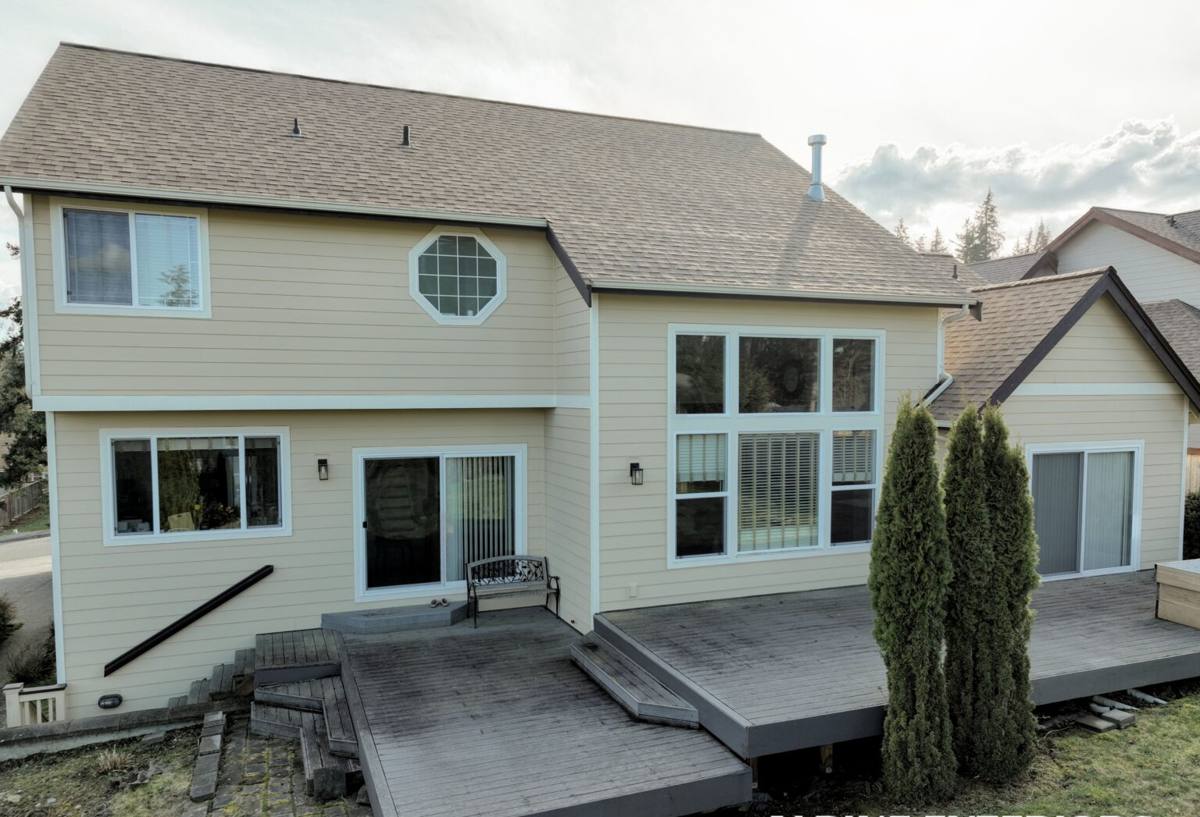
Why Decks Age Faster Here Than the Warranty Card Suggests
Manufacturers write their maintenance schedules for an average U.S. climate, not for a river valley in northwest Washington. A few things stack against decks here specifically:
- Driving rain gets pushed sideways by wind off the valley, soaking ledger connections and rim joists that a vertical-rain climate would keep drier.
- Moss and algae hold moisture against wood and composite surfaces for weeks at a time, especially on decks with tree cover or a north-facing exposure.
- Humidity swings slowly — decks here rarely get a hard, fast dry-out between rain events the way they would in a drier climate, so any trapped water has time to do damage.
- Freeze-thaw cycles, while not extreme, are frequent enough in winter to work water into small cracks and loosen fasteners over several seasons.
None of this means decks can't last decades here — plenty do. It means the build details that get glossed over in a fair-weather climate (flashing, drainage gaps, hardware grade) are the details that actually determine whether a deck makes it to year 20 or starts rotting at year 8.
What a Correct Deck Replacement Involves
Structure first, decking second
A deck is only as good as what's underneath it. Before any decking goes down, a proper replacement addresses:
- Footings sized and set to current Whatcom County frost depth requirements, not just matched to whatever was there before.
- Ledger board flashing — this is the single most common point of hidden rot we find on tear-outs. A ledger without proper flashing and a water-resistant barrier behind it will eventually leak into the house rim joist, no matter how good the decking above looks.
- Joist protection — a self-adhering flashing tape over every joist top, so the fastener holes for the decking don't become hundreds of small entry points for water into exposed end grain.
- Post bases that keep wood off concrete, using standoff hardware rather than posts set directly in or on wet concrete.
- Hot-dip galvanized or stainless fasteners rated for treated lumber and coastal-adjacent humidity — mismatched hardware corrodes and stains long before the structure itself gives out.
Decking gaps and airflow underneath
Board spacing matters more here than in a dry climate. Too tight, and moss and debris pack the gaps and hold water against the edges. Too wide, and the deck feels unfinished and drops small items through. We set gaps based on the decking material's expected seasonal movement, and we make sure there's real airflow underneath the deck — skirting that seals off ventilation is one of the fastest ways to turn a crawlspace under a low deck into a permanent damp zone.
Choosing a Decking Material for Everson's Climate
There's no single "right" material — it depends on budget, how much upkeep you want to do, and how much shade and moss exposure the site gets. Here's how the common options actually perform under this area's rain-and-moss conditions:
| Material | Moisture behavior | Moss/mildew resistance | Maintenance |
|---|---|---|---|
| Pressure-treated fir/hem-fir | Good if sealed regularly; end grain is the weak point | Needs periodic cleaning and treatment | Re-seal every 1–2 years |
| Western red cedar | Naturally moisture-resistant heartwood; sapwood is more vulnerable | Better natural resistance, still needs cleaning | Oil/stain every 2–3 years |
| Capped composite | Excellent — doesn't absorb water into the core | Moss still grows on the surface film; needs washing | Periodic wash, no sealing |
| Uncapped composite (older style) | Weaker — core can absorb moisture at cut ends and fastener holes | More prone to surface mold in shaded, damp spots | Wash regularly; watch cut edges |
We don't push one material on every homeowner. If a yard gets heavy shade and moss pressure, we're honest that capped composite or well-detailed cedar will save real maintenance time over the life of the deck, even at a higher upfront cost. If the site gets good sun and airflow, a properly sealed treated-lumber deck can perform just as well for a lot less money.
Our Deck Replacement Process
- On-site evaluation. We check the ledger connection, footings, joist condition, and drainage path around the deck before quoting anything — a deck that looks fine from the top can be hiding rotten framing.
- Written scope and permit check. Most full deck replacements in Whatcom County require a permit, especially if the footprint, height, or footings change. We handle that step rather than leaving it to the homeowner.
- Demo and disposal. Old decking, railing, and any compromised framing come out, with the ledger and rim joist inspected once the old boards are off — this is where hidden water damage actually shows up.
- Structural rebuild. Footings, posts, beams, and joists are set or replaced to current code, with flashing and joist tape installed before any decking touches the frame.
- Decking and railing installation. Boards, fasteners, and railing are installed per the manufacturer's spec for our climate — proper gapping, hidden or exposed fastening as chosen, and railing hardware rated for outdoor exposure.
- Final walkthrough. We go over drainage, gaps, and any maintenance the specific material needs before we consider the job finished.
Permits, Setbacks, and River-Adjacent Considerations in Everson
Because Everson sits along the Nooksack River, some lots here fall inside floodplain or flood-adjacent zoning that affects how a deck can be rebuilt — particularly around finished height, footing type, and how close a structure can sit to a bank or setback line. This isn't something to guess at. Whatcom County permitting has specific requirements for decks attached to a home versus freestanding decks, and lots near the river may carry additional review. Part of doing this job correctly is pulling the right permit for your specific lot rather than assuming a rebuild is "like-for-like" and permit-exempt.
Keeping a New Deck Ahead of Moss Season
A well-built deck still needs some seasonal attention in this climate. A short list that actually makes a difference:
- Sweep debris out of board gaps before fall rains start — trapped leaves and needles are moss's favorite starting point.
- Rinse or lightly wash the deck surface once or twice a year, more often under heavy tree cover.
- Check the ledger flashing line and any spots where the deck meets the house siding for gaps opening up over time.
- Keep gutters and downspouts near the deck clear so runoff isn't dumping directly onto the structure.
- Re-seal or re-oil wood decking on the schedule appropriate to the species — don't wait until graying and cupping show up.
Cost Factors Homeowners Should Actually Weigh
Deck replacement pricing varies a lot based on site conditions, not just square footage. A rough sense of what moves the number:
| Factor | Why it affects cost |
|---|---|
| Ledger/rim joist condition | Hidden rot found during demo can require repairing house framing, not just the deck |
| Height and stair count | Elevated decks need more structural framing and code-compliant railing/stair details |
| Footing access | Difficult digging conditions or limited equipment access add labor time |
| Decking material | Composite runs higher upfront than treated lumber but lowers long-term upkeep costs |
| Permit and inspection requirements | River-adjacent or larger structural changes may require additional review steps |
We don't quote decks off a phone call. Site conditions here vary block to block, and an honest number requires actually looking at the ledger, the ground, and the existing structure first.
Why a Blaine-Based Crew Working Everson Makes a Difference
We're not driving in from out of the region to bid this job. Working Whatcom County day to day means we already know how the Nooksack valley's moisture behaves differently than a job in a drier part of the state, which permit desk to talk to, and what kind of flashing details actually hold up here versus what's written in a generic install manual. That local repetition is what catches a rotted ledger before it becomes a bigger repair, and it's what makes the material recommendation about your yard's actual sun and shade, not a one-size-fits-all pitch.
If you're planning a deck replacement in Everson, we're happy to come take a look, walk the existing structure with you, and put together a straightforward, no-pressure estimate using the form below.