 Blaine Siding
 Deck Replacement for Ferndale Homes
Ferndale sits close enough to the water and the marine air pattern that moves through Whatcom County that decks here age differently than decks inland. A deck that would last two decades in a dry climate can start showing structural trouble in half that time if it was built without the right materials, flashing, and fastener choices for this specific environment. If you're noticing soft spots, gaps between boards that keep widening, or a green film that comes back no matter how often you scrub it, you're not imagining a problem — you're looking at the normal wear pattern for an aging deck in this part of Washington.
Deck replacement isn't just pulling up old boards and nailing down new ones. Done right, it means evaluating the substructure, correcting drainage and moisture paths that caused the original failure, and choosing materials that are actually suited to salt-tinged air and a long wet season rather than materials that simply looked good on a showroom sample.
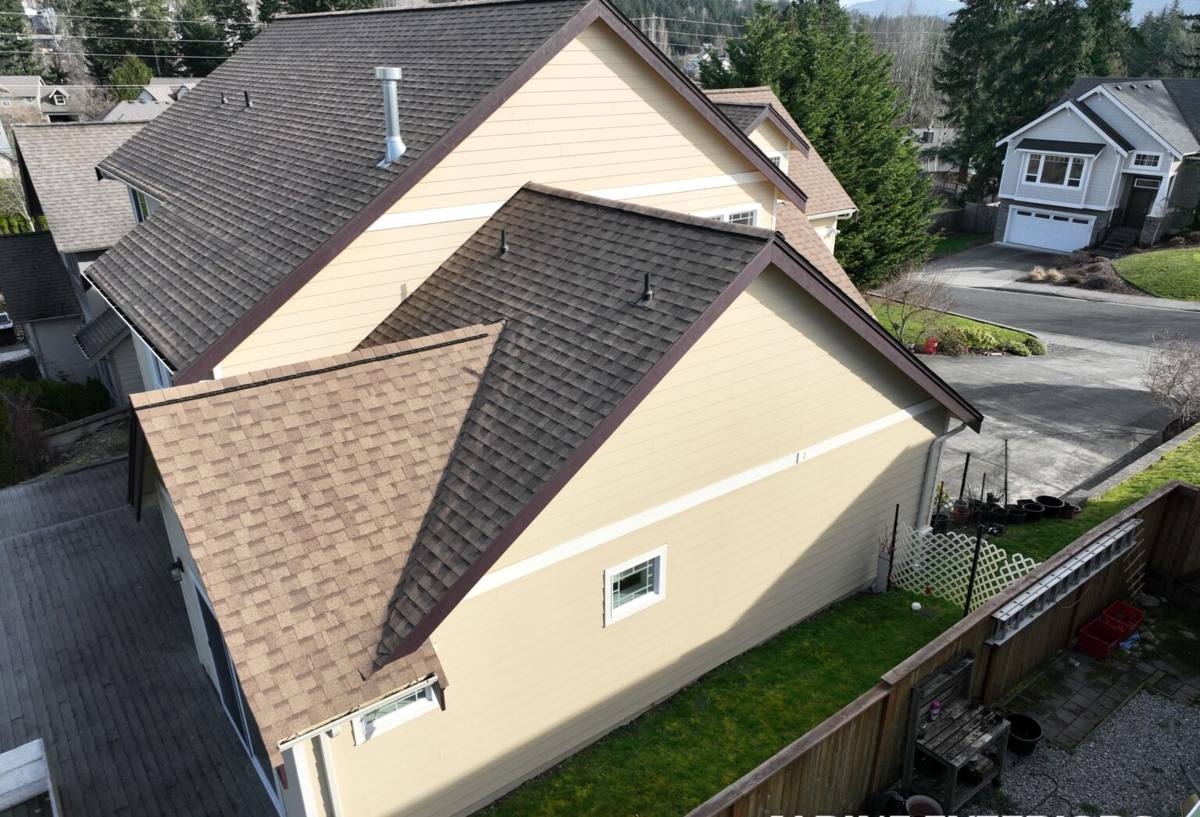
Why Decks Fail Faster Near Ferndale and Blaine
Three things work against outdoor wood and wood-adjacent structures in this area, and they compound each other:
- Salt air — proximity to Puget Sound and Georgia Strait means airborne salt reaches fasteners, flashing, and hardware, accelerating corrosion in anything not rated for coastal exposure.
- Driving rain — wind-driven rain doesn't just fall straight down; it gets pushed sideways into ledger connections, stair stringers, and any spot where two materials meet without proper flashing.
- A long moss season — Whatcom County's extended wet, low-sun stretch gives moss and algae months to establish on horizontal surfaces, and moss holds moisture against the wood far longer than plain rain does.
Individually, any one of these is manageable. Together, over years, they find every weak point in a deck's original construction — a ledger board that wasn't flashed correctly, joist hangers that were standard-duty instead of corrosion-resistant, or decking that traps water instead of shedding it.
The Ledger Board Is Usually Where It Starts
The ledger board — the piece that attaches the deck to the house — is the single most common failure point on older decks in this climate. If it wasn't properly flashed when installed, water works its way behind it year after year, and the rot often isn't visible until it's already compromised the framing behind your siding. Any legitimate deck replacement includes opening this connection up and inspecting it, not just building new decking on top of an old, unverified structure.
Signs Your Deck Needs Replacing, Not Just Repair
Some deck problems are cosmetic and some are structural. Knowing the difference matters, because repairing a structurally compromised deck is a temporary fix at best.
- Boards that feel spongy or flex noticeably underfoot
- Visible rot, dark staining, or soft wood around the ledger board or posts
- Fasteners that are rusted, popped up, or streaking the wood with rust stains
- Railings or stairs that wobble or feel less solid than they used to
- Persistent moss or algae growth that returns within weeks of cleaning
- Gaps between deck boards that have widened well beyond their original spacing
- Any daylight or gap visible where the deck meets the house
A deck with one or two of these issues, caught early, may only need targeted repair. A deck with several of these signs — especially anything involving the ledger board, posts, or main support beams — is usually past the point where repair makes financial sense.
What a Correct Deck Replacement Involves
A full replacement is more than a materials swap. Here's what we actually do, in order:
1. Structural Assessment
Before anything comes down, we check the framing, posts, footings, and — critically — the ledger connection. Footings that were undersized or set too shallow for this soil and freeze-thaw pattern get flagged here, not discovered halfway through the build.
2. Removal and Site Protection
Old decking, railings, and any compromised framing come out. We protect your siding, landscaping, and walkways during teardown — this is also the point where hidden ledger rot or siding damage typically gets discovered.
3. Framing and Flashing Correction
This is the step that most determines whether your new deck lasts 10 years or 25. We install proper ledger flashing with correct water-shedding overlap, use corrosion-resistant hardware rated for coastal exposure, and correct any drainage issues in the substructure — including making sure water has somewhere to go instead of pooling against the house.
4. Decking, Railing, and Stair Installation
Boards, railings, and stairs go in with attention to board spacing (wide enough for drainage and seasonal wood movement, tight enough to look right), fastener selection, and consistent, code-correct railing height and baluster spacing.
5. Final Inspection and Walkthrough
We walk the finished deck with you, cover basic care for whatever material you chose, and make sure everything meets local permit and inspection requirements before we consider the job done.
Choosing the Right Decking Material for This Climate
There's no single "best" decking material — there's a best material for your budget, your maintenance tolerance, and how much sun versus shade your deck gets (shaded decks in Ferndale hold moisture longer and are more moss-prone regardless of material). Here's how the common options actually compare in a marine, high-moisture climate:
| Material | Moisture Behavior | Maintenance | Typical Lifespan Here |
|---|---|---|---|
| Pressure-treated wood | Resists rot when sealed regularly; untreated cuts and fastener holes are vulnerable | Annual cleaning and re-sealing recommended | 10–15 years with upkeep |
| Cedar | Naturally rot-resistant, but surface graying and moss uptake happen fast without sealant | Sealing every 1–2 years | 15–20 years with upkeep |
| Composite | Doesn't absorb water like wood; surface can still hold moss/algae film without cleaning | Periodic washing, no sealing needed | 20–25+ years |
| PVC/synthetic | Fully moisture-resistant, best resistance to moss and salt exposure | Occasional washing | 25+ years |
We'll talk through these trade-offs honestly rather than pushing whatever has the best markup. If you want a natural wood look and are willing to keep up with sealing, cedar or treated lumber is a reasonable choice. If you'd rather not think about your deck every spring, composite or PVC earns back its higher upfront cost through the moss season, year after year.
Hardware and Fasteners Matter More Here Than People Realize
This is the detail that gets skipped on budget deck jobs and causes early failure. Standard interior-grade or even standard exterior-grade fasteners can corrode within a few years under sustained salt-air exposure. We use hot-dip galvanized or stainless hardware rated for coastal and high-moisture use throughout the structure — joist hangers, screws, post bases, and flashing — because replacing a corroded fastener buried inside finished decking isn't a five-minute fix.
Cost Factors for Deck Replacement
Every deck is different, so we don't quote sight-unseen numbers, but these are the main factors that move the price up or down:
| Factor | Impact on Cost |
|---|---|
| Deck size and shape | Larger and multi-level decks require more material and labor |
| Decking material chosen | Pressure-treated is lowest upfront; PVC/synthetic highest |
| Substructure condition | Rotted framing, posts, or footings add repair scope beyond surface decking |
| Railing style and code requirements | Cable, glass, or custom railing costs more than standard baluster railing |
| Height and stairs | Elevated decks with stairs require more framing and railing than ground-level decks |
| Permit requirements | Structural work typically requires a permit and inspection, which we handle |
We'll give you a straightforward, itemized estimate after seeing the deck in person — no inflated "worst case" numbers designed to make a mid-range quote look like a deal.
Maintenance That Actually Extends the Life of a New Deck
The material and build quality only get you part of the way. What you do afterward matters, especially in a climate that stays wet for months at a stretch:
- Sweep debris and standing leaves off the deck regularly — trapped organic matter feeds moss and holds moisture against the surface
- Rinse or wash the surface at least once or twice a year to interrupt moss and algae before it establishes
- Check railings and stair connections annually for looseness
- For wood decking, re-seal on the schedule appropriate to your material — don't wait until the wood looks gray and dry
- Keep gutters and downspouts near the deck clear so overflow isn't dumping extra water onto or near the structure
- Watch the ledger connection area for any staining or gaps forming where the deck meets the house
Why a Crew That Already Works in Ferndale Makes a Difference
Deck problems in this area follow patterns — the same ledger flashing shortcuts, the same fastener corrosion, the same moss buildup in shaded corners — because the climate that causes them doesn't change from job to job. A crew that regularly works Ferndale and the surrounding Blaine and Whatcom County area has already seen how local soil conditions affect footings, how the prevailing wind direction drives rain into certain sides of a house, and which materials genuinely hold up here versus which ones just perform well in a manufacturer's brochure. That experience shows up in fewer surprises during teardown and a build that's designed for the weather it will actually face, not generic weather.
We also handle the permit and inspection process as a normal part of the job, since structural deck work in this area typically requires both — it's one less thing for you to chase down.
Get a Free, No-Pressure Estimate
If your deck is showing any of the warning signs above, or you just want an honest opinion on whether repair or full replacement makes more sense, we're happy to take a look. Fill out the form below for a free estimate — no pressure, no obligation, just a straight answer about what your deck needs.