 Blaine Siding
 Ferndale Roofs Take a Beating From the Coast Inland
Ferndale sits back a bit from the open water compared to a town like Blaine, but the same marine weather pattern reaches this far into Whatcom County's lowlands. Salt-laden air moves in off the Sound, driving rain comes sideways during winter storms, and heavy tree cover throughout the area's older neighborhoods keeps roof surfaces shaded and damp for weeks at a stretch. Put those three things together and you get one of the longer moss seasons in the state — roofs here can stay wet from October through April in a normal year.
None of that is a reason to panic about a roof. It's a reason to make sure the roof going on your house is actually built for those conditions, instead of installed the same way it would be in a dry inland climate. The materials, the ventilation, and the flashing details all matter more here than they would somewhere with a shorter wet season.
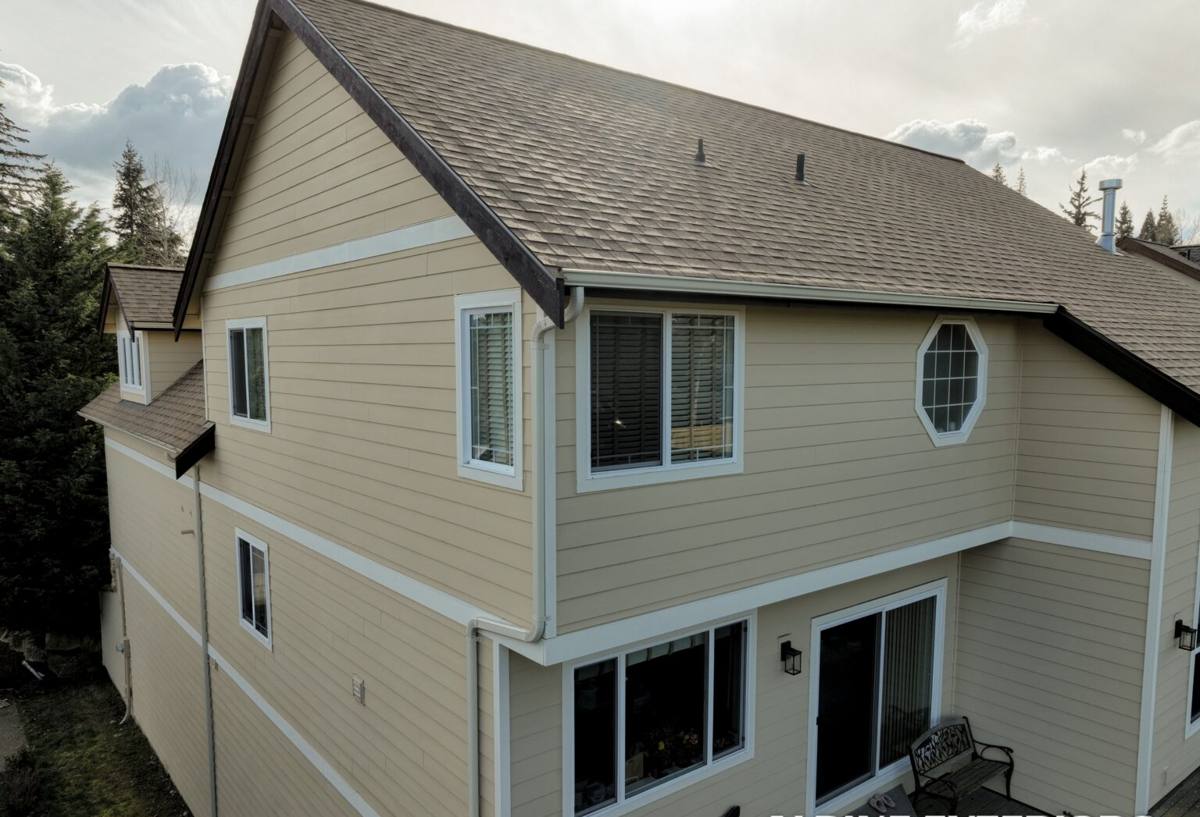
What a Correct Installation Actually Involves
Tear-Off and a Real Deck Inspection
A new roof is only as good as the deck underneath it. Once the old material comes off, every square foot of sheathing needs to be checked — not just glanced at. Years of trapped moisture from moss and slow-draining valleys can soften plywood or OSB in spots you can't see from a ladder. Any soft or delaminating decking gets replaced before anything new goes down. Covering rotten sheathing with a new roof just hides the problem for a few more years.
Underlayment and Water-Entry Points
In a climate with this much sustained rain, underlayment isn't a formality. Self-adhered ice-and-water membrane belongs at eaves, valleys, and anywhere water tends to pool or back up, with synthetic underlayment across the rest of the field for wind and water resistance during the install itself and for the life of the roof.
Flashing — Where Most Leaks Actually Start
Chimneys, skylights, sidewalls, and valley flashing are where the majority of roof leaks originate, not the shingle field. Correct step flashing at walls, proper valley metal, and counter-flashing that's actually tucked into the surface it meets (not just caulked over it) make the difference between a roof that's dry in year one and one that's still dry in year fifteen.
Ventilation, Not Just Shingles
A balanced system of soffit intake and ridge exhaust keeps the underside of the deck dry and temperature-stable. Skip this and moisture gets trapped in the attic, which shortens the life of the decking and the shingles from below — the same wet-climate problem homeowners think they're solving by just replacing the roof.
Choosing a Roofing Material for a Salt-Air, High-Moisture Climate
There's no single "best" roofing material — there's a best material for your roof's exposure, your budget, and how much upkeep you're willing to do. Here's how the common options actually perform in a Whatcom County coastal climate:
| Material | Typical Lifespan Here | Moss & Moisture Behavior | Salt Air / Wind Exposure | Maintenance |
|---|---|---|---|---|
| Architectural asphalt shingle | 25–30 years | Algae-resistant granules help; still needs ventilation and occasional cleaning to fight moss | Good with proper nailing pattern and wind rating for the site | Low to moderate |
| Standing seam metal | 40–50+ years | Sheds water and moss buildup better than any other option; snow and debris slide off | Excellent when properly coated and fastened; handles coastal wind well | Very low |
| Cedar shake | 20–25 years in this climate | Absorbs moisture, holds moss and algae more readily, needs regular treatment | Fair; more sensitive to sustained damp exposure | High |
| Synthetic/composite shingle | 30–40 years | Resists moisture absorption well; less common locally but performs similarly to metal | Good | Low |
We install architectural asphalt shingles and metal roofing as our standard recommendations for this climate because both hold up to sustained moisture without the ongoing treatment schedule that cedar requires. That's not a knock on cedar as a look — it's an honest maintenance conversation. A roof you have to treat every couple of years to keep moss and rot at bay is a different commitment than one you can largely leave alone.
The Moss Problem Isn't Fixed by Just Cleaning the Roof
Pressure washing or scraping moss off a roof treats the symptom, not the cause, and can strip protective granules or loosen shingles if done wrong. The actual fixes are addressed during installation:
- Zinc or copper strips installed near the ridge, which release trace metal ions with every rain that inhibit new moss growth downstream
- Balanced ridge and soffit ventilation so the deck isn't holding moisture from underneath
- Keeping overhanging branches trimmed back so the roof gets more sun and airflow (this is on the homeowner's side, but we'll flag it during the estimate)
- Correct shingle spacing and nailing so water sheds cleanly instead of catching at lifted edges, which is where moss typically gets its first foothold
Our Ferndale Installation Process
- Free on-site inspection — we walk the roof and the attic, not just look from the ground
- Written estimate covering material options, scope, and timeline
- Permit pulled through the appropriate local jurisdiction before work starts
- Property protection — tarps and plywood over landscaping, siding, and windows
- Full tear-off and deck inspection, with any soft or damaged sheathing replaced
- Ice-and-water membrane, underlayment, and flashing installed at every vulnerable point
- Roofing material installed to manufacturer specification for wind rating and exposure
- Ridge and soffit ventilation set to proper intake/exhaust balance, moss-prevention strips added
- Full magnetic nail sweep of the yard and driveway, debris hauled off site
- Final walkthrough with you, plus warranty registration paperwork
What Affects the Cost of a New Roof
Every roof gets a number based on its own specifics, but the main cost drivers are consistent from job to job:
- Roof size and complexity — a simple single-story roof costs far less per square foot than a steep, multi-valley roof of the same square footage
- Pitch and access — steep or hard-to-reach roofs take longer and require more safety setup
- Decking condition — how much sheathing needs replacing isn't fully known until tear-off begins
- Material choice — asphalt shingle installations generally run in the lower-to-moderate range per square (100 sq ft), while standing seam metal typically runs meaningfully higher due to material and labor
- Layers being removed — tearing off two layers of old roofing costs more than tearing off one
- Permit and disposal fees — vary by jurisdiction and load size
We'd rather walk your specific roof and give you real numbers than throw out a broad figure that doesn't apply to your house. That's what the free estimate is for.
Signs Your Ferndale Home Needs a Full Replacement, Not a Patch
- Shingles that are cupping, curling, or cracking across large sections rather than one isolated spot
- Heavy granule buildup in gutters and downspouts, a sign the shingles are wearing down
- Moss growing under shingle edges rather than just sitting on top of them, which lifts the shingle and lets water in
- Soft or spongy spots when walking the roof, or sagging visible from the ground
- Daylight or water staining visible from inside the attic
- Roof age at or past the material's rated lifespan, especially if it's had multiple past repairs
- Rising energy bills tied to poor attic ventilation or insulation gaps at the roofline
If you're only seeing one or two of these and the roof is still relatively young, a repair may genuinely be the right call — we'll tell you that if it's true.
Permits and Local Requirements
Roof replacements in Ferndale and the surrounding Whatcom County area typically require a permit before work begins, along with an inspection once it's complete. That process exists for your benefit — it means someone independent of the contractor is confirming the underlayment, ventilation, and flashing were actually done to code, not just that the roof looks finished from the street. We handle the permit process as part of the job rather than leaving it for the homeowner to sort out.
Why a Blaine-Based Crew That Already Works Ferndale Matters
A roofing crew based nearby and already working in Ferndale regularly knows which parts of the area hold moisture longer because of tree cover and sun angle, which houses tend to need extra ventilation work, and how the wind actually behaves off the water during a winter storm — not from a manual, but from being on these roofs season after season. That local presence also means faster response if a storm causes damage and a warranty that's backed by a crew you can actually reach, not a call center. Being local isn't a slogan here — it's the difference between a roof designed for a generic climate and one designed for this one.
If you're weighing a repair against a full replacement, or you just want an honest look at what your roof actually needs, we're happy to walk it with you. Reach out for a free, no-pressure estimate — we'll tell you what we see, plainly, and let you decide from there.