 Blaine Siding
 Why California Creek Homes Need the Right Siding Material
California Creek sits close enough to the water and the open marine air off the Strait of Georgia that siding here works harder than siding fifty miles inland. Salt-laden air, near-constant winter drizzle, and long stretches of overcast, damp weather create conditions that punish the wrong exterior product year after year. Homes in this pocket of Blaine also sit under a lot of tree cover in places, which means shade, slow-drying wall surfaces, and a moss and algae season that can run from October through May.
None of that is exotic — it's simply what Whatcom County coastal weather does. But it means the siding decision on a California Creek home isn't cosmetic. It's a durability decision. Fiber cement, specifically James Hardie fiber cement, is the product we install here because it's engineered to hold up to exactly this combination of moisture, salt exposure, and biological growth without the maintenance spiral that comes with softer materials.
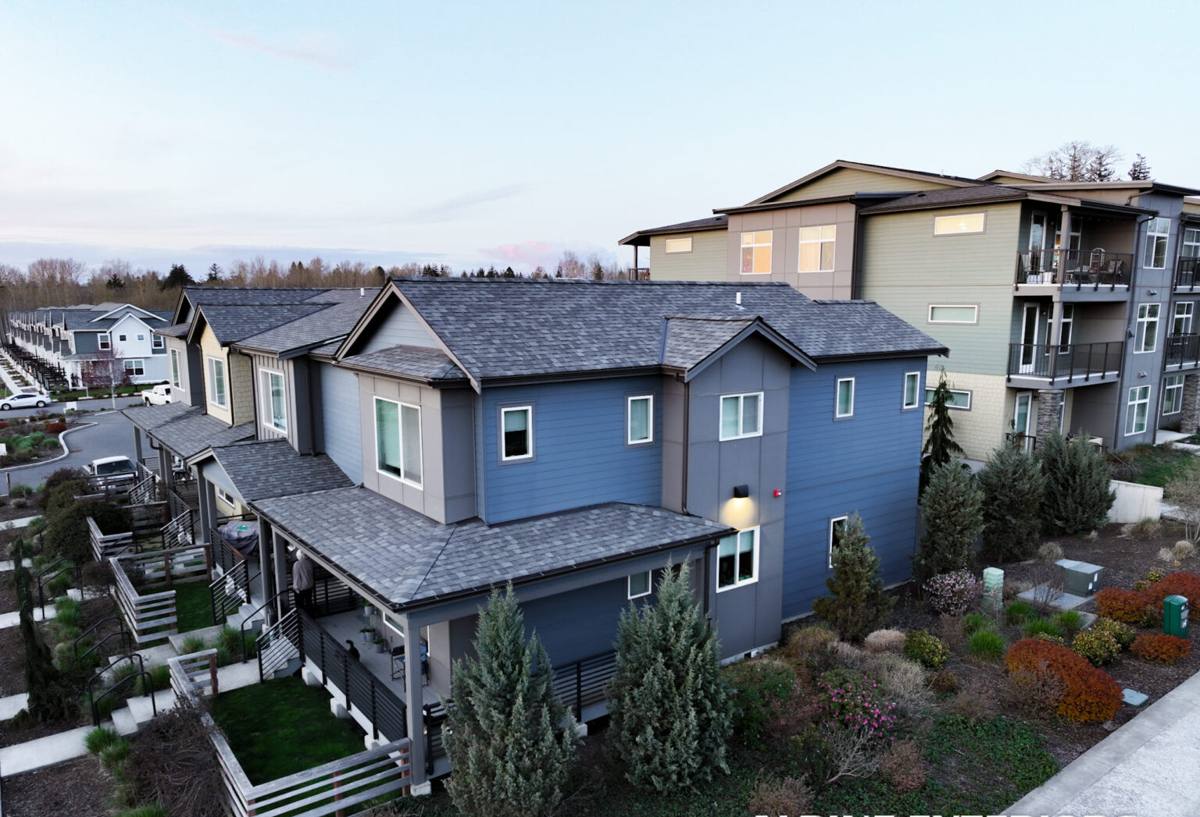
What Salt Air, Rain, and Moss Actually Do to Siding
Salt Air
Proximity to saltwater means airborne salt settles on exterior surfaces and window screens, especially on the sides of a house that face open water or prevailing wind. Salt is corrosive to exposed metal fasteners and trim, and it accelerates the breakdown of finishes that aren't formulated to resist it. Paint film on wood siding chalks and fails faster in salt air than it does even a few miles inland.
Driving Rain
Blaine doesn't just get rain — it gets wind-driven rain that hits siding at an angle instead of falling straight down. That matters because it pushes water into laps, seams, and butt joints that would stay dry in a calmer climate. Any siding system with weak water management at the seams will eventually let moisture behind the cladding, and once that happens the sheathing and framing are at risk, not just the siding face.
Moss and Algae
Shaded walls, north-facing elevations, and anything near trees or shrubs stay damp longer after every rain event. That extended dampness is exactly what moss and algae need to establish themselves on a wall surface. On porous or absorbent siding materials, moss can actually get a foothold in the material itself, not just sit on top of it, which makes cleaning more damaging over time.
Why We Install Only James Hardie Fiber Cement
We don't install LP SmartSide, vinyl, Cemplank, Allura, primed spruce, or cedar. That's not a marketing position — it's a standard we set because of what we've seen these products do in exactly this climate over time. Wood-based and engineered wood products depend on an intact factory or field-applied coating to keep moisture out; once that coating is compromised at a cut edge, a fastener hole, or a scratch, the substrate underneath can absorb water and begin to break down. In a climate with this much sustained moisture exposure, that's a real long-term liability, not a hypothetical one.
Vinyl siding is inexpensive and low-maintenance in the sense that it doesn't need painting, but it's a thin plastic product that can warp in temperature swings, crack in cold snaps, and fade unevenly in UV exposure over the years. It also doesn't offer the fire resistance or the rigidity of fiber cement, and it's not what we choose to put our name behind.
James Hardie fiber cement is a cement, sand, and cellulose fiber composite. It doesn't rot, it isn't a food source for moss the way wood is, it holds paint and factory finish far longer than wood substrates, and it's non-combustible. Hardie also engineers specific product lines (the HZ5 line, for example) for climates like ours — colder, wetter regions — versus the HZ10 line built for hot, humid, high-UV climates. That's an engineering distinction most competing products simply don't make.
What a Correct Fiber Cement Install Involves
Fiber cement siding is only as good as the installation behind it. A huge share of the siding failures we get called out to inspect aren't material failures — they're installation failures. Getting it right in a California Creek microclimate means:
- Correct water-resistive barrier and flashing detail at every window, door, and penetration before any siding goes up
- Proper starter strip and clearance at the foundation line so the bottom edge of the siding isn't sitting in splash-back moisture
- Manufacturer-specified fastener pattern, type, and embedment depth — Hardie is specific about this, and shortcuts here cause blow-outs and loosening
- Correct joint treatment at butt seams so wind-driven rain can't track behind the siding at the ends of boards
- Proper caulking and sealant only where Hardie's install guide calls for it — over-caulking traps moisture just as badly as under-caulking lets it in
- Adequate clearance between siding and roof lines, decks, and other abutting surfaces to avoid trapped moisture pockets
- Field-cut edges sealed per manufacturer spec to protect the factory finish integrity at every cut
Skipping any one of these doesn't necessarily show up as a problem in year one. It shows up in year five or year eight, as moisture damage, paint failure, or fastener corrosion that's expensive to trace back to its source and expensive to fix once the sheathing is involved.
ColorPlus Factory Finish vs. Field-Painted Siding
We favor Hardie's ColorPlus factory-applied finish over field-applied paint whenever it fits the project. The factory finish is baked on under controlled conditions and backed by its own finish warranty, and it resists the fading and chalking that field-applied paint experiences faster in salt air and UV exposure. For California Creek homes specifically, this matters because it removes one more maintenance task — repainting — from a homeowner's list in a climate that already demands more upkeep than most.
Comparing Siding Materials for This Climate
| Factor | James Hardie Fiber Cement | Wood / Engineered Wood | Vinyl |
|---|---|---|---|
| Moisture resistance | Excellent — cement-based, does not rot | Depends entirely on intact coating | Good but can trap moisture behind panels |
| Moss/algae resistance | High — not an organic food source | Lower — organic substrate can host growth | Moderate — surface growth only, but traps moisture behind |
| Salt air durability | High with factory finish | Coating fails faster in salt exposure | Can become brittle over time |
| Fire resistance | Non-combustible | Combustible | Combustible, can warp from heat |
| Typical repaint interval | 15+ years with ColorPlus | 5-8 years | Never painted, but fades and can't be color-matched easily if damaged |
| Impact/rigidity | Rigid, resists denting | Can dent or split | Can crack in cold, dent easily |
Our Process for California Creek Projects
1. On-Site Assessment
We look at sun and shade exposure on each elevation, existing moisture damage, current siding condition, trim and flashing details, and how exposed the home is to prevailing wind and salt air off the water. This tells us which Hardie product line and profile fit the home and where extra water-management detail is needed.
2. Product and Color Selection
We walk homeowners through Hardie's plank, shingle, and panel options along with the ColorPlus palette, factoring in how a color and sheen will actually perform under this area's grey, overcast light and damp conditions.
3. Tear-Off and Substrate Check
Old siding comes off and we inspect the sheathing underneath for any moisture damage before anything new goes on. This step gets skipped by crews trying to move fast — we don't skip it, because covering a wet or compromised wall with new siding just hides the problem.
4. Weather Barrier and Flashing
Correct water-resistive barrier installation and flashing at every penetration, installed to shed water the way this climate demands, not just to code minimum.
5. Installation to Hardie Spec
Fastening, clearances, joint treatment, and caulking all follow Hardie's published installation guidelines — not shortcuts, not "how we've always done it."
6. Final Walkthrough
We review the completed work with the homeowner, including care and cleaning guidance specific to this climate — what to expect from moss growth on shaded elevations and how to handle it without damaging the finish.
Maintenance Realities for This Neighborhood
Even the right siding material needs some homeowner attention in a climate like this. A realistic maintenance checklist for a California Creek home:
- Rinse shaded and north-facing walls periodically to slow moss and algae buildup, using a soft wash rather than aggressive pressure washing
- Keep gutters clear so overflow doesn't run down and saturate wall sections repeatedly
- Trim back shrubs and tree branches that keep siding sections shaded and damp longer than necessary
- Inspect caulking at trim and penetrations annually — sealant is the one component that does wear out over time, even on fiber cement
- Address any fastener staining or trim issues early, before water has a chance to track behind the siding
None of this is unique to fiber cement — every siding material in this climate needs some attention. The difference is that fiber cement gives you a durable, stable substrate underneath, so maintenance stays cosmetic instead of structural.
Cost Factors for a California Creek Project
| Factor | How It Affects Cost |
|---|---|
| Home size and elevation count | More wall area and more complex rooflines mean more material and labor |
| Existing siding removal | Tear-off of old wood or vinyl adds labor versus a bare-wall install |
| Substrate repair | Any rot or moisture damage found during tear-off needs to be repaired before new siding goes on |
| Product line and profile | Lap, shingle, and panel profiles carry different material costs |
| Trim and finish detail | Additional trim boards, corner treatments, and factory finish options add cost |
| Site access | Shaded lots, tree cover, or tight access can affect crew efficiency and staging |
We give homeowners a real, project-specific number after seeing the home — we don't work off generic per-square-foot rules of thumb, because the variables above shift the number too much for that to be honest.
Why a Crew That Already Works This Area Matters
Blaine and the surrounding Whatcom County coastline aren't like inland Washington or the drier side of the Cascades. A crew that installs siding across a range of climates may not adjust their flashing details, fastener choices, or joint treatment for what California Creek actually throws at a house year-round. Working this specific stretch of coastline repeatedly means we already know which elevations need the most water-management attention, how bad the moss season gets on shaded lots, and what corner and trim details hold up versus what fails early here.
That local pattern recognition is the difference between a siding job that looks right on installation day and one that's still performing correctly a decade later.
If you're weighing a siding project for a California Creek home, we're glad to walk the property with you, look at what your home's exposure and shade pattern actually demand, and give you a straightforward, no-pressure estimate — reach out through the form below to get started.