 Blaine Siding
 Why Cherry Point Puts Extra Stress on Siding
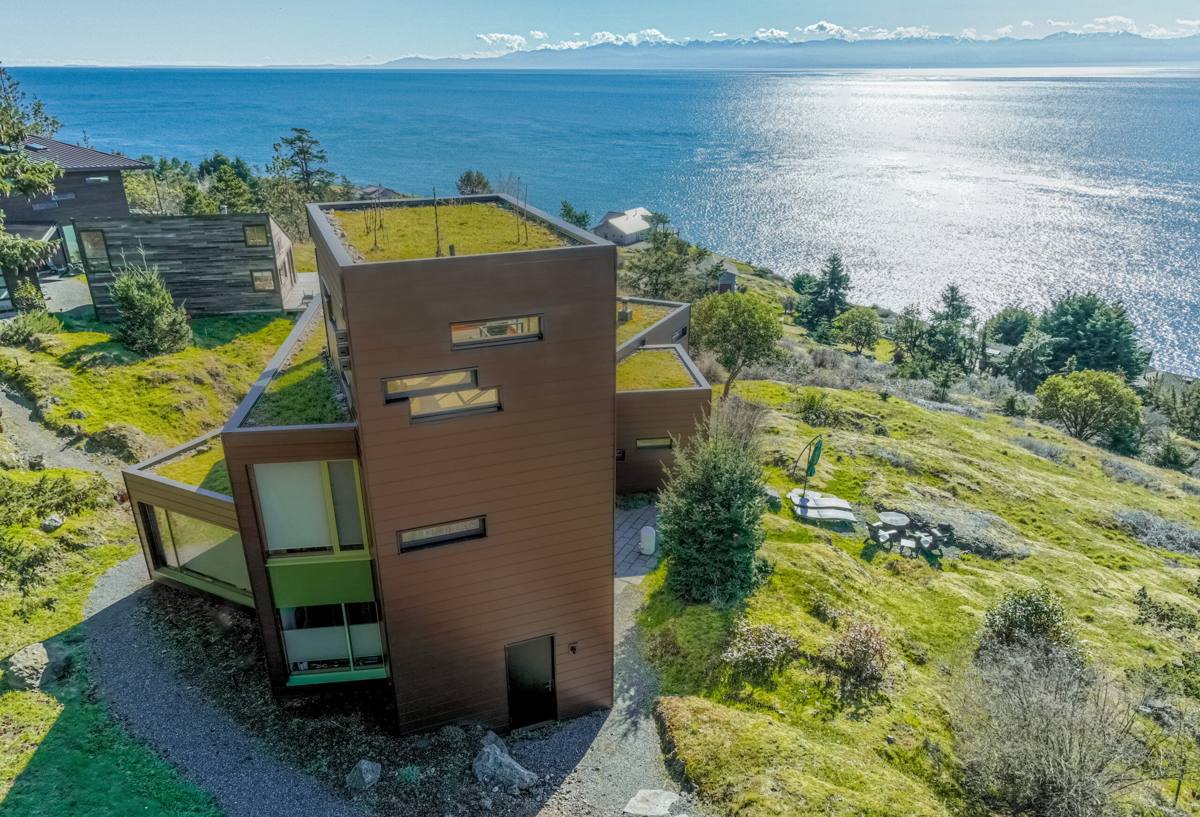
Cherry Point sits right up against the water, and that location is exactly what makes siding here behave differently than siding twenty miles inland. Homes get a steady mix of salt-laden air, wind-driven rain coming off the water, and a moss season that runs long even by Whatcom County standards. None of that is unusual for this stretch of the Washington coast, but it does mean the siding on a Cherry Point home is working harder, more often, than siding on a home in a drier, more sheltered part of the county.
Salt Air and Metal Fasteners
Salt spray carries further than most homeowners expect, and it settles on everything — siding faces, trim, and especially the fasteners holding it all on. Fasteners that aren't rated for a marine-influenced environment can start showing rust bleed through paint within a few years, long before the siding itself is due for attention. It's a small detail, but it's one of the first things that gives away a rushed or budget install out here.
Driving Rain and Wall Assemblies
Wind off the water doesn't just bring rain — it drives it sideways into wall surfaces that a calmer climate would never test. That means laps, joints, and butt seams that would be a non-issue in a sheltered inland neighborhood need to actually perform in Cherry Point. If water finds a way behind the siding here, it has more opportunities to do so, and more days a year of weather that will exploit any gap.
Moss Season and Trapped Moisture
Moss doesn't just grow on roofs. Given a shaded wall, a north-facing elevation, or a spot with poor airflow, it will colonize siding seams and hold moisture against the surface for weeks at a time. On a wood-based or improperly sealed product, that sustained dampness is where rot gets its start. On correctly installed fiber cement, it's mostly a cosmetic issue — but "correctly installed" is doing a lot of work in that sentence.
What Cherry Point Siding Actually Needs to Deliver
Given all of that, siding for this specific stretch of coastline needs a few things at once: a material that doesn't absorb water and swell, a factory finish that can take years of salt exposure without chalking or fading unevenly, and a product that's dimensionally stable enough that its seams stay tight through wet winters and drier summers. It also needs to be installed by people who understand which walls on a given home take the worst of the weather, because not every elevation of a Cherry Point house faces the same exposure.
This is also why we treat fire resistance as part of the climate conversation, not a separate topic. Non-combustible siding matters everywhere in Washington, but it's simply one more box that a well-built product should check alongside moisture performance — there's no reason to trade one for the other.
Why We Only Install James Hardie Fiber Cement
We standardized on James Hardie products and don't install vinyl, LP SmartSide, cedar, primed spruce, or other fiber cement brands. That's a deliberate choice, not a sales preference. Hardie's HardieZone system engineers specific product formulations for different climate zones, and the Pacific Northwest's wet, temperate coastal conditions are exactly what that system was built to account for. The ColorPlus finish is baked on in a factory-controlled process, which holds up to sun and salt exposure more consistently than a field-applied paint job ever will, and it comes with its own finish warranty on top of Hardie's product warranty.
We're not going to tell you vinyl or engineered wood siding can't work anywhere — they have their place, and there are legitimate reasons homeowners choose them, usually cost. But for a house sitting close to the water, dealing with wind-driven rain and a long moss season, we've seen what those materials are up against, and we'd rather stand behind one product system we know we can install correctly and warranty properly than offer several we can't fully vouch for in this specific climate.
What a Correct Fiber Cement Install Looks Like Here
Fasteners and Flashing
Every fastener needs to be corrosion-resistant — stainless steel or hot-dipped galvanized, not standard coated fasteners that were never rated for salt exposure. Flashing at windows, doors, and any wall penetration has to be installed so water sheds outward at every layer, not just at the surface. This is where a lot of installation quality either shows up or gets found out, usually years later.
Clearances and Drainage
Hardie's own installation instructions specify minimum clearances from grade, roof lines, and decks, along with a drainage plane behind the siding. Those numbers aren't suggestions — they're the difference between water draining away from the wall assembly and water sitting against it. In a climate that gets as much driving rain as Cherry Point does, skipping or shortcutting these details tends to catch up with a house faster than it would somewhere drier.
| Installation Detail | Why It Matters Here | Risk If Skipped |
|---|---|---|
| Corrosion-resistant fasteners | Constant salt air accelerates corrosion of standard fasteners | Rust streaking, fastener failure, loosened panels |
| Weather-resistive barrier + drainage gap | Wind-driven rain regularly reaches the wall surface | Trapped moisture behind siding, hidden sheathing damage |
| Proper clearance from grade/roofline | Keeps splash-back and roof runoff off the siding's bottom edge | Wicking, paint failure, and rot at the lowest courses |
| Sealed cut edges | Factory finish only protects uncut edges | Moisture entry at every field cut, especially around trim |
| Manufacturer-specified caulking at joints | Keeps seams tight through wet-dry cycling | Open joints that let water and moss spores in |
Our Process for a Cherry Point Project
We approach every Cherry Point job the same methodical way, because the climate doesn't reward shortcuts:
- On-site assessment of the existing siding and wall condition, including a look for moisture damage that isn't visible from the street.
- Removal of the old siding and inspection of the sheathing underneath — this is often where hidden problems from a previous install show up.
- Repair of any damaged sheathing before anything new goes back on the wall.
- Installation of a weather-resistive barrier and drainage plane suited to the home's exposure.
- Flashing at every window, door, and penetration, installed to shed water outward.
- Hardie panel or plank installation with corrosion-resistant fasteners, following manufacturer clearance and fastening specs.
- Trim, caulking, and touch-up work at cut edges and seams.
- A final walkthrough so you can see the completed work and ask questions before we consider the job done.
Living With It: Maintenance in a Marine Climate
Fiber cement is low-maintenance compared to the alternatives, but "low-maintenance" isn't "no-maintenance," especially this close to the water. A yearly rinse-down knocks off the salt film and moss spores before they get a foothold in seams and corners. Keeping gutters clear matters more here too, since overflow during a heavy driving-rain event will hit siding directly instead of draining off the roof the way it's supposed to. It's also worth a quick yearly look at caulking lines around windows and trim — caulking is the one part of the system that ages faster than the siding itself and is easy to touch up before it becomes a bigger issue.
- Moss or dark streaking building up in horizontal seams, especially on shaded or north-facing walls
- Visible rust bleeding from fastener heads
- Caulking that's cracked, shrunk, or pulled away from trim
- Soft spots or slight give when you press on the siding near the bottom courses
- Paint or finish that's chalking unevenly, especially on the sides that take the worst weather
- Gaps opening up at butt joints or around window and door trim
If you're noticing any of those on a walk around your Cherry Point property, it's worth having someone take a closer look before the next wet season.
What Affects the Cost of a Cherry Point Project
Every home is different, and we won't throw out numbers that don't reflect your actual house, but a few factors consistently move the price on projects out here:
| Factor | Why It Affects Cost |
|---|---|
| Removal and disposal of existing siding | More layers or harder-to-remove materials add labor |
| Condition of sheathing underneath | Moisture damage found during tear-off means repair before re-siding |
| Home size and wall complexity | Dormers, multiple gables, and cut-up wall lines take more time and material |
| Product line and profile chosen | Lap siding, shingle-style, and panel systems have different material and labor costs |
| Trim and accessory work | Corner boards, window trim, and fascia detail add to scope |
Why a Crew That Already Works Cherry Point Matters
A lot of what separates a siding job that holds up for decades from one that needs attention in five years isn't the product — it's whether the crew installing it understands the specific conditions the house faces. A crew that regularly works this part of Whatcom County already knows which elevations catch the worst of the wind and rain, how much salt exposure to plan for, and what the county expects for permitting and inspection. That familiarity shows up in the small decisions made on-site — where extra flashing goes, which walls get closer attention to sealing, how the job is sequenced around the weather — decisions that are harder to get right for a crew seeing a marine-exposed property for the first time.
We're not interested in installing a product we can't stand behind on a coastal Blaine home, which is part of why we've kept our lineup narrow rather than offering every siding option on the market.
If you're weighing your options for a Cherry Point home, we're happy to take a look and walk you through what your specific house needs — no pressure, no obligation. Use the form below to request a free estimate.