 Blaine Siding
 Why Asphalt Shingle Roofs in Lynden Take a Different Kind of Beating
Lynden sits inland from the coast, in Whatcom County's farm country, but "inland" doesn't mean easy on a roof. The same wet Pacific Northwest weather pattern that soaks the whole county settles over Lynden for months at a time, and the mix of mature trees, open farmland wind, and long stretches of low, gray, damp weather creates its own set of problems for asphalt shingles. It's a different wear pattern than what a roof sees right on the water in Blaine or Birch Bay, but it's not a gentler one.
A shingle roof here is fighting driving rain that finds every gap in flashing and underlayment, a moss season that can run from fall through spring, and freeze-thaw swings that show up more often than people expect this close to the Salish Sea. Add tree cover and the debris that comes with it, and you've got a roof that needs to be installed and maintained with the local climate in mind from day one, not treated like it's going on a house in a drier part of the state.
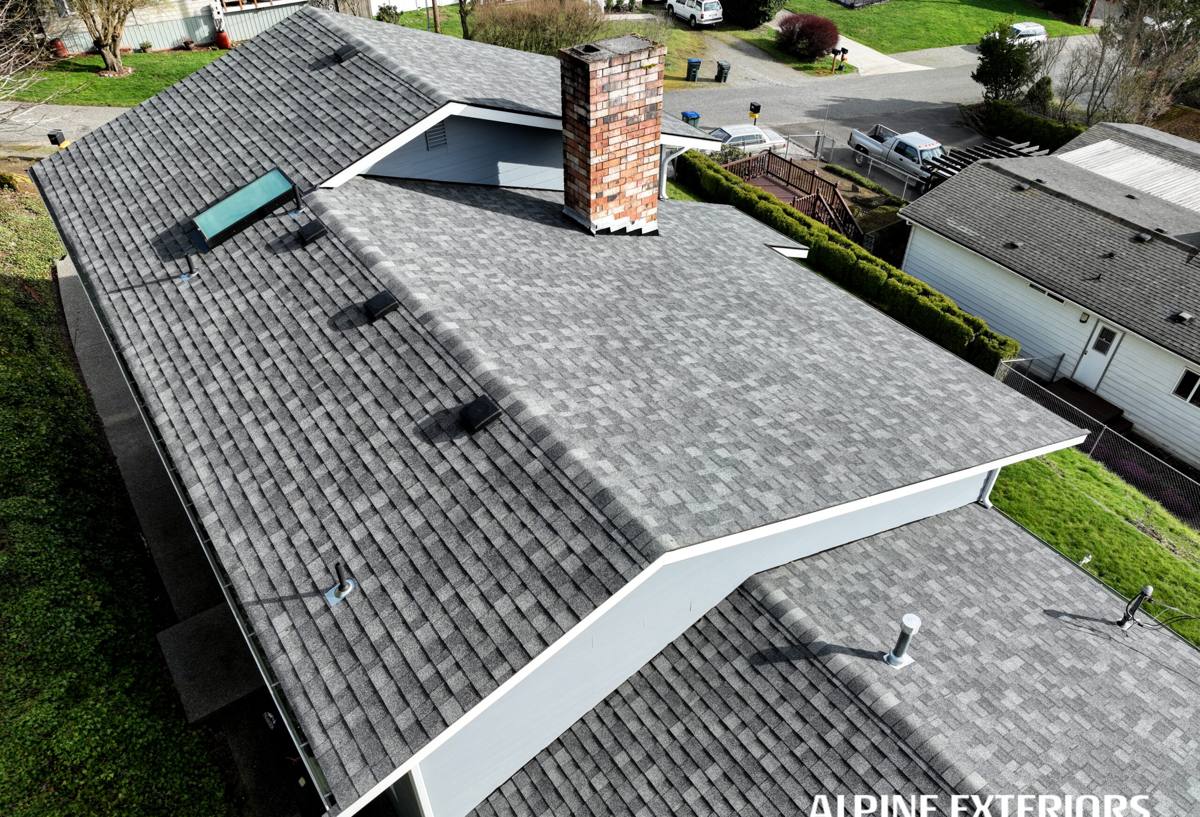
What Whatcom County Weather Actually Does to a Shingle Roof Over Time
Most shingle roofs don't fail all at once. They wear down in specific, predictable ways, and in Lynden those ways are tied directly to the climate:
Moss and Algae
Shade from trees, consistent moisture, and mild temperatures are exactly what moss needs to get established. Once it takes hold on a north-facing slope or in a valley that doesn't dry out between rains, it works its way under shingle tabs and lifts them, which lets water in underneath rather than off the roof. Dark algae streaking is mostly cosmetic, but moss growth is a mechanical problem, not just an appearance one.
Granule Loss
Asphalt shingles rely on their granule coating for UV protection and fire resistance. Constant wetting and drying, plus abrasion from wind-blown debris and the occasional pressure-washing a homeowner tries as a quick fix for moss, strips granules faster than in drier climates. Once the granules are gone in a spot, that section of shingle ages faster than the rest of the roof.
Flashing and Valley Failures
Long stretches of steady rain don't test a roof's ability to shed a downpour so much as its ability to handle water that just sits and seeps for days. Flashing around chimneys, skylights, and roof-to-wall transitions, along with valley metal, is where most leaks in this climate actually start — not in the field of the shingles themselves.
Freeze-Thaw Stress
It doesn't need to snow hard here for freeze-thaw cycling to matter. A wet roof deck that drops below freezing overnight and thaws by midday, repeated over a winter, stresses fasteners, sealant strips, and any spot where water has already found its way past the shingle surface.
What a Correct Asphalt Shingle Installation Involves
A shingle roof is only as good as what's underneath it. In this climate, the components most homeowners never see matter as much as the shingle brand on top.
Underlayment and Ice-and-Water Barrier
We use a synthetic underlayment across the full roof deck rather than old-style felt, because it holds up better to the temperature swings and moisture exposure typical of a long Whatcom County winter. Self-adhering ice-and-water barrier goes down first at eaves, valleys, and any roof-to-wall or chimney transition — the spots where standing water and wind-driven rain are most likely to get under the shingles.
Ventilation
A roof deck that can't breathe traps moisture underneath the shingles from the inside, which accelerates rot and shortens shingle life regardless of how good the shingles themselves are. Balanced intake at the eaves and exhaust at the ridge is part of a correct installation, not an upsell — it's especially important on homes with the kind of dense tree cover common around Lynden, where less direct sun means slower drying.
Flashing and Valleys
We install new metal flashing and valley material as part of a re-roof rather than reusing what's there, and we set nailing patterns to the manufacturer's high-wind specification. Given how much of the leak risk in this area traces back to flashing rather than the shingle field, cutting corners here is where a cheap roof turns into a problem roof within a few winters.
Choosing the Right Shingle for a Lynden Home
Not every asphalt shingle is built the same way, and the right choice depends on how much wind, moss pressure, and budget you're working with.
| Shingle Type | Typical Lifespan | Wind Rating | Algae/Moss Resistance | Best For |
|---|---|---|---|---|
| 3-Tab | 15–20 years | Lower (60–70 mph) | Standard, unless treated | Budget-conscious re-roofs, secondary structures |
| Architectural/Laminate | 25–30 years | Higher (110–130 mph) | Better with algae-resistant (AR) granules | Most Lynden homes; better performance in driving rain and wind |
| Impact-Resistant (Class 4) | 25–30+ years | High, plus impact rating | AR granules standard on most lines | Homes wanting maximum durability; may qualify for insurance discounts |
For most homes in this area, we steer people toward a laminate/architectural shingle with algae-resistant granules. The extra cost over 3-tab is modest, and the combination of a heavier, wind-rated shingle with AR granules directly addresses the two biggest local stressors — driving wind-rain and moss/algae growth. We'll walk through the honest trade-offs on cost versus lifespan for your specific roof rather than push whatever has the best margin.
Our Process, Start to Finish
The steps don't change much from job to job, but how carefully each one is done is where roofs in this climate succeed or fail early.
- Inspection and estimate. We get on the roof, not just a look from the ground, to check the deck condition, existing flashing, ventilation, and moss/algae staining before writing a number.
- Tear-off. Full removal of the old roofing down to the deck, with the deck inspected and any soft or water-damaged sheathing replaced before anything new goes down.
- Underlayment and flashing. Ice-and-water barrier at eaves, valleys, and penetrations; synthetic underlayment across the field; new flashing and valley metal.
- Shingle installation. Installed to the manufacturer's nailing and exposure specs, including the high-wind pattern appropriate for this area.
- Ventilation check. Intake and exhaust confirmed or upgraded so the new roof isn't trapping moisture from day one.
- Cleanup and walkthrough. Magnetic sweep for nails, debris hauled off, and a walkthrough so you know what was done and what to watch for going forward.
Maintenance That Actually Matters Here
A well-installed shingle roof in Lynden still needs upkeep suited to the climate. Most of what shortens roof life locally is neglect of a short list of things, not a defect in the roof itself.
- Keep gutters and valleys clear of leaves and needles, especially heading into the wet fall months, so water has somewhere to go instead of backing up under shingle edges.
- Have moss treated, not power-washed, as soon as it appears on shaded slopes — chemical treatment or a gentle low-pressure application protects granules that a pressure washer will strip.
- Trim back overhanging branches to cut down on shade, debris, and the physical abrasion branches cause in wind.
- Get a roof looked at after any significant windstorm, not just on a fixed annual schedule, since wind is often what dislodges a shingle or flashing piece before a leak shows up inside.
- Check that attic ventilation isn't blocked by insulation or storage, since poor airflow undoes a lot of the protection a good roof install provides.
Signs Your Lynden Roof Needs Attention Now
Because leaks in this climate often start slow — a little seepage during a long rain rather than an obvious burst — it helps to know what to look for before it becomes a bigger repair:
- Dark streaking or visible moss patches, especially on north-facing or shaded slopes
- Granules collecting in gutters or at the base of downspouts
- Shingle tabs that look lifted, curled, or cracked
- Daylight visible through the roof deck from inside the attic
- Water stains on ceilings or in the attic, particularly after a stretch of steady rain
- Roof valleys or flashing that show rust, gaps, or loose fasteners
Any one of these on its own doesn't necessarily mean a full replacement — it might just mean a repair. But it's worth having someone who knows what local weather does to a roof take a look rather than waiting for a ceiling stain to tell you.
Why It Matters to Hire a Crew That Already Works in Lynden
A roofing crew that mostly works drier parts of the state can put on a technically fine-looking roof that still underperforms here, because the details that matter in Whatcom County's climate — ventilation for tree-shaded lots, flashing built for weeks of steady rain rather than occasional downpours, and shingle selection that accounts for a real moss season — aren't the same details that matter everywhere. Working this area regularly also means knowing realistic weather windows for tear-offs, understanding what local building departments expect for permits and inspections, and having a feel for how a specific roof pitch or tree canopy will hold up through a wet Lynden winter before the first shingle goes down.
We're not going to tell you a roofing brand or product line is "junk" to make a sale — most name-brand asphalt shingles are solid products when installed correctly. Where we draw a hard line is on cutting corners in the parts of the job nobody sees: underlayment, flashing, ventilation, and nailing pattern. Those are the choices that decide whether a shingle roof gets its full lifespan in this climate or starts leaking in year six.
If your Lynden home needs a roof inspection, a repair, or a full replacement, we're happy to take a look and give you a straight answer — no pressure, no scare tactics. Use the form below to request a free estimate and we'll get back to you to schedule a time to come out.