 Blaine Siding
 Why Lynden Roofs Wear Out Faster Than the Brochure Says
Lynden sits inland from Blaine, but it shares the same Whatcom County weather pattern the rest of us deal with year-round: long stretches of wet Pacific fronts, short dry summers, and a moss season that can run eight months or more. Roofs here don't fail because of one dramatic storm. They fail because moisture never really leaves the picture, and every material on the roof is being asked to shed water, resist moss, and hold its seal through dozens of freeze-thaw and wet-dry cycles every single year.
Add in the salt-laden air that moves inland off the water on our coastal weather systems, and you've got a climate that's genuinely harder on roofing than most of the country deals with. It's not dramatic damage most of the time — it's slow. Fasteners corrode a little faster. Coatings chalk and fade sooner. Moss gets a foothold in shaded, north-facing sections and starts lifting edges before anyone notices. None of that shows up on a spec sheet, which is why the install details matter as much as the material choice.
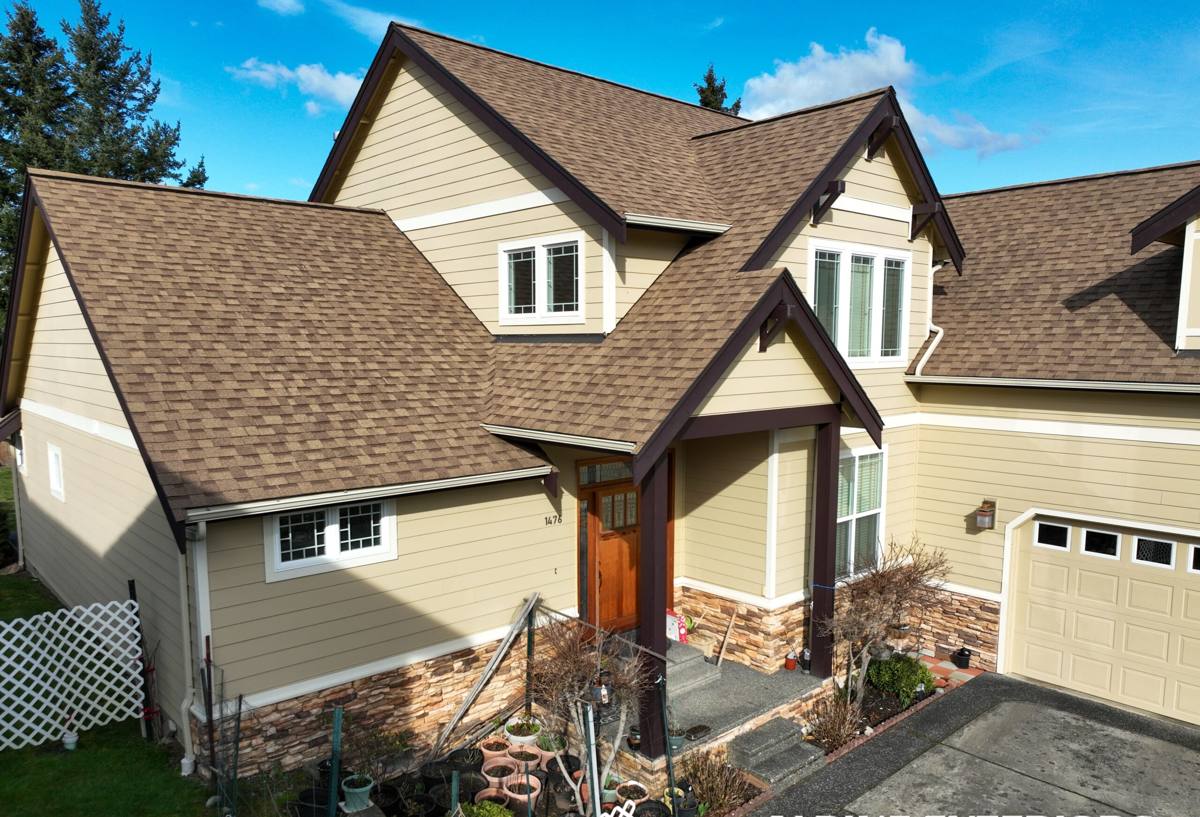
What a Correct Metal Roof Install Actually Requires
Metal roofing has a real reputation for longevity, but that reputation only holds up if the roof underneath the panels is done right. A metal panel is only as good as what's holding it down and keeping water out from behind it.
Checking the Deck Before Anything Goes On
Before any panel goes down, the decking needs to be sound — no soft spots, no delamination, no old leaks that quietly rotted the sheathing over the years. On homes with older roofs, this is often where the real story is: a roof can look fine from the ground and still have plywood underneath that's been absorbing moisture for a decade. We check this before quoting a final price, not after we've already opened things up.
Underlayment That Can Handle a Wet Winter
In a climate this wet, the underlayment isn't a formality — it's the roof's backup plan. A synthetic underlayment rated for high-moisture climates gives the roof a second line of defense if wind-driven rain ever gets under a seam or around a flashing detail. In vulnerable spots — valleys, eaves, around chimneys and skylights — a self-adhering ice-and-water membrane is worth the extra material cost, even though we don't get much actual ice here. That membrane does just as much work against driving rain as it does against ice.
Panel Profile and Fastening
The panel profile you choose changes how the roof handles water and wind over time. We'll walk through the trade-offs in the next section, but the fastening method matters just as much as the profile: exposed fasteners rely on a rubber gasket that has to stay compressed and intact for the life of the roof, while concealed-fastener systems keep every penetration under the panel, out of direct weather. In a climate that never really dries out, that difference compounds over the years.
Flashing, Ventilation, and the Details That Get Skipped
Most metal roof problems we get called out to inspect aren't panel failures — they're flashing failures. Valleys, wall transitions, chimney flashing, and ridge caps are where water finds a way in if they're not detailed correctly. We also check attic ventilation as part of every metal roofing job, because trapped moist air condensing against the underside of cold metal panels can cause damage that has nothing to do with the roofing material itself.
Standing Seam vs. Exposed-Fastener Panels for This Climate
Both systems are legitimate metal roofing options, and both hold up well when installed correctly. The right choice usually comes down to budget, roof pitch, and how long you want to go before any maintenance is needed.
| Factor | Standing Seam | Exposed-Fastener Panel |
|---|---|---|
| Fasteners | Concealed under the seam, not exposed to weather | Visible screws with rubber washers, exposed to sun and rain |
| Maintenance over time | Very low — no gaskets to inspect or replace | Washers can harden and need occasional re-torquing or replacement |
| Upfront cost | Higher material and labor cost | More budget-friendly upfront |
| Best fit | Long-term ownership, low-slope sections, higher-visibility roofs | Outbuildings, budget-conscious re-roofs, steeper simple gable roofs |
| Moss resistance | Smooth panel, fewer horizontal ledges for debris to collect | Rib pattern can trap organic debris that feeds moss growth |
Neither option is wrong. We'll tell you honestly which one fits your roof's pitch, your budget, and how hands-off you want to be with maintenance — not just push whichever one carries a better margin.
What Salt Air and a Long Moss Season Do to a Roof Over Time
Salt air is a slow corrosive, not a dramatic one. It accelerates the natural aging of fasteners, cut edges, and any exposed steel that isn't fully coated. That's why panel and fastener coating quality matters more here than it would further inland — a paint or coating system rated for coastal exposure earns its cost back in reduced maintenance over the life of the roof.
Moss is the more visible problem. It thrives in the shaded, north-facing, and low-slope sections of a roof that stay damp longest, and once established, it holds moisture directly against roofing material and works its way under laps and seams. On asphalt shingles this causes granule loss and lifting; on metal roofing the bigger risk is moss holding water against a scratch or cut edge in the coating, which is where corrosion actually starts. A well-installed metal roof resists moss far better than shingles do, but "resists" isn't "immune" — a roof shaded by trees still needs periodic attention.
Our Process for a Lynden Metal Roofing Job
- Inspection. We get on the roof (or drone-inspect steep sections), check the decking, existing flashing, ventilation, and any signs of past leaks before quoting anything.
- Honest scope and estimate. You get a written breakdown of what's actually needed — deck repair, underlayment upgrade, tear-off versus overlay — not a one-line number.
- Tear-off or prep. In most cases we remove the old roofing down to the deck so we can verify and repair the substrate; overlaying is only appropriate on specific roof types and we'll tell you honestly if that applies.
- Deck repair as needed. Any soft or rotted sheathing gets replaced before underlayment goes down — this is the step that gets skipped by crews trying to move fast.
- Underlayment and ice-and-water membrane installed at eaves, valleys, and penetrations.
- Panel installation with attention to correct fastening pattern, panel overlap, and thermal movement allowance — metal expands and contracts more than shingles, and panels need room to do that without stressing seams.
- Flashing and trim custom-fit at valleys, walls, and penetrations rather than relying on stock pieces that don't match the roof geometry.
- Final walkthrough so you know what was done, what the warranty covers, and what (if anything) needs periodic attention going forward.
What Drives the Cost of a Metal Roof Here
We won't quote a number without seeing the roof, but these are the factors that move the price up or down on most Lynden-area jobs:
| Factor | Effect on Cost |
|---|---|
| Roof pitch and complexity (valleys, dormers, penetrations) | More cuts and flashing details mean more labor |
| Standing seam vs. exposed-fastener panel | Standing seam typically runs higher per square |
| Condition of the existing deck | Rot or soft sheathing adds repair cost found during tear-off |
| Tear-off vs. overlay | Tear-off costs more upfront but avoids hiding existing problems |
| Coating and gauge upgrades | Heavier gauge and premium coastal-rated finishes cost more but reduce long-term maintenance |
As a general rule, metal roofing costs more upfront than asphalt shingles but is typically expected to last multiple decades longer with less maintenance — that trade-off is worth walking through against your specific roof and timeline, not accepting as a blanket rule.
Keeping a Metal Roof Ahead of Moss and Moisture
A correctly installed metal roof needs far less maintenance than shingles, but "less" isn't "none," especially with a moss season this long. A short annual check catches small issues before they become expensive ones.
- Clear debris and needles from valleys and low-slope sections where moisture collects
- Check gutters and downspouts are flowing freely, especially after fall leaf drop
- Look for moss establishing on shaded, north-facing slopes and remove it before it spreads
- Visually check exposed fasteners (if applicable) for signs of rust or loose washers
- Confirm flashing at chimneys, skylights, and wall transitions is still sealed and intact
- Trim back overhanging branches that keep sections of the roof shaded and damp
Why a Crew That Already Works This Area Matters
Metal roofing done wrong doesn't usually fail in year one — it fails in year eight or twelve, quietly, in exactly the spots a crew unfamiliar with this climate wouldn't think to reinforce. A crew that already works Blaine, Lynden, and the surrounding Whatcom County area has seen where moss actually takes hold on local roof lines, which flashing details fail first under our wind-driven rain, and how much of a difference coastal-rated coatings make once salt air has had a few years to work on a cheaper finish. That's not something you can get from a general contractor who mostly works drier inland climates and treats this job the same as any other.
It also means someone local to call if a question comes up two years after installation — not a crew that did one job in the area and moved on.
If you're weighing options for a metal roof in Lynden, we're happy to take a look and give you an honest read on what your roof actually needs — no pressure, no inflated scope. Reach out below for a free estimate.