 Blaine Siding
 Siding Installation Built for Lynden's Climate, Not Just Any Climate
Lynden sits in the same corner of Whatcom County that deals with a wet, marine-influenced climate most of the year — long stretches of driving rain, salt-tinged air moving in off the water, and a moss season that can run from October through May in a bad year. Siding installed here doesn't get the luxury of a dry, forgiving climate to hide small mistakes. Every seam, every fastener pattern, and every piece of flashing either sheds water correctly or it doesn't, and in this part of Washington, the ones that don't get exposed fast.
That's the lens we bring to every Lynden siding job: this isn't a generic install, it's an install for a specific climate that punishes shortcuts. A crew that treats a Whatcom County home the same as a job in a dry inland climate is setting that homeowner up for problems in three to five years, not thirty.
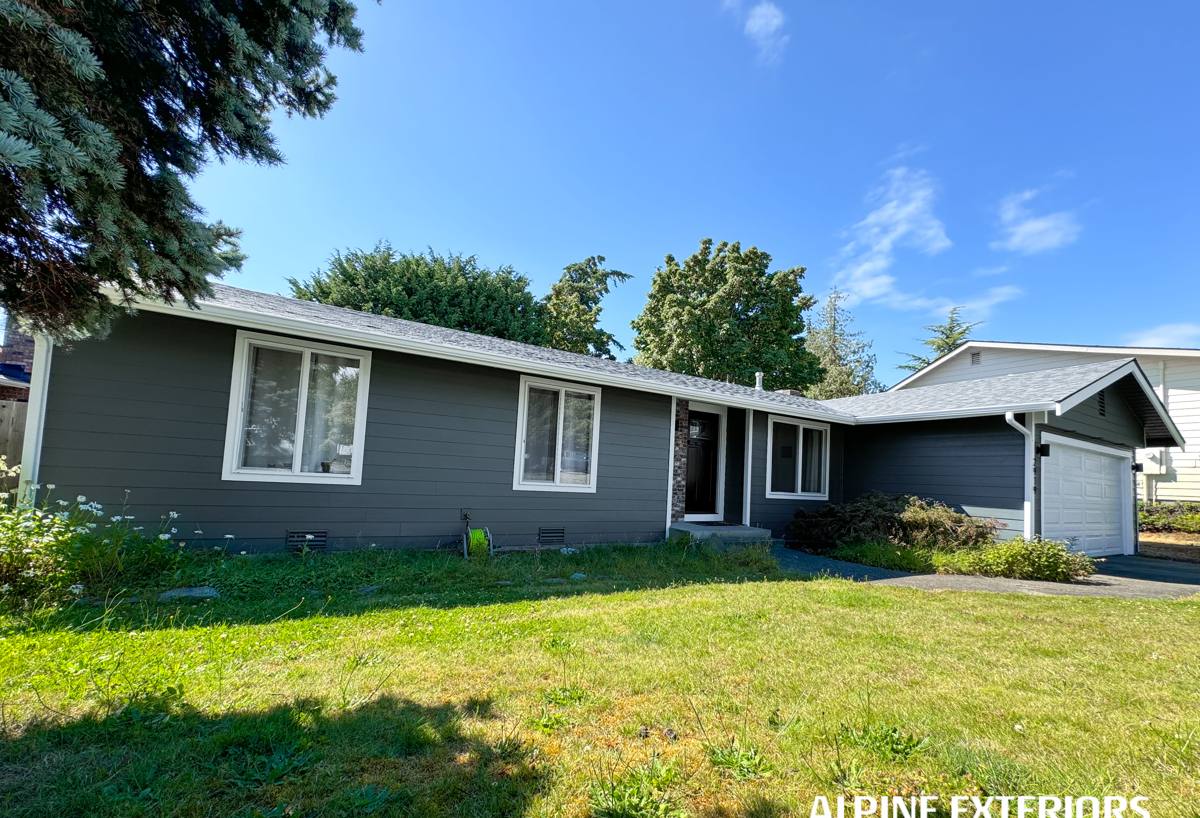
What Local Homes Are Actually Up Against
Driving Rain and Wind-Driven Moisture
Rain in this region rarely falls straight down. Wind off the water pushes it sideways into wall assemblies, which means siding has to do more than just cover the wall — it has to manage water that's actively trying to get behind it. That puts real weight on lap spacing, caulking discipline, and a weather-resistive barrier that's installed correctly underneath, not just siding that looks good from the curb.
Moss, Algae, and Constant Dampness
A long moss season means siding surfaces stay damp longer than they would in drier climates. Moss and algae don't just look bad — they hold moisture against the siding surface, which accelerates wear on products that aren't built to handle sustained dampness. This is one of the biggest arguments for choosing a material engineered for wet climates over one that's simply painted or coated.
Salt Air and Coastal Exposure
Salt-laden air corrodes fasteners, accelerates paint and coating failure, and works its way into any gap in a siding system over time. Homes closer to the water feel this first, but it's a factor across the broader Blaine and Whatcom County area, not just directly on the coastline.
What a Correct Siding Installation Actually Involves
Siding installation is often sold as a cosmetic upgrade. It isn't. The visible siding is the last layer of a system, and if the layers underneath aren't done right, no amount of quality siding on top will save the wall. A correct installation includes:
- A properly lapped and sealed weather-resistive barrier (housewrap) installed before any siding goes up
- Correct flashing at every window, door, and roof-to-wall intersection — the single biggest source of hidden leaks when skipped or done wrong
- Proper fastener type, spacing, and depth for the specific siding product, following the manufacturer's installation guidelines exactly
- Correct clearances from grade, roof lines, decks, and other siding terminations so water has somewhere to go instead of wicking upward
- Butt joints and seams sealed or flashed to manufacturer spec, not just caulked and hoped for
- Ventilation gaps maintained where the siding system calls for a rainscreen or drainage plane
Skip any one of these and the siding might look fine for a year or two. In a climate like this one, hidden moisture problems don't stay hidden for long.
Our Process for a Lynden Siding Installation
1. On-Site Assessment
We walk the home, check the condition of the existing siding and sheathing, and look for signs of past moisture intrusion — soft spots, staining, or areas where previous flashing work was cut short. This tells us what we're actually working with before a single piece of siding comes off.
2. Tear-Off and Sheathing Check
Old siding comes off in sections so we can inspect the sheathing underneath. Any water-damaged sheathing gets addressed before anything new goes on — covering a compromised wall with new siding just delays the problem and hides it from the next inspection.
3. Weather Barrier and Flashing
This is the step that matters most and gets rushed most often industry-wide. We install and lap the weather-resistive barrier correctly, then flash every penetration — windows, doors, vents, roof intersections — before siding installation starts.
4. Siding Installation to Manufacturer Spec
We install James Hardie fiber cement siding following James Hardie's published fastening, clearance, and joint-treatment requirements. This isn't optional detail work — installing outside of manufacturer spec can void the product warranty, regardless of who installed it.
5. Final Walkthrough
We review the finished work with the homeowner, point out anything worth knowing about long-term care, and confirm everything meets both our standards and the manufacturer's.
Why We Only Install James Hardie Fiber Cement
We don't install vinyl, LP SmartSide, primed wood, or other fiber cement brands. That's not a marketing position — it's a standard we hold because of what this specific climate does to siding over time.
James Hardie's HardiePlank and related HZ5 product lines are engineered specifically for climates with high moisture exposure, which is exactly what Lynden and the rest of Whatcom County deal with. Fiber cement is non-combustible, holds up to sustained dampness far better than wood-based products, and doesn't suffer the swelling, delamination, or edge damage that engineered wood siding can experience when moisture gets past the surface finish repeatedly over years.
The ColorPlus factory finish is baked on under controlled conditions rather than field-applied, which matters in a region where paint and stain have to fight moss growth, salt air, and near-constant dampness for months at a time. A factory finish holds color and resists fading and moisture intrusion more consistently than most field-applied coatings, and it comes with a stronger, clearly defined warranty backing it.
We're not saying every other siding product is unusable everywhere. We're saying that for the climate our customers actually live in, we've decided fiber cement engineered for moisture is the standard we're willing to put our name behind.
Siding Material Comparison for This Climate
| Factor | James Hardie Fiber Cement | Vinyl Siding | Engineered Wood (e.g. LP SmartSide) |
|---|---|---|---|
| Moisture resistance | Engineered for wet climates, resists swelling | Sheds water but can trap moisture behind panels | Vulnerable at cut edges and joints if moisture gets in |
| Combustibility | Non-combustible | Combustible, can melt or warp near heat | Combustible |
| Finish durability | Factory-baked ColorPlus finish | Color molded through, can fade/chalk | Field or factory finish, needs ongoing maintenance |
| Moss/algae resistance | Holds up well with routine cleaning | Can trap moisture that feeds growth | Prone to surface breakdown if kept damp long-term |
| Warranty structure | Strong transferable manufacturer warranty | Varies widely by manufacturer/grade | Typically shorter, more exclusions around moisture |
Cost Factors for a Lynden Siding Project
Every home is different, but a few things consistently drive the price of a siding installation in this area more than homeowners expect:
- Sheathing condition — hidden water damage found during tear-off adds repair scope before new siding can go on
- Home complexity — corners, dormers, and multiple roof lines mean more flashing detail and labor time
- Siding profile and trim package — lap width, trim style, and accent choices affect material cost
- Access and site conditions — steep lots, tight setbacks, or landscaping near the home can add setup time
- Removal and disposal — the volume and type of old siding coming off affects labor and disposal cost
We walk through these factors on-site during the estimate so there aren't surprises once work starts.
What to Ask Before Hiring a Siding Crew in This Area
Because so much of a siding job's long-term success depends on what happens under the surface — flashing, barrier installation, fastening — it's worth asking direct questions before hiring anyone:
- Do you follow the manufacturer's published installation instructions exactly, and can you show me what that means in practice?
- What happens if you find water-damaged sheathing once the old siding comes off?
- How do you flash windows, doors, and roof intersections specifically?
- Is the warranty backed by the manufacturer, and does it stay in effect only if installed to spec?
- Have you worked in this specific area before and dealt with local moisture and moss conditions firsthand?
A crew that's worked around Blaine and the surrounding Whatcom County communities has already seen how this climate behaves against different siding systems over multiple seasons. That's not a small advantage — it means fewer surprises during tear-off and installation choices that are already proven to hold up here, rather than guesses based on a drier region's playbook.
Ready When You Are
If your Lynden home's siding is showing its age — or you just want an honest read on whether it's holding up the way it should in this climate — we'll come take a look. The estimate is free, there's no pressure, and you'll get a straight answer about what your home actually needs.