 Blaine Siding
 Why Custer Roofs Wear Out Differently Than Roofs Inland
Custer sits close enough to the water that salt-laden air is a real factor in how roofing materials age, on top of everything else Whatcom County throws at a roof: long stretches of driving rain off the Strait, short winter days that keep shaded slopes damp for months, and a moss season that can run from fall through spring. None of these things alone destroys a roof overnight. Together, over ten or fifteen years, they explain why so many roofs in this area fail from the inside out — through slow water intrusion and fastener corrosion — rather than from one dramatic storm.
A new roof installation done right for Custer isn't just "install shingles and move on." It's choosing materials and details that specifically account for salt exposure, moisture that lingers on north-facing and tree-shaded sections, and moss that will come back no matter what you install unless the roof is built to discourage it.
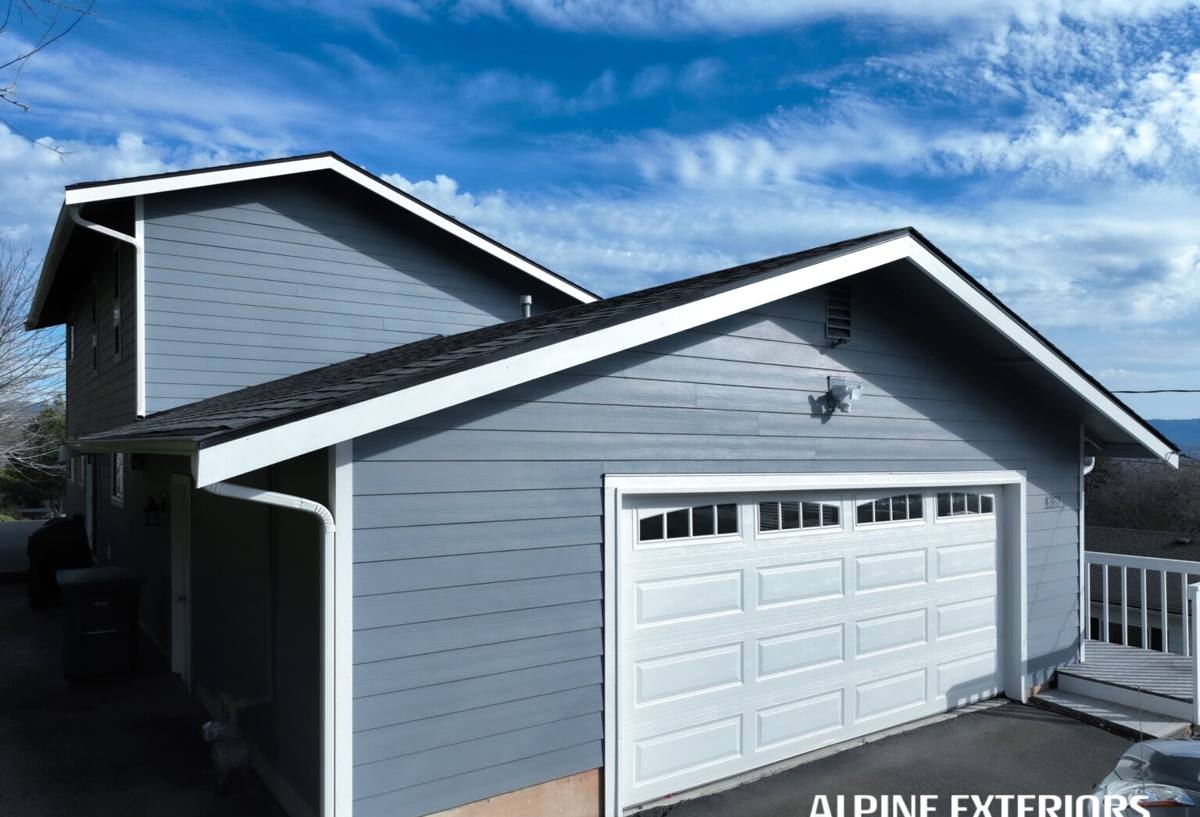
Signs a Custer Home Needs Full Replacement, Not Another Repair
We get called out to a lot of roofs that homeowners assume just need a patch. Sometimes that's true. But in this climate, certain signs mean the underlying roof system has reached the point where repairs are just delaying the inevitable — and often costing more in the long run than one correct installation would.
- Granule loss heavy enough that you're finding gritty buildup in gutters or downspouts every season
- Moss or algae staining that keeps returning within months of cleaning, especially on shaded or north-facing slopes
- Shingles that are curling, cupping, or cracking rather than lying flat
- Soft spots or slight sagging when walking the roof deck
- Rusted or failing flashing around chimneys, vents, and valleys
- Daylight visible through the attic sheathing, or damp insulation below the roof deck
- A roof already at or past 20–25 years old, even if it "looks fine" from the ground
If you're seeing two or more of these, it's worth having someone look at the whole system rather than chasing individual leaks.
What a Correct New Roof Installation Actually Involves
The visible layer — the shingles or panels — gets most of the attention, but it's the layers underneath that determine whether a roof holds up to Whatcom County weather for its full expected life. Skipping or shortcutting any of these is where most premature failures start.
Tear-Off and Deck Inspection
We remove the old roofing down to the deck rather than laying new material over old. That's the only way to actually see the condition of the sheathing underneath — soft, rotted, or delaminated panels are common on older Custer roofs that have had slow moisture intrusion for years, and they get replaced before anything new goes down.
Ice and Water Protection
Self-adhering ice-and-water membrane goes in at eaves, valleys, and around penetrations. In a region with as much sustained rain as this one, wind-driven water can work its way up under shingles at these vulnerable points; the membrane is what stops it from reaching the deck.
Underlayment
A synthetic underlayment across the full roof adds a second line of defense and holds up far better than old-style felt paper when it's exposed to moisture during construction or through minor future damage.
Flashing
Chimneys, skylights, sidewalls, and valleys are where roofs actually leak — far more often than the open field of shingles. Correct flashing, properly lapped and sealed rather than just caulked over old metal, is one of the biggest differences between a roof that lasts and one that doesn't.
Ventilation
Balanced intake and exhaust ventilation keeps the attic dry and temperature-regulated. In a damp climate like this one, poor ventilation traps moisture in the attic space, which accelerates sheathing rot and helps create the conditions moss and mildew thrive in — from the inside as well as the outside.
Material Options for a Custer Roof
There isn't one "right" material for every home — it depends on your budget, the roof's exposure, and how much long-term maintenance you want to take on. Here's how the common options compare for this specific climate.
| Material | Salt Air Behavior | Moss Resistance | Typical Lifespan |
|---|---|---|---|
| Architectural asphalt shingle | Good with proper fasteners and flashing metal | Moderate — benefits from zinc/copper strips | 25–30 years |
| 3-tab asphalt shingle | Fair — thinner profile, more exposed surface | Lower — traps moisture more easily | 15–20 years |
| Standing seam metal | Very good with coastal-rated coatings and fasteners | High — moss struggles to hold on smooth, sloped metal | 40–50+ years |
| Wood shake | Poor without diligent upkeep near salt air | Low — natural material feeds moss and rot | 20–30 years with heavy maintenance |
For most Custer homes, a quality architectural asphalt shingle with corrosion-resistant fasteners and copper or zinc moss-control strips is the practical middle ground — solid performance without the upfront cost jump of metal. Homes with heavy tree cover or long-term owners who want to minimize future maintenance often lean toward standing seam metal instead.
Our New Roof Installation Process
- On-site assessment — we walk the roof and attic, check the deck condition, note ventilation, flashing points, and any moss or moisture staining patterns specific to your property's exposure.
- Written estimate — a clear scope covering tear-off, deck repair allowance, underlayment, flashing, material, and ventilation — no vague line items.
- Material selection — we walk through the trade-offs above based on your budget, roof pitch, and how much shade or salt exposure your property gets.
- Tear-off and deck repair — old roofing removed, deck inspected and repaired as needed before anything new is installed.
- Installation — ice-and-water membrane, underlayment, flashing, ventilation components, and final roofing material installed to manufacturer and code specifications.
- Cleanup and walkthrough — site cleared of debris and old materials, magnetic nail sweep of the property, final walkthrough so you know exactly what was done.
Why It Matters to Hire a Crew That Already Works in Custer
Roofing crews that mostly work drier, inland climates sometimes under-spec ventilation or skip moss-control details because those problems don't show up where they usually work. A crew that installs roofs regularly in Blaine, Custer, and the rest of Whatcom County has already seen which details actually matter here — where wind-driven rain tends to find its way in, which slopes hold moss longest, and how fasteners and flashing metals hold up after a decade of salt air.
Local experience also means faster response if something needs attention after the job — no waiting on a crew that has to drive in from out of the area, and no guessing about whether a warranty callback will actually get answered.
What Drives the Cost of a New Roof in Custer
Every roof is different, but the same handful of factors move the price up or down on most jobs in this area:
| Factor | Why It Matters |
|---|---|
| Roof size and pitch | Steeper roofs take longer to work safely and use more material for waste and cuts |
| Deck condition | Rotted or soft sheathing found during tear-off has to be replaced before new roofing goes down |
| Number of penetrations | Chimneys, skylights, and vents each require careful flashing work, adding labor |
| Material choice | Asphalt, metal, and specialty products have different upfront costs and lifespans |
| Ventilation upgrades | Adding or correcting intake/exhaust venting is a smart long-term investment but adds to the scope |
| Access and tear-off complexity | Layers of old roofing, steep site access, or landscaping to protect can add time |
We break all of this out in the estimate rather than giving a single number with no explanation, so you can see exactly what you're paying for and where there's room to adjust the scope.
Keeping a New Roof Performing in This Climate
A correctly installed roof still benefits from a little seasonal attention in a climate like this one. Keep gutters and valleys clear of needles and debris so water has a clear path off the roof. Have moss growth addressed early rather than letting it establish, since moss that's allowed to mat down holds moisture directly against shingles. And have flashing and sealant points glanced at every few years, particularly around chimneys and skylights, since these are the first spots to show wear from years of driving rain.
None of this requires a maintenance contract or constant attention — just periodic checks so small issues don't turn into deck damage down the line.
If your Custer home's roof is showing its age or you're planning ahead rather than waiting for a leak, we're happy to take a look and walk you through your options. Use the form below to request a free, no-pressure estimate.