 Blaine Siding
 Why Nooksack Decks Wear Out Faster Than Homeowners Expect
Nooksack sits inland from Blaine, but the two share the same Whatcom County weather pattern: wet marine air moving through, months of steady rain, and shaded, damp yards where moss gets a head start every fall and doesn't let go until late spring. On a deck, that combination doesn't take a season off. Wood that looks fine in July can be holding water in its joints by November, and a deck that "just needs a good cleaning" every spring is often already dealing with damage underneath the boards.
Closer to the water in Blaine, salt-laden air adds another layer of corrosion risk to fasteners and flashing. Even out in Nooksack, away from direct salt exposure, humidity and driving rain do most of the work on their own — rusting nails and screws, softening end grain, and feeding rot in spots that never fully dry out between storms. A deck built or repaired without accounting for that reality tends to need attention again within a few years, not a few decades.
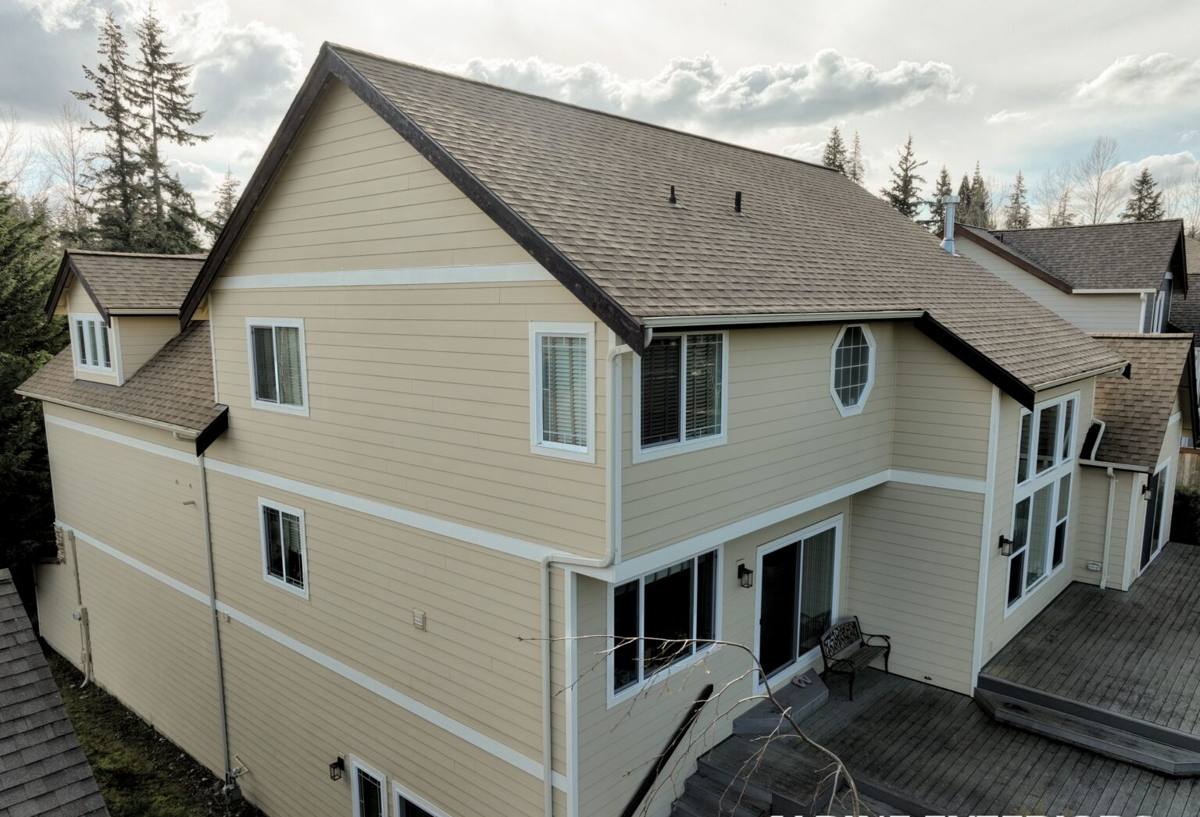
Signs You Need Deck Repair (Not Full Replacement)
Most decks don't fail all at once. They fail in specific spots first, and catching those spots early is usually the difference between a repair bill and a replacement bill.
- Boards that feel spongy, spring underfoot, or show dark staining along the edges
- Green or black growth that comes back within weeks of cleaning, especially in shaded corners
- Railing posts that wiggle at the base, or handrails that flex more than they used to
- Gaps opening up where the deck attaches to the house (the ledger board)
- Rust streaks running down from screw heads or metal connectors
- Stair stringers that feel uneven or bounce when you walk down them
- A persistent damp or musty smell coming from underneath the deck
Any one of these on its own might be a minor fix. Two or three together usually mean water has been getting into the structure for a while, and it's worth having someone look underneath before deciding whether repair or replacement makes more sense.
What's Really Going On Underneath: Common Failure Points
Ledger Board and Rim Joist
The ledger board — where the deck bolts to the house — is the single most common failure point we see on older decks in this climate. If it wasn't properly flashed when built, or the flashing has failed over time, water runs behind the board instead of off of it. That's slow, hidden rot, and it's structural: the ledger carries a meaningful share of the deck's load.
Fasteners and Hardware
Older decks were often built with standard galvanized nails and screws. In a wet climate, those corrode faster than the wood around them, and a corroded fastener loses grip long before it visibly breaks. Rust streaking on the surface is usually a sign the fastener underneath is already weaker than it looks.
Decking Boards and Moss
Moss and algae don't just look bad — they hold moisture against the board surface, which accelerates rot in wood decking and can degrade the surface layer on some composite products over time. Boards with heavy, persistent growth in the same spots year after year are telling you something about drainage and airflow underneath, not just about cleaning frequency.
Railings and Stairs
Railing posts are usually attached with a handful of fasteners into end-grain wood, which is the fastest part of a deck to rot. A post that flexes at the base is a safety issue, not a cosmetic one, and it's one of the more common repair calls we get.
What a Correct Deck Repair Actually Involves
Structural Assessment First
A repair that only replaces what's visibly damaged, without checking the framing underneath, tends to fail again in the same spot within a year or two. A correct repair starts by pulling boards where there's suspected damage and physically checking joists, beams, posts, and the ledger connection — probing for soft wood, not just looking at the surface.
Flashing and Water Management
If the ledger board is involved at all, proper flashing goes back in as part of the repair — not optional trim, but the piece that keeps water from running behind the house siding and into the rim joist. Skipping this step is the most common shortcut we see in past repair work, and it's usually why the same problem comes back.
Matching Fasteners to the Fix
Structural repairs get structural-rated hardware — corrosion-resistant connectors and fasteners rated for exterior or ground-contact use, matched to whether the wood is treated lumber, cedar, or composite. In a coastal-influenced climate like this one, we lean toward stainless or heavy hot-dip galvanized hardware in exposed connections rather than standard coated fasteners, because the cost difference is small compared to redoing the work in a few years.
Repair or Replace? Weighing the Real Cost Factors
This is the question almost every homeowner asks first, and the honest answer is "it depends on what's underneath," not the age of the deck alone. Here's how we actually think through it:
| Factor | Leans Toward Repair | Leans Toward Replacement |
|---|---|---|
| Framing condition | Joists, beams, and posts are solid; damage is isolated | Rot found in multiple structural members |
| Ledger board | Sound, or a fixable flashing issue | Widespread rot where it meets the house |
| Decking material | A handful of boards affected | Most of the deck surface showing wear or rot |
| Age of structure | Under roughly 15 years, built to code | Older, or built before current fastening and flashing standards |
| Budget goal | Extend usable life at lower upfront cost | Want a longer-term reset and possibly a design change |
Spot repairs — a few boards, a railing section, a stair stringer — typically run in the low hundreds to low thousands of dollars depending on scope and material. Structural repairs involving the ledger, multiple joists, or a full re-decking start climbing toward a partial-rebuild cost. We'll always tell you plainly when a repair is a short-term patch versus a durable fix, so you're deciding with real information rather than guessing.
Material Choices for the Repair Itself
What you replace a damaged section with matters as much as the repair technique. Mixing materials on an older deck is common and usually fine — the goal is matching performance, not necessarily matching the original product exactly.
| Material | Upside in This Climate | Trade-Off |
|---|---|---|
| Pressure-treated lumber | Lowest cost, easy to source and match to existing framing | Needs regular sealing/staining to resist moisture and moss |
| Cedar | Naturally rot-resistant, ages well | Softer surface, still needs periodic finish maintenance |
| Composite decking | Very low maintenance, resists rot and moss buildup on the surface | Higher upfront cost; substructure still needs to be sound wood or approved framing |
| PVC/cellular decking | Fully moisture-resistant surface, holds up well to constant damp shade | Highest material cost; installation is less forgiving of framing irregularities |
For framing and structural repairs, we stick to code-rated lumber and hardware regardless of what decking surface is chosen — that part of the deck isn't the place to cut cost, since it's what everything else depends on.
Our Deck Repair Process
- On-site inspection — we look at the deck from underneath as well as on top, checking framing, ledger, and hardware condition before quoting anything.
- Honest scope and estimate — you get a clear breakdown of what's damaged, what's marginal, and what's fine, with repair and (if relevant) replacement pricing side by side.
- Repair work — damaged framing, decking, railings, or flashing are replaced with matched, code-appropriate materials and corrosion-resistant fasteners.
- Water management check — flashing, drainage, and any grading or gutter issues feeding water toward the deck are addressed as part of the fix, not left for next time.
- Cleanup and walkthrough — we go over what was done, what to watch, and simple upkeep that will extend the life of the repair.
Simple Maintenance That Extends the Repair
A good repair lasts a lot longer with a little seasonal attention, especially given how long the wet season runs here. None of this requires special equipment.
- Sweep leaves and debris off the deck surface regularly in fall — trapped leaves hold moisture and feed moss growth
- Rinse or gently scrub visible moss and algae before it gets a foothold, rather than after it's established
- Check that gaps between boards stay clear so water can drain through instead of pooling
- Look underneath once or twice a year for new staining, soft spots, or rust streaks
- Reseal or restain wood decking on the manufacturer's recommended schedule, not just when it "looks dry"
- Keep gutters and downspouts near the deck clear so runoff isn't dumping directly onto it
Why Local Experience in Nooksack and Blaine Matters
A deck repair crew that already works throughout this part of Whatcom County has usually already seen the specific failure patterns this climate produces — which ledger flashing details tend to fail first, which fastener types hold up and which don't, and how much moss buildup is normal versus a sign of a drainage problem. That familiarity shows up in faster, more accurate diagnosis rather than guesswork.
It also matters for permitting and code compliance. Structural deck repairs — especially anything touching the ledger board, framing, or guardrails — can fall under local building code requirements, and a crew that regularly works in the area knows what typically needs a permit and what doesn't, so there are no surprises partway through the job.
Finally, there's the practical side: a local crew can get to Nooksack for an inspection or follow-up without the delay and travel cost of a company based further away, which matters if a problem is actively letting water into your framing.
Get a Straight Answer About Your Deck
If your deck has a soft spot, a wobbly railing, or moss that keeps coming back no matter how often you clean it, it's worth having someone take an honest look before it turns into a bigger repair. We offer free, no-pressure estimates for deck repair throughout the Nooksack and greater Blaine area — fill out the form below and we'll take it from there.