 Blaine Siding
 Siding Repair Built for Peace Arch's Climate
Homes near the Peace Arch area of Blaine sit right where Semiahmoo Bay's salt air, wind-driven rain, and a long wet season all meet at once. That combination is harder on exterior siding than most inland Whatcom County neighborhoods ever see. Salt-laden air accelerates corrosion on fasteners and trim. Driving rain off the water finds every gap in flashing and caulk. And the region's long moss season keeps north-facing and shaded walls damp for months at a stretch. None of that means your siding is doomed — it means repairs here have to account for things a one-size-fits-all fix would miss.
This page is about one job done right: siding repair for homes in and around Peace Arch. Not a full site replacement, not a generic siding overview — just what it actually takes to fix damaged siding on a coastal Blaine home so the repair holds up instead of failing again in a season or two.
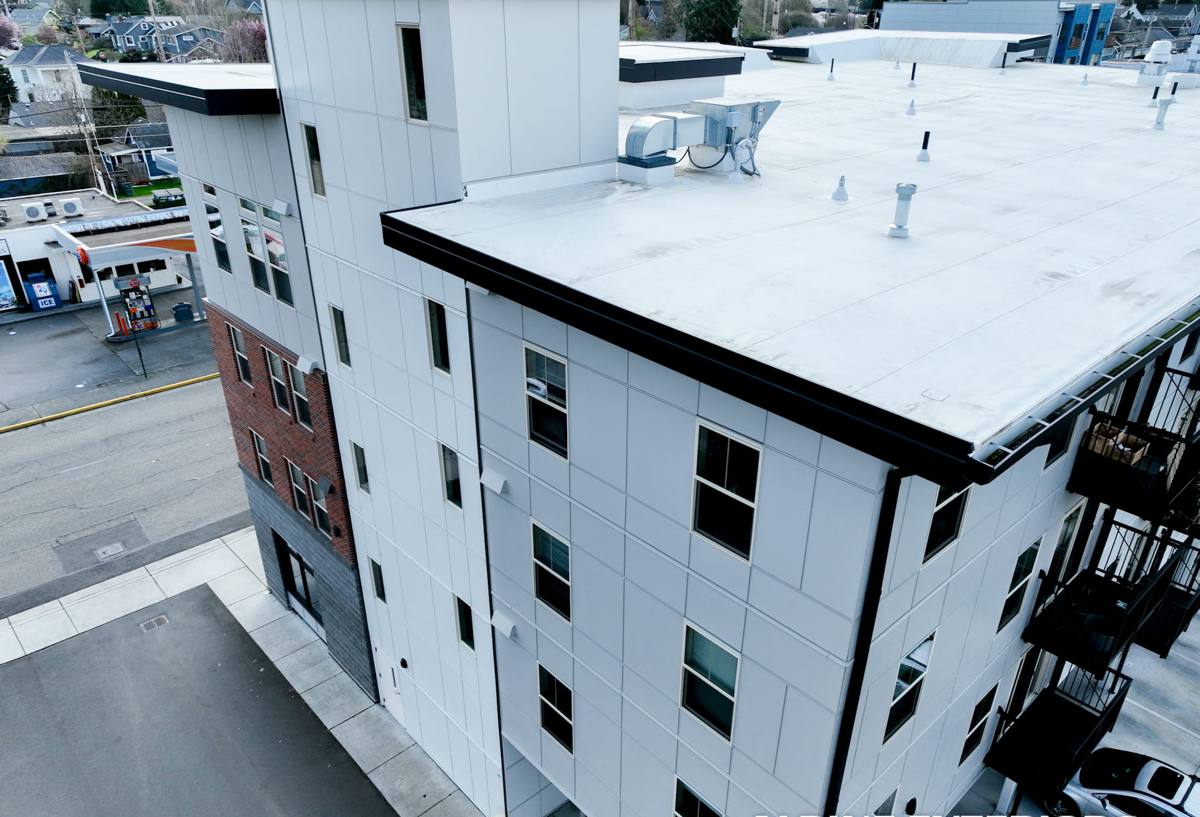
Why Siding Fails Faster Near Peace Arch
Every siding material eventually needs attention, but the causes of failure we see closest to the water follow a pattern:
Salt Air and Fastener Corrosion
Airborne salt from the bay settles on exposed surfaces and works into any nail or screw that isn't properly coated or set. Once a fastener starts to corrode, it loses its grip, siding panels can work loose, and water gets a path behind the cladding. This shows up first at corners and lower courses, where salt spray and splash-back are heaviest.
Wind-Driven, Horizontal Rain
Blaine's exposure to weather coming off the Strait of Georgia and Semiahmoo Bay means rain doesn't always fall straight down — it drives sideways into walls, especially on west- and north-facing elevations. That kind of rain finds weak caulk joints, undersized flashing, and butt joints that weren't lapped correctly, and pushes water in rather than letting it run off.
Moss, Algae, and Trapped Moisture
A long, mild, wet season means moss and algae get a real foothold, particularly under tree cover or on shaded north walls that never fully dry out between storms. Moss itself doesn't destroy siding, but it holds moisture against the surface far longer than bare siding would experience, which softens caulk, feeds rot in any wood trim, and accelerates paint and finish breakdown underneath.
Freeze-Thaw and Seasonal Movement
Whatcom County doesn't get deep freezes often, but the occasional cold snap combined with saturated siding can still cause small cracks to widen. A hairline gap that was cosmetic in August can become a water entry point by the following spring.
Signs Your Peace Arch Home's Siding Needs Repair
Most siding problems near the water start small and stay hidden until they're expensive. Walk your exterior a couple of times a year and look for these:
- Soft or spongy spots when you press on siding, especially near the bottom courses or under windows
- Visible corrosion streaks (rust-colored trails) running down from nail heads or trim fasteners
- Panels or boards that have pulled slightly away from the wall or show visible gaps at seams
- Persistent moss or dark algae staining that returns within weeks of cleaning, especially on shaded walls
- Peeling, bubbling, or chalking paint concentrated on one elevation rather than the whole house
- Warped, cupped, or delaminating boards, particularly on older wood or engineered wood siding
- Cracked or missing caulk at butt joints, corners, and around windows and doors
- Interior clues — a musty smell, a damp patch on drywall, or peeling interior paint on an exterior wall
Any one of these on its own might be minor. Several showing up together, or any sign paired with interior moisture, means it's worth having someone look before the next wet season.
What a Correct Repair Actually Involves
Siding repair gets done badly more often than it gets done well, mostly because it's tempting to treat it as a cosmetic patch instead of a moisture-control job. A repair that actually holds up in a coastal Blaine climate involves several steps that are easy to skip if you're in a hurry:
Diagnose Before You Patch
Damaged siding is usually a symptom, not the root cause. Before replacing a board, we check for the actual source — a failed flashing detail, a clogged gutter dumping water down a wall, a missing kick-out flashing at a roof-to-wall intersection, or simply years of wind-driven rain finding a joint. Patching over the visible damage without fixing what caused it just buys you a year or two before it comes back.
Check What's Behind the Siding
Once panels or boards come off, we look at the water-resistive barrier and sheathing underneath. If the barrier is torn, improperly lapped, or the sheathing has started to soften, that gets addressed before anything new goes back on. Closing up a wall over a compromised barrier is one of the most common ways a "repair" fails within a season.
Match Materials Correctly
If your home already has James Hardie fiber cement siding, we can repair it with matching Hardie product and ColorPlus-finished trim so the patch blends in rather than standing out as an obvious repair. If your home has a different siding material — vinyl, LP SmartSide, cedar, or another fiber cement brand — we'll say so plainly: we install and stock James Hardie products exclusively, so we won't source or install replacement panels in another brand to patch your existing siding. In those cases we'll be upfront about what we can and can't match, and where it makes more sense to talk about a full re-side with Hardie down the road rather than patching a material we don't carry.
Get the Flashing and Fasteners Right
Given how much fastener corrosion we see close to the bay, repairs use corrosion-resistant fasteners set to the manufacturer's specified depth and spacing — not just whatever was already there. Flashing at windows, doors, and horizontal joints gets checked and corrected, since a repair that reuses bad flashing is a repair that fails again.
Finish the Job So It Blends
A repair should look intentional, not like a scar on the house. That means matching reveal lines, caulking to the same standard as the surrounding wall, and where color-matched Hardie trim and panels are used, a finish that reads as part of the original wall rather than an obvious patch.
Repair or Replace? What Actually Tips the Decision
Not every damaged wall needs a full re-side, and not every repair is worth doing instead of replacing. Here's how we walk homeowners through that decision:
| Factor | Leans Toward Repair | Leans Toward Full Replacement |
|---|---|---|
| Extent of damage | Isolated to one wall, corner, or a few boards | Showing up on multiple elevations or throughout |
| Age of existing siding | Under 15-20 years, still structurally sound elsewhere | Original siding is near or past its expected service life |
| Moisture behind the wall | Barrier and sheathing test dry once panels are removed | Sheathing is soft, rotted, or barrier has failed broadly |
| Material match | Existing siding is Hardie, or close cosmetic match is possible | Existing material is one we don't stock, or is discontinued |
| Root cause | A single fixable issue (one bad flashing detail, clogged gutter) | Systemic issues — original install quality, wrong product for the exposure |
| Cost over time | Repair cost is a small fraction of full replacement | Repeated repairs are starting to approach replacement cost |
We'll always tell you honestly which side of that table your home falls on. If a targeted repair will genuinely hold up, that's what we recommend — we're not trying to sell a full re-side when a wall just needs proper attention.
How Our Repair Process Works
- On-site inspection. We look at the damaged area and the surrounding siding, checking for related issues you may not have noticed — a common pattern near the water, where one failure point often has a companion a few feet away.
- Root-cause diagnosis. Before quoting a repair, we identify why the damage happened — flashing, drainage, fastener failure, or original installation quality — so the fix addresses the cause, not just the symptom.
- Honest scope and estimate. You get a clear explanation of what needs to happen, what it will cost, and whether repair or replacement makes more sense for that section of the house.
- The repair itself. Damaged material comes off, the barrier and sheathing underneath get inspected and corrected as needed, and new material goes in with proper flashing, fastening, and sealing.
- Final walkthrough. We check the finished repair with you, confirm it blends with the surrounding siding, and answer any questions about maintenance going forward.
Why We Only Repair and Install With James Hardie
We get asked why we won't match a repair to vinyl or another fiber cement brand, and it's a fair question. The short answer is that we standardized on James Hardie fiber cement because it's non-combustible, holds up to the specific combination of salt air, rain, and moss exposure that Peace Arch homes deal with, and comes with a factory ColorPlus finish and a strong transferable warranty when installed to spec. Stocking one product line means our crews know its behavior, its flashing details, and its failure points cold — which matters a lot more on a repair, where getting the details right the first time is the whole job. It also means when we do patch existing Hardie siding, the color and texture match is dependable instead of a guess.
Why a Crew That Already Works Peace Arch Matters
Siding repair close to the water isn't the same job as siding repair twenty miles inland. A crew that's already spent time on homes in this part of Blaine knows which elevations tend to take the worst of the wind-driven rain, where moss builds up fastest, and how quickly a corroded fastener near the bay can undermine a wall compared to a drier neighborhood. That local pattern recognition is the difference between a repair that gets treated as a cosmetic fix and one that actually accounts for what caused the damage in the first place. It also means a crew that understands regional permitting norms and building code expectations for exterior work in Whatcom County, so the repair is done to code, not just to look right.
Maintaining Your Siding Between Repairs
A good repair buys you years, but a little upkeep stretches that further, especially in this climate:
- Rinse siding gently once or twice a year to keep salt residue and grime from building up, particularly on walls facing the water
- Clean gutters before the wet season starts so water isn't overflowing down the siding
- Trim back vegetation that keeps a wall shaded and damp, which slows drying and encourages moss
- Recaulk hairline gaps at trim and joints as soon as you spot them, before the next heavy rain drives water in
- Walk the exterior after any major windstorm to check for loosened panels or trim
If you're seeing any of the warning signs above, or you just want an honest opinion on whether a section of your Peace Arch home needs repair or something more, we're happy to take a look. Estimates are free, there's no pressure to move forward, and you'll get a straight answer about what your siding actually needs.