 Blaine Siding
 Why Point Roberts Roofs Wear Differently Than Roofs a Few Miles Inland
Point Roberts sits out on open water, and that changes what a roof has to deal with. Homes here take on a steady mix of salt-laden air, driving rain off the Strait of Georgia, and a moss season that barely lets up between fall and spring. None of that means a shingle roof can't hold up out here for its full service life — it means the install has to account for conditions that a roof a few miles inland, even elsewhere in Whatcom County, doesn't see nearly as hard.
Salt Air and Metal Components
Salt air doesn't damage the shingles themselves as much as it accelerates corrosion in the metal parts of the roofing system — flashing, drip edge, nail heads, vent stacks, and gutter hardware. Once corrosion opens a pinhole in flashing around a chimney or skylight, water finds its way into the deck long before anyone notices a stain on the ceiling. On a peninsula like this, corrosion-resistant fasteners and flashing are our baseline, not an upgrade we charge extra for.
A Moss Season That Doesn't Really End
Moss needs shade, moisture, and organic debris to get established, and Point Roberts roofs — especially north-facing slopes and anything under tree cover — supply all three for most of the year. Moss doesn't just look bad. It holds moisture against the shingle surface, lifts shingle tabs as it spreads underneath them, and works its way toward the fasteners over time. A roof that's shedding granules while also hosting moss is aging faster than its warranty assumes.
Driving Rain and Wind Off the Water
Being exposed on open water means Point Roberts catches more wind-driven rain than a typical inland property elsewhere in the county. Wind-driven rain doesn't just fall straight down — it pushes sideways and works its way up under shingle tabs and into any seam in the roofing system: valleys, flashing, ridge caps. A shingle roof built for this location needs sealing and fastening details that assume the rain won't cooperate by falling straight.
What a Correct Shingle Install Requires Out Here
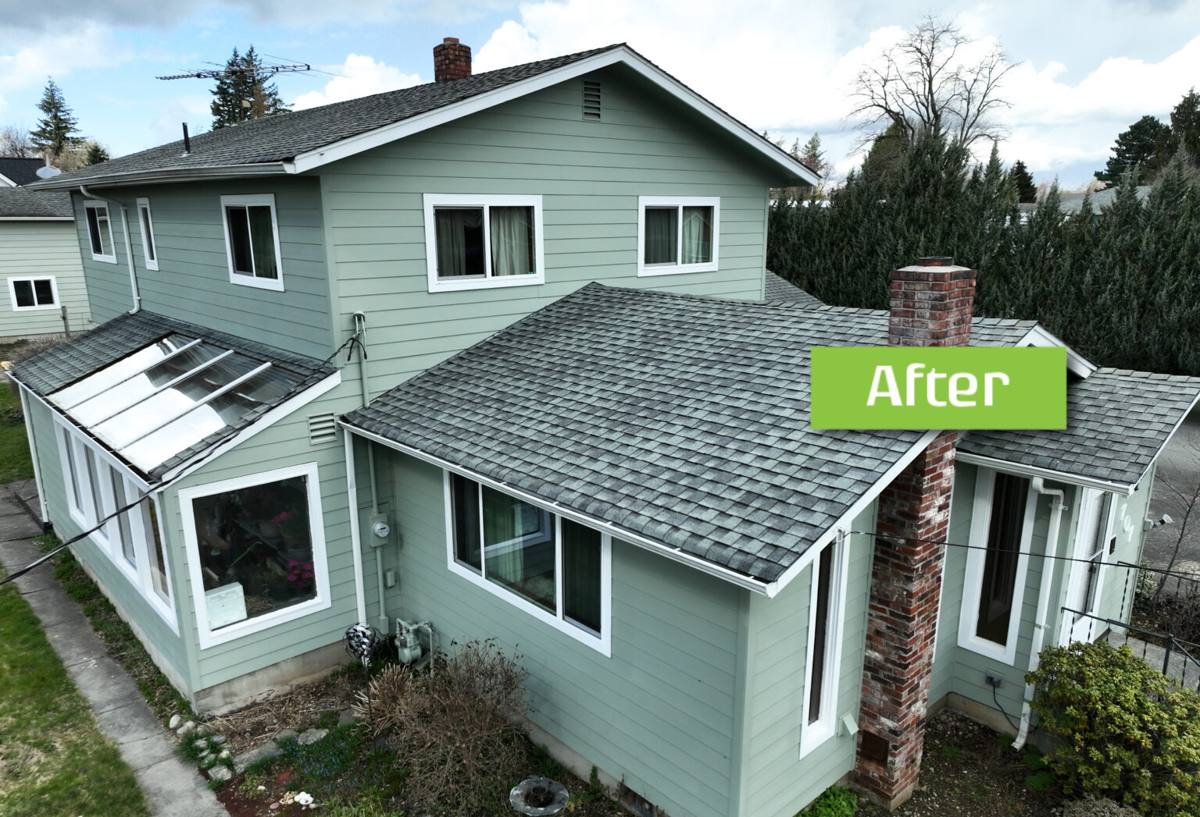
A shingle roof is a system, not just a layer of shingles nailed to plywood. In a climate like this, a few details matter more than they would somewhere drier and less exposed:
- Ice-and-water shield at eaves, valleys, and around every penetration — it's not just for snow country; it's the backup layer that stops wind-driven rain that gets past the shingles.
- Balanced attic ventilation (intake low at the soffits, exhaust high at the ridge) so damp, salt-tinged air doesn't sit in the attic and condense against the underside of the deck.
- Correct drip edge and starter strip at every eave and rake, so water is directed off the roof instead of curling back under the first course.
- A nailing pattern matched to the shingle's wind rating, not just the manufacturer's minimum — this location earns the extra fasteners.
- Algae-resistant shingles with copper- or zinc-infused granules, which slow (not eliminate) the moss and algae growth this climate encourages.
- Properly sized and lapped flashing at every chimney, skylight, and vent stack, in corrosion-resistant metal.
Skip any one of these and the roof will still look fine for a year or two. The failures in this climate tend to show up slowly, as slow leaks and deck rot, not as a dramatic blow-off in the first storm.
Choosing the Right Shingle for a Point Roberts Home
Shingle lines are usually sold in three practical tiers. The right one depends on how exposed your roof is, how long you plan to stay in the home, and what you're trying to balance between upfront cost and long-term maintenance.
| Tier | Typical Lifespan | Wind Rating | Best Fit |
|---|---|---|---|
| Standard 3-tab | 15–20 years | Lower | Budget-conscious, more sheltered lots |
| Architectural / dimensional | 25–30+ years | Moderate to high | Most Point Roberts homes — the balance of cost, durability, and appearance |
| Impact- and high-wind-rated | 30+ years | Highest | Open, wind-exposed lots and homes prioritizing longest service life |
Almost everything we install out here is at least an architectural shingle with algae-resistant granules — the added upfront cost is small compared to what a full re-roof runs, and the added durability matters more here than in a sheltered inland yard.
Our Process for a Point Roberts Roofing Job
Point Roberts is part of Whatcom County, but it's a peninsula that's only reachable by land through Canada. That's not a detail we mention to sound interesting — it's a real scheduling factor, because both crew and material deliveries have to route through the border. We plan around it up front instead of discovering it mid-project.
- Inspection and estimate — we look at the deck, ventilation, flashing, and current shingle condition, not just square footage.
- Scheduling with logistics built in — material drops and crew travel across the border are planned into the timeline, so a delay at the crossing doesn't turn into a delay on your roof.
- Tear-off and deck inspection — old shingles and underlayment come off down to the deck, which gets checked for soft spots, rot, or prior water damage.
- Deck repair as needed — any damaged sheathing is replaced before anything new goes down; this is not an area to skip to save a day.
- Underlayment, ice-and-water shield, and drip edge — installed at eaves, valleys, and penetrations first.
- Flashing — new, corrosion-resistant flashing at every chimney, skylight, and vent.
- Shingle installation — starting at the eave and working up, with the fastening pattern matched to the shingle's wind rating.
- Ridge vent and cap — completing the ventilation path so the attic can actually breathe.
- Cleanup and magnetic nail sweep — the yard and driveway get swept for stray fasteners before we leave.
- Final walkthrough — we go over the finished roof with you before calling the job done.
What Drives the Cost of a Point Roberts Re-Roof
Every roof is priced on its own specifics, but the factors that move the number the most in this area are fairly consistent:
| Factor | Why It Matters Here |
|---|---|
| Roof size and pitch | More surface area and steeper pitches take longer and need more safety setup |
| Layers to remove | Multiple old layers add tear-off time and disposal cost |
| Deck condition | Salt air and moss-related moisture increase the odds of hidden rot needing repair |
| Number of penetrations | Each chimney, skylight, or vent needs its own flashing, which adds labor |
| Shingle tier | Architectural and high-wind-rated products cost more per square than standard 3-tab |
| Access and logistics | Point Roberts' location can affect delivery timing and crew scheduling |
A broad, honest range for a full tear-off and re-roof on a typical single-family home runs from the low thousands into the high five figures, depending heavily on the factors above. We won't give you a real number until we've actually looked at the roof.
Maintenance That Actually Extends Roof Life in This Climate
A well-installed shingle roof out here still needs some upkeep to hit its full lifespan. This is the short list that matters most:
- Have moss treated or gently removed before it spreads under shingle tabs — don't pressure-wash it off, which can strip granules and force water under the shingles.
- Keep gutters and downspouts clear so water isn't backing up under the eaves during driving rain.
- Trim back overhanging branches to reduce shade, debris, and the moss growth that comes with both.
- Have flashing and sealant checked annually, especially around chimneys and skylights, since these are the first places salt-air corrosion shows up.
- Clear needles and leaf debris off the roof surface after fall, before the wet season sets in for good.
Signs a Point Roberts Roof Needs Attention Before It Leaks
Most roof failures out here don't start with a dramatic leak — they start small and get ignored. Worth checking for:
- Granules collecting in gutters or at the base of downspouts
- Visible moss patches or dark streaking, especially on north-facing slopes
- Curling, cracked, or lifting shingle tabs
- Soft or spongy spots when walking the roof (or visible sagging from the ground)
- Daylight visible through the attic roof boards
- A noticeable jump in heating costs, which can point to attic moisture or lost insulation value
Any one of these on its own isn't an emergency, but catching it early is the difference between a repair and a full re-roof.
Why It Matters to Hire a Crew That Already Works Point Roberts
A roofing crew based elsewhere can still do a competent tear-off and install, but there's a real difference in showing up already knowing how this location behaves. Crews that regularly work Point Roberts already have the border logistics for materials and equipment worked into how they schedule jobs, so a project doesn't stall waiting on a delivery. They also know, from repeated jobs on the peninsula, which roof exposures need extra attention for wind and salt, and which north-facing slopes are going to need moss management sooner than a homeowner might expect.
There's also the warranty side of it. A roof problem two years after install is a lot easier to deal with when the contractor who did the work is already routinely working in the area, rather than a crew that treated your job as a one-off trip across the border and isn't eager to make that trip again for a callback.
If you're weighing a repair, a full re-roof, or just want an honest read on how much life is left in your current shingles, we're happy to take a look. Use the form below to request a free, no-pressure estimate for your Point Roberts home.