 Blaine Siding
 Point Roberts Sits in a Climate That Wears Siding Out Faster
Point Roberts is a strange piece of geography — a small peninsula surrounded almost entirely by water, connected to the rest of Whatcom County only by driving through Canada. That geography is exactly why siding here takes more abuse than siding a few miles inland. Homes are exposed to open water on multiple sides, which means salt-laden air, near-constant wind, and driving rain that hits walls at an angle instead of falling straight down. Add in the Pacific Northwest's long, damp moss season, and you have a set of conditions that will find every weakness in a siding system within a few years, not a few decades.
We've replaced siding on enough Point Roberts homes to know this isn't a place where "good enough" materials or a rushed installation hold up. This page covers what the climate actually does to siding, what a correct replacement job looks like, and why the product we standardized on — James Hardie fiber cement — is the one we're willing to put our name on out here.
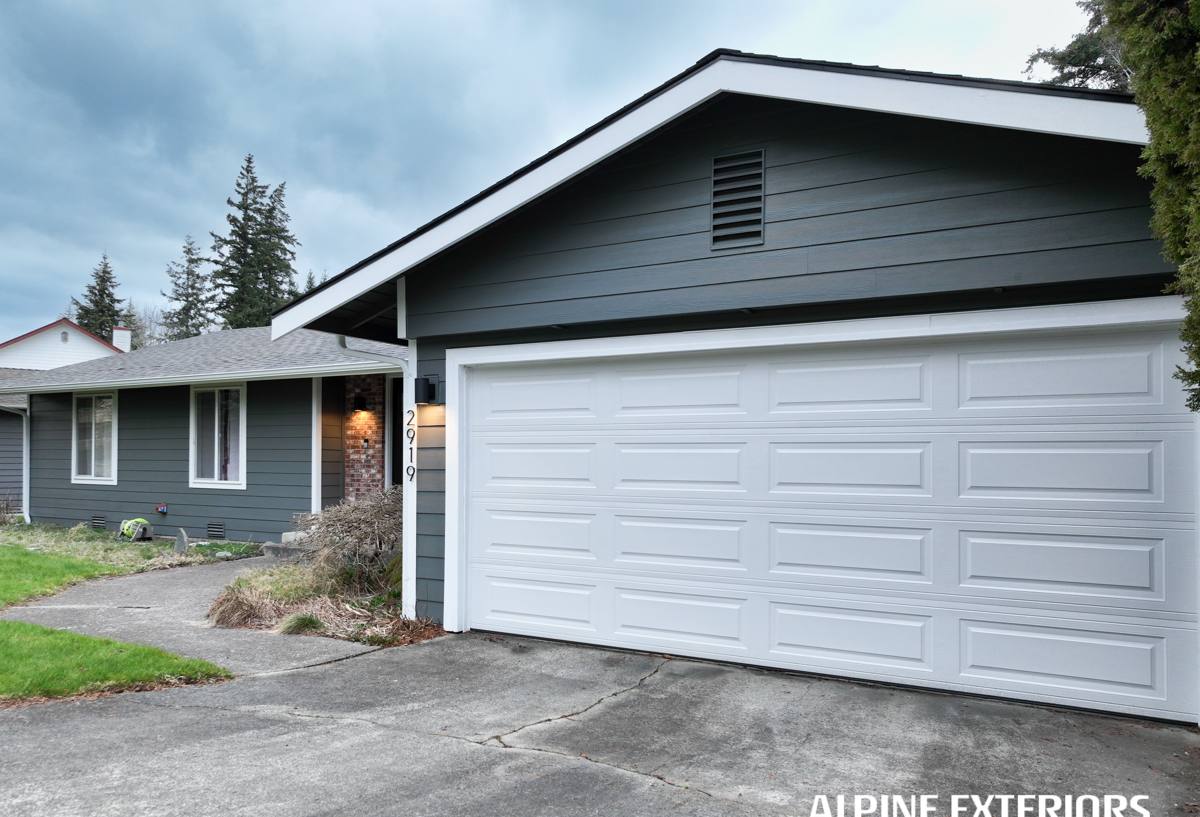
What Salt Air, Wind-Driven Rain, and Moss Actually Do to Siding
Salt Air
Airborne salt is corrosive to metal fasteners, flashing, and trim, and it accelerates the breakdown of many paint and coating systems. Over time, salt exposure can chalk and dull painted surfaces faster than the same product would fade a few miles inland. It also tends to hold moisture against a wall surface longer, which matters more than most homeowners realize.
Wind-Driven Rain
On an exposed peninsula, rain rarely just falls — it's pushed sideways into walls, lap joints, corners, and penetrations like hose bibs, light fixtures, and vents. Siding that isn't installed with the right laps, clearances, and flashing details will let water behind the cladding at exactly these points, even if the material itself is rated for wet climates.
Moss and Prolonged Dampness
Shaded north- and west-facing walls, tree cover, and the region's long stretch of gray, wet months mean siding can stay damp for days at a time. That's a problem for any organic or wood-based product, since sustained moisture is what feeds moss, mildew, and eventually rot. It's less of a problem for a material engineered specifically to resist moisture absorption.
Why We Only Install James Hardie Fiber Cement Here
We don't install vinyl, LP SmartSide, cedar, primed spruce, or other fiber cement brands like Cemplank or Allura. That's a deliberate standard, not a sales pitch, and it matters more in a place like Point Roberts than almost anywhere else we work.
- Vinyl can warp, buckle, or crack under repeated wind loading and temperature swings, and its seams give wind-driven rain more opportunities to work behind the panel over time.
- Wood-based products (cedar, primed spruce, LP SmartSide) are engineered wood or solid wood at their core. In a climate with this much sustained dampness and moss pressure, that means more frequent recoating, more vulnerability at cut edges and fastener points, and a real risk of rot if maintenance slips even one season.
- Other fiber cement brands use similar raw materials to James Hardie, but Hardie's ColorPlus factory-applied finish and HardieZone engineering are specifically built and tested for the moisture and climate demands of regions like ours, and Hardie's installation specs and warranty structure are the ones we trust enough to stand behind long-term.
James Hardie fiber cement is non-combustible, doesn't support the kind of organic growth that feeds moss and mildew the way wood-based siding can, and holds its factory finish far longer than field-painted wood products in a salt-air, high-moisture environment. It won't warp or buckle under wind loading the way vinyl can. For a peninsula home taking rain from multiple directions, that combination of moisture resistance, dimensional stability, and finish durability is the difference between siding that looks good in year three and siding that still looks good in year fifteen.
Material Comparison for a Marine Climate Like Point Roberts
| Material | Moisture Behavior | Salt Air / Wind Performance | Maintenance |
|---|---|---|---|
| James Hardie Fiber Cement | Engineered to resist moisture absorption and swelling | Non-combustible, holds up under sustained wind loading | Occasional wash; factory finish rated for long service life |
| Vinyl | Doesn't absorb water but seams allow intrusion behind panel | Can warp or crack under repeated wind stress and temperature swings | Low, but damaged panels are hard to color-match years later |
| Cedar / Primed Spruce | Absorbs moisture; vulnerable to rot at cuts and fasteners | Prone to cupping and checking in sustained damp conditions | Regular recoating; more frequent in high-moisture zones |
| LP SmartSide | Engineered wood core; needs intact coating to resist moisture | Performs reasonably if maintained, but coating failure exposes the wood substrate | Coating inspection and touch-up on a regular schedule |
What a Correct Siding Replacement Actually Involves
Replacing siding isn't just swapping old panels for new ones. On a home facing this much wind-driven rain, the details underneath the siding matter as much as the siding itself.
Tear-Off and Substrate Check
Full removal of the old siding lets us actually see the sheathing underneath — soft spots, old rot, or water staining that a re-side over existing material would just cover up and trap.
Weather-Resistive Barrier
A properly lapped and sealed weather-resistive barrier goes on the sheathing before any siding, giving the wall a drainage plane so any water that does get past the cladding has somewhere to go instead of soaking into framing.
Flashing at Every Penetration
Windows, doors, hose bibs, vents, and light fixtures all need proper flashing integrated with the weather-resistive barrier. This is where wind-driven rain finds its way in on a peninsula home, and it's the step that gets skipped most often on rushed jobs.
Correct Fastening and Clearances
James Hardie panels have specific fastener spacing, nailing patterns, and ground-clearance requirements. Installing to those specs — not just "close enough" — is what keeps the manufacturer's warranty intact and keeps the wall system performing as designed.
Caulking and Paint Touch-Up at Cut Edges
Field-cut edges need to be sealed per manufacturer spec, especially in a salt-air environment where any exposed, uncoated edge is the first place moisture will find a foothold.
Our Process for Point Roberts Homes
Because Point Roberts is only reachable by crossing an international border, we plan material delivery and crew scheduling for these projects with that logistics reality built in from the start — not figured out on the fly. That means fewer delays waiting on a forgotten tool or a missed delivery window, and a job that moves at the pace we quoted.
- On-site inspection of existing siding, trim, and any visible moisture damage
- Written estimate covering tear-off, sheathing repair allowance, and full Hardie installation
- Material and crew scheduling that accounts for border crossing and delivery logistics
- Tear-off, substrate inspection, and repair of any compromised sheathing before new siding goes on
- Weather-resistive barrier, flashing, and James Hardie installation to manufacturer spec
- Final walkthrough covering caulking, touch-up paint, and warranty registration
Signs Your Point Roberts Home Needs Siding Replacement, Not Just Repair
- Soft or spongy spots when you press on the siding, especially near the bottom courses
- Persistent moss or dark staining that returns within a season of cleaning
- Visible cupping, warping, or cracking across multiple panels
- Paint that's chalking, peeling, or failing faster than it used to
- Water stains or soft drywall on interior walls that back up to exterior siding
- Gaps opening up at seams, corners, or trim boards
One or two of these on an otherwise sound wall might mean a repair is enough. Multiple signs across different walls, especially on the sides facing open water, usually means the siding system as a whole has reached the end of its useful life.
Why the Crew Matters as Much as the Material
James Hardie siding performs the way it's engineered to when it's installed to spec — full stop. A crew that's worked other Point Roberts and Blaine homes already understands where wind-driven rain tends to concentrate on a given lot, how far to hold ground clearance given local drainage patterns, and which penetrations need the most attention on an exposed wall. That local track record is worth more than a low bid from a crew that's never dealt with this particular stretch of coastline.
We stand behind our installation work, and because we only install one product system, we're not juggling different manufacturer specs from job to job — every crew member knows the Hardie install requirements cold.
Get a Straight Answer About Your Siding
If your Point Roberts home is showing any of the signs above, or you're just planning ahead for a home in this environment, we're happy to take a look and give you an honest assessment — repair or full replacement, whichever the wall actually needs. Reach out for a free, no-pressure estimate using the form below.