 Blaine Siding
 Birch Point Roofs Take a Different Kind of Beating
Birch Point sits close enough to the water that its roofs live a different life than a roof five miles inland in Blaine. The same three things come up on almost every repair call out here: salt-laden air off the water, rain that comes in sideways more often than straight down, and enough shade and moisture to keep moss going most of the year. None of that is unique to one house — it's the baseline for this stretch of Whatcom County shoreline, and it changes what "repair it right" actually means.
Salt Air Works on Metal Whether It's Raining or Not
Salt air doesn't need a storm to do damage. It settles on exposed metal — nail heads, flashing, vent caps, gutter fasteners — every day, and over years it accelerates corrosion in materials that would last much longer a few miles inland. A repair that uses standard hardware because it's what's on the truck can start failing again within a couple of seasons near the water. A repair that accounts for the salt exposure holds.
Wind-Driven Rain Finds the Weak Spots
Driving rain off the water doesn't just fall on a roof — it gets pushed up and under things: shingle tabs, ridge caps, the edges of flashing. A roof that would shed a normal downpour without issue can still leak in a wind-driven storm if a seal, lap, or fastener is even slightly compromised. That's why so many Birch Point leaks show up specifically during winter storms and not during a calm summer rain — the water is being forced into places it normally wouldn't reach.
Shade, Moisture, and a Long Moss Season
Add tree cover and the moisture that comes with proximity to the water, and you get a moss season that runs longer here than it does in drier parts of the county. Moss isn't just cosmetic — it holds water against the roofing material, lifts shingle edges as it grows, and channels runoff into gaps it wouldn't otherwise find. A lot of the repair calls we get in this neighborhood trace back to moss that was left alone for a year or two too long.
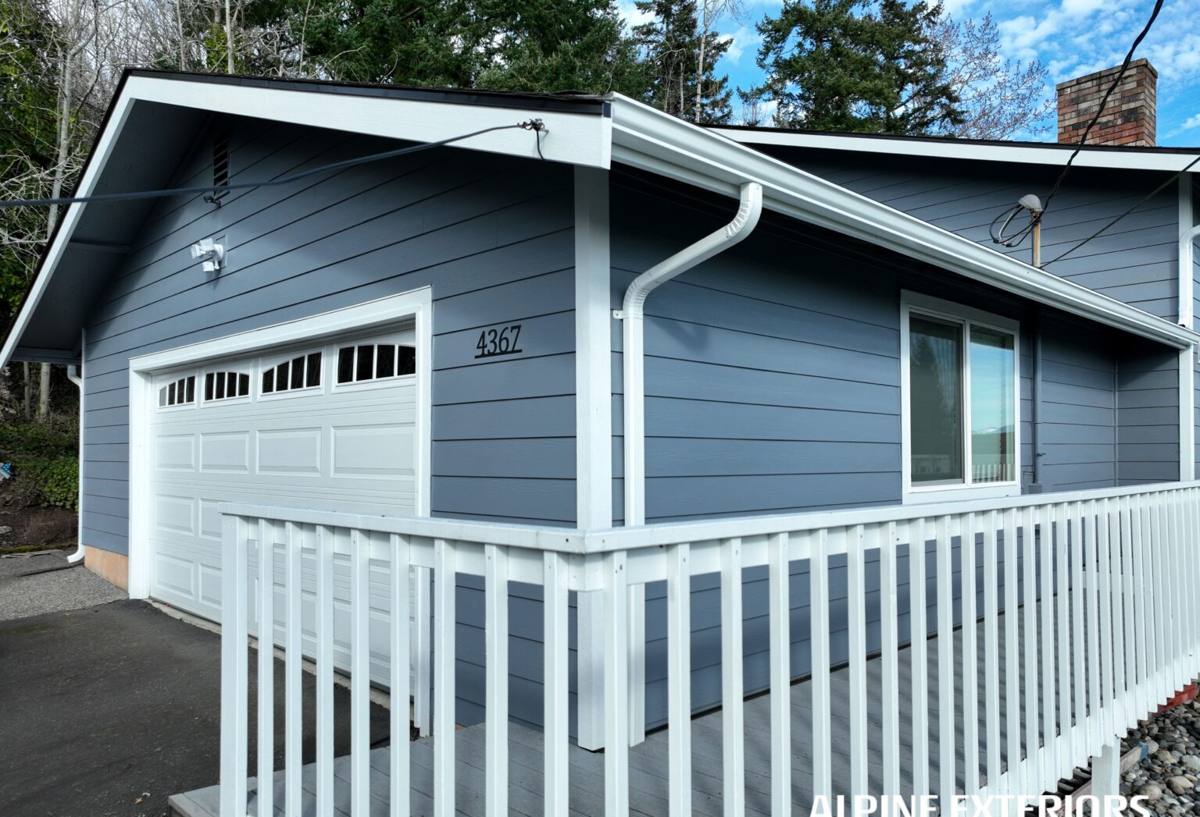
What We Actually Find on Birch Point Repair Calls
- Shingle tabs and edges lifted or cracked by moss growth holding moisture against the surface
- Flashing around chimneys, vents, and roof-wall intersections corroding or pulling loose from the salt air
- Valley leaks where debris and moss slow drainage and let water back up under the shingles
- Fastener corrosion — nail heads and screws that have rusted or lost their grip
- Soffit and fascia rot where water has been running off the roof edge for longer than it should have
- Ridge cap seals that have opened up under repeated wind-driven rain
Most of these start small. A lifted shingle tab or a hairline gap in flashing doesn't look urgent, but it's exactly the kind of thing wind-driven rain will exploit before a calm rain ever would.
What a Correct Repair Involves — Not Just a Patch
Finding the Actual Leak Path
Water rarely drips straight down from where it enters. It can travel along a rafter or across sheathing before showing up as a stain on a ceiling inside the house. A repair that just caulks the spot where the stain appeared often misses the real entry point, which is why the same leak can "come back" after a quick fix. A proper repair traces the path — checking the attic side when possible, looking at the roofing above and slightly upslope from where water is showing, and confirming the fix addresses the source, not the symptom.
Matching Materials to the Environment
Not every fastener or flashing product performs the same way this close to the water. This is a judgment call we make based on where on the roof the repair sits and how exposed it is, not a one-size answer for every job.
| Material | How It Holds Up Near Salt Air | Trade-Off |
|---|---|---|
| Standard galvanized fasteners/flashing | Adequate short-term, corrodes faster with salt exposure | Lower upfront cost, shorter service life here |
| Stainless steel fasteners | Strong resistance to salt-air corrosion | Higher material cost, worth it on exposed elevations |
| Aluminum flashing | Naturally corrosion-resistant, lightweight | Softer material, needs careful installation to avoid damage |
| Copper flashing | Excellent longevity, ages naturally | Highest material cost, best reserved for high-exposure or high-visibility spots |
We don't upsell every repair to the top-tier material — a lower-exposure section of roof doesn't need the same hardware as a chimney flashing facing straight into the prevailing weather. The goal is matching the material to the actual exposure, not defaulting to the cheapest option everywhere.
How We Handle a Birch Point Repair Call
1. Inspection First, Estimate Second
We look at the roof and, where access allows, the attic side before we quote anything. That's how we catch the difference between a surface issue and something that's been progressing for a while — like sheathing that's started to soften under a slow leak.
2. A Scope You Can Actually Read
You get a plain description of what's wrong, what we're going to do about it, and what materials we're using and why — especially if we're recommending a step up in fastener or flashing material because of where the repair sits.
3. The Repair Itself
We address the source of the leak, not just the visible symptom, and we check the surrounding area — flashing, fasteners, adjacent shingles — since a failure in one spot is often a sign of aging materials nearby that are close behind it.
4. What You're Left With
A straightforward explanation of what we found, what we fixed, and anything worth keeping an eye on — including whether moss or debris played a role, since that's something you can manage between visits.
Keeping Moss From Undoing the Repair
A repair holds a lot longer when moss and debris aren't working against it year-round. None of this requires climbing on the roof yourself — most of it is about timing and paying attention.
- Clear needles, leaves, and moss buildup from valleys and behind chimneys before the fall rains set in
- Keep gutters and downspouts flowing — backed-up gutters push water back under the roof edge
- Trim back branches that keep sections of the roof shaded and slow to dry
- Watch for dark green or black streaking, which usually means moss or algae is already established
- Have the roof looked at after any significant windstorm, since that's when marginal flashing and fasteners tend to fail
- Don't pressure-wash moss off yourself — it can drive water and force debris under shingles instead of removing it cleanly
Repair or Replace? Reading the Signs
Not every call ends in a repair, and we'll tell you honestly when a section of roof is past the point where patching it makes sense.
| Signs a Repair Makes Sense | Signs You're Looking at Replacement |
|---|---|
| Leak is isolated to one flashing point, valley, or vent | Multiple leak points across different areas of the roof |
| Shingles nearby are still flexible and holding granules | Shingles are brittle, curling, or losing granules broadly |
| Roof is within its expected service life for the material | Roof is at or past the age where materials naturally degrade |
| Underlying sheathing tested and found sound | Sheathing has soft spots or visible water damage in multiple spots |
When a repair is the right call, we'll do a repair. When the underlying roof is clearly on its way out, we'd rather say so upfront than sell you a patch that buys a single season.
Cost Factors for Roof Repair Near the Water
Roof repair costs vary enough by scope that a flat number isn't honest — a single flashing repair and a valley rebuild with sheathing replacement aren't in the same category. What actually moves the price:
| Factor | Why It Matters |
|---|---|
| Scope of the leak | A single flashing point costs far less to fix than a valley with water-damaged sheathing underneath |
| Material upgrade for exposure | Stainless or aluminum flashing costs more than standard galvanized, but lasts longer on exposed elevations |
| Roof pitch and access | Steeper or harder-to-reach sections take more time and equipment |
| Extent of moss or debris removal needed | Heavier buildup adds cleanup time before the actual repair can start |
| Hidden damage found once opened up | Soft or rotted sheathing found during the repair adds material and labor |
Most straightforward repairs land in a modest range; anything involving structural sheathing or a larger section of roof runs higher. We'll always give you the number after we've actually looked, not before.
Why It Matters That We Already Work This Neighborhood
A crew that's worked roofs at Birch Point before already knows what tends to fail here and why — which flashing points take the brunt of the wind-driven rain, how fast moss comes back given the shade and moisture on a given lot, and which fastener choices hold up versus which ones we'll be replacing again in a few years. That's not something you get from a general estimate template; it comes from having actually been up on roofs in this specific stretch of Blaine and Whatcom County, in this specific weather, more than once.
If you've got a leak, a soft spot, or just want an honest look at a roof that's been through a few winters near the water, we're glad to come take a look. The estimate is free, there's no pressure attached to it, and you'll get a straight answer about whether it's a repair or something bigger — use the form below to get started.