 Blaine Siding
 Why Bellingham Roofs Wear Out Differently
Bellingham sits close enough to the water and deep enough into Whatcom County's marine weather pattern that roofs here take a specific kind of beating. Salt-laden air off the Sound accelerates corrosion on fasteners, flashing, and any metal component that isn't rated for it. Driving rain, pushed sideways by wind off the water, finds every weak seam and undersized flashing detail that a calmer climate would never expose. And the long, wet moss season, stretching from fall through spring most years, keeps shaded roof slopes damp for months at a time, which is exactly the environment moss and algae need to take hold.
None of this means Bellingham roofs fail faster than roofs elsewhere. It means they fail differently, and a replacement that doesn't account for those specific stresses will show the same problems again within a few years instead of holding up for decades.
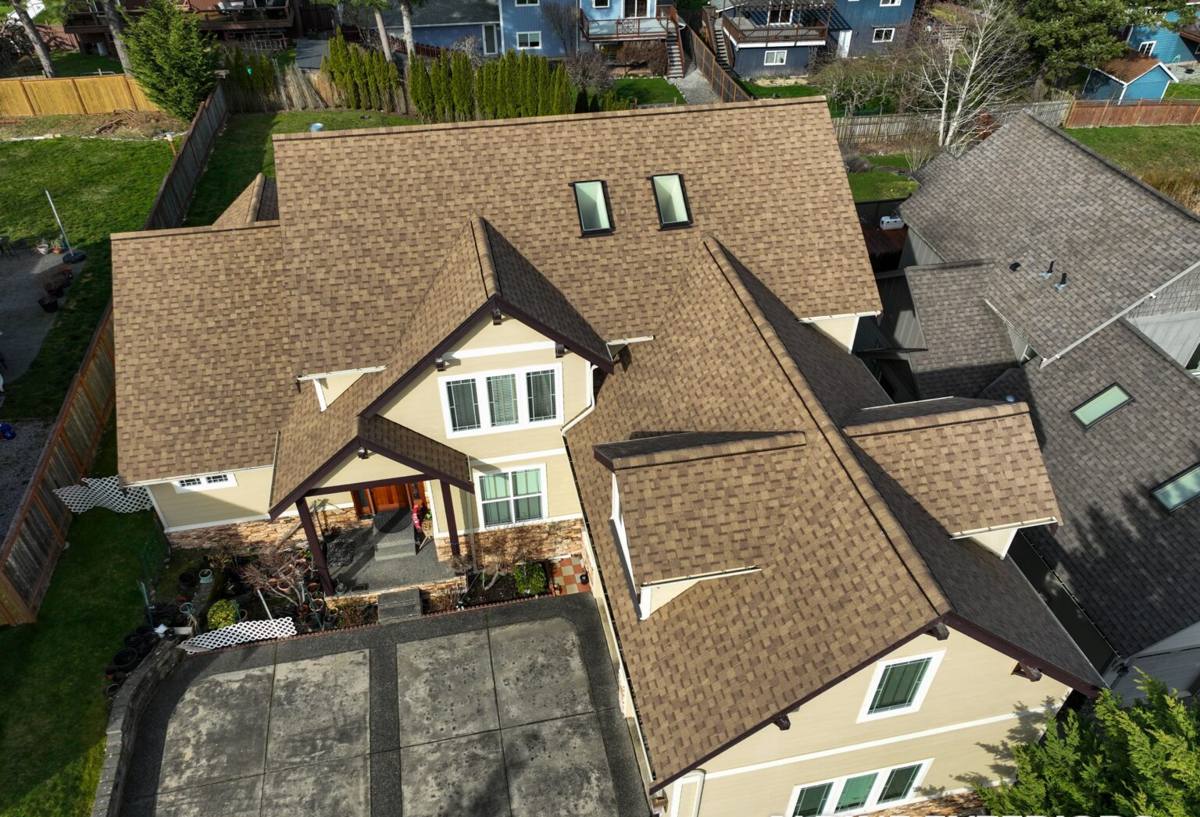
Signs Your Bellingham Roof Needs Replacement, Not Just a Repair
Most roofs give warning signs well before a leak shows up inside the house. The hard part is knowing which signs mean "patch it" and which mean the whole system is past its service life.
- Granule loss heavy enough that valleys and downspouts are collecting gritty sediment
- Shingles cupping, curling, or cracking across multiple slopes, not just one isolated spot
- Moss or algae mats that have been scraped or treated more than once and keep coming back
- Soft or spongy decking felt underfoot, especially near valleys and eaves
- Daylight visible through the roof deck from inside the attic
- Flashing around chimneys, vents, or skylights that's rusted, lifted, or was never properly stepped in
- A roof older than 20-25 years for asphalt shingle, even if it still looks fine from the ground
One or two of these on their own might be a repair. Several together, especially combined with the roof's age, usually mean replacement is the more honest recommendation than another round of patching.
What a Correct Roof Replacement Actually Involves
A roof replacement is more than swapping old shingles for new ones. In a climate that sees this much sustained moisture, the layers underneath the shingles matter as much as the shingles themselves, and skipping any one of them is where "cheap now" turns into "expensive again in five years."
Tear-Off and Deck Inspection
We remove the existing roofing down to the deck rather than layering new shingles over old ones. That's the only way to actually see the plywood or OSB underneath, which is where water damage from years of small, slow leaks tends to hide unnoticed. Any soft, delaminated, or rotted decking gets replaced before anything new goes down. Covering over bad decking just guarantees a shorter lifespan for the new roof, no matter how good the shingles are.
Underlayment and Flashing
Given how much wind-driven rain this area sees, we pay particular attention to synthetic underlayment coverage and ice-and-water shield at eaves, valleys, and any roof-to-wall transition. Flashing around chimneys, skylights, and plumbing vents is a common failure point on older roofs, often because it was installed as an afterthought rather than woven into the underlayment properly. On a correct install, flashing is integrated into the water path, not just caulked over the top of it and left to fail once the caulk dries out and cracks.
Ventilation
A roof deck that can't breathe traps moisture underneath the shingles, which shortens shingle life from below and feeds the exact damp conditions that grow moss and algae on the surface. We check intake at the soffits and exhaust at the ridge and make sure the two are balanced, not just present. Undersized, blocked, or mismatched ventilation is one of the most common issues we find on Bellingham homes during tear-off, and it's completely invisible from the ground or from inside the house.
Choosing Roofing Materials for Whatcom County Weather
There's no single best roofing material for every home. The right choice depends on budget, roof pitch, and how much long-term maintenance a homeowner actually wants to take on. Here's how the common options compare in this specific climate.
| Material | Moss/Algae Resistance | Wind-Driven Rain Performance | Typical Lifespan Here |
|---|---|---|---|
| Standard architectural asphalt shingle | Moderate; benefits from algae-resistant granules | Good with proper underlayment and flashing | 20-25 years |
| Algae-resistant (AR) asphalt shingle | Better; copper/zinc granules slow regrowth | Good with proper underlayment and flashing | 25-30 years |
| Standing seam metal | Strong; steep pitch and slick surface shed moss well | Excellent when panels and flashing are properly lapped | 40-50+ years |
| Cedar shake | Weak without diligent upkeep; holds moisture | Fair; seams are more sensitive to wind-driven rain | Highly maintenance-dependent |
For most Bellingham homes, an algae-resistant architectural shingle is the practical middle ground between upfront cost and reduced moss maintenance down the road. Metal is a strong option on steeper roofs or for homeowners who want to minimize moss treatment altogether, though it comes with a higher installed cost. We're upfront with clients about cedar shake: it can look great, but it demands a level of ongoing maintenance in this moisture that most homeowners underestimate at the time of installation, and we'd rather say so plainly than sell a product that needs more attention than a homeowner is signing up for.
Our Roof Replacement Process
- On-site inspection. We get on the roof, check the decking where it's accessible, look at existing ventilation, and take real measurements instead of guessing from a satellite photo.
- Written estimate. A clear breakdown of material, labor, and any decking or ventilation work we anticipate, so there are no surprise change orders for problems we could have flagged upfront.
- Material selection. We walk through the options above based on the home's pitch, exposure, and the homeowner's budget and maintenance preferences, not a one-size-fits-all pitch.
- Tear-off and deck repair. Full removal, deck inspection, and replacement of any compromised sheathing before anything new is installed over it.
- Underlayment, flashing, and ventilation install. The layers that actually determine whether the roof performs in driving rain and resists trapped moisture for the long haul.
- Final shingle or panel install. Installed to manufacturer specification, which is also what keeps the material warranty valid if a claim is ever needed.
- Cleanup and final walkthrough. Magnetic sweep for stray nails, debris hauled off site, and a walkthrough so the homeowner knows exactly what was done and why.
Moss, Algae, and Long-Term Roof Care
A new roof in Bellingham doesn't mean moss stops being a consideration. It means the roof is now built to handle it better. Shaded north-facing slopes, roofs under overhanging trees, and low-slope sections will still collect more moisture than the rest of the roof, and moss spores don't care how new the shingles underneath them are.
What changes with a correctly installed replacement is the roof's ability to shed that moisture instead of holding onto it. Balanced ventilation keeps the deck drier from underneath, algae-resistant granules slow regrowth on the surface, and proper flashing keeps water moving off the roof instead of pooling at transitions where moss tends to establish first. We recommend a simple annual habit for every homeowner, regardless of who installed the roof: a visual check each fall before the wet season sets in, clearing debris out of valleys and gutters, and addressing any moss buildup while it's still light rather than letting it establish into thick, moisture-holding mats.
Why a Bellingham-Familiar Crew Matters
Roofing crews that mostly work drier inland climates tend to under-spec ventilation and underlayment, because they've never had to live with the consequences of getting it wrong. A crew that works Whatcom County regularly knows which roof details fail first in this weather, because we've torn off enough old roofs to see it firsthand: the flashing details that were skipped, the ventilation that was never balanced, the underlayment that stopped short of where it actually needed to reach.
Local familiarity also matters for permitting and inspection timing, which can vary even within the same county, and for scheduling realistically around the wetter months so a tear-off isn't left exposed longer than it should be. None of that shows up in a bid on paper, but it shows up in how the roof performs three winters later, after the first hard windstorm off the water.
What Roof Replacement Costs Depend On
We won't quote a number here, because an honest number depends on the specifics of your home, but these are the factors that actually move the price, in roughly the order they tend to matter.
| Factor | Why It Matters |
|---|---|
| Roof size and number of slopes | More material, more labor, and more flashing details to get right |
| Roof pitch and accessibility | Steep or hard-to-access roofs take longer and need more safety setup |
| Decking condition | Rot or delamination found during tear-off means added sheathing replacement |
| Material choice | Standard shingle, algae-resistant shingle, and metal carry different material costs |
| Layers to remove | Tearing off multiple existing layers takes more labor than a single layer |
| Ventilation and flashing upgrades | Bringing an older roof's ventilation or flashing up to a proper standard adds scope but prevents repeat problems |
The only way to get an accurate number is an actual on-site look, since two roofs of the same square footage can price very differently depending on pitch, number of layers, and deck condition once we're up there.
If your roof is showing its age, or you just want a straight answer about what shape it's really in, we're happy to take a look. Request a free, no-pressure estimate using the form below and we'll walk the roof, tell you honestly what we see, and lay out your options with no obligation either way.