 Blaine Siding
 Why Semiahmoo Roofs Wear Differently
Semiahmoo sits about as close to the water as a Whatcom County property can get, and that location shapes everything about how a roof ages here. Homes on this peninsula take a steady diet of salt-laden air off Semiahmoo Bay and the Strait of Georgia, near-constant marine humidity, driving rain that comes in sideways during winter storms, and a moss season that can run eight or nine months out of the year in the shaded, north-facing sections of a roof. A roof spec that works fine in a drier inland part of Blaine won't necessarily hold up the same way three miles closer to the water. We treat Semiahmoo as its own microclimate when we spec a new roof, not a copy-paste of what we'd install anywhere else in the county.
Salt air is corrosive to exposed metal fasteners, flashing, and vent components over time, so material choice and detailing at every penetration matter more here than in a typical inland install. Combine that with rainfall that doesn't just fall straight down but gets driven under lapped materials by wind, and you have two separate failure modes a correct installation has to defend against at once: corrosion and wind-driven water intrusion.
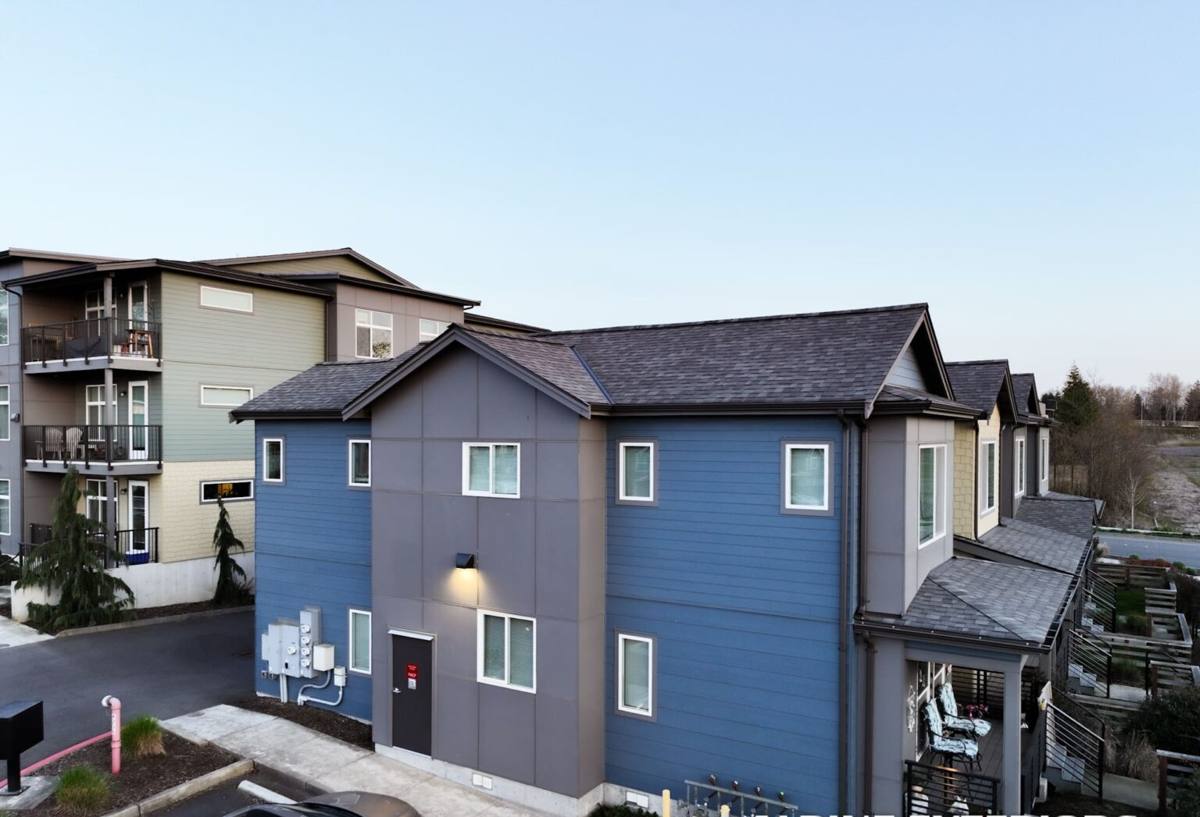
What Semiahmoo Homes Actually Need From a New Roof
Corrosion-Resistant Metal Everywhere
Every metal component on a Semiahmoo roof — flashing, drip edge, vent boots, fasteners, ridge caps — should be rated for coastal exposure. Standard galvanized fasteners can start showing surface corrosion within a few years this close to the water. We spec stainless steel or high-quality coated fasteners and flashing on every install out here, because replacing a rusted-through valley flashing five years into a roof's life costs far more than specifying the right metal on day one.
Underlayment That Handles Wind-Driven Rain
A synthetic, water-resistant underlayment installed with proper lap direction and sealed seams is non-negotiable on this stretch of coastline. When wind pushes rain uphill under shingle tabs during a winter storm, the underlayment is the last line of defense before that water reaches the roof deck. We pay particular attention to lap orientation relative to prevailing storm direction, not just the manufacturer's minimum spec.
Ventilation That Fights Moss and Moisture
Moss doesn't just grow because a roof sits in shade — it grows because moisture lingers. A roof that's properly ventilated dries out faster between rain events and after fog, which slows moss colonization even on north-facing slopes. We check attic ventilation balance (intake at the eaves, exhaust at the ridge) as part of every new roof install, because a beautiful new roof over a poorly ventilated attic will grow moss and shorten shingle life regardless of what shingle you chose.
The Installation Process, Step by Step
- On-site inspection and measurement — we walk the roof (or use precise measurement tools where access is limited), check the deck for soft spots, and note exposure direction, shading, and drainage patterns specific to the property.
- Tear-off and deck assessment — old roofing comes off down to the deck, and we inspect sheathing for rot or delamination before anything new goes down. Coastal moisture can hide deck damage that isn't visible from the surface.
- Deck repair as needed — any soft or damaged sheathing gets replaced before underlayment goes on. Installing new roofing over a compromised deck just hides the problem.
- Ice-and-water shield at vulnerable zones — valleys, eaves, and roof-to-wall transitions get self-adhering waterproof membrane, which matters more here than in drier parts of the county because of how often wind-driven rain finds these transition points.
- Synthetic underlayment, full field — installed with attention to lap direction and fastening pattern for wind resistance.
- Flashing at every penetration — chimneys, vents, skylights, and wall intersections all get new corrosion-resistant flashing, not a reuse of old flashing to save time.
- Roofing material installation — installed to manufacturer spec plus our own coastal-specific adjustments (fastener pattern, sealant at exposed edges).
- Ridge, hip, and vent detailing — ridge caps and vent boots installed with corrosion-rated hardware and checked for proper ventilation function.
- Final walkthrough and cleanup — magnetic sweep for stray fasteners, full site cleanup, and a walkthrough so the homeowner understands what was done and what maintenance to expect.
Material Options for Coastal Whatcom County
| Material | Coastal Performance | Maintenance Consideration |
|---|---|---|
| Architectural asphalt shingle | Good with marine-rated fasteners and proper ventilation; algae-resistant granules help in humid, shaded areas | Periodic moss/debris clearing on shaded slopes |
| Standing seam metal | Excellent wind and rain-shedding performance; concealed fasteners reduce corrosion points | Higher upfront cost, very low ongoing maintenance |
| Synthetic/composite shake | Strong moisture resistance, doesn't absorb water like wood shakes can | Moderate cost, minimal maintenance |
| Cedar shake | Traditional look but requires more diligence against moisture retention in a marine climate | Higher maintenance burden — regular treatment and moss management needed |
We'll walk through these trade-offs against your budget and the specific exposure of your roof rather than pushing one product. On heavily shaded, north-facing sections that hold moisture longest, we're often more conservative about material recommendations than on a sun-exposed south slope of the same house.
Cost Factors for a Semiahmoo Roof Replacement
- Roof size and pitch — steeper pitches and larger square footage increase labor and material needs.
- Number of penetrations — chimneys, skylights, and multiple vents each add flashing detail work.
- Deck condition — hidden sheathing damage from long-term moisture exposure can add repair cost once tear-off begins.
- Material selection — asphalt, metal, and composite options carry meaningfully different price points.
- Access and staging — waterfront and hillside lots common in Semiahmoo can affect equipment staging and disposal logistics.
- Ventilation upgrades — adding or correcting attic ventilation as part of the reroof is a smart long-term investment against moss regrowth.
We don't quote a number without seeing the roof — anyone who does is guessing. What we can tell you honestly is that coastal-grade fasteners, proper underlayment, and correct ventilation aren't places to cut corners to save a few hundred dollars, because the repair costs from skipping them show up within a handful of years, not decades.
Signs a Semiahmoo Roof Needs Replacement, Not Repair
- Granule loss heavy enough that you're finding shingle grit in gutters every season
- Moss that returns within months of cleaning, especially on north-facing slopes
- Visible daylight or water staining in the attic near valleys or penetrations
- Curling, cupping, or cracked shingles across multiple slopes rather than one isolated spot
- Rusted or failing flashing at chimneys, vents, or valleys
- The roof is approaching or past the expected lifespan for its material in a marine climate
A roof with isolated damage — one damaged valley, a handful of blown-off shingles after a windstorm — is often a repair, not a full replacement. We'll tell you straight if repair is the honest answer; a full tear-off makes sense when the underlying materials are broadly past their service life or when patch repairs would just be chasing the same moisture problem around the roof.
Why a Crew That Already Works Semiahmoo Matters
A new roof installed by a crew unfamiliar with this specific stretch of coastline will often use standard inland specs — standard fasteners, standard ventilation assumptions, standard underlayment lap patterns — because that's what works in most of the country. Out here, those standard assumptions leave gaps. We've installed and repaired roofs across Blaine and the surrounding Whatcom County coastline long enough to know which slopes hold moss longest, which penetrations tend to leak first in a wind-driven rainstorm, and which fastener grades actually hold up against years of salt exposure rather than just meeting code minimums.
That local experience also means we're not learning on your roof. We know the permitting expectations in this part of the county, we understand how Semiahmoo's waterfront exposure differs from more sheltered inland Blaine properties even a mile or two away, and we bring that knowledge into every measurement, material choice, and detail decision on the job.
What to Expect From Us
We give straight answers about what your roof actually needs — not the most expensive option, not a race to the bottom on price, but a correct install using materials suited to a marine climate. We explain trade-offs in plain terms: why we recommend one flashing grade over another, why ventilation is part of the conversation even though it's not the most visible part of a new roof, and what maintenance you should realistically expect afterward. No pressure tactics, no inflated urgency — just an honest assessment and a clear scope of work before anything starts.
If your roof is showing its age, or you just want a second opinion on whether repair or replacement makes sense for your Semiahmoo home, we're happy to take a look. Fill out the form below for a free, no-pressure estimate — we'll walk the roof, explain what we see, and give you options that fit your budget and your property's actual exposure.