 Blaine Siding
 Siding Installation Built for the Cherry Point Environment
Homes in the Cherry Point area sit close enough to the water that salt-laden air, wind-driven rain, and long stretches of damp, shaded weather are simply part of owning property here. That combination is harder on exterior siding than most homeowners realize until they're dealing with peeling paint, soft trim, or moss creeping up the north wall every winter. Siding installation in this part of Whatcom County isn't just about picking a color and nailing up panels — it's about choosing a material and installation method that can actually stand up to what the local climate throws at it, year after year.
This page covers what siding installation for a Cherry Point home should actually involve: the climate factors that matter, what correct installation looks like, how our process works, and why we install James Hardie fiber cement exclusively rather than the vinyl, LP SmartSide, or other engineered-wood products you'll see offered elsewhere.
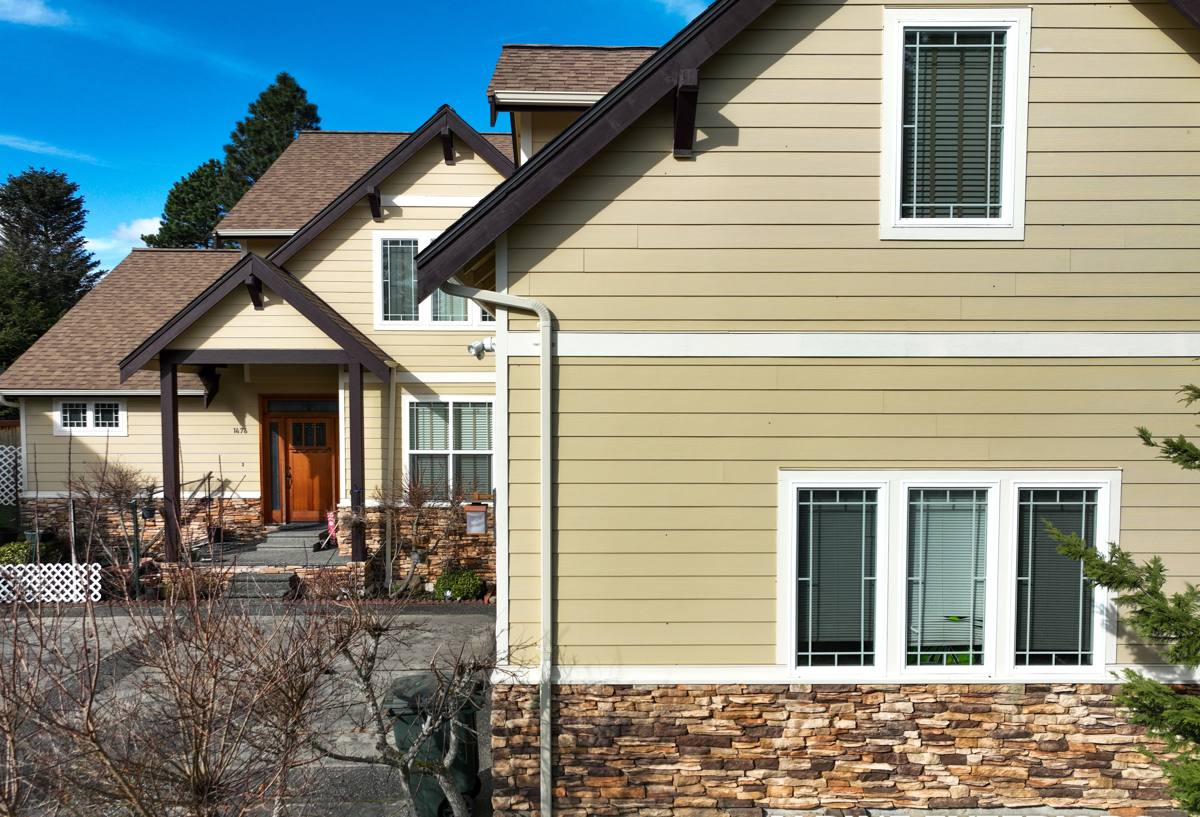
What Cherry Point's Climate Does to Siding Over Time
Salt Air
Proximity to the Strait of Georgia and the Salish Sea means airborne salt is a constant, low-level presence on homes near Cherry Point. Salt accelerates corrosion on fasteners, flashing, and any exposed metal trim, and it degrades cheap paint finishes faster than inland exposure would. Siding that isn't engineered to handle a marine-influenced environment tends to show fading, chalking, and edge deterioration years before a comparable product would fail further inland.
Driving Rain
Storms coming off the water don't just fall straight down — wind pushes rain sideways into wall assemblies, seams, and butt joints. Any weak point in the water-management plane (a gap in house wrap, a poorly lapped joint, a missing kick-out flashing) becomes an entry point. Over time, that moisture works its way behind the siding and into sheathing, framing, and insulation, where it does damage long before it's visible from the outside.
Moss Season
Whatcom County's wet season stretches long, and shaded, north-facing walls near tree lines or dense landscaping stay damp for months at a time. That's ideal growing conditions for moss and algae on siding surfaces. Beyond the cosmetic issue, sustained moisture contact against a siding surface that isn't moisture-resistant by design shortens its service life and can telegraph problems into the substrate underneath.
What Correct Siding Installation Actually Requires Here
Given those conditions, a proper siding installation for a Cherry Point home has to get several things right that a generic install in a drier climate could get away with skipping:
- A continuous drainage plane — weather-resistant barrier installed with correct laps, sealed penetrations, and no shortcuts around windows or doors.
- Rainscreen or drainage gap detailing where appropriate, so incidental moisture behind the siding has somewhere to go instead of sitting against the wall.
- Correct flashing at every horizontal transition — window heads, deck ledgers, roof-to-wall intersections, and any trim board that meets a horizontal surface.
- Manufacturer-spec fastening — the right fastener type, spacing, and depth, not just "close enough," since improper fastening is one of the most common causes of early siding failure in wet climates.
- Factory-finished material wherever possible, so the protective coating isn't dependent on field-applied paint holding up under salt and UV exposure.
Skip any one of these and the siding may look fine for a season or two, but the underlying wall assembly is set up to fail early — which is exactly what we see when we're called out to diagnose problems on homes that had siding installed by crews without local, coastal-climate experience.
Why We Install James Hardie Fiber Cement Exclusively
We made a deliberate decision to install only James Hardie fiber cement siding — no vinyl, no LP SmartSide, no Cemplank, no Allura, no primed spruce or cedar. That's not a marketing position; it's a standard we hold because of what we've seen play out on real homes in this climate.
Vinyl siding is inexpensive and easy to install, but it's a poor match for driving-rain exposure: seams and laps aren't watertight the way a properly installed fiber cement wall is, and it can warp or crack under temperature swings and wind loads. Engineered wood products like LP SmartSide use wood strand cores that, once a coating is compromised by moisture intrusion, are vulnerable to swelling and rot — a real risk in a climate where wall assemblies stay damp for extended stretches. Primed cedar and spruce require ongoing paint maintenance that most homeowners underestimate, and any lapse lets moisture in. Fiber cement alternatives to Hardie exist, but we've standardized on Hardie specifically for its factory ColorPlus finish, its climate-engineered HZ product line, and the strength of its transferable warranty when the installation is done to spec.
None of this means other products can't work anywhere — it means we've chosen not to put our name behind materials we don't think perform reliably in this specific coastal, high-moisture climate.
The James Hardie Products That Make Sense for Cherry Point Homes
| Product | Best Use | Why It Fits This Climate |
|---|---|---|
| HardiePlank lap siding | Most home exteriors | Non-combustible, engineered moisture resistance, factory finish holds up to salt air and UV |
| HardiePanel vertical siding | Accent walls, gables, modern facades | Fewer horizontal joints reduces water-entry points on rain-exposed elevations |
| HardieTrim boards | Corners, window and door trim, fascia | Resists the rot and swelling that plague wood trim in damp, shaded areas |
| HZ5 formulation | Standard for our region | Engineered specifically for wetter, harsher climate zones like the Pacific Northwest |
All of these come with James Hardie's factory-applied ColorPlus finish, which is baked on under controlled conditions rather than field-applied — a meaningful advantage on a home exposed to salt air, since the finish doesn't depend on weather conditions at the time of painting to cure properly.
Our Installation Process
- On-site assessment — we walk the exterior, check for existing moisture damage, evaluate current water-management details, and note exposure conditions specific to the property's orientation and surroundings.
- Removal and substrate inspection — old siding comes off and we inspect sheathing and framing for hidden rot or damage before anything new goes up. This step matters more here than in drier climates, because moisture problems near Cherry Point often exist behind siding long before they're visible.
- Water-resistive barrier and flashing — house wrap or building paper installed with correct laps, flashing integrated at every window, door, and horizontal transition.
- Drainage detailing — furring or rainscreen strategy applied where the wall assembly and exposure warrant it, giving incidental moisture a path out.
- Siding installation to manufacturer spec — correct fastener type, spacing, and clearance from grade and roof lines, following James Hardie's published installation instructions rather than shortcuts.
- Trim, caulking, and final detailing — HardieTrim installed at corners and openings, sealant applied only where the manufacturer calls for it (not as a substitute for proper flashing).
- Final walkthrough — we review the finished work with the homeowner and confirm everything matches what was scoped.
Signs a Cherry Point Home May Need New Siding
- Persistent moss or algae growth that returns shortly after cleaning
- Paint that's peeling, bubbling, or chalking faster than a normal repaint cycle
- Soft or spongy spots when pressing on siding or trim, especially near the bottom courses
- Visible warping, cracking, or gaps opening up at seams and joints
- Rising energy bills that suggest the wall assembly is no longer insulating or sealing properly
- Interior signs — musty smells, staining, or bubbling drywall on exterior-facing walls
Any one of these on its own might be minor. Several together, especially on a home that's had siding for 20+ years, usually means it's time for a real evaluation rather than another round of caulk and paint.
What Affects the Cost of a Cherry Point Siding Installation
| Factor | Why It Matters |
|---|---|
| Home size and elevation count | More square footage and more complex rooflines mean more material and labor |
| Existing siding removal | Tear-off and disposal of old vinyl, wood, or damaged siding adds time and cost |
| Substrate repair | Rotted sheathing or framing discovered during removal must be repaired before new siding goes on |
| Siding profile and trim detail | Vertical panels, wider trim, or custom detailing take more labor than a straightforward lap-siding job |
| Accessibility | Tall walls, steep sites, or limited equipment access affect scaffolding and staging costs |
| Drainage/rainscreen detailing | Added protection for high-exposure walls near the water adds material and labor but reduces long-term risk |
We don't publish flat prices because every home's exposure, condition, and layout are different — but we walk every homeowner through exactly what's driving their number before any work starts, so there are no surprises.
Why Local, Cherry Point-Familiar Experience Matters
A crew that regularly works properties near the water in Whatcom County already knows which walls take the worst of the driving rain, where moss tends to establish first, and how much drainage detailing a given exposure actually needs — versus a crew used to drier, inland conditions who might treat this like a standard install. That local pattern recognition shows up in the small decisions: where to add extra flashing, whether a rainscreen gap is worth the added cost on a particular elevation, how tight the fastening needs to be given the wind exposure. Those aren't things you can fully spec on paper; they come from having done this work, on homes like this, in this specific climate.
Maintaining Your New Siding After Installation
- Rinse siding annually to prevent salt and grime buildup, especially on water-facing elevations
- Trim back vegetation and tree cover that keeps shaded walls damp, to slow moss regrowth
- Inspect caulking around windows, doors, and trim every year or two and have gaps resealed promptly
- Watch gutters and downspouts for clogs that can direct water back against the siding
- Address any impact damage or cracked panels quickly rather than letting moisture find a way in
If you're dealing with tired, failing siding near Cherry Point, or you're planning ahead for a home you know needs work, we're happy to take a look and walk you through what your specific property needs. Reach out for a free, no-pressure estimate using the form below.