 Blaine Siding
 Nooksack's Climate Is Harder on Siding Than It Looks
Nooksack sits inland from the coast, up along the river valley in the eastern half of Whatcom County, and it's easy to assume that distance from open water means an easier climate for a house exterior. It doesn't, not really. The same marine weather systems that soak the rest of the county still push through here, and the valley setting brings its own complications: persistent humidity off the river bottom, shaded tree lines that keep walls damp longer after a storm, and a moss and mildew season that can run most of the year on north-facing siding. Add in the salt-tinged marine air that regularly moves inland across this part of Whatcom County, and you've got a climate that's arguably tougher on cheap or poorly installed siding than a lot of homeowners expect from an inland town.
We do siding installation, and only siding installation is the focus of this page, because it's the trade where a wrong material choice or a rushed install shows up fastest in a climate like this. A roof or a window can hide a mistake for a while behind flashing and trim. Siding is out in the weather every day, on every wall, and it either sheds moisture correctly for decades or it starts failing within a handful of wet seasons.
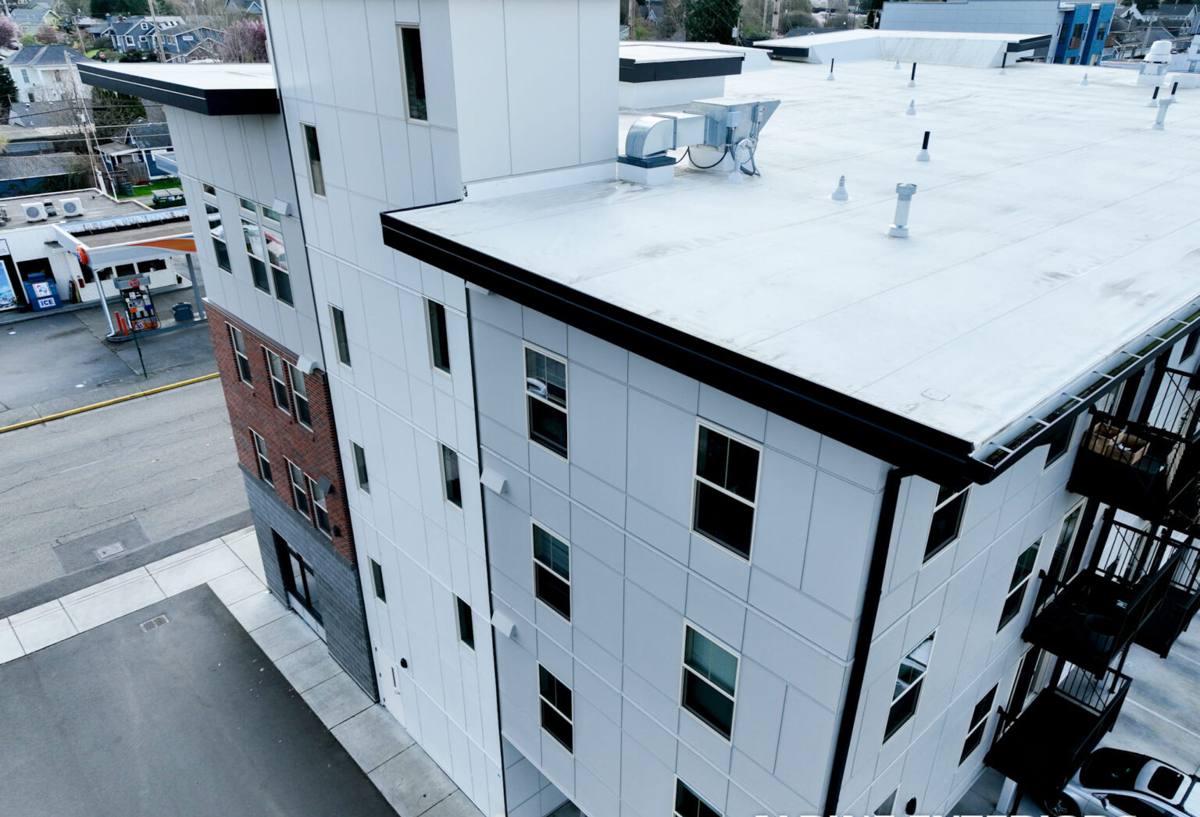
What Driving Rain and a Long Moss Season Do to a Wall
Moisture That Doesn't Just Fall Straight Down
Storms in this part of Washington rarely arrive as calm, straight-down rain. Wind pushes it sideways into wall assemblies, into the joints where trim meets siding, and into any gap around a window or door that wasn't flashed correctly. That sideways-driven moisture is what actually damages a wall over time, not the rainfall total by itself. A siding system that isn't detailed to shed water at every joint, lap, and penetration is working against that pattern instead of with it.
Moss, Mildew, and Shaded Walls
Mild temperatures and near-constant moisture add up to a long growing season for moss and mildew, and Nooksack's tree cover and river-valley humidity give it a head start over drier, more open parts of the county. Walls that stay damp longest — shaded, north-facing, tucked under overhangs with poor airflow — are the first to show green growth and dark staining. Any siding material with surface porosity or a finish that doesn't hold up under sustained moisture becomes a growth surface faster than most homeowners realize.
Salt-Tinged Air, Even Away From the Water
Nooksack isn't a waterfront town, but this stretch of Whatcom County still sees marine air move inland on a regular basis. That air carries enough salt content to accelerate corrosion on fasteners, flashing, and any exposed metal trim over the years, which is one more reason material and hardware choices matter here rather than something to shortcut on the theory that "we're not right on the water."
What a Correct Siding Installation Actually Involves
Siding performs the way it's supposed to only when the installation follows the manufacturer's spec, not a shortcut version of it. In a climate like this, skipping any of the following is where premature failure usually starts:
Drainage and the Weather-Resistive Barrier
A correctly lapped house wrap, properly integrated window and door flashing, and a rain screen gap behind the siding all work together to give moisture that gets past the outer surface somewhere to go besides straight into the wall sheathing. Skip the rain screen or lap a seam backward, and you've built a wall that traps water instead of shedding it.
Fastening and Clearances
Fastener type, spacing, and placement aren't preferences — the manufacturer specifies them for a reason, and corrosion-resistant fasteners matter more here given the marine air moving through the valley. Siding also needs proper clearance from grade, roof lines, and decks so it isn't sitting in standing moisture or splash-back.
Sealed Joints and Trim Transitions
Butt joints, corners, and trim transitions are where wind-driven moisture finds its way behind siding first if they're not sealed and detailed correctly. This is also the part of an installation that's hardest to inspect once the job looks finished, which is exactly why it shouldn't be rushed.
Why We Install Only James Hardie Fiber Cement
We used to install a wider range of siding products. We stopped, and the reason came from what we kept finding on tear-offs and service calls in wet, moss-prone Whatcom County towns, Nooksack included — not from a supplier arrangement or a sales angle.
- Non-combustible core: Fiber cement doesn't feed a fire the way wood-based siding products can, which matters for both safety and insurance considerations.
- Factory-applied ColorPlus finish: The color is baked on under controlled factory conditions instead of brushed on in the field, which holds up longer against fading, chalking, and sustained moisture exposure than most field-applied finishes.
- Climate-engineered HZ5 formulation: Hardie's HZ5 product line is built for regions with sustained moisture and freeze-thaw cycling, which describes this part of Whatcom County well.
- Dimensional stability: Fiber cement doesn't swell, cup, or warp the way engineered wood products can after repeated wet-dry cycles.
- A warranty backed by the manufacturer: It's transferable if the home sells, provided the installation follows Hardie's spec — which is one more reason we won't cut corners on the install itself.
We don't install LP SmartSide, vinyl siding, Cemplank, Allura, primed spruce, or cedar. Each has a place in the market, and plenty of homeowners are satisfied with them. But for a climate that puts driving rain, a long moss season, and marine-influenced humidity on a wall almost year-round, we've made a professional call to install one system we fully stand behind rather than offer something cheaper that quietly shifts maintenance risk onto the homeowner down the road.
How We Approach a Nooksack Siding Project
- Walk-through and assessment: We look at the existing siding, the wall assembly underneath where accessible, and any signs of past moisture intrusion before we talk about scope or numbers.
- Tear-off versus overlay decision: On most re-siding jobs we recommend a full tear-off so we can inspect and repair sheathing, address any hidden rot, and install the weather-resistive barrier correctly rather than build over an unknown condition.
- Barrier and flashing work: House wrap, window and door flashing, and a rain screen gap go in before a single piece of siding does. This is the step that determines how the wall performs for the next several decades, and it's not one we shortcut to save a day.
- Installation to Hardie's spec: Correct fastener type and spacing, proper clearances, and sealed joints and trim transitions, installed the way the manufacturer engineered the system to work.
- Final walk-through: We go over the finished job with the homeowner, point out anything worth knowing for long-term care, and make sure every detail matches what was scoped.
Common Problems We Find on Older Nooksack Homes
A lot of the calls we get in this area aren't from homeowners who ignored their siding — they're from homeowners whose siding was installed without the details above, or with a material that wasn't suited to this much sustained moisture. The patterns repeat often enough to be worth naming:
- Soft or spongy siding low on the wall or around window and door trim, usually a sign moisture has been getting behind the surface for a while
- Moss or dark staining that returns quickly after cleaning, especially on shaded or north-facing walls
- Cupping, swelling, or visible warping on wood-based or engineered wood siding after repeated wet seasons
- Rust staining around fasteners or trim, more common on hardware that wasn't rated for the moisture and marine air this area sees
- Peeling or chalking paint on siding with a field-applied finish rather than a factory-baked one
- Gaps at butt joints or trim transitions where sealant has failed or was never properly applied
Cost Factors for Siding Installation in This Area
| Factor | Why It Matters | Typical Impact |
|---|---|---|
| Tear-off vs. overlay | A full tear-off allows sheathing inspection and repair, plus correct barrier and flashing installation | Moderate to High |
| Home size and wall complexity | More wall area, corners, and trim details mean more material and labor | High |
| Existing moisture damage | Rotted sheathing or framing found once old siding comes off needs repair before new siding goes on | Variable, sometimes High |
| Siding profile chosen | Lap siding, shingle-style, and panel systems differ in material and labor requirements | Moderate |
| Trim and detail work | Corner boards, window and door trim, and transitions add labor time relative to plain wall runs | Moderate |
| Site access | Tree cover, tight lot lines, or difficult staging can slow the work | Low to Moderate |
These are general drivers, not a quote. Two homes on the same road in Nooksack can need very different scopes once we're actually pulling old siding and can see what's underneath, which is why we walk every property before putting a real number on the work rather than pricing over the phone.
Keeping New Siding Looking Right: A Homeowner Checklist
Correct installation does most of the work, but a little homeowner attention keeps it looking right for the long haul:
- Rinse siding once or twice a year, especially on shaded or north-facing walls where moss and mildew take hold first
- Keep gutters clear so overflow isn't running down or pooling against a wall
- Trim back trees and shrubs that keep siding shaded and damp longer than it needs to be
- Check caulking at trim transitions and penetrations every year or two and have any gaps resealed before they become a moisture path
- Watch for soft spots, staining, or bubbling paint after the wet season and have anything unusual looked at before it spreads
- Avoid pressure washing directly into siding joints or at close range, which can force water past the surface instead of just cleaning it
Why Hiring a Crew That Already Works This Area Matters
A crew that installs siding across Whatcom County regularly, in towns with river-valley humidity and heavy tree cover as well as ones closer to open water, sees firsthand how these conditions actually play out on real houses over a full year rather than how a product performs on a spec sheet. That experience shapes practical decisions on install day — where extra flashing attention pays off, which walls stay wet the longest after a storm, and which fastener and sealing details are worth the extra time so a homeowner isn't dealing with a callback after the next wet season. Nooksack's inland, tree-shaded setting isn't identical to more open or coastal parts of the county, and a crew that knows the difference details the job accordingly instead of applying the same approach everywhere.
If your Nooksack home needs new siding, or you're weighing whether to repair or fully replace what's there, we're glad to take a look and give you a straightforward, honest assessment of what the job actually needs. Reach out using the form below to schedule a free, no-pressure estimate.