 Blaine Siding
 Why Dakota Creek Homes Wear Out Siding Faster Than the Manual Says
Dakota Creek sits close enough to the water and the lowland drainage around it that homes here take a different kind of weather beating than a house ten miles inland in Whatcom County. It isn't one big storm that does the damage — it's the accumulation. Salt-laden air off the coast settles into every seam and fastener. Driving rain, pushed sideways by wind off the Strait, finds the gaps that vertical rain never would. And because this corner of Washington rarely gets a hard, dry freeze to knock it back, moss and algae get a long, uninterrupted growing season on anything that stays damp and shaded.
Manufacturer warranties and installation manuals are written for average conditions across the whole country. They're not written for a lot on Dakota Creek. That gap between "what the spec sheet assumes" and "what actually happens on this street" is where premature siding failure comes from — not bad luck, just a mismatch between the product, the install, and the site.
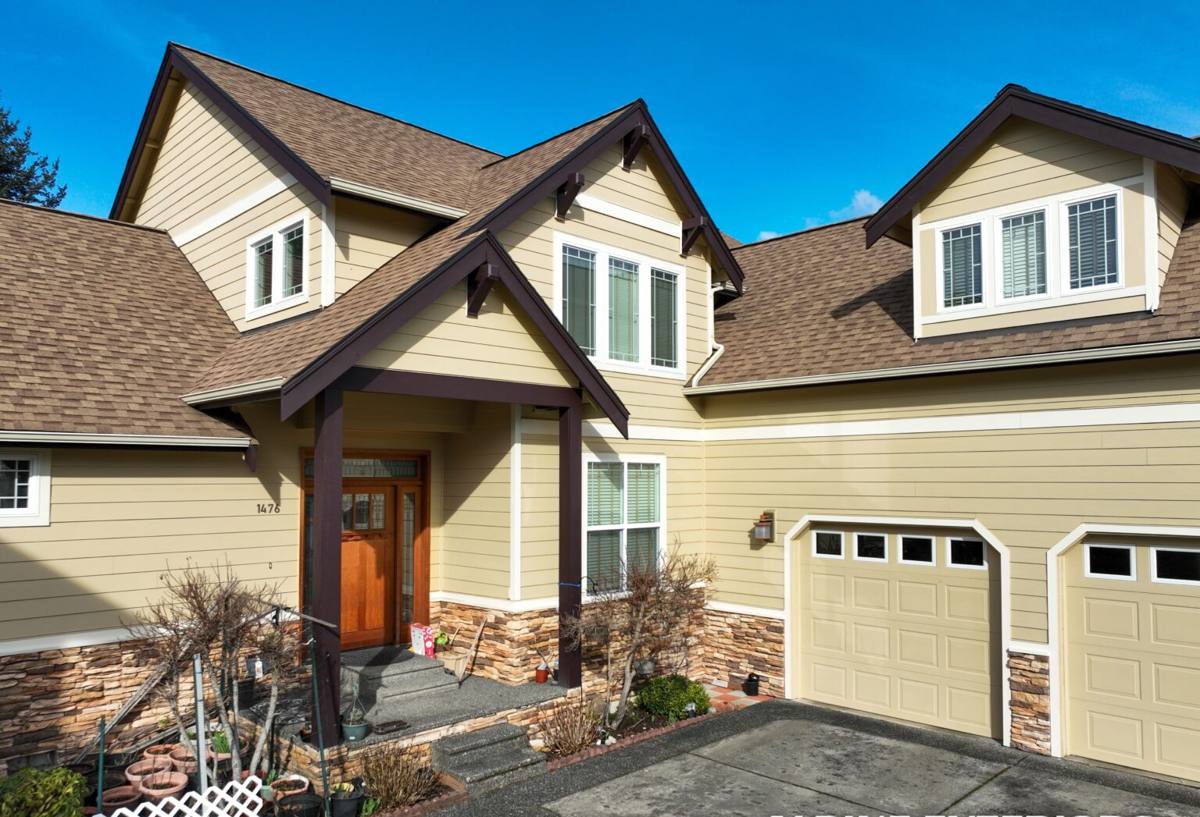
What Salt Air Actually Does to Siding Over Time
Salt air doesn't rot siding directly the way trapped moisture does, but it accelerates almost everything else that goes wrong:
- Fastener corrosion: Standard fasteners lose their coating faster in salt-influenced air, leading to rust streaks, weeping stains, and eventually loose panels.
- Finish breakdown: Field-applied paint chalks and fades faster near the coast. A factory finish holds up longer because it's cured under controlled conditions, not brushed on in variable weather.
- Metal trim and flashing fatigue: Uncoated or poorly coated flashing corrodes at a visibly faster rate within a mile or two of open water.
- Caulk and sealant aging: Salt-air exposure combined with UV and moisture cycling shortens the useful life of exterior sealants, which are already the first thing to fail on any siding job.
None of this means siding near Dakota Creek is a lost cause. It means the product and the fastener/flashing choices need to be matched to the exposure, not picked off a generic spec sheet.
Driving Rain and the Wall Behind the Siding
Blaine gets weather that comes in sideways as often as it comes straight down. Driving rain pressurizes a wall assembly differently than a gentle vertical rain does — it pushes water laterally into laps, seams, and butt joints that would otherwise stay dry. A siding job that looks fine from the driveway can still be feeding water behind the cladding if the laps, flashing, and water-resistive barrier underneath weren't detailed for that kind of wind-driven exposure. This is a water-management problem first and a materials problem second — but the material has to be able to tolerate the moisture that inevitably gets past even a good install, and that's where a lot of siding options come up short.
The Long Moss Season and What It Means for Your Siding
Whatcom County's moss season isn't a few weeks in spring — on shaded, north-facing, or tree-covered walls near Dakota Creek, it's most of the year. Moss and algae need moisture and organic material to feed on. Wood-based siding products give them exactly that. Even well-primed engineered wood siding has an organic wood-fiber core that, once the factory coating is compromised at a cut edge or fastener hole, becomes a food source. Fiber cement doesn't offer that food source — moss and algae can still grow on the surface if a wall stays damp and shaded long enough, but they aren't feeding on the siding itself, and a rinse or gentle wash restores the surface without damaging the material underneath.
This is one of the clearest, most practical differences homeowners in this specific microclimate will notice within the first few years of a siding job — long before rot or structural failure would ever show up.
What a Correct Siding Replacement Involves Here
A siding replacement in this area is not just "remove old siding, nail up new siding." Done right, it's a sequence where every step accounts for the exposure:
- Tear-off and wall inspection. Old siding comes off and the sheathing gets inspected for hidden water damage — common at inside corners, below windows, and around old penetrations that were never properly flashed.
- Repair before cover-up. Any soft or water-damaged sheathing gets replaced. Covering rot with new siding just hides a problem that keeps growing.
- Water-resistive barrier. A weather barrier suited to wind-driven rain exposure goes on correctly lapped, shingle-style, so water sheds down and out rather than working its way in at the laps.
- Flashing at every penetration. Windows, doors, hose bibs, vents, and light fixtures all get proper flashing integration — this is where driving rain finds its way in if it's skipped or rushed.
- Corrosion-resistant fasteners. Fastener spec matters more within salt-air exposure than most homeowners realize; the wrong fastener corrodes and streaks the siding within a few seasons.
- Correct siding installation to manufacturer spec. Proper gapping, fastener placement, and clearance from grade, decks, and roof lines — all details that affect how the wall handles moisture for the next several decades.
- Caulking and touch-up only where specified. Over-caulking traps moisture; under-caulking lets it in. There's a right amount, and it's less than most people assume.
Why We Install Only James Hardie Fiber Cement Here
We standardized on James Hardie fiber cement siding for every job we take on, including in Dakota Creek, for reasons that come directly from what this climate does to a wall over time:
- No organic material for moss and algae to feed on — a real advantage given how long the growing season is here.
- Non-combustible core — a material property, not a marketing point, and one that matters regardless of coastal exposure.
- ColorPlus factory finish — baked-on color that resists fading and chalking far better than field-applied paint exposed to salt air and UV.
- HZ5 product engineering — James Hardie's HZ line is built for moisture- and freeze-exposure climates, which fits the Pacific Northwest better than a one-size-fits-all national product.
- Strong transferable warranty — backed by a large manufacturer, transferable to a future buyer, which matters if you ever sell.
We don't install LP SmartSide, vinyl, Cemplank, Allura, primed spruce, or cedar. Each has a place in the market, but each also carries trade-offs — organic cores, seam and expansion behavior, or maintenance schedules — that we're not willing to put our name behind on homes exposed to salt air, driving rain, and a long moss season. Fiber cement, installed correctly, is the product we trust to hold up to this specific set of conditions for decades, not just years.
Comparing Siding Options for Dakota Creek's Exposure
| Factor | James Hardie Fiber Cement | Engineered Wood (e.g., LP SmartSide) | Vinyl |
|---|---|---|---|
| Organic core for moss/algae | No | Yes (wood fiber) | No, but seams trap debris |
| Salt air / corrosion resistance | High (with correct fasteners) | Moderate; edge exposure is a weak point | High, but can become brittle over time |
| Factory finish life expectancy | Long (ColorPlus baked finish) | Moderate (factory-primed, field-painted) | Color is through-body, but fades with UV |
| Non-combustible | Yes | No | No |
| Performance in driving-rain wind exposure | Strong when properly flashed | Sensitive to cut-edge and seam exposure | Panels can flex and gap in high wind |
Cost Factors for a Dakota Creek Siding Job
Every home is different, but a handful of factors consistently move the price on jobs in this area, more than they would on a job with no coastal or moisture exposure:
- Extent of hidden water damage found once old siding comes off — this is the single biggest swing factor on any older home near the water.
- Wall complexity — corners, dormers, and multiple roof intersections all add flashing detail work.
- Siding profile and trim package chosen (lap width, trim boards, accent details).
- Access — landscaping, fencing, or tight side yards near creek-adjacent lots can add labor time.
- Existing moss/algae remediation needed on the wall or surrounding surfaces before work begins.
We give straight, itemized estimates rather than vague ballpark numbers, because the honest answer is that we won't know the true scope until the old siding is off and the sheathing is visible.
Why a Crew That Already Works Dakota Creek Matters
Siding installation is the same trade everywhere, but a crew that's already worked this specific stretch of Blaine and Whatcom County knows things a generalist doesn't have to think about: which wall orientations hold moss the longest, which fastener specs actually hold up to the salt exposure here, and how much lap and flashing detail this particular wind-driven rain pattern requires. That's not something you learn from a manual — it's something you learn from doing the work on homes just like yours, in this exact microclimate, and seeing what holds up five and ten years later.
If your siding is showing chronic moss staining, chalky or peeling paint, soft spots near the bottom courses, or fastener rust streaks, it's worth having it looked at before those symptoms turn into a sheathing repair. We're happy to walk your property, explain what we see, and give you a straightforward, no-pressure estimate for a James Hardie siding replacement built for what Dakota Creek actually throws at a house.