 Blaine Siding
 Siding Replacement in Grandview: A Job That Has to Fit the Site, Not Just the House
Grandview sits on the higher, more open ground on the edge of Blaine, and homes up here tend to catch more wind and weather than houses tucked down closer to town or behind a tree line. That's not a knock on the neighborhood — it's just what comes with the elevation and exposure the name suggests. It also means a siding replacement in Grandview isn't quite the same job as the same house would be a mile away in a more sheltered spot. The wind loading is higher, the rain hits the walls at more of an angle, and there's less natural shelter from mature trees or neighboring structures to slow any of it down.
We replace siding on homes throughout Blaine and the surrounding Whatcom County area, and Grandview is one of the neighborhoods where the difference between a correctly installed job and a corner-cut one shows up fastest. This page walks through what the local climate actually does to siding here, what a proper replacement involves, and why we've standardized on one product — James Hardie fiber cement — for every reside we do in this area.
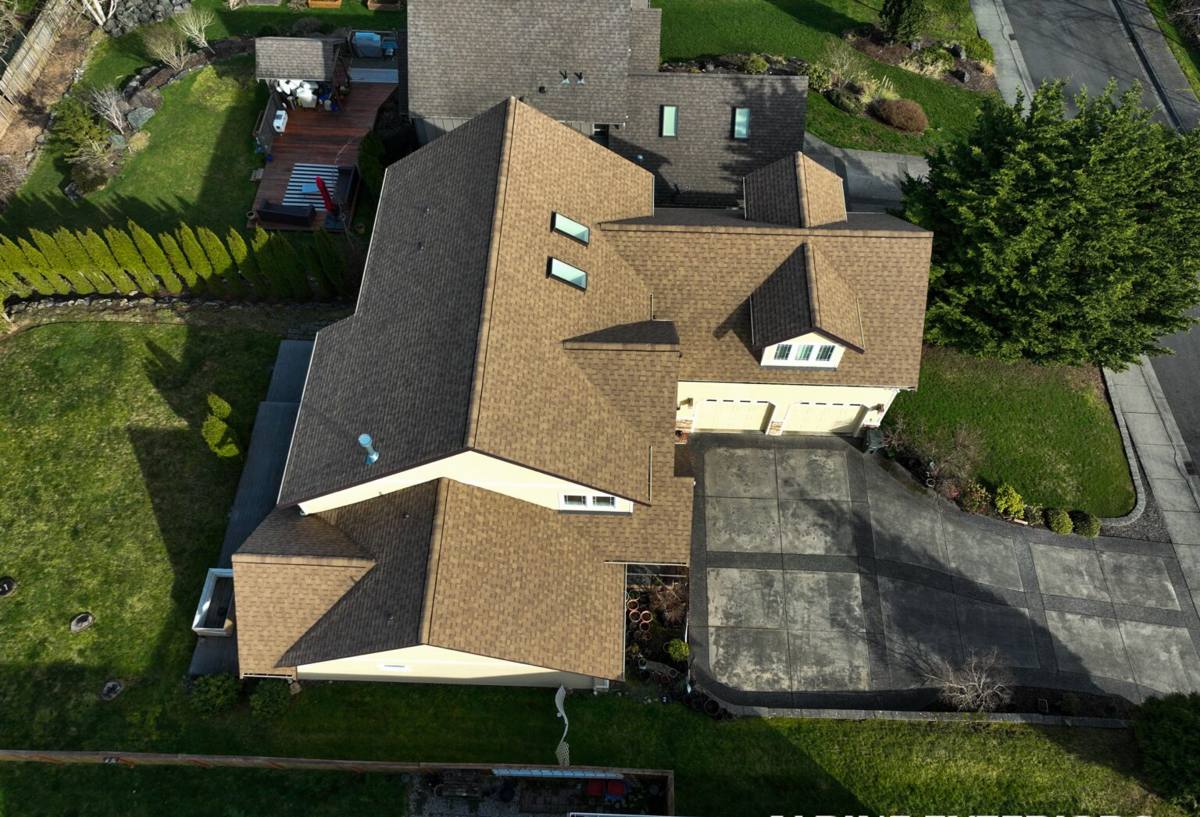
What the Grandview Climate Does to Siding
Salt Air on Exposed, Open Lots
Blaine sits right on the water, and salt-laden air moves inland with the prevailing wind on a regular basis. Homes on more open, elevated ground catch more of that airflow than houses set back or shielded by tree cover, which means fasteners, trim, and finishes on a Grandview home are doing more work against corrosion and finish breakdown than the same materials would on a sheltered inland lot. Over years, that steady low-level exposure is what separates a wall system that still looks tight after two decades from one that's chalking, staining, and pulling away from its fasteners well before that.
Driving Rain With Less to Break It
Open exposure cuts both ways — the same lack of windbreak that lets salt air move through freely also means wind-driven rain hits Grandview walls with more force and at more of a horizontal angle than it would on a calmer, more tree-sheltered site. That matters because most siding failures aren't the siding material rotting through; they're water finding a way in sideways, at a lap joint, a window flashing, or a corner that was caulked instead of properly flashed. A wall assembly built for gentle, mostly-vertical rainfall will get exposed on a site like this.
A Long Moss and Mildew Season
Like the rest of Whatcom County, Blaine gets a moss and mildew season that runs most of the year — mild temperatures, high humidity, and long stretches without enough sun to dry things out fully between storms. North-facing walls and any siding surface with texture or porosity tend to hold that moisture longest, and it shows up as green or black staining that keeps coming back no matter how many times it's washed off. On an elevated, more open property, that moisture load doesn't disappear — it just arrives as horizontal rain instead of standing puddling, which changes where on the wall it tends to collect.
Signs a Grandview Home's Siding Is Due for Replacement
Siding failure is usually gradual, and homeowners often live with early warning signs for a year or two before calling anyone. On an exposed site like this, those signs tend to show up sooner than they would on a sheltered lot. Worth checking for:
- Soft or spongy spots when you press on the siding, especially near the bottom courses or around window and door trim
- Visible warping, buckling, or gaps between boards that weren't there a few years ago
- Paint that's peeling, bubbling, or won't hold no matter how often it's redone
- Moss or mildew staining that returns quickly after cleaning, particularly on north- or wind-facing walls
- Cracked, split, or missing boards after a windstorm
- Interior signs — musty smells, staining near exterior walls, or peeling interior paint on an outside wall
- Rising energy bills that suggest the wall assembly is no longer doing its job insulating and sealing the house
Any one of these on its own might just need a repair. Several at once, or any sign of moisture getting behind the siding rather than just sitting on its surface, usually means the wall assembly itself has been compromised and a full replacement is the honest answer rather than another patch.
Why We Replace Siding With James Hardie Fiber Cement — and Nothing Else
We used to install a wider range of siding products. We stopped, and the decision came directly from what we kept seeing on tear-offs and service calls on exposed, weather-heavy properties like the ones in Grandview — not from a supplier relationship or a sales push. We don't install LP SmartSide, vinyl siding, Cemplank, Allura, primed spruce, or cedar. Each of those has a legitimate place in the market, and plenty of homeowners elsewhere are satisfied with them. But we made a professional call that on a site with this much wind and rain exposure, we'd rather stand fully behind one system than offer a cheaper option that quietly shifts long-term maintenance risk back onto the homeowner.
- Non-combustible core: Fiber cement doesn't feed a fire the way wood-based products can, which matters for safety and often for insurance underwriting as well.
- Factory-applied ColorPlus finish: The color is baked on under controlled factory conditions rather than brushed on in the field, and it holds up far longer against fading, chalking, and moisture intrusion than site-applied paint.
- Climate-engineered HZ formulation: Hardie's HZ5 product line is built for regions with heavy moisture exposure and freeze-thaw cycling, which describes this part of Whatcom County well.
- Dimensional stability: Fiber cement doesn't swell, cup, or warp the way engineered wood can after repeated wetting through a long wet season.
- A strong transferable warranty: Hardie backs its product with a substantial warranty, as long as installation follows their published spec — which is exactly why installation quality matters as much as the material choice.
The trade-off worth being honest about: fiber cement is heavier to handle, requires carbide-tipped tools to cut, and costs more upfront than vinyl or engineered wood. For a Grandview property taking the full brunt of this area's weather, we think that upfront difference is the cheaper decision over the life of the house — not the more expensive one.
What a Correct Siding Replacement Actually Involves
Full Tear-Off and a Wall Assessment
A proper reside starts with taking the old siding all the way off, not layering new material over it. That's the point where we can actually see the condition of the sheathing and framing underneath — whether there's rot, soft spots, or existing moisture damage that needs to be repaired before anything new goes up. Any exterior contractor willing to side over existing material without checking what's underneath is hiding the one thing that determines whether the new siding will actually last.
The Water-Resistive Barrier and Flashing
Siding is the outer shell of the wall system, not the waterproofing itself — that job belongs to the weather-resistive barrier and the flashing behind it. On an open, wind-exposed site, that means a properly lapped and taped barrier, correctly integrated flashing at every window and door, and kick-out flashing wherever a roof edge meets a wall so water gets directed away from the wall assembly instead of behind it. This is the part of the job that's invisible once the siding goes up, and it's also the part most responsible for whether a wall stays dry for thirty years or starts rotting from the inside in five.
Fastening and Manufacturer Clearances
Hardie siding is only as good as the installation behind it. That means the fastener type and spacing called for in Hardie's published installation guide, corrosion-resistant fasteners appropriate for a salt-air environment, and strict clearances between the bottom of the siding and grade, roof lines, decks, and patios so the material never sits in standing water or splash-back. Butt joints need to land on framing, stagger properly between courses, and be flashed or sealed to spec. None of this is visible from the curb — all of it is visible in how the wall performs over time.
Trim, Caulking, and Finish Details
The finish details are what most homeowners actually see day to day: clean corner trim, tight window and door casings, and caulk joints that are sized and placed correctly rather than used to cover up a gap that should have been closed with better carpentry. On a home taking direct wind-driven rain, sloppy caulking is one of the fastest ways for water to find its way behind an otherwise well-installed wall.
Comparing Siding Materials for an Exposed Grandview Property
| Material | Moisture Behavior | Performance in Wind & Salt Air | Typical Longevity Here |
|---|---|---|---|
| James Hardie fiber cement | Dimensionally stable; doesn't swell or absorb moisture | Rigid and heavy; factory finish resists fading and chalking | 30+ years with correct installation |
| Vinyl siding | Can warp, oil-can, or distort with temperature swings | Lightweight panels are more prone to wind damage; seams are exposure points | Variable; shorter on exposed, open lots |
| LP SmartSide / engineered wood | Wood-based core is moisture-sensitive at cut edges and joints | Cut-edge and joint sealing becomes critical in driving rain | Depends heavily on installation and ongoing maintenance |
| Cedar / primed wood | Absorbs and releases moisture readily | Needs consistent refinishing to hold up against salt air and rain | Shorter without regular upkeep |
What Drives the Cost of a Siding Replacement in This Area
No honest contractor will quote a firm number without walking the property first, but the factors that move the price are the same from job to job. As a broad, honest range, a full Hardie reside on a typical single-family home in this area usually lands in the mid-to-upper five figures, with the specifics below determining where in that range a given job falls.
| Cost Factor | Why It Matters |
|---|---|
| Wall area and home height | Square footage is the base driver; two-story walls add staging and labor time |
| Condition of the existing wall assembly | Hidden rot or moisture damage found during tear-off adds real cost, but it's cheaper to fix now than to bury under new siding |
| ColorPlus finish vs. field painting | Factory-applied ColorPlus costs more upfront but removes the painting question for years |
| Trim and accent scope | Corner trim, window and door casings, and any accent detailing add material and labor |
| Site exposure and access | Open, elevated, or hard-to-stage lots can affect scaffolding and scheduling around weather windows |
Our Process for a Grandview Siding Replacement
- An on-site walkthrough of the current siding and a check for signs of underlying moisture damage
- A clear, written scope of work and cost estimate before any contract is signed
- Full tear-off of the existing siding and an inspection of the sheathing and framing underneath, with any needed repairs addressed before new material goes up
- Installation of the weather-resistive barrier and flashing at every window, door, and roof-to-wall transition
- Installation of James Hardie siding to manufacturer specification — correct fasteners, spacing, and clearances
- Trim, caulking, and finish work, followed by a final walkthrough with the homeowner
Questions Worth Asking Before You Hire
- What siding material do they install, and why — and will they put it in writing?
- Do they tear off the old siding completely, or offer to side over it?
- How do they detail flashing at windows, doors, and roof-to-wall transitions on an open, wind-exposed lot?
- Do they carry current Washington contractor licensing and active liability insurance?
- Will they give you a clear, written scope before any contract is signed?
Why a Crew That Already Works Grandview Matters
A contractor who regularly works this part of Blaine already has a feel for how much more exposed these lots are than sheltered ones a short distance away, and that shows up in the decisions that don't get discussed at the estimate — where to add extra flashing, which fastener grade to use, how tight to run caulk joints on a wall that takes rain at an angle instead of straight down. Those aren't upgrades we charge extra for. They're what "installed correctly for this site" actually means once the estimate is done and the crew is on the roof.
Familiarity with the neighborhood also means fewer surprises during the job itself — knowing generally what tends to be hiding behind older siding in homes of a certain age and construction type in this area, and planning the tear-off and schedule around it instead of discovering it partway through and improvising.
If your Grandview home's siding is showing its age, we're happy to take a look and give you an honest read on what it actually needs — repair, partial replacement, or a full reside. Reach out below for a free, no-pressure estimate.