 Blaine Siding
 Point Roberts Roofs Take a Different Kind of Beating
Point Roberts sits on its own peninsula, surrounded by water on three sides, which means every roof out there is dealing with conditions most inland Whatcom County homes never see. Wind off the water hits harder and more often, salt spray settles into everything metal, and the rain doesn't just fall straight down — it drives in sideways during a real storm. None of this makes a roof fail overnight. It wears one down, year after year, until a storm finds the weak spot the previous few years already created.
Salt Air and Metal Fatigue
Flashing, fasteners, gutter hardware, and vent caps are usually the first casualties of salt-laden air. Galvanized and painted metals that would last decades a few miles inland can start showing rust and pinholing years sooner on a waterfront exposure. Once flashing starts to corrode, it stops doing its job long before it looks obviously "bad," which is why a lot of storm leaks trace back to flashing nobody thought to worry about.
Driving Rain and Wind Exposure
A roof that sheds rain fine in a normal shower can still leak in a wind-driven storm, because wind pushes water uphill under shingle edges, around ridge caps, and into any gap that gravity alone would never exploit. Point Roberts' open exposure to the Strait means these wind-driven events aren't rare here — they're a regular part of the fall and winter pattern.
A Moss Season That Doesn't Really End
Western Washington's damp, mild climate gives moss and algae a long runway, and Point Roberts' marine air keeps roofs wetter, longer, than drier inland spots. Moss doesn't just look bad — it holds moisture directly against the roofing material, works its way under shingle edges, and gradually lifts them enough for wind and rain to get underneath. A roof with heavy moss going into a storm is a roof that's already partway toward failing.
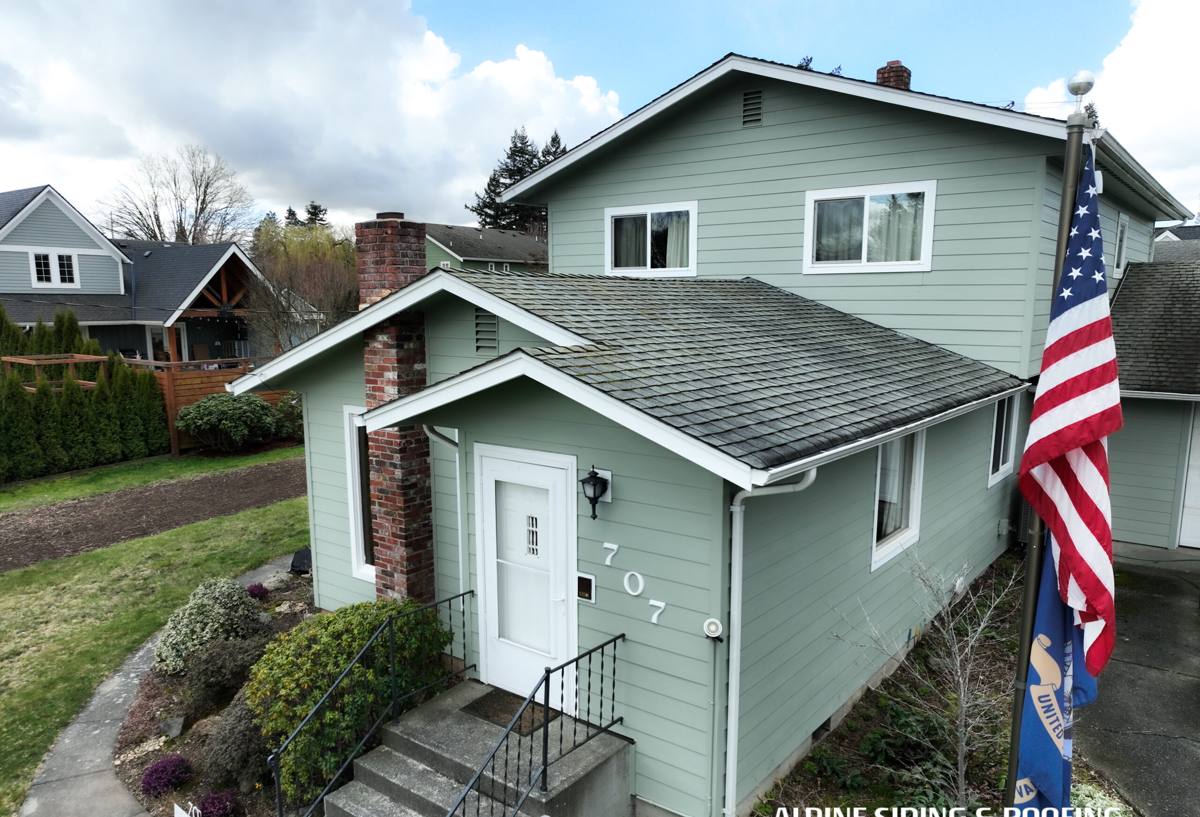
Common Storm Damage We See on Point Roberts Roofs
Most of the storm calls we get out to Point Roberts for fall into a handful of repeat patterns. Knowing what they are helps you know what to look for after the next front comes through.
Wind-Lifted and Missing Shingles
Shingles that were already brittle from age or UV exposure, or loosened by moss growth underneath, are the ones that lift or blow off first. Sometimes it's obvious — a bare patch of exposed underlayment or decking. Other times it's a handful of tabs that got creased or partially torn loose but are still sitting in place, which can look fine from the ground and still leak the next time it rains.
Flashing and Penetration Leaks
Chimneys, vent pipes, skylights, and roof-to-wall transitions are where storm leaks usually show up first, because that's where flashing has to do all the work. Salt-air corrosion, sealant that's dried out, or flashing that was never properly stepped and counter-flashed in the first place will all fail the same way: quietly, until a hard rain finds the gap.
Moss-Related Water Damage
When moss has been sitting on a roof for a season or two, storm damage often isn't a single dramatic failure — it's the moss finally winning a fight it's been having with the shingles for a while. We regularly find soft, saturated decking under thick moss mats that had been quietly holding water against the roof long before the storm that "caused" the leak.
What a Correct Storm Damage Repair Actually Involves
A storm repair done right isn't just about stopping the drip. It's about finding every place the storm exposed a weakness, not just the one that happens to be dripping onto the ceiling.
A Full Inspection, Not Just the Obvious Spot
We check the whole roof plane, not just the area over the leak, because wind damage rarely limits itself to one spot. That includes checking ridge caps, valleys, flashing at every penetration, gutter attachment points, and the areas most exposed to prevailing wind and salt spray.
Matching Materials and Techniques
Patching storm damage with mismatched shingles, the wrong fastener type, or improvised flashing might stop a leak for a season, but it rarely holds up to the next storm and it can void whatever warranty is left on the roof. We match the existing material and manufacturer specs as closely as possible, and where an exact match isn't available, we're upfront about that before the work starts.
Proper Flashing and Underlayment Work
Given how much of Point Roberts' storm damage traces back to flashing and moisture intrusion rather than missing shingles alone, we treat flashing and underlayment repair as part of the job, not an upsell. Replacing a shingle over failed flashing just buys you the same leak again next winter.
Why a Blaine-Based Crew That Already Works Point Roberts Matters
The Border Crossing Reality
Point Roberts is part of Washington, but the only way to drive there is through Canada — there's no direct U.S. road connection to the rest of Whatcom County. That single fact changes how storm repair actually works on the ground. A contractor who isn't set up for it has to plan around border wait times, coordinate tools and materials crossing back and forth, and often just decides it's not worth the hassle for one job. That's a big part of why some homeowners out there have a hard time getting anyone to show up quickly after a storm. Being based in Blaine, close to the crossing, means we can respond without treating the trip itself as a barrier.
Knowing the Housing Stock
A lot of Point Roberts homes were built as cabins or seasonal properties that have since become full-time residences, which means roof age, ventilation, and past repair quality vary a lot from house to house. Crews who've actually worked the area learn what's typical out there — the common roof ages, the usual trouble spots on waterfront-exposed homes, and which older repairs tend to need a second look.
Our Process, Start to Finish
- Call and initial description. We ask what you're seeing — active leak, missing shingles, damage after a specific storm — so we show up with the right materials and expectations.
- On-site inspection. We walk the roof (or use a ladder and binoculars if conditions don't allow safe roof access that day) and check both the interior and exterior for related damage.
- Written estimate. You get a clear explanation of what's damaged, what needs repair versus what's just cosmetic, and a straightforward price before anything is touched.
- Repair. We fix the actual problem — flashing, decking, underlayment, and shingles as needed — not just the visible symptom.
- Cleanup and walkthrough. Debris and old materials leave with us, and we walk you through what was done.
Repair or Replace? How We Make That Call
Not every storm-damaged roof needs a full replacement, and not every roof is worth repairing again. The honest answer depends on a few concrete factors.
| Factor | Leans Toward Repair | Leans Toward Replacement |
|---|---|---|
| Roof age | Under roughly 15 years | Nearing or past its material's expected lifespan |
| Damage extent | Isolated to one area or a few penetrations | Spread across multiple roof planes |
| Underlying decking | Solid, no rot found | Soft or saturated decking in multiple spots |
| Repair history | First or second repair | Third or later repair in the same area |
| Moss/algae condition | Light, surface-level growth | Heavy moss with visible shingle lift |
When a roof is young and the damage is contained, a targeted repair is the honest recommendation, and we'll tell you that even if a full replacement would be a bigger job for us. When we find repeated past patch jobs, soft decking, or heavy moss damage under the storm damage itself, we'll explain why a repair would likely just be a short-term fix and let you weigh that against the cost of replacement.
After the Repair: Reducing Your Next Storm's Damage
Moss Management
Keeping moss growth under control between storm seasons is one of the more effective things a homeowner can do to prevent repeat damage, particularly on shaded or north-facing sections of roof that stay damp longest.
Gutter and Drainage Upkeep
Clogged gutters back water up under the roof edge and into fascia boards, which is a slow, quiet way to create the kind of soft decking that turns a minor storm leak into a bigger repair. Clearing gutters before the fall storm season starts is basic, cheap insurance.
Post-Storm Checks
After any significant wind event, a quick visual check — from the ground, not the roof — for lifted shingles, debris in the gutters, or dented vent caps can catch a small problem before the next rain turns it into a ceiling stain.
What to Do in the First 48 Hours After a Storm
- Check the attic and ceilings for new water stains, damp insulation, or drips — this often shows up before any exterior damage is obvious from the ground.
- Photograph any visible exterior damage from the ground or from inside; don't get on a wet or storm-damaged roof yourself.
- If water is actively coming through, place a container to catch it and move anything valuable out of the drip path.
- Note the date and approximate time of the storm for your records and any insurance claim.
- Call for an inspection promptly — a small leak left over a wet winter can turn into a decking or framing repair.
- Keep receipts for any temporary measures you take, such as a tarp, in case they're relevant to a claim.
Insurance and Storm Claims
Most homeowners' policies cover sudden storm damage, but coverage details, deductibles, and what counts as "sudden" versus "wear and tear" vary by policy. We're happy to document what we find in plain language — what's damaged, what likely caused it, and what repair involves — so you have something clear to give your adjuster. We don't handle the claim itself, but a straightforward, honest inspection report tends to make that process go a lot smoother than a vague verbal description.
If a recent storm has left you with a leak, missing shingles, or just a nagging feeling something's not right up there, we're glad to come out to Point Roberts and take an honest look. The estimate is free, there's no pressure to book anything on the spot, and you'll get a straight answer about whether you're looking at a repair or something bigger. Use the form below to get started.