 Blaine Siding
 Composite Decking for Sumas Homes: Built for the Weather You Actually Get
Sumas sits in a part of Whatcom County that doesn't get a break from moisture. Rain moves through steadily most of the year, marine air off the Salish Sea keeps humidity high even away from the water, and the shoulder seasons bring the kind of low, wet cold that turns any north-facing surface into a moss farm by February. A deck built without that reality in mind doesn't fail dramatically — it just slowly gets worse. Boards cup, fasteners work loose, and a surface that looked great at installation is slippery and gray within a few winters.
Composite decking, installed correctly, is one of the better answers to that climate. It doesn't rot, it doesn't need yearly staining, and the better products resist the moss and algae growth that plague wood decking in this part of the state. But "composite" isn't one product, and "installed correctly" is doing a lot of work in that sentence. This page covers what actually matters for a composite deck built in and around Sumas — not the generic pitch you'll get from a national deck-building franchise that's never worked a Whatcom County job site.
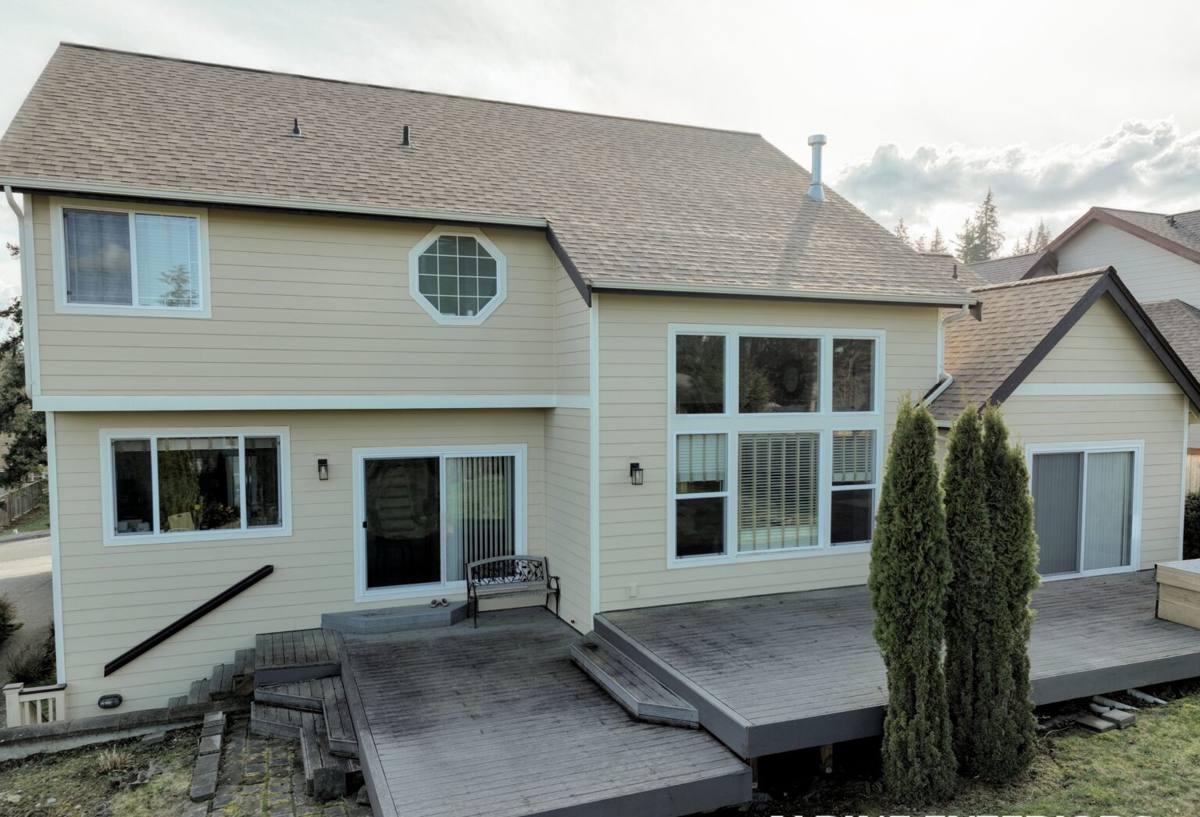
What Driving Rain, Salt Air, and Moss Season Actually Do to a Deck
Every material decision on a composite deck should trace back to three regional facts:
- Driving rain gets pushed sideways by wind off the water more often here than in drier inland climates, which means ledger boards, fascia, and any wood-to-composite transition points take on more water than a spec sheet from a manufacturer in the Southwest ever accounted for.
- Marine air carries salt and moisture that accelerates corrosion on cheap or exposed fasteners, and it keeps humidity elevated even on days it isn't actively raining, which slows drying time between weather events.
- A long moss and algae season — realistically fall through spring — means any deck surface with poor drainage, shade, or a rough, uncapped texture will host organic growth that makes the deck slick and eventually stains it permanently.
None of these are exotic problems. They're just persistent, and persistence is what wears out decks. A composite deck built for Sumas needs to manage water at the substructure level, not just present a nice-looking surface on top of it.
What a Correctly Built Composite Deck Involves
The substructure matters more than the boards
Most complaints about composite decking — sagging, soft spots, boards that seem to move — actually trace back to the frame underneath, not the decking material itself. A correct build includes:
- Joist spacing matched to the specific composite product's span rating (many composite boards require tighter joist spacing than the 16" o.c. standard used for wood decking).
- Joist tape over every joist top to keep standing water off the framing lumber, which matters a lot more in a climate where the frame rarely gets a chance to fully dry out.
- Proper flashing where the deck ledger meets the house, since this is the single most common point of hidden water damage on any deck, composite or wood.
- Adequate slope and drainage under the deck itself so water doesn't pool against posts and footings.
Fasteners and fastening systems
Face-screwed decking is cheaper and faster, but hidden fastener systems (clips that sit in a grooved edge of the board) give a cleaner look and eliminate hundreds of screw penetrations that would otherwise be potential water entry points. In a marine climate, we also pay attention to fastener material — coated or stainless hardware holds up considerably longer than bargain-grade fasteners exposed to salt-laden air year-round.
Expansion gaps
Composite boards expand and contract with temperature more than most homeowners expect. Skipping proper end-gaps and picture-frame transitions is a common shortcut that shows up a year or two later as buckled boards or popped fascia.
Choosing the Right Composite Product
"Composite decking" covers a wide range of products, from economy boards to fully capped polymer systems. The right choice depends on budget, sun exposure, and how much you want to think about the deck once it's built.
| Type | What It Is | Best For | Trade-Offs |
|---|---|---|---|
| Uncapped composite | Wood-plastic blend, no protective outer layer | Tight budgets, covered or low-exposure areas | More prone to moisture absorption, staining, and fading over time in a wet climate |
| Capped composite | Wood-plastic core with a polymer shell on the visible faces | Most Sumas homes — solid balance of cost and weather resistance | Cut ends still need to be sealed or capped to fully protect the exposed core |
| Capped polymer (PVC-based) | No wood content, fully encapsulated | High-moisture areas, ground-level decks, homes wanting the lowest possible maintenance | Highest upfront cost; can feel less "wood-like" underfoot to some homeowners |
For most Sumas properties, we lean toward capped composite as the practical middle ground — it holds up well against the rain and moss cycle here without pushing the budget to PVC-tier pricing. For decks close to grade, heavily shaded, or built over a patio where drainage is limited, capped polymer earns its higher price with genuinely better moisture performance.
Our Process, Start to Finish
- On-site assessment — we look at drainage, sun/shade exposure, existing structure (if this is a replacement deck), and how the deck ties into the house.
- Honest product recommendation — based on your budget and how the space is actually used, not a one-size-fits-all upsell.
- Permitting — decks of most sizes require a permit; we handle the paperwork and inspections so you don't have to chase it down.
- Demo and structural work — including footing and framing repairs if an existing deck's substructure isn't sound enough to build on.
- Installation — proper flashing, joist tape, fastening system, and finish details (fascia, stair treads, railing) done in sequence, not shortcuts stacked on shortcuts.
- Final walkthrough — we go over the finished deck with you, including what maintenance (minimal as it is) the product actually needs going forward.
Permits and Local Code Considerations
Sumas falls under its own permitting process, distinct from unincorporated Whatcom County jurisdictions nearby. Footing depth requirements, setback rules, and guardrail/stair code all get checked during inspection, and getting them wrong means costly rework. Working with a crew that already knows which department to call and what inspectors in this area actually look for saves real time — we've built that relationship because we work here regularly, not as a one-off drive-in job.
Maintenance: What "Low-Maintenance" Composite Still Needs
Composite decking is a real improvement over wood in a climate like this, but "low-maintenance" isn't "no-maintenance." A realistic maintenance routine for a Sumas deck includes:
- Periodic washing (a garden hose and stiff-bristle brush, or a low-pressure wash) to keep moss and algae from getting a foothold in shaded areas.
- Keeping gutters and downspouts clear so runoff from the roof isn't dumping extra water directly onto or under the deck.
- Sweeping debris out of gaps between boards so organic material doesn't sit and hold moisture against the surface.
- Checking railing and stair connections annually, since hardware is still hardware regardless of what the decking itself is made of.
Why a Crew That Already Works Sumas Matters
Sumas is a small enough community that it's easy for it to fall into the gap between contractors based in Bellingham and crews working the Canadian border towns — some companies treat it as a long drive for a small job and either avoid it or rush the work. A crew that already routes through Sumas regularly means: someone answers if a warranty issue comes up, the crew already understands the local permitting office, and the drive to your job site isn't an excuse to cut corners or skip a step to save time.
What to Ask Before You Hire a Decking Contractor
- Are you licensed and insured in Washington, and can you provide proof?
- Will you pull the permit, or is that left to me?
- What's your joist spacing and fastening plan for the specific composite product I'm considering?
- Do you use joist tape and proper ledger flashing as standard practice, not an upgrade?
- What does the manufacturer's warranty actually cover, and does your installation meet its requirements?
- Can I see a couple of decks you've built in this area?
If you're weighing a new composite deck or replacing a tired wood one, we're happy to walk the property, talk through what makes sense for your budget and how you use the space, and give you a straightforward, no-pressure estimate. There's a form below to get that scheduled.