 Blaine Siding
 Asphalt Shingle Roofing Built for Nooksack's Climate
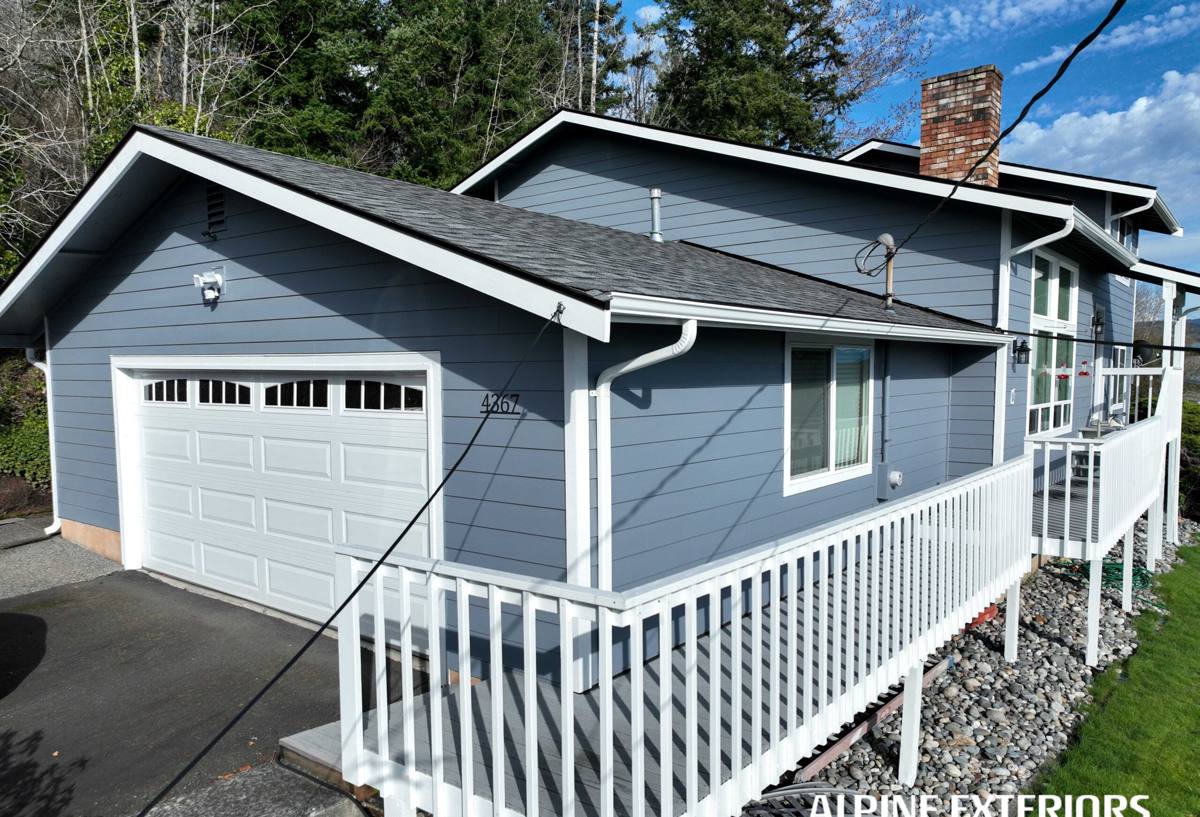
Nooksack sits close enough to the water that salt air is part of daily life, and far enough inland that homes still catch the full force of Whatcom County's wet-season storms. That combination is hard on a roof. Asphalt shingles remain the most practical choice for most homes in this area because they're affordable, repairable, and available in products engineered specifically for algae and moss resistance — but only when they're installed correctly for the conditions here. A shingle roof that would hold up fine in a dry inland climate can fail early in Nooksack if the underlayment, ventilation, and flashing details aren't matched to what this area actually throws at a house.
We work on roofs throughout the Blaine area, including Nooksack, and we see the same failure patterns repeat: moss working under shingle tabs, nail heads corroding faster than expected near the coast, and ventilation that was adequate when the house was built but is now undersized for how tight modern insulation upgrades have made the attic. A roof done right here accounts for all of that from the start.
Why Local Conditions Change What "Correct" Looks Like
Salt Air and Metal Components
Salt-laden air accelerates corrosion on any exposed metal — nail heads, flashing, drip edge, and vent stacks. Standard electro-galvanized fasteners can start showing rust streaks on shingles well before the shingles themselves are due for replacement. We spec corrosion-resistant fasteners and flashing metals for roofs in this area, which costs a little more up front but avoids the streaking and premature leaks that come from fastener failure.
Driving Rain and Wind-Driven Water
Storms coming off the water don't just fall straight down — wind pushes rain sideways and up under shingle edges, especially at eaves, valleys, and anywhere a roof plane meets a wall or chimney. This is where most leaks actually start, not in the open field of the roof. It's also why we don't treat flashing and underlayment as an afterthought; they matter more than the shingle brand in most failure cases we're called out to fix.
The Long Moss Season
Whatcom County's wet season stretches long enough that north-facing slopes and shaded roof sections rarely get a real chance to dry out. Moss and algae take hold in that moisture, and once moss gets a foothold it lifts shingle edges, holds water against the roof deck, and accelerates granule loss. A roof with no ventilation gaps for airflow and no algae-resistant granules is fighting an uphill battle from day one.
What a Correct Asphalt Shingle Roof Involves
A properly installed shingle roof is a system, not just a layer of shingles nailed to a deck. Each component has a job:
- Roof deck inspection and repair — soft, delaminated, or water-damaged sheathing gets replaced before anything new goes down, not covered up.
- Ice-and-water shield at vulnerable zones — eaves, valleys, and roof-to-wall transitions get a self-adhering waterproof membrane, not just felt paper.
- Synthetic underlayment across the field — more durable and more consistently waterproof than old-style felt, especially through a long wet season.
- Corrosion-resistant flashing and fasteners — matched to the salt-air exposure typical of this area.
- Balanced intake and exhaust ventilation — soffit intake vents paired with ridge or roof vents so the attic can actually breathe, which slows moss growth and prevents moisture buildup under the deck.
- Algae-resistant shingles — shingles with copper- or zinc-infused granules resist the algae staining and moss establishment that plain shingles are prone to here.
Skip any one of these and the roof will still look fine on install day — the problems show up two, five, or ten years later, usually as a leak that's hard to trace back to the real cause.
Repair, Re-Roof, or Full Replacement
Not every roof in Nooksack needs to be torn off. We look at the actual condition before recommending anything:
| Situation | Typical Approach | What to Watch For |
|---|---|---|
| Isolated leak, roof under 10-15 years old | Targeted repair — flashing, valley, or damaged shingle section | Confirm the deck underneath wasn't compromised by the leak |
| Moss buildup, shingles otherwise sound | Moss removal, treatment, and ventilation improvements | Aggressive scraping can strip granules — this needs to be done carefully |
| Widespread granule loss, curling, or brittle shingles | Full re-roof | Underlayment and flashing should be replaced too, not just the shingles |
| Multiple leak points or soft decking found | Tear-off and replacement | Deck repair costs vary depending on how much water damage is hidden underneath |
Cost depends heavily on roof size, pitch, layer count, and how much deck repair is needed once the old shingles come off. We give straight numbers after an actual look at the roof rather than a guess over the phone.
Our Process on a Nooksack Roofing Project
1. On-Site Inspection
We walk the roof (or use appropriate access for steep or unsafe pitches) and check the deck, flashing, ventilation, and shingle condition — not just what's visible from the ground.
2. Honest Scope and Written Estimate
You get a clear breakdown of what actually needs to happen, what's optional, and what it costs. If a repair will genuinely hold, we say so instead of pushing a full replacement.
3. Material Selection for the Site
We help you weigh shingle class, algae resistance, and color against how much sun or shade your specific roof gets, since that affects moss risk more than most homeowners expect.
4. Tear-Off and Deck Prep (When Needed)
Old material comes off cleanly, the deck gets inspected board by board, and any soft or damaged sheathing is replaced before underlayment goes down.
5. Installation to Manufacturer and Climate Spec
Proper nailing pattern, correct overlap, sealed valleys, and ventilation tied in correctly — the details that determine whether the roof performs in year one and still performs in year fifteen.
6. Final Walkthrough
We review the finished work with you, including how the ventilation and drainage are set up, so you know what's there and what maintenance (if any) it needs going forward.
Maintenance That Actually Extends Roof Life Here
Given the moss season and salt exposure, a few habits make a real difference in how long a shingle roof lasts in this area:
- Keep gutters clear so water isn't backing up under the eave edge during heavy rain.
- Trim back overhanging branches on shaded slopes to let more light and air reach the roof.
- Have moss addressed early — a light coating is a quick treatment, established moss under shingle tabs is a bigger job.
- Get flashing and valleys checked after major windstorms, since driving rain finds weak points there first.
- Schedule a walk-through inspection every couple of years even without an obvious problem, especially once a roof passes the ten-year mark.
Why Hiring a Crew That Already Works in This Area Matters
A roofer who mainly works drier, inland jobs may not default to corrosion-resistant fasteners or plan ventilation around a long moss season, because they haven't had to. A crew that regularly works Blaine and the surrounding Whatcom County communities, including Nooksack, has already seen which shortcuts fail here and builds around them from the start. That's not a marketing point — it shows up in fewer callbacks and roofs that still look and perform well well past year ten.
It also matters for something less obvious: local crews know how to sequence work around this area's weather windows, so a project doesn't get left partially torn off when a storm rolls in off the water. That scheduling judgment only comes from actually working the area season after season.
Questions Worth Asking Before You Hire
Whoever you choose for a roofing project in Nooksack, it's reasonable to ask them directly:
- What underlayment and ice-and-water shield do you use, and where specifically does it go?
- What fasteners and flashing metal do you use, and are they rated for coastal salt exposure?
- How will you address or improve attic ventilation as part of this job?
- What's your plan if you find deck damage once the old roofing comes off?
- Is the warranty from the manufacturer, from your labor, or both, and what actually voids it?
A contractor who answers these clearly and specifically, without vague reassurances, is one worth trusting with the job.
Get a Straightforward Estimate
If your roof is showing moss, granule loss, staining, or you're just not sure what condition it's actually in, we're happy to take a look. We'll give you a clear, no-pressure estimate and an honest read on whether you're looking at a repair or a full replacement — no upsell, just what the roof actually needs. Use the form below to request your free estimate.