 Blaine Siding
 Building Decks for a Different Kind of Weather
Birch Point sits close enough to the water that homes here deal with a different set of conditions than a deck built a few miles inland. Salt-laden air, wind-driven rain coming off the Strait, and a wet season that stretches long into spring all put real stress on outdoor structures. A deck that would hold up fine in a drier part of Whatcom County can start showing problems within a few years out here — soft spots in the decking, rusted fasteners bleeding through the boards, moss creeping across every horizontal surface that doesn't get sun or airflow.
None of that means a deck at Birch Point can't last. It means the build has to account for the conditions from the start — material selection, framing details, fastener choice, and drainage all matter more here than they would somewhere sheltered. This page walks through what that actually looks like, so you know what to expect and what to ask for.
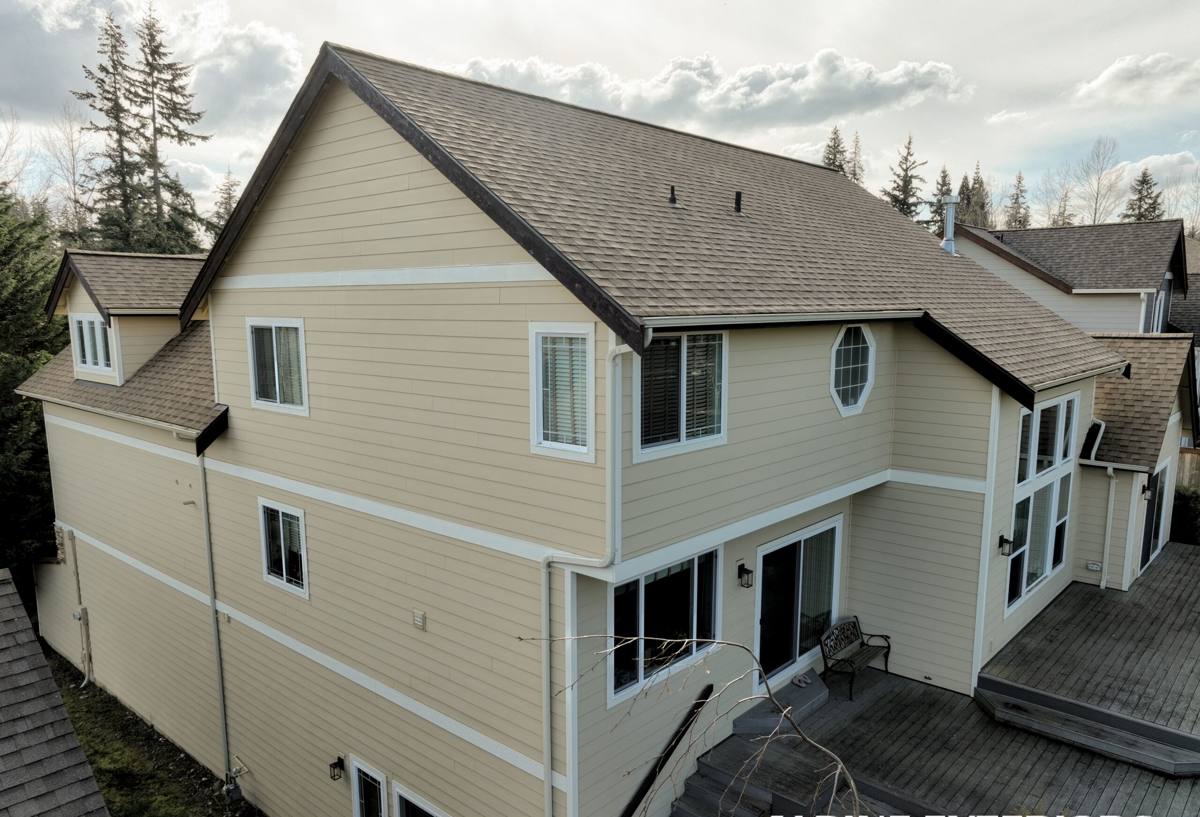
What Salt Air and Driving Rain Do to a Deck Over Time
It helps to understand the specific ways coastal exposure wears a deck down, because it changes which corners are safe to cut and which ones aren't.
Salt Air and Metal Fasteners
Salt in the air accelerates corrosion on any exposed metal — nails, screws, joist hangers, bolts. Standard galvanized coatings that hold up fine inland can start breaking down faster near the water, leading to rust streaks on the decking and, over enough years, weakened connections you can't see from the surface.
Driving Rain and Water Intrusion
Rain that comes in at an angle, pushed by wind off the water, gets into places vertical rain never reaches — under railings, behind ledger boards, into end grain on stair stringers. Decks built without attention to flashing and end-grain sealing end up with rot starting in exactly those hidden spots.
Moss and the Long Wet Season
Whatcom County's wet season runs long, and any deck surface that stays shaded and damp for weeks at a time becomes a moss magnet. Moss holds moisture against the decking surface, which speeds up wood decay and makes boards slick and unsafe underfoot — a real concern on stairs and any deck near mature trees.
Decking Material: What Actually Holds Up Here
There's no single right answer for every home — budget, look, and how much maintenance you want to do all factor in. But some materials handle this climate better than others.
| Material | Moisture & Moss Behavior | Maintenance | Typical Lifespan Here |
|---|---|---|---|
| Pressure-treated lumber | Absorbs moisture, needs sealing to resist moss and rot | Annual cleaning and re-sealing recommended | 10-15 years with upkeep |
| Cedar | Naturally rot-resistant but still needs sealing near the water | Periodic cleaning and refinishing | 15-20 years with upkeep |
| Capped composite | Doesn't absorb moisture; moss can still grow on the surface in shade but wipes off easily | Occasional washing, no sealing or staining | 25+ years, manufacturer-warrantied |
| PVC decking | Fully moisture-resistant, most moss-resistant option | Lowest maintenance of the group | 25+ years, manufacturer-warrantied |
We install all of the above and will give you an honest read on which fits your home, your budget, and how much maintenance you actually want to sign up for. A lot of Birch Point homeowners lean toward capped composite or PVC specifically because they don't want to be re-sealing a deck every year within sight of the water — but a well-sealed cedar or treated-lumber deck, maintained on schedule, still performs well and costs less up front.
What Happens Below the Decking Matters More Than the Decking Itself
The boards you walk on get all the attention, but the framing underneath is what determines whether a deck is safe and long-lived. This is also where corners get cut on lower-quality builds, because it's the part nobody sees once the project is done.
Fasteners
In a marine-influenced climate, we use stainless steel or high-grade coated fasteners rated for exterior and coastal exposure, not standard interior-grade hardware. It costs more up front and it's the difference between hardware that's still solid in fifteen years and hardware that's rusting through in five.
Joist Hangers and Structural Connectors
Same logic applies to joist hangers, post bases, and structural screws — coastal-rated hardware throughout, not just at the visible connections.
Ledger Board Flashing
Where the deck attaches to the house is the single most common source of hidden rot on any deck, anywhere. Proper flashing that sheds water away from the house structure is non-negotiable, and it matters even more with wind-driven rain pushing water where gravity alone wouldn't take it.
End-Grain Sealing
Cut ends of lumber — stair stringers, post bottoms, joist ends — absorb water far faster than the face of a board. Sealing every cut end during construction, not just the finished surfaces, closes off one of the most common entry points for rot.
Design Choices That Reduce Moss and Extend Deck Life
Good design does a lot of the maintenance work for you before the deck is ever built.
- Orient and space the deck to get sun and airflow across as much of the surface as possible, rather than leaving permanently shaded sections that never dry out
- Use proper board spacing so water drains through rather than pooling on the surface
- Grade and drain the ground underneath the deck so moisture doesn't sit trapped below it
- Keep the deck surface slightly clear of overhanging vegetation where possible, since dropped leaves and needles hold moisture and feed moss growth
- Choose railing and post details that shed water rather than catching it in horizontal ledges and joints
None of this eliminates maintenance entirely, but it substantially cuts down how often you're out there scrubbing moss off the boards or watching for soft spots.
Railings, Stairs, and Local Code
Deck railings and stairs are structural safety items, not just aesthetic ones, and Whatcom County building code has specific requirements around railing height, baluster spacing, and stair geometry for any deck above a certain height off the ground. We build to code as a baseline, pull permits where the project requires it, and handle the inspection process as part of the job — you shouldn't have to chase that down yourself.
For a coastal property, we also pay attention to how railings are detailed at the connection points, since horizontal railing caps and post tops are prime spots for water to sit and eventually work its way into the wood if they aren't built to shed it.
Our Deck Building Process
Every deck we build at Birch Point goes through the same basic sequence, though the specifics get tailored to your home and site.
- On-site assessment — we look at sun exposure, drainage, proximity to the water, existing structure (if it's a replacement), and how the deck will actually get used
- Material and design walkthrough — an honest conversation about decking material, railing style, and layout, including trade-offs on maintenance and cost
- Permitting — we handle the permit application and code review where required
- Framing — coastal-rated fasteners and connectors, proper ledger flashing, sealed end grain
- Decking, railings, and stairs — installed to the agreed spec, with attention to drainage and spacing
- Final walkthrough — we go over the finished deck with you, including what maintenance schedule makes sense for the material you chose
Maintenance: What You're Actually Signing Up For
Whatever material you choose, a coastal deck needs some ongoing attention. Here's roughly what that looks like by material type:
- Wood decks (treated lumber or cedar): annual or biennial cleaning and resealing, plus periodic checks for soft spots, especially near ground contact and stair stringers
- Composite and PVC decks: occasional washing to keep moss and mildew from taking hold on shaded sections, with no sealing or staining required
- All decks: keep gutters and drainage paths clear so runoff isn't sheeting directly onto or under the deck, and clear off standing leaves or debris before the wet season sets in
We'll walk you through the specific maintenance schedule for whatever material you go with, so there are no surprises a few years down the road.
Why Local Experience Matters for This Job
A deck built by a crew that hasn't worked this specific stretch of coastline will often use the same fastener grade, the same detailing, and the same material assumptions they'd use on an inland project — because that's what works most places. Out here, that approach shortens the life of the deck. We've built and repaired decks throughout the Blaine area and understand what the salt air, the wind-driven rain, and the moss season actually do to a structure over years, not just what it looks like on installation day. That shows up in fastener selection, in how we detail the ledger and railings, and in what we recommend for decking material given your specific site and sun exposure.
If you're planning a new deck or need to replace one that's showing its age, we're happy to come take a look and give you a straightforward estimate — no pressure, no upsell, just an honest read on what your home needs. Use the form below to get started.