 Blaine Siding
 Birch Point's Coastal Climate and What It Asks of a Roof
Birch Point sits right up against the water, and that location shapes everything about how a roof ages there. Salt-laden air moves off the Strait of Georgia and settles on every exposed surface, wind-driven rain finds its way into seams and laps that would stay dry a few miles inland, and the long stretch of grey, damp months from fall through spring gives moss every reason it needs to take hold. A roof on a Birch Point home isn't dealing with abstract "coastal exposure" — it's dealing with a specific, daily combination of salt, moisture, and shade that wears down materials faster than most manufacturers' warranties assume.
That's the backdrop for every roofing decision out here, and it's why we treat Birch Point differently from a roof going up in a drier, more sheltered part of Whatcom County. The right material, the right detailing, and the right maintenance rhythm all change once salt air and driving rain are part of the equation.
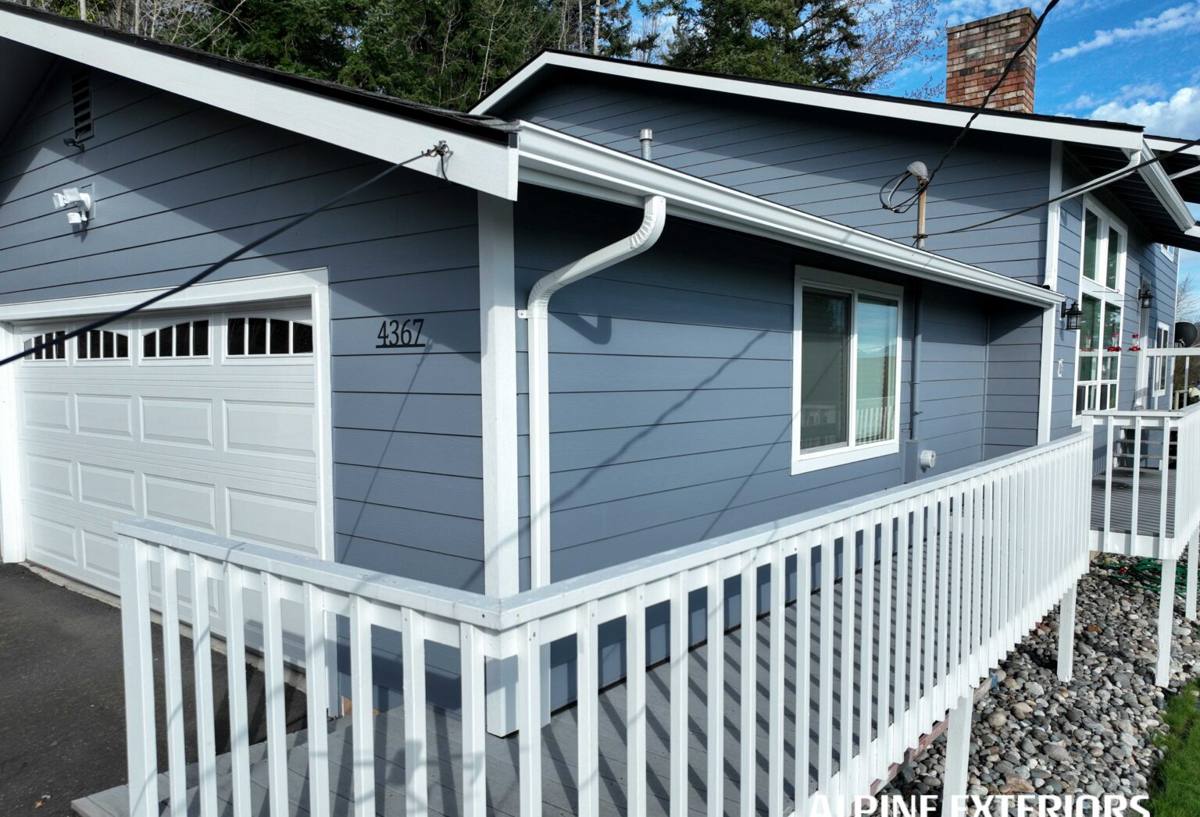
What Salt Air, Rain, and Moss Do to a Roof Over Time
Corrosion at Fasteners and Flashing
Salt air accelerates oxidation on any exposed metal — fasteners, flashing, drip edges, valleys. On a standard asphalt roof, the nails and metal flashing are often the first components to fail, well before the shingles themselves wear out, because they're rarely rated or coated for a marine-influenced environment. Once a fastener starts corroding, it loses its grip and its seal, and that's how water finds its way into the deck.
Moss and Trapped Moisture
Birch Point's shaded, damp stretches of the year give moss a long runway to establish itself, especially on north-facing slopes and anywhere debris collects. Moss doesn't just look bad — it holds moisture directly against the roofing material, keeps that section of the roof from ever fully drying out, and on organic materials like wood shakes or asphalt shingles it can work into the surface and shorten the material's life by years.
Wind-Driven Rain
Rain that comes in sideways off the water tests every seam, lap, and penetration on a roof, not just the field of the material. Roofs that perform fine in calmer inland conditions can leak at Birch Point simply because the water is being pushed uphill and sideways under laps that were only ever designed to shed water moving straight down.
Why Metal Roofing Holds Up Here
Metal roofing isn't a cure-all, but it addresses the specific failure points that coastal exposure creates. A correctly specified and installed metal roof gives Birch Point homeowners a few concrete advantages:
- No organic surface for moss to root into — it can still collect debris and grow moss on the surface, but it won't degrade the material the way it degrades wood or asphalt
- Continuous panel runs and standing seams shed wind-driven rain more reliably than lapped, granular materials
- Modern coatings and finishes are formulated to resist salt-air corrosion far better than uncoated or minimally coated fasteners and flashing
- A properly installed metal roof typically outlasts asphalt by two to three times, which matters when the climate is already shortening the life of other materials
The trade-off is that "metal roofing" covers a range of products and installation approaches, and not all of them are a good match for a site this exposed. That's where the specifics matter.
Metal Roofing Options for Birch Point Homes
We install a limited set of systems because they're the ones that hold up honestly in this environment. Here's how the common options compare for a home in Birch Point's conditions:
| System | Salt-Air Performance | Best Fit | Trade-Offs |
|---|---|---|---|
| Standing seam steel | Very good — concealed fasteners, continuous panel | Full re-roofs on homes with direct water exposure | Higher upfront cost, needs a crew experienced with seaming |
| Standing seam aluminum | Excellent — naturally corrosion-resistant | Homes closest to the water or with heavy salt spray | Costs more than steel, slightly softer material |
| Exposed-fastener steel panel | Fair — fasteners are the weak point over time | Outbuildings, budget-conscious projects set back from the shore | Fasteners need periodic inspection and eventual re-tightening or replacement |
| Metal shingle/shake panels | Good, depends on coating quality | Homes wanting a traditional look with metal's durability | More seams than standing seam, so detailing quality matters more |
For homes with direct or near-direct exposure to the water, we generally steer clients toward standing seam systems with concealed fasteners. Exposed-fastener panels aren't a bad product — they're a reasonable choice for a detached garage or shop — but on a primary roof this close to salt air, exposed fasteners are the first thing that will need attention down the road, and we'd rather set that expectation up front than have it surprise someone in year eight.
What a Correct Metal Roof Installation Involves
Underlayment and Water Barrier
A metal panel is only as good as what's underneath it. We use a synthetic, high-temperature underlayment rated for the exposure, with self-adhered ice-and-water membrane at eaves, valleys, and any low-slope transitions — the spots where wind-driven rain is most likely to get pushed backward under a panel.
Fastening and Flashing Details
On standing seam systems, panels are held with concealed clips rather than exposed screws, which removes the single biggest long-term failure point in a salt-air environment. Every flashing detail — valleys, wall transitions, penetrations, ridge caps — gets built with corrosion-rated materials and proper laps, not just caulked and hoped for. Caulk is a backup, not a strategy.
Ventilation
Metal roofs need to breathe. Trapped moisture under a panel with no path out can cause condensation issues that have nothing to do with the roof's exterior performance. We check ridge and soffit ventilation as part of every metal roof installation, because skipping this step is one of the more common ways a metal roof underperforms its material life.
Our Process for a Birch Point Metal Roof
- On-site assessment — we look at slope, exposure direction, existing deck condition, and how much of the roof is shaded or moss-prone before recommending a system
- Material and system selection — matched to the home's exposure, not a one-size-fits-all default
- Tear-off and deck inspection — any soft, rotted, or moisture-damaged decking gets identified and addressed before a single panel goes on
- Underlayment and flashing installation — the part of the job that determines whether the roof actually performs in driving rain, done before the panels go up
- Panel installation — seamed or fastened per the system spec, with attention to proper overlap and clip spacing for wind exposure
- Final walkthrough — we go over the completed roof, the maintenance basics, and what to watch for given the site's specific exposure
Keeping a Metal Roof Sound Near the Water
Metal roofing is lower-maintenance than most materials, but "lower-maintenance" isn't "no maintenance" — especially in a salt-air, moss-prone setting like Birch Point. A short seasonal routine goes a long way:
- Rinse accumulated salt residue and debris off the roof surface once or twice a year, especially after dry spells followed by rain
- Clear gutters and valleys before the fall rains start, since clogged valleys are where wind-driven water backs up under panels
- Check for moss or algae buildup on shaded slopes and remove it before it holds moisture against the surface long-term
- Inspect flashing and sealant at penetrations (vents, chimneys, skylights) annually — these are the components most likely to need attention before the panels themselves do
- Look over exposed fasteners (if that's your system) every year or two and re-tighten or replace any showing corrosion
What Affects the Cost
Metal roofing costs more upfront than asphalt, and the exact number depends on a handful of factors specific to the home and site rather than a flat per-square-foot rate. Roof complexity (number of valleys, penetrations, and slope changes), panel material (steel versus aluminum), system type (standing seam versus exposed fastener), and deck condition all move the number. A simple, accessible roof with few penetrations costs less to do right than a steep, cut-up roof with multiple dormers — that's true of any roofing material, but it's worth factoring in honestly rather than quoting a number that doesn't reflect the actual roof. We give a firm, itemized estimate after seeing the roof in person, not a phone-quote guess.
Why Local Experience in Birch Point Matters
A roof that's never seen salt air gets specified differently than one that's spent a decade dealing with it. Working in Birch Point and the surrounding Blaine and Whatcom County coastline regularly means we already know which slopes on a given lot orientation tend to hold moss longest, which flashing details actually hold up to wind-driven rain off the water, and which fastener and coating choices are worth the extra cost versus which ones are unnecessary for a given home's exposure. That's not something a crew coming from a drier, more sheltered market picks up on the first job — it comes from doing this work, on this coastline, repeatedly.
It also means straightforward answers about permitting, typical timelines for this area, and what a realistic maintenance schedule looks like for a home in this specific microclimate, rather than generic advice that doesn't account for where the house actually sits.
If you're considering a metal roof for a home in Birch Point, we're happy to take a look and walk you through what your specific roof needs — no pressure, no hard sell. Use the form below to request a free estimate.