 Blaine Siding
 Building New at Birch Point: Windows Have One Shot to Be Done Right
Birch Point sits on the water in northern Whatcom County, close enough to the open Strait of Georgia that homes here take a steadier dose of salt-laden marine air and wind-driven rain than most inland Blaine properties do. If you're building new on a Birch Point lot, that exposure should shape how the windows go in from the very first rough opening — not get addressed later as a punch-list item. New construction gives you one real opportunity to get window flashing, sealing, and integration with the wall assembly right before siding closes everything up. Get it right at this stage and the windows can perform for decades with minimal fuss. Get it wrong and you're looking at hidden water intrusion that might not show up as a visible problem for years, by which point it's a siding tear-off and framing repair instead of a five-minute fix.
We handle siding, roofing, windows, and decks for homes throughout this stretch of Whatcom County, and on new-construction window work specifically we treat the installation sequence — how flashing laps into the weather-resistive barrier, how the rough opening is prepped, how the unit is fastened and sealed — as being at least as important as which window brand goes into the opening. That's not a sales pitch. It's what actually determines whether a Birch Point home stays dry through its first decade of winter storms.
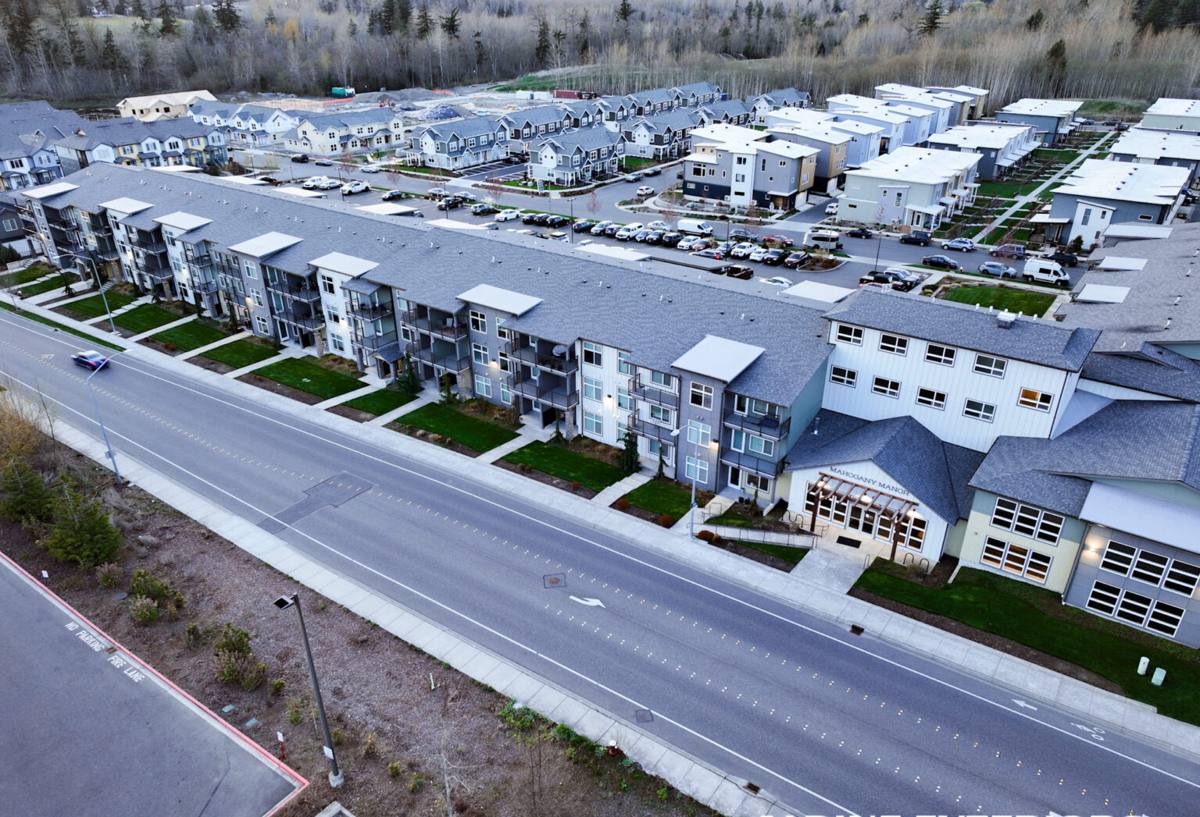
What Birch Point's Exposure Means for a New Build
Salt Air and Corrosion
Waterfront and near-waterfront lots at Birch Point get more direct salt exposure than homes set back even a mile or two inland. Salt-laden air accelerates corrosion on fasteners, hardware, and lower-grade window components, and it can shorten the working life of finishes and seals that would hold up fine in a drier climate. On a new build, that means every fastener, flashing detail, and piece of window hardware needs to be chosen with corrosion resistance in mind from the start — not retrofitted after something fails.
Driving Rain and Wind Load
Open water exposure also means more wind, and wind-driven rain at Birch Point doesn't fall straight down onto a roof — it gets pushed sideways into wall assemblies and window openings. That's a heavier moisture load on new window installations than a simple rainfall total would suggest. A rough opening that's flashed to shed water only from directly above will leak here. The flashing sequence has to account for water moving sideways and up under pressure, not just down.
A Long Moss and Mildew Season
Mild temperatures and near-constant moisture give Whatcom County a moss and mildew season that runs most of the year on shaded surfaces. On a new home, window sills, trim, and any horizontal surface where water can sit instead of draining become growth candidates over time. Getting drainage and slope right at installation — so water moves off the sill instead of pooling — matters more here than it would in a drier region.
What Correct New-Construction Window Installation Actually Involves
New-construction window installation is fundamentally different from a replacement job, and the difference matters most in a climate like Birch Point's. In a new build, the window goes into a bare rough opening before siding is on, which means the installer has full access to build the flashing and drainage plane correctly from the framing out — there's no existing siding to work around or disturb.
Rough Opening Prep
The rough opening needs to be square, properly sized to the window's specifications, and protected with a sill pan or flashing membrane before the window ever goes in. A sill pan gives any water that gets past the window a place to drain back out to the exterior instead of soaking into the framing below.
Flashing Sequence
Flashing at a new-construction opening needs to integrate with the weather-resistive barrier in the correct shingle-lap order — barrier laps over the head flashing, side flashing laps over the sill pan, and every seam is sealed with materials rated for sustained moisture exposure. Done correctly, water is always directed down and out, never trapped behind the window or channeled into the wall cavity.
Fastening and Sealing
Whether a window is nailing-fin or block-frame changes the fastening approach, but either way the goal is the same: a mechanically sound attachment to the framing plus a continuous air and water seal around the perimeter. Sealant is a supplement to correct flashing, not a substitute for it — caulk alone breaks down over time and was never meant to be the only line of defense against wind-driven rain.
Frame Material Choices for a Birch Point New Build
We talk homeowners and builders through real trade-offs rather than pushing one brand as the only right answer. For a Birch Point property specifically, corrosion resistance and moisture tolerance matter more than they would on a sheltered inland lot.
| Frame Material | Strengths in This Climate | Trade-Offs to Consider |
|---|---|---|
| Vinyl | Won't rot, resists corrosion, generally the most budget-friendly option | Frame color and size options are more limited than fiberglass |
| Fiberglass | Dimensionally stable across temperature swings, can be painted, holds up well long-term | Higher upfront cost than vinyl |
| Wood-clad | Interior wood warmth with an exterior-facing clad shell | Any breach in the cladding exposes wood to this climate's moisture — more maintenance sensitivity |
| Aluminum | Strong, narrow sightlines for larger openings | Conducts heat and cold readily; needs a thermal break for real energy performance |
Glazing and Energy Code Considerations
New construction in Washington has to meet current state energy code requirements, and window glazing is one of the bigger levers for hitting those targets. Beyond code compliance, the glazing package you choose affects day-to-day comfort in a home exposed to Birch Point's temperature swings between heated interiors and cold, wet exteriors.
- Low-E coatings: Help windows perform in both directions — reducing heat loss in winter and unwanted solar gain in summer.
- Double vs. triple-pane: Triple-pane adds cost but can be worth it on exposed elevations facing the water directly, where wind chill and temperature swings are more pronounced.
- Gas fill and spacer type: Argon fill and warm-edge spacers reduce condensation risk on interior glass during cold, damp stretches — a common comfort complaint in this climate if skipped.
- U-factor and SHGC ratings: These numbers, not the brand name on the label, are what determine actual energy performance and what your energy code compliance path will reference.
Working With Your Builder or GC
Most new-construction window installs happen as one piece of a larger build, coordinated with a general contractor's framing and siding schedule. We work directly with builders on timing — windows typically need to be ordered well ahead of the framing being ready, since custom sizes and configurations can carry lead times of several weeks or more. We also coordinate the flashing and weather-resistive barrier sequencing with whoever is installing siding, because a window flashed correctly but then covered by siding that doesn't lap over it properly still ends up with a leak path. On a Birch Point build we treat window, siding, and roof-to-wall details as one connected system, because that's how water actually moves through a wall assembly.
What Drives Cost on a New-Construction Window Job
| Factor | Why It Matters |
|---|---|
| Number and size of openings | More and larger windows mean more material and more flashing detail to install correctly |
| Frame material | Vinyl generally costs less upfront than fiberglass or wood-clad options |
| Glazing package | Triple-pane and upgraded low-E coatings add cost but can matter more on exposed, water-facing elevations |
| Exposure of the elevation | Openings facing directly into prevailing wind and rain may warrant extra flashing detail or a higher-spec unit |
| Custom sizing or shapes | Non-standard openings cost more and typically carry longer lead times |
A Checklist Before Your Windows Go In
- Confirm the installer will use a sill pan flashing on every opening, not just on openings facing the water
- Ask how the window flashing will integrate with the weather-resistive barrier and upcoming siding install
- Get glazing specs in writing — U-factor, SHGC, and gas fill, not just "energy efficient" as a description
- Confirm current Washington contractor licensing and active liability insurance
- Ask about lead times early, since custom or larger window orders can take several weeks to arrive
- Get a written scope that separates the manufacturer's product warranty from the installer's workmanship warranty
Why a Blaine-Based Crew That Works Birch Point Regularly Matters
A crew that builds windows into new construction throughout Blaine and the surrounding Whatcom County waterfront already knows how exposed this particular stretch of coastline behaves compared to a sheltered inland lot — how much lap a flashing detail needs, which hardware grade actually holds up against sustained salt air, and where drainage tends to fail if it's not built in from the start. Those are the details that don't show up on a spec sheet but end up determining whether a new home's windows are still performing well twenty years from now or already showing water damage in five.
If you're planning a new build at Birch Point and want windows installed with this climate in mind from the rough-opening stage forward, we're happy to walk through the details with you or your builder. Reach out below for a free, no-pressure estimate.