 Blaine Siding
 Birch Point's Waterfront Climate Is Tougher on Siding Than Most Homeowners Realize
Homes along the Birch Point shoreline near Blaine sit right at the edge of the Salish Sea, and that location comes with a specific set of exterior problems. Salt-laden air corrodes unprotected metal fasteners and trim over time. Wind-driven rain off the water doesn't fall straight down — it drives sideways into wall assemblies, finding every gap, seam, and undersized overlap. And Whatcom County's long, wet, low-light season keeps north-facing and shaded walls damp for weeks at a stretch, which is exactly the condition moss and algae need to take hold.
None of that is unique to Birch Point in the abstract — plenty of Pacific Northwest coastal areas deal with some combination of these factors. What makes Birch Point demanding is that homes here often get all three at once: direct salt exposure, unobstructed wind off the water, and heavy tree cover or shade on at least one elevation. Siding that isn't installed with that combination in mind tends to show problems years before it should — swollen bottom edges, streaking, fastener bleed-through, or soft spots where moisture has been sitting against the substrate.
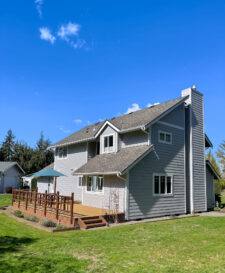
What "Correct" Siding Installation Actually Means Here
A siding job can look finished and still be wrong for this climate. The difference shows up in details that aren't visible from the curb but matter enormously five, ten, and twenty years down the road.
Drainage Behind the Siding
Any wall assembly, no matter how well caulked, will eventually let some moisture behind the cladding. What separates a durable installation from a problem one is whether that moisture has somewhere to go. A properly built assembly includes a drainage gap and a water-resistive barrier that lets incidental water drain out and the wall dry, rather than trapping it against the sheathing. On a shaded, damp lot near the water, that drainage plane is doing real work most of the year.
Flashing and Water Management
Windows, doors, roof-to-wall intersections, and deck ledgers are where water intrusion actually starts. Correct flashing — properly lapped, sealed in the right sequence, and paired with kick-out flashing where a roofline meets a wall — keeps wind-driven rain from working its way behind the siding at these transition points. This is also where a lot of shortcuts happen on rushed jobs, because it's slower work that doesn't show once the siding goes up.
Fastener Selection
In a salt-air environment, fastener choice isn't a minor spec — it's the difference between trim that stays clean for decades and trim that streaks with rust within a few years. Corrosion-resistant fasteners, installed at the manufacturer's specified pattern and depth, matter more here than in an inland neighborhood a few miles away.
Joint Gaps and Clearances
Fiber cement siding needs specific gaps at butt joints, corners, and penetrations to allow for expansion and to keep water from wicking in and sitting. It also needs proper clearance from grade, roofing, and hardscape so that splash-back and standing moisture don't sit against the bottom edge of the siding — a common failure point on waterfront lots where landscaping and drainage patterns vary.
Why We Install Only James Hardie Fiber Cement
We standardized on James Hardie siding and don't install vinyl, LP SmartSide, or other fiber cement brands. That's a deliberate call, not a brand preference. Fiber cement is dimensionally stable and non-combustible, which matters in a region where wildfire smoke and ember exposure are an increasing concern even in coastal counties. James Hardie backs its products with a strong transferable warranty and a factory-applied ColorPlus finish that's baked on under controlled conditions rather than field-painted — which reduces the number of failure points (thin coats, missed spots, early fading) that show up on siding painted on site. For a climate that already stresses exterior materials with salt, wind, and prolonged moisture, we'd rather install one product system correctly than juggle several with different moisture behaviors and warranty terms.
The Hardie Product Lines We Use in the Birch Point Area
James Hardie makes several siding profiles and formulates them differently depending on the climate they're sold into. For Whatcom County's combination of coastal moisture and winter freeze-thaw, we use the HZ5 formulation, which is engineered specifically for northern climates that see both wet weather and cold snaps — as opposed to the HZ10 formulation built for hot, humid southern regions. The distinction matters: siding engineered for the wrong climate zone can perform worse over time even if it looks identical off the truck.
| Product | Typical Use | Why It Fits Birch Point |
|---|---|---|
| HardiePlank lap siding | Primary wall cladding | Most common profile for coastal homes; holds a straight, clean line under driving rain when properly lapped and fastened |
| HardiePanel vertical siding | Accent walls, gable ends | Fewer horizontal seams for water to catch on exposed, wind-facing elevations |
| HardieTrim boards | Corners, window and door trim | Pairs with corrosion-resistant fasteners to resist the streaking and swelling trim often shows first in salt air |
| ColorPlus factory finish | All exposed surfaces | Baked-on finish resists fading and reduces future repainting in a climate where field-applied paint doesn't last as long |
Our Installation Process for a Birch Point Home
The process itself isn't exotic — it's the attention to sequence and detail that determines whether the job holds up.
- On-site assessment. We look at the home's exposure — how much direct wind and salt air it takes, where shade and moisture collect, and the condition of the existing wall assembly underneath any old siding.
- Tear-off and substrate inspection. Removing the old siding lets us check the sheathing and framing for rot or prior water damage before anything new goes up — a step that's easy to skip and expensive to regret later.
- Water-resistive barrier and drainage plane. We install the housewrap or building paper and drainage gap system appropriate to the wall assembly, so the wall can dry if moisture gets behind the cladding.
- Flashing at every penetration. Windows, doors, roof lines, and any wall penetrations get flashed and sequenced correctly before siding covers them.
- Siding installation to Hardie's fastening and clearance specs. Correct nailing pattern, joint gaps, and grade clearances, using corrosion-resistant fasteners suited to a marine-influenced climate.
- Trim, caulking, and final detailing. Trim boards, caulking at the right joints (and not over ones that need to breathe), and a final walkthrough.
Signs Your Current Siding Is Already Losing the Fight
Homeowners near the water often notice problems on the siding's wind-facing or shaded side well before the rest of the house shows wear. Worth checking for:
- Soft or spongy spots when you press on the siding, especially near the bottom courses
- Persistent green or black staining that comes back quickly after cleaning
- Rust streaks running down from nail heads or trim fasteners
- Cupping, warping, or visible gaps opening up at seams
- Paint or finish that's chalking, peeling, or fading unevenly by elevation
- Interior signs — musty smell, peeling interior paint, or soft drywall near exterior walls
Any one of these can be a maintenance item. Several together, especially on the side of the house facing the water or shaded by trees, usually mean the wall assembly behind the siding has been taking on moisture for a while.
What Drives Cost on a Birch Point Siding Job
| Factor | Why It Matters Here |
|---|---|
| Extent of substrate repair | Waterfront and shaded lots more often reveal sheathing or framing damage once old siding comes off |
| Wall complexity | Dormers, multiple gables, and cut-in windows all add flashing and cutting time |
| Siding profile mix | Combining lap siding with vertical panel accents or trim detailing adds material and labor |
| Access and site conditions | Sloped, wooded, or waterfront lots can limit staging and equipment access |
| Existing siding removal | Multiple layers of old siding or extensive rot remediation add time before installation even starts |
We give a firm, written quote after the on-site assessment rather than a rough phone estimate — on a shoreline lot, the difference between a straightforward re-side and one that needs real substrate repair usually isn't visible until the old siding comes off.
Maintenance That Actually Matters in This Climate
Correctly installed Hardie siding is low-maintenance, but "low" isn't "none," especially with a long moss season and salt air in the mix.
- Rinse salt residue and grime off the exterior periodically, particularly on wind-facing walls
- Keep gutters and downspouts clear so water isn't sheeting down the siding face
- Trim back vegetation and tree cover where it's keeping a wall shaded and damp longer than necessary
- Re-caulk joints if you notice cracking or separation, using a sealant compatible with the finish
- Address moss or algae growth early with a gentle wash rather than pressure-washing, which can force water behind the siding
Why It Matters That We Already Work in Birch Point
Siding specs on paper are the same everywhere, but how they translate to a specific lot isn't. A crew that already works this stretch of Whatcom County shoreline knows which elevations typically take the worst wind-driven rain, which lots hold moisture longer because of tree cover or drainage patterns, and how the local building department expects flashing and moisture barriers documented. That local pattern recognition doesn't replace following the manufacturer's install spec — it's what makes sure the spec gets applied correctly to the conditions your specific home actually faces.
If you're weighing a full re-side or just want a straight answer on whether your current siding is holding up, we'll come take a look and give you a free, no-pressure estimate for James Hardie siding installation on your Birch Point home.