 Blaine Siding
 Blaine Harbor Sits at the Rough End of the Climate Spectrum
Homes along Blaine Harbor take on more punishment than siding a few miles inland. The water brings salt-laden air that settles on every exterior surface, wind-driven rain comes in sideways off Drayton Harbor and the Strait of Georgia during fall and winter storms, and the mild, wet Whatcom County climate keeps moss and algae growing on north- and west-facing walls for most of the year. None of that is unusual for this stretch of the Washington coast, but it does mean siding decisions that work fine in a drier inland neighborhood can fail faster here, sometimes years before a homeowner expects to think about siding again.
This page is about one product, in one setting: fiber cement siding on Blaine Harbor homes. We're not going to give you a generic rundown of fiber cement in general — you can find that elsewhere on this site. This is about what the harbor environment specifically demands, what a correct installation looks like when salt air and standing moisture are part of the equation, and why we only put James Hardie products on homes in this area.
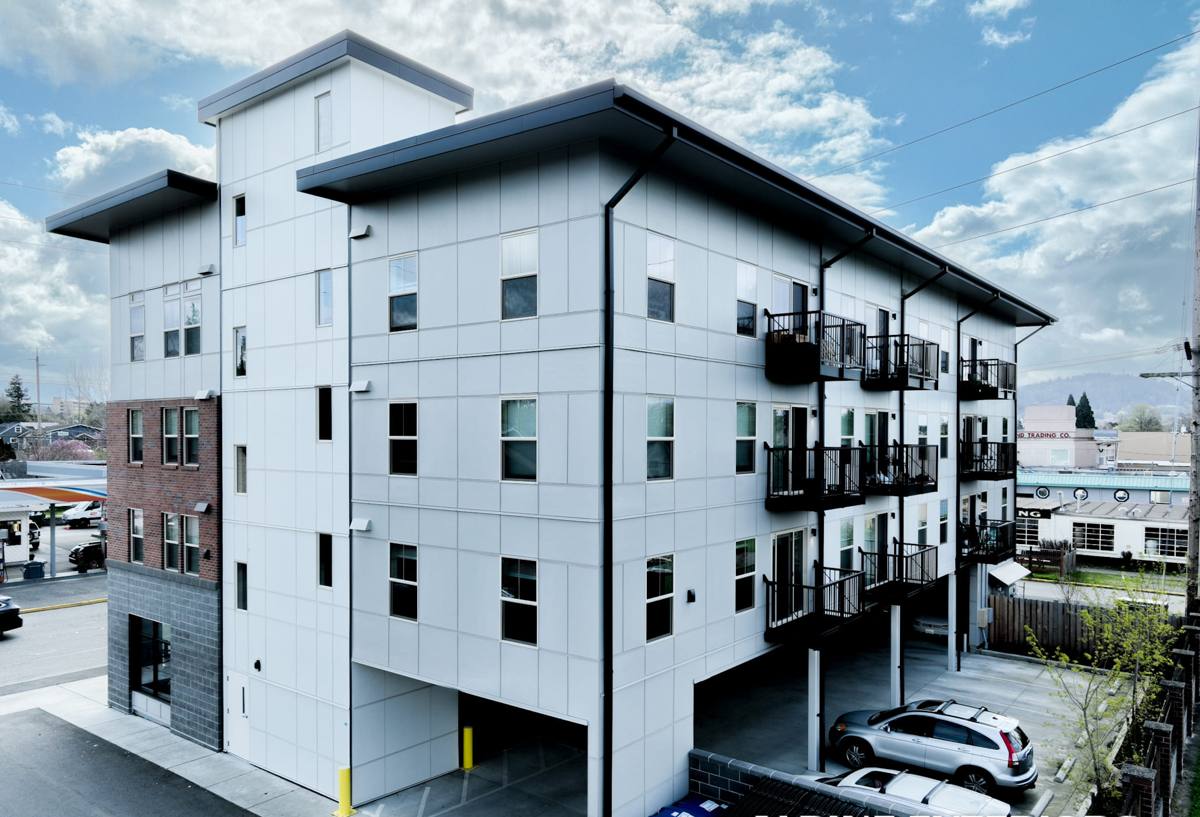
What Blaine Harbor Homes Actually Need From Their Siding
Strip away the marketing and a waterfront or near-waterfront home in this area needs a siding system that handles three things well:
- Moisture cycling. Rain, fog, and humidity keep exterior walls damp for long stretches, then sun and wind dry them out. Materials that swell and shrink with that cycle eventually crack, cup, or separate at the seams.
- Salt exposure. Airborne salt accelerates corrosion on fasteners and hardware, and it can degrade some coatings and finishes faster than inland weathering would.
- Sustained organic growth. Moss, algae, and mildew thrive in shaded, damp conditions. Siding that holds moisture at the surface or in its substrate gives that growth more to work with.
Fiber cement, done correctly, handles all three better than most alternatives — but "done correctly" is doing a lot of work in that sentence, and we'll get into why below.
Why We Only Install James Hardie in This Area
There are other fiber cement brands on the market, and there are other siding materials entirely — vinyl, engineered wood, cedar. We don't install any of those, and in a harbor climate the reasoning gets sharper, not softer.
James Hardie engineers its siding for specific climate zones rather than selling one formulation everywhere. Products built for the HZ5 zone — which covers most of the Pacific Northwest, including Whatcom County — are formulated with our freeze-thaw cycles and wet winters in mind, as opposed to the HZ10 formulation built for hot, humid Gulf Coast conditions. That distinction matters here: a siding product engineered for the wrong climate zone is one more variable working against a house that already deals with salt air and driving rain.
Hardie's ColorPlus finish is baked on in a factory setting under controlled conditions, which gives it more consistent adhesion and UV resistance than field-applied paint, and it comes backed by its own finish warranty separate from the substrate warranty. On top of that, Hardie backs its lap siding with a 30-year limited warranty — a length of coverage that reflects genuine confidence in how the product performs over time, not just in a lab.
Vinyl siding softens and warps at temperatures this region does see during summer heat spikes, and it relies on lap joints and J-channels that can trap moisture behind the panel — a real liability when wind-driven rain is part of the yearly pattern. Cedar and other wood siding look great fresh but need paint or stain renewal on a cycle that only gets shorter in a climate this wet, and any gap in that maintenance invites rot. We're not saying those products can't be installed well elsewhere — we're saying that for a harbor-adjacent home in this climate, we don't think they're the right call, and we'd rather stand behind one product we trust completely than offer several we have reservations about.
What a Correct Installation Involves Here
Fiber cement's reputation is built on durability, but that durability depends entirely on installation details that are easy to skip and hard to spot once the siding is up. In a salt-air, high-moisture environment, these details matter more than they would inland.
Fasteners and Hardware
Every nail, screw, and piece of flashing on a harbor-adjacent home should be corrosion-resistant — hot-dip galvanized or stainless steel, not standard electro-galvanized fasteners that can start rusting within a few seasons of salt exposure. Rust streaks bleeding through a ColorPlus finish are almost always a fastener problem, not a siding problem.
Drainage and the Water-Resistive Barrier
Fiber cement is not waterproof siding — it's a rain-screen material, meaning it's designed to shed the majority of water while a weather-resistive barrier and drainage plane behind it manage what gets past the joints. In a climate that sees sustained wind-driven rain, a continuous, properly lapped barrier and a functioning drainage gap behind the siding aren't optional extras; they're what keeps incidental moisture from turning into trapped moisture.
Clearances and Flashing
Siding installed too close to grade, a roofline, or a deck surface wicks up moisture and stays wet longer than it should. Manufacturer-specified clearances, along with correctly lapped flashing at every window, door, and roof intersection, are what keep water moving away from the wall assembly instead of into it.
Caulking — Where It Belongs and Where It Doesn't
Caulk is meant for specific joints, primarily where siding meets trim, not at every horizontal lap. Over-caulking traps moisture behind the siding instead of letting it drain, which is a common mistake on jobs done by crews unfamiliar with fiber cement's actual drainage design.
How Fiber Cement Compares for a Blaine Harbor Home
| Factor | James Hardie Fiber Cement | Vinyl | Cedar / Wood |
|---|---|---|---|
| Salt air tolerance | Strong when paired with corrosion-resistant fasteners | Moderate; can discolor and become brittle over time | Weak; accelerates weathering and finish breakdown |
| Wind-driven rain performance | Strong with proper rain-screen installation | Prone to water intrusion at lap joints in sustained wind | Weak unless maintenance is kept current |
| Moss/algae resistance | Good; dense, low-absorption surface | Good on the surface but growth collects in seams and channels | Poor; porous surface holds moisture and organic growth |
| Fire resistance | Non-combustible | Combustible; can melt or deform near heat sources | Combustible |
| Typical maintenance cycle | Occasional wash; repaint only if not ColorPlus finished, roughly every 10-15 years | Occasional wash; no repainting, but replacement panels can be hard to match after fading | Repaint or restain every 3-7 years depending on exposure |
The table isn't meant to declare every other material worthless — it's meant to show why, in this specific climate, the trade-offs tilt heavily toward fiber cement, and why we stopped installing anything else.
Our Process for a Blaine Harbor Project
- Site assessment. We look at wall orientation relative to prevailing wind and rain, existing moisture damage, current cladding condition, and drainage around the foundation before we recommend anything.
- Tear-off and substrate check. Old siding comes off and we inspect the sheathing underneath for rot or hidden moisture damage — a step that matters more on a home that's been absorbing harbor moisture for years.
- Weather-resistive barrier and flashing. A continuous barrier goes on first, with flashing integrated at every window, door, and penetration before a single piece of siding is hung.
- Installation to manufacturer spec. Fastener type and placement, clearances, and panel lapping all follow James Hardie's published installation requirements, not shortcuts.
- Final inspection and cleanup. We walk the completed job checking caulk placement, fastener seating, and trim details before calling it finished.
What a Correctly Installed Job Should Look Like When We're Done
- No exposed fastener heads or visible rust bleed
- Consistent reveal lines across each course of lap siding
- Caulk only at trim and transition joints, not at every horizontal seam
- Proper clearance from grade, roofline, and any horizontal surfaces
- Flashing integrated — not just caulked — at every penetration
Maintenance in a Salt-Air, Moss-Prone Climate
Correctly installed Hardie siding is low-maintenance, not no-maintenance. In this climate, a little seasonal attention goes a long way toward protecting the investment:
- Rinse siding with a garden hose or low-pressure wash once or twice a year to clear salt residue, pollen, and early moss growth, especially on shaded north- and west-facing walls.
- Avoid high-pressure washing directly at joints and seams — it can force water behind the siding rather than just cleaning the surface.
- Trim back vegetation and tree cover that keeps siding shaded and damp longer than necessary.
- Check caulking at trim joints annually and have any cracked or missing caulk replaced before winter rains set in.
- Watch for any soft spots, staining, or gaps at the base of the siding near grade, which can indicate a drainage or clearance issue worth addressing early.
Talk to a Crew That Knows Blaine Harbor
A siding crew that mostly works drier, inland neighborhoods will still know how to hang fiber cement — but they may not think in terms of corrosion-resistant fasteners, rain-screen drainage, or moss-prone exposures the way a crew that regularly works this specific stretch of Whatcom County coastline does. Those details rarely show up as a problem in year one. They show up in year five or six, as streaking, soft trim, or siding that's holding moisture it shouldn't be. Getting the installation right the first time costs the same as getting it wrong — the difference is entirely in the details.
If you're weighing a siding replacement for a Blaine Harbor home, we're happy to take a look, walk you through what your specific exposure calls for, and give you a straightforward, no-pressure estimate — no scare tactics, no upsell on products we wouldn't put on our own homes.