 Blaine Siding
 Siding Repair in Blaine Harbor Is Its Own Job
A siding repair on a home near the water in Blaine is not the same job as a siding repair ten miles inland in Whatcom County. Homes close to Drayton Harbor and Semiahmoo Bay sit in a constant flow of salt-laden air, take wind-driven rain straight off the water, and spend a good part of the year shaded and damp enough to grow moss on anything that holds moisture. That combination wears siding down faster and in different places than a typical inland home, and it changes what a correct repair actually looks like. A crew that works Blaine Harbor regularly knows where the damage tends to start and what it takes to fix it so it stays fixed.
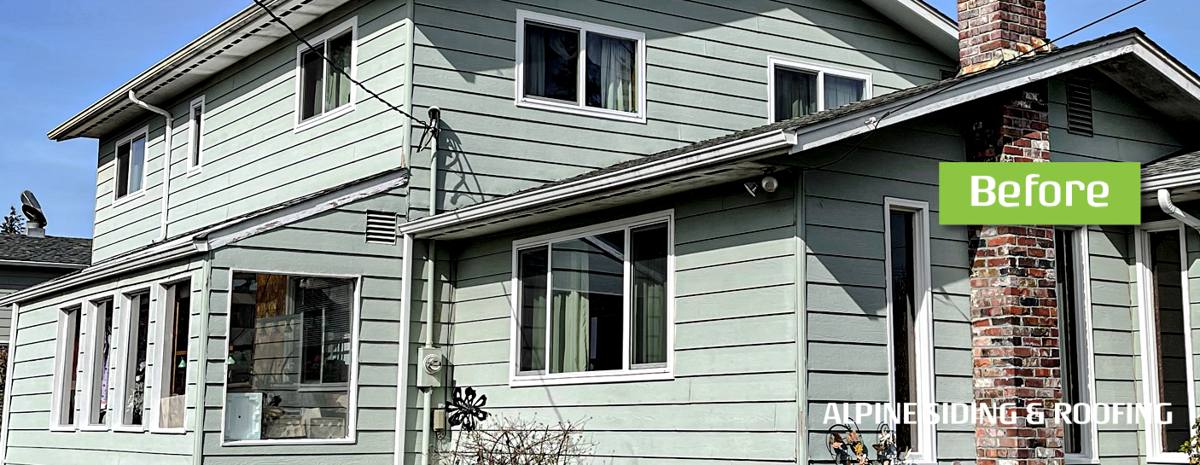
What the Marine Climate Does to Siding Near the Harbor
Salt Air and Corrosion
Air moving off the harbor carries fine salt spray that settles on exterior surfaces even on calm days. Over time it accelerates corrosion in exposed fasteners, flashing, and trim hardware, and it breaks down paint film and caulk faster than the same products would wear on a home a few miles from the water. Rust streaking below nail heads or trim fasteners is one of the clearest local tells that salt exposure is doing its work.
Wind-Driven Rain
Storms coming off the water don't just wet the surface of a wall — they push rain sideways, hard enough to drive moisture into laps, seams, corner boards, and anywhere caulking has started to fail. That means water intrusion on a harbor-area home is often happening behind the siding, not just on top of it, well before there's any visible staining outside.
Moss and Shade
Between the marine humidity and the long stretch of overcast, damp months typical of this part of Whatcom County, shaded and north-facing walls stay wet longer than the rest of the house. Moss and algae take hold in those spots, and once established they hold moisture directly against the siding surface around the clock, which speeds up whatever damage is already underway underneath.
Signs a Blaine Harbor Home Needs Siding Repair
Most siding failures near the harbor give warning signs well before there's a real structural problem. Worth checking for:
- Soft or spongy areas when you press on siding, especially near the bottom courses or under windows
- Cracked, shrunk, or missing caulk at trim, corners, and butt joints
- Rust streaks trailing down from fastener heads or metal flashing
- Moss or algae buildup concentrated on shaded or north-facing walls
- Panels that look warped, bowed, or slightly separated from the wall
- Paint that's peeling, bubbling, or chalking off on your hand when you touch it
- Gaps opening up where siding meets window and door trim
- Dark staining or discoloration along the bottom edge of siding boards
Any one of these on its own might be minor. Several showing up together, especially on the water-facing side of the house, usually means moisture has already found its way behind the surface.
What a Correct Repair Actually Involves
Finding the Real Problem, Not Just the Symptom
Patching a visibly damaged board without tracing where the water actually got in just buys a little time. A proper repair starts by following the moisture path back to its source — often a failed piece of flashing above a window, a missing kickout flashing where a roofline meets a wall, or a seam that was never sealed correctly to begin with. If the sheathing behind the siding has absorbed water, that has to be addressed before any new siding goes back on, or the repair fails again from the inside.
Matching Materials and Fasteners
Replacement pieces need to match the existing siding's profile and exposure, and fasteners need to be corrosion-resistant and set to the manufacturer's spacing — not just close enough. Given how hard salt air is on hardware here, using the wrong fastener is one of the fastest ways to end up doing the same repair again in a few years.
Sealing Without Trapping Moisture
It's tempting to caulk everything heavily and call it sealed, but siding needs to be able to shed water and dry out, not get sealed into a wall the way a sponge gets sealed into a bag. Correct flashing details do the real work of keeping water out; caulk is there to back that up, not replace it.
Repair or Replace? What We Actually Look At
| Factor | Leans Toward Repair | Leans Toward Replacement |
|---|---|---|
| Extent of damage | Isolated to a wall section or a few boards | Spread across multiple elevations |
| Sheathing condition | Dry, sound wood behind the siding | Soft, rotted, or delaminated sheathing |
| Age of existing siding | Newer material, still within its expected service life | Older siding already near or past typical lifespan |
| Cause of damage | One identifiable, fixable source (bad flashing, failed caulk) | Chronic moisture from multiple unresolved sources |
| Cosmetic vs. structural | Surface wear, fading, minor cracking | Warping, buckling, or wall assembly damage |
We tell homeowners honestly which side of that table their home falls on. A lot of harbor-area repairs are legitimately repairs — but when the damage has been sitting unaddressed for a while, replacement of that section (or the wall) is usually the more honest recommendation, not the more profitable one.
Why We Repair and Rebuild With James Hardie Fiber Cement
Our company installs and repairs siding using James Hardie fiber cement exclusively — we don't install vinyl, LP SmartSide, primed wood, or cedar siding. That's not a marketing position, it's a standard we set because of what we see in climates like this one. Vinyl expands and contracts with temperature swings and can crack or warp at seams over time, which is a particular liability where wind-driven rain is already looking for any gap to exploit. Wood and cedar siding need routine refinishing to hold up against constant moisture and salt exposure, and a missed maintenance cycle shows up fast in a marine environment. Engineered wood products carry their own moisture-sensitivity considerations at cut edges and seams.
Fiber cement doesn't share those weak points. It's non-combustible, dimensionally stable across our temperature and moisture swings, and James Hardie's ColorPlus factory finish is baked on to resist fading and chalking far longer than field-applied paint typically holds up under salt air and UV exposure. When we do a repair, we can splice in new Hardie material and match the ColorPlus finish cleanly, so the fix doesn't stand out as an obvious patch job five years later.
How We Handle a Blaine Harbor Siding Repair
Our process for a repair call in this area is straightforward:
- Full exterior walkaround, paying particular attention to water-facing and shaded walls
- Moisture readings at suspect areas to check what's happening behind the surface, not just what's visible
- Identification of the actual entry point — flashing, seam, trim, or fastener failure
- A clear, written scope: what's being repaired, what materials are used, and why
- Correct flashing and sealing details before any new siding goes back on
- Color-matched Hardie replacement material and cleanup that leaves the site the way we found it
Because we already work regularly in Blaine and along the harbor, we're familiar with how this stretch of coastline behaves differently from siding jobs even a short distance inland, and we price and schedule around that reality rather than treating every job the same.
Keeping Repaired Siding From Failing Again
A good repair buys you real time, but a few habits stretch that further in a salt-air, high-moisture environment:
- Rinse salt residue off exterior walls once or twice a year, especially after winter storm stretches
- Keep gutters and downspouts clear so runoff isn't sheeting down the siding face
- Trim back vegetation and tree cover that keeps shaded walls damp and slows drying
- Do a quick visual check of caulking and trim joints annually, before the wet season sets in
- Have flashing and seams looked at after any unusually hard windstorm off the water
None of this is complicated, but skipping it is how a well-done repair ends up needing a repeat visit a few years earlier than it should.
Talk to a Crew That Already Works Blaine Harbor
If you're seeing rust streaks, soft spots, failing caulk, or moss creeping across a wall on a Blaine Harbor home, it's worth getting a straight answer on what's actually going on behind the siding before it turns into a bigger job. We offer free, no-pressure estimates — come find out what we see and what we'd recommend, with no obligation attached.