 Blaine Siding
 Blaine Harbor Windows Face a Different Set of Problems
Homes along Blaine Harbor sit closer to open water than almost anywhere else in Whatcom County, and that changes what a window has to survive. It's not just rain — it's rain pushed sideways by wind coming off Semiahmoo Bay, salt-laden air that settles on every exterior surface, and a wet season that stretches long enough for moss and algae to take hold on anything that doesn't dry out quickly. A window that's rated fine for a drier inland lot can still underperform here if it wasn't installed with this specific exposure in mind.
This page is about one job in one place: installing windows correctly on Blaine Harbor homes, where the climate is doing more work against the building envelope than in most of the rest of the region.
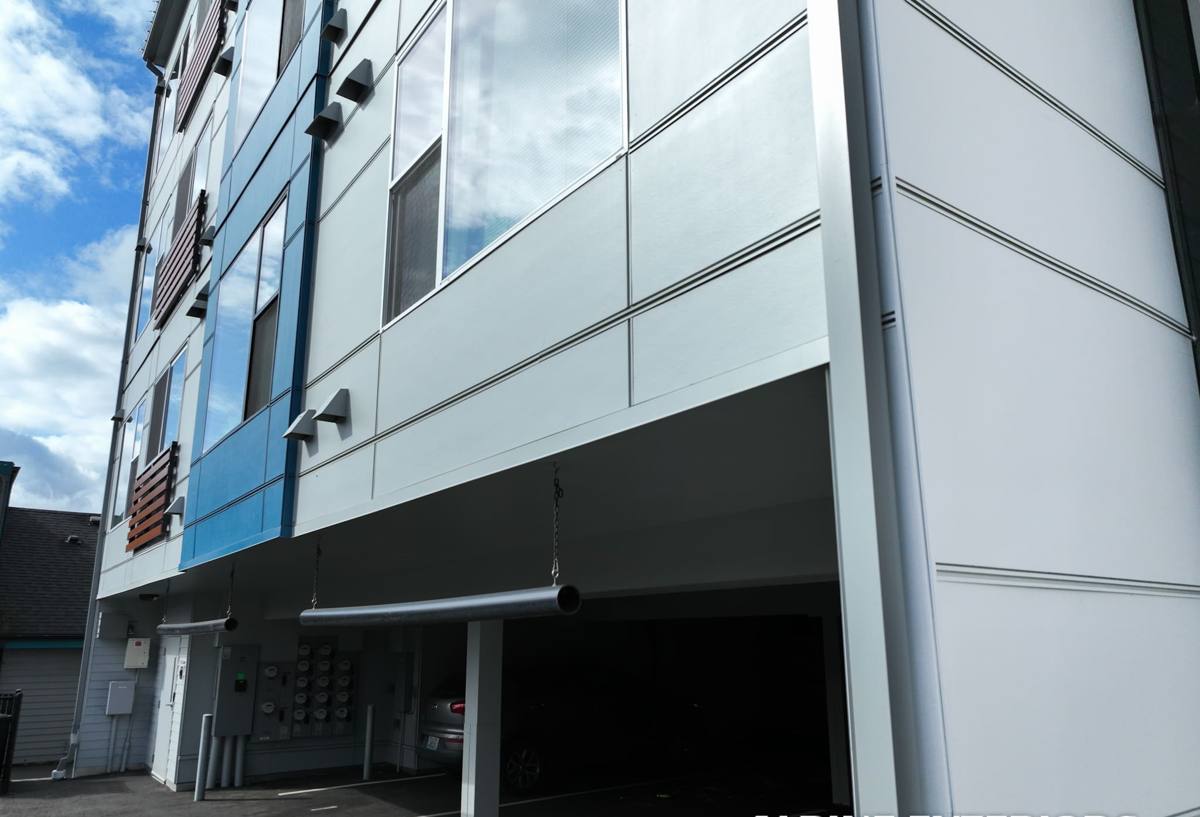
What Salt Air, Wind-Driven Rain, and Moss Season Actually Do to Windows
Each of these factors attacks a window a little differently, and understanding the mechanism is what separates a install that lasts from one that doesn't.
Salt Air
Airborne salt is corrosive to exposed metal — hinges, cranks, screen frames, and lower-grade fasteners all degrade faster near the water than they would even a few miles inland. It also breaks down some sealants and finishes more quickly than manufacturers' general warranty language assumes, since most published lifespans are based on inland test conditions, not marine exposure.
Wind-Driven Rain
Rain that's falling straight down is a much easier problem than rain being pushed horizontally into a wall. Wind-driven rain finds any gap in flashing, any shortcut in sealant, and any spot where the window wasn't shimmed and leveled correctly, and it will work water into the wall assembly over time rather than just off the glass. On an exposed harbor lot, this is a near-constant condition for months of the year, not an occasional storm event.
Moss and Algae Season
Long stretches of damp, shaded, low-sun conditions let moss and algae establish on sills, trim, and anywhere water sits rather than sheds. Beyond the cosmetic issue, moss holds moisture against wood trim and painted surfaces far longer than bare material would, which accelerates rot at exactly the joints — sills and corners — where a window is most vulnerable to begin with.
What a Correct Window Installation Involves
Setting a new window into an opening is the easy part. The work that actually determines whether that window performs for the next few decades happens around it, not in it.
- Removing the old window and inspecting the framing and sheathing underneath for hidden rot or water staining before anything new goes in
- Repairing or replacing any compromised framing rather than installing a new window over a damaged opening
- Installing proper flashing at the sill, jambs, and head in the correct shingle-lap order so water is directed out and down, never trapped behind the window
- Using a sill pan to catch any water that does get past the exterior seal and route it back outside instead of into the wall cavity
- Setting the window level, plumb, and square, and shimming it correctly so the frame isn't under stress that will eventually crack seals
- Sealing and insulating the gap between the window frame and the rough opening with the correct materials — not just canned foam everywhere
- Finishing the exterior with sealant rated for the substrate and exposure, and trim that's detailed to shed water rather than collect it
Skip or rush any one of these steps and the window itself can be excellent quality and still fail early — usually as a slow leak that isn't obvious until there's staining, soft trim, or a musty smell inside the wall.
Choosing Frame Materials for a Harbor-Exposed Home
Not every window frame material handles salt air and constant moisture the same way. This isn't about one product being bad — it's about matching the material to the exposure so you're not fighting the climate for the life of the window.
| Frame Material | How It Handles Harbor Exposure | What to Know |
|---|---|---|
| Vinyl | Resists salt corrosion well since there's no exposed metal to pit; UV-stable finishes hold up over time | Quality varies widely by manufacturer — welded corners and reinforced frames matter more here than on a sheltered lot |
| Fiberglass | Very stable in wet, temperature-swinging coastal conditions; low expansion and contraction keeps seals intact longer | Higher upfront cost than vinyl, but the dimensional stability pays off on a wind-exposed wall |
| Wood-Clad | The exterior cladding protects the wood from direct weather, but any breach in that cladding exposes wood to constant moisture | We're selective about where we recommend this on harbor-facing walls, mainly because of the maintenance burden if the cladding is ever compromised |
| Aluminum | Strong and slim-profile, but bare or poorly finished aluminum is the most exposed material to salt corrosion | Workable with a proper marine-grade finish, but it's not our default recommendation for a first-row harbor lot |
For most Blaine Harbor homes we lean toward vinyl or fiberglass for direct water-facing elevations, and we'll walk through the trade-offs for your specific exposure rather than defaulting to one answer for the whole house.
Our Installation Process
The process is the same discipline whether we're doing one window or a full-home replacement — the harbor environment just means we're stricter about a few extra steps.
- Walkthrough and assessment. We look at each opening's actual exposure — is it facing the water and prevailing wind, or is it more sheltered by the structure itself — because that changes the flashing and sealant approach for that specific window.
- Product selection. We talk through frame material, glass package, and hardware based on that exposure, your budget, and how the home is used.
- Removal and opening inspection. Old windows come out carefully so we can see the condition of the framing before covering it back up.
- Repair as needed. Any soft wood, rot, or prior water damage gets addressed before the new window goes in — never installed over.
- Flashing and sill pan installation. This is the step that determines long-term water management, and it's not something we shortcut regardless of schedule pressure.
- Window set, shim, and seal. Level, plumb, square, and sealed with materials appropriate to the substrate and marine exposure.
- Exterior trim and finish. Detailed to shed water, not just to look finished.
- Final check. Operation, seal, and weatherstripping confirmed before we call the job done.
Mistakes We See From Past Installations on Harbor-Facing Homes
A fair amount of our window work in this area is correcting problems from a prior install, not just replacing old windows on their own. The patterns repeat:
- Sealant used as the only water defense, with no flashing or sill pan behind it — sealant is a wear item, not a permanent barrier
- Standard fasteners and hardware that weren't rated for coastal exposure, corroding well before the window itself wore out
- Trim details that create a flat ledge instead of a sloped, water-shedding profile — exactly where moss and standing moisture take hold first
- Foam-only insulation in the rough opening with no attention to air sealing or vapor control, leading to condensation issues inside the wall
- Windows installed without addressing framing that was already showing early rot, which just hides the problem for a few more years
None of these show up on move-in day. They show up two, five, or ten years later — usually as a leak, a soft spot in interior trim, or a window that's suddenly hard to operate.
What Affects the Cost of a Window Installation Here
Every home and every opening is different, so we won't quote a number without seeing the job, but these are the factors that most commonly move the price up or down.
| Factor | Why It Matters |
|---|---|
| Number and size of openings | More or larger windows means more material, labor, and flashing work |
| Frame material chosen | Vinyl, fiberglass, and wood-clad carry different material costs and installation requirements |
| Condition of existing framing | Hidden rot or water damage found during removal adds repair work before the new window can go in |
| Exposure and accessibility | A harbor-facing wall or a hard-to-reach upper-story window takes more care and time than a sheltered ground-floor opening |
| Glass package and hardware | Upgraded low-E coatings, gas fills, and corrosion-resistant hardware cost more but pay off in this climate |
| Trim and exterior finish work | Proper water-shedding trim details take more time than a basic caulk-and-cover finish |
Living With Windows on Blaine Harbor: Simple Upkeep That Extends Their Life
A correctly installed window still benefits from a little seasonal attention in this environment. None of this is complicated, but skipping it lets moss, salt residue, and moisture problems get a head start.
- Rinse salt residue off frames and glass periodically, especially after storms with onshore wind
- Check exterior sealant beads once a year for cracking or separation, particularly on the sides facing the water
- Keep sills and trim clear of moss and algae buildup before it holds moisture against the surface long-term
- Test operation and locking hardware seasonally — salt air is harder on moving metal parts than on the frame itself
- Watch for soft spots, discoloration, or a musty smell near window trim, which are early signs of a moisture path forming
Why It Matters to Hire a Crew That Already Works Blaine Harbor
Window installation isn't a one-size-fits-all trade, and a contractor who mostly works drier, inland parts of Whatcom County may not default to the flashing details, sealant choices, and hardware specs that a direct-harbor exposure actually needs. We work this area regularly, so accounting for wind-driven rain and salt exposure isn't an upcharge or an afterthought — it's just how we build the job from the start.
If you're planning a window replacement or dealing with a window that's already showing signs of trouble, we're happy to come take a look and give you an honest read on what's going on and what it would take to fix it right. There's no pressure and no cost to get an estimate — just use the form below to get started.