 Blaine Siding
 Storm Damage Roof Repair for Nooksack Homes
Nooksack sits inland from the coast in the Nooksack River valley, close to the Canadian border in Whatcom County. That location brings its own mix of roofing problems. Winter storms move through the valley with strong, gusty wind that isn't always as visible in the forecast as it is on the ground, and the river bottom holds moisture and fog longer than higher ground nearby. Add in a long, wet moss season and salt-tinged coastal air drifting inland off the Strait of Georgia during bigger weather systems, and you get roofs that take damage in ways that aren't always obvious from the driveway.
Storm damage roof repair isn't just patching whatever is leaking today. It's finding every place the roof was compromised, understanding why, and fixing it in a way that holds up through the next storm season — not just until the next one.
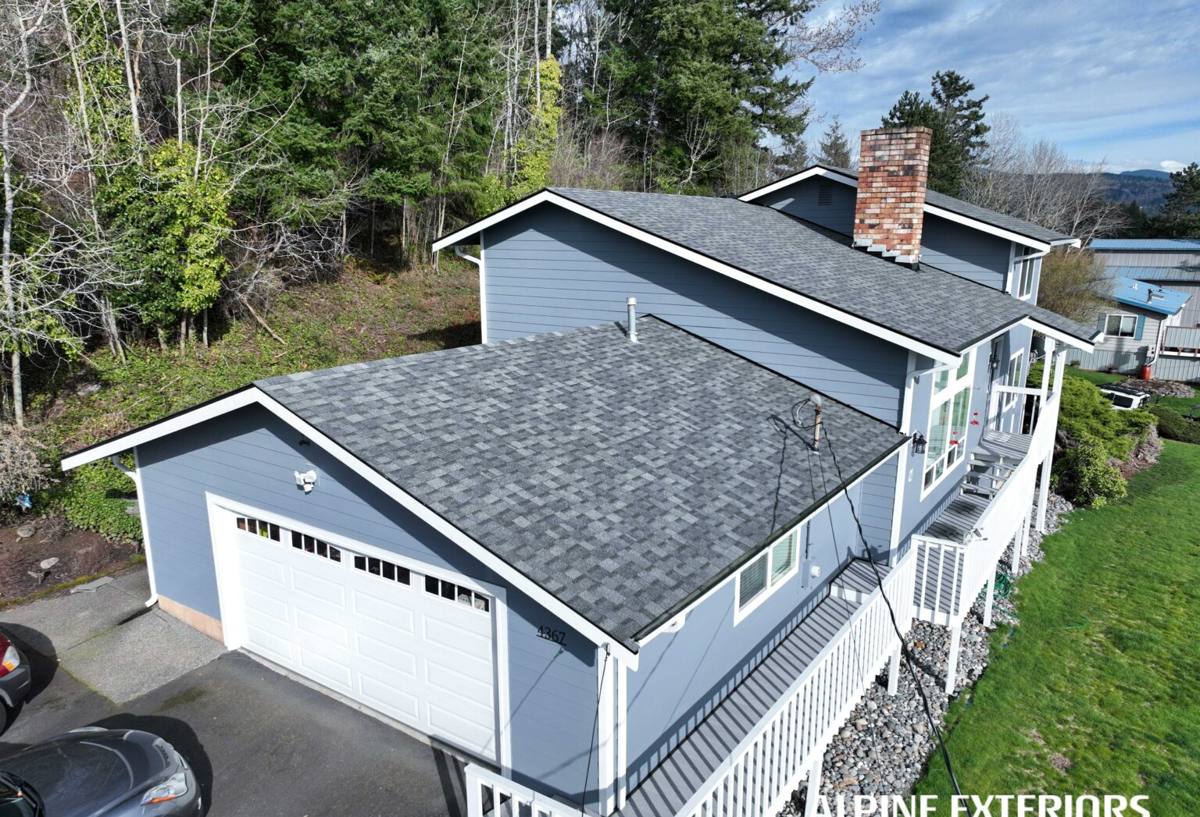
What Whatcom County Weather Does to a Nooksack Roof
Every roofing region has its own failure patterns, and Nooksack's are shaped by a few specific conditions:
Wind and Debris
River valleys can funnel wind, and a storm that seems moderate in Bellingham or Blaine can hit harder in Nooksack. Wind lifts shingle edges, works fasteners loose, and drives branches and debris from nearby trees onto the roof deck. Once a shingle tab is lifted even slightly, wind-driven rain gets underneath it on the next storm, and the damage compounds.
Driving Rain
Whatcom County doesn't just get rain — it gets rain pushed sideways by wind, which finds every gap in flashing, every nail that's backed out, and every seam that isn't sealed the way it should be. Driving rain is why storm damage often shows up as a leak somewhere well away from the actual entry point; water travels along the underlayment or decking before it drips through.
Moss and Trapped Moisture
The long wet season here means moss gets a real foothold on roofs that don't get much direct sun, especially north-facing slopes and anything shaded by fir or cedar. Moss holds moisture against the shingle surface long after a storm has passed, which accelerates granule loss and rot in the decking underneath. A storm that damages a shingle in a mossy area does more harm, more quickly, than the same damage on a clean, dry roof.
Signs Your Roof Has Storm Damage
Not all storm damage announces itself with an active leak. Some of it sits quietly for months before it turns into a bigger repair. After any significant wind or rain event, it's worth checking for:
- Shingles that are cracked, curled, lifted at the edges, or missing outright
- Granules collecting in gutters or at the base of downspouts
- Bent, creased, or missing flashing around chimneys, vents, and skylights
- Soft or discolored spots on ceilings or in the attic after a storm
- Debris — branches, needles, moss clumps — piled against a roof valley or behind a chimney
- Daylight visible through the roof deck from inside the attic
- Gutters pulling away from the fascia or sagging under storm debris
Any one of these on its own might be minor. Several together usually mean the storm did more than cosmetic damage.
What a Correct Storm Damage Repair Actually Involves
A repair that only addresses the visible symptom tends to fail again in the next storm. A repair done right starts with a full inspection, not just a look at the spot where the leak showed up.
Full-Roof Inspection, Not Spot-Checking
Wind and rain rarely damage just one shingle. We check the whole slope the wind hit, the valleys, all flashing points, and the attic side of the deck — because a leak visible in one room can be entering the roof several feet away and traveling along the rafters before it drips.
Matching the Repair to the Damage
A few lifted shingles from wind might only need to be re-secured or replaced. Damage that's reached the underlayment or decking needs those layers opened up and properly rebuilt, not just shingled back over. Skipping this step is the single biggest reason storm repairs fail early — covering rotten decking with new shingles looks fine for a season and then fails again.
Flashing and Sealant Done Right
Flashing failures are one of the most common sources of storm leaks, and they're also one of the easiest things to get wrong in a rushed repair. Flashing needs to be properly layered with the underlayment and shingle courses, not just caulked over the top. Caulk is a short-term patch, not a repair.
Common Storm Damage Scenarios in This Area
| Damage Type | Typical Cause | What the Repair Involves | Urgency |
|---|---|---|---|
| Lifted or missing shingles | High wind, aging fasteners | Replace affected shingles, check surrounding tabs for loosened seals | High — exposed area, next rain gets in |
| Flashing separation | Wind flexing the roof deck, old sealant failing | Remove and re-flash properly, integrate with shingle courses | High — common leak point |
| Moss-related shingle degradation | Long wet season, shaded roof slopes | Remove moss, treat affected area, replace granule-stripped shingles | Medium — worsens over time |
| Soft or rotted decking | Prolonged unnoticed leak under shingles | Cut out and replace decking before re-roofing that section | High — structural, not cosmetic |
| Gutter and fascia damage | Wind-driven debris, ice weight in cold snaps | Repair or replace gutter runs and affected fascia board | Medium — affects water drainage from roof |
Our Storm Damage Repair Process
- Inspection. We walk the roof and check the attic, not just the spot where the problem showed up, so nothing gets missed.
- Honest assessment. We tell you what's actually damaged, what's still sound, and what we'd genuinely recommend if it were our own roof.
- Written scope and estimate. You know what's being done and why before any work starts.
- Repair. We fix the deck, underlayment, and flashing properly before any new shingles go down — not just the visible surface.
- Cleanup and final check. Debris is cleared, and we confirm the repair holds up under a close inspection, not just a glance from the ground.
Storm Damage and Insurance Claims
Many storm repairs in this area are covered in whole or part by homeowner's insurance, depending on the policy and the cause of damage. We can document what we find with clear photos and a written description of the damage, which is what most adjusters need to process a claim. We're not a public adjuster and we don't promise a claim outcome — that's between you and your insurer — but we make sure the documentation reflects the actual condition of the roof, not a guess.
Why It Matters That We Already Work in Nooksack
A crew that's already familiar with this part of Whatcom County knows what to check for beyond the obvious. We know that a north-facing slope near the river bottom is going to hold moss and moisture longer than a south-facing slope in more open, wind-exposed Blaine. We know that a roof here may need a closer look at flashing after storms than one further from the valley. That local pattern recognition is part of doing the job right the first time — it's the difference between a repair that addresses what actually happened to your roof and one that treats every storm repair the same way regardless of where the house sits.
It also means we're not disappearing after the invoice is paid. We're a phone call away if something doesn't look right a few months later, and we stand behind the work we do in this community because it's the community we work in every storm season, not just this one.
Keeping Storm Damage From Coming Back
A good repair after a storm is only half the equation. A little upkeep between storms goes a long way toward keeping the next one from doing serious damage:
- Clear gutters and downspouts before the fall storm season starts
- Trim back branches that overhang the roof, especially over valleys and near the chimney
- Have moss treated before it spreads across a full slope, not after
- After any major windstorm, do a quick visual check from the ground for obvious shingle or flashing movement
- Address small leaks immediately — a stain the size of a coin now can mean rotted decking by next winter
If a recent storm has left you with a leak, missing shingles, or just a nagging feeling that something's not right up there, we're happy to take a look. We offer free, no-pressure estimates for storm damage repair in Nooksack and the surrounding area — use the form below to get started.