 Blaine Siding
 Why California Creek Roofs Wear Differently
California Creek sits close enough to Drayton Harbor and the open water around Blaine that salt-laden air is part of daily life here, even a mile or two inland. Add in the tree cover along the creek corridor and the surrounding low-lying, often shaded lots, and you get a roof environment that's tougher than what a house twenty miles east in drier Whatcom County ever sees. We've repaired enough roofs in this pocket of the county to know the failure patterns are consistent: metal components corrode faster, moss gets a head start in shaded northern exposures, and wind-driven rain off the water finds every weak seam in flashing and underlayment.
None of that means a California Creek roof is doomed to constant problems. It means the repair work has to account for those conditions specifically, not just patch the visible symptom. A nail pop or a lifted shingle out here is rarely an isolated event — it's usually the first visible sign of moisture that's already been working on the roof for a season or two.
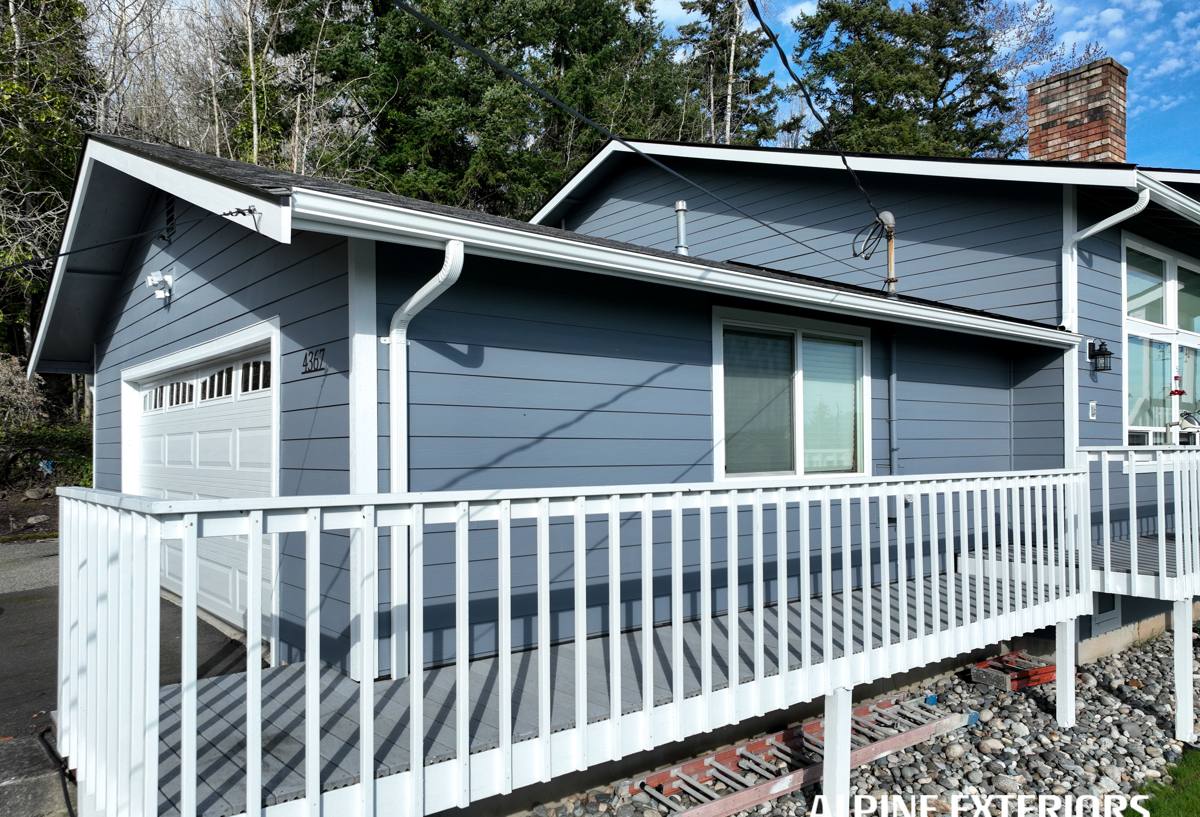
The Three Forces at Work on Local Roofs
Salt Air
Salt air accelerates corrosion on any exposed metal — nail heads, flashing, gutter fasteners, and the metal components in roof vents. Once a fastener starts to corrode, it loses holding strength before it ever looks bad from the ground. This is one reason we inspect fastener condition directly during a repair call rather than assuming a shingle problem is only a shingle problem.
Driving Rain
Storms coming off the water tend to push rain sideways rather than straight down, which puts pressure on details that a calm-weather roof would never test: step flashing along walls and chimneys, valley metal, and the seams around roof penetrations like plumbing vents and skylights. Wind-driven rain doesn't need a big gap to get in — a quarter-inch of lift in a shingle edge is enough over the course of a wet Whatcom County winter.
Moss Season
Between the creek-side tree canopy and the region's long stretch of damp, mild weather, moss has a good six to eight months a year to establish itself on shaded roof planes. Moss holds moisture against the roofing material, lifts shingle edges as it grows, and — if left unchecked — works its way under the shingle mat where it can compromise the underlayment. It's slow, so it's easy to ignore, but it's one of the more common reasons we get called out to a roof that's only ten or twelve years old and already showing granule loss and soft spots.
Common Repair Calls We See in This Neighborhood
- Moss-related shingle lift and granule loss on north- and east-facing roof planes with tree cover
- Corroded or failed flashing around chimneys, dormers, and sidewalls where two roof or wall planes meet
- Nail pops and loosened fasteners from a combination of wind uplift and metal fatigue
- Valley leaks where debris and moss buildup channel water under the metal instead of down it
- Soft or spongy decking discovered during a repair, usually near a roof penetration that's been leaking slowly for longer than the homeowner realized
- Gutter and roof-edge rot from water that never fully dries out between rain events
What a Correct Repair Actually Involves
A roof repair done right isn't just swapping a shingle or squeezing in a bead of sealant. It starts with figuring out why the failure happened in the first place — otherwise you're paying to fix the same spot again in two years. Our approach on a California Creek repair call typically includes:
- A full-roof visual inspection, not just a look at the reported problem area, since moss and moisture damage in this climate are rarely confined to one spot
- Checking the decking underneath any suspect area for soft spots, delamination, or rot before new material goes down
- Matching materials as closely as possible to the existing roof — shingle profile, color line, and metal type — so the repair doesn't stand out or create a mismatched wear pattern later
- Correcting flashing details rather than just re-sealing them, since caulk over bad flashing is a temporary fix that fails again within a season or two out here
- Addressing the moss or debris that contributed to the failure, not just the leak itself
Sealant has its place, but on its own it's a short-term answer to a problem that usually needs a mechanical fix — proper flashing lap, correct fastener placement, or a shingle course that's actually tied back into the surrounding field correctly.
Our Process, Start to Finish
| Step | What Happens |
|---|---|
| Initial contact | We talk through what you're seeing — stains on a ceiling, missing shingles, visible moss — so we know what to look for first |
| On-site inspection | We walk the roof (weather permitting) and check the attic or interior where accessible, since interior signs often tell us more than the surface does |
| Written estimate | You get a clear scope of work and price before anything starts — no verbal-only estimates |
| Repair work | We complete the agreed scope, including any decking repair that's uncovered once we open up the area |
| Cleanup and walkthrough | Debris and old material hauled off, and we show you what was done and why |
Repair vs. Replacement: How We Help You Decide
Not every roof problem in California Creek needs a full replacement, and we're not going to tell you it does. But there's a point where repeated repairs cost more over time than doing the roof once, correctly. Here's how we generally think about it:
| Factor | Favors Repair | Favors Replacement |
|---|---|---|
| Age of roofing material | Under 12–15 years | Approaching or past its expected service life |
| Extent of damage | Isolated to one area or penetration | Spread across multiple planes or slopes |
| Decking condition | Solid, dry, no rot found | Soft or delaminated decking in more than one spot |
| Moss/algae history | Recent and treatable | Long-term, with granule loss and mat breakdown |
| Repair frequency | First or second call in several years | Recurring leaks in different spots each season |
If your roof falls mostly in the middle column, a repair is the honest recommendation and what we'll price for you. If it's landing in the right column, we'll say so plainly and explain why — we'd rather tell you that now than have you pay for a patch that doesn't hold through the next wet season.
Materials We Use for Repairs Here
For asphalt composition roofs, which make up most of the housing stock in and around Blaine, we match shingle type and color as closely as the existing roof allows and tie new courses into the old ones with proper overlap rather than just face-nailing a patch on top. For flashing, we favor corrosion-resistant metal given how much salt exposure this area gets — mild steel flashing that hasn't been properly coated is one of the more common failure points we replace on older homes near the water.
We're upfront about one thing: if your existing shingle line has been discontinued or the color has weathered enough that an exact match isn't possible, we'll tell you before starting rather than let you be surprised by a visible seam. Sometimes the honest answer is repairing a less visible slope with the closest match available and saving a true color match for when the roof is replaced.
Signs It's Time to Call for a Repair
- Visible moss, especially thick or dark green patches on shaded slopes
- Granules collecting in gutters or at the base of downspouts
- Curling, cracking, or lifted shingle edges
- Rust streaks or visible corrosion on flashing or vent boots
- Water stains on interior ceilings or in the attic near roof penetrations
- Daylight visible through the roof deck from inside the attic
- Sagging or soft-feeling areas when walked (we check this, not something to test yourself)
Catching any of these early is almost always cheaper than waiting. A moss problem caught in late summer is a maintenance job; the same moss problem caught after a full wet winter of holding moisture against the deck can turn into a decking repair.
Timing Repairs Around the Whatcom County Weather
Late spring through early fall is the best window for roof repair work in this area — drier conditions mean better adhesion for sealants and shingle work, and we're not fighting rain delays. That said, active leaks don't wait for good weather, and we do emergency and cold-weather repairs when a roof needs it. If a repair has to happen during the wetter months, we plan around the forecast and use materials rated for cold-weather application so the work holds up rather than failing early because it was installed outside its ideal conditions.
Why Local Experience in California Creek Matters
A roof repair crew that already knows this stretch of Whatcom County isn't guessing about how salt air, tree cover, and driving rain interact on a roof — we've seen the pattern repeat across enough homes in the area to know where to look first. That local knowledge shows up in small but real ways: knowing which roof orientations in California Creek tend to hold moss longest, knowing what flashing details tend to fail first on homes this close to the water, and being able to give you a realistic timeline instead of a generic one. It also means a faster response when a leak shows up mid-storm, since we're not driving in from across the county.
If you're seeing signs of a roof problem, or you just want an honest read on whether a repair or a longer-term plan makes sense for your home, we're glad to take a look. Reach out for a free, no-pressure estimate using the form below.