 Blaine Siding
 Why Board & Batten Suits Cherry Point
Board and batten has a strong foothold along the Cherry Point shoreline and the rural stretches around it, and it's not just about looks. The vertical lines read well against the mix of farmhouse, craftsman, and modest ranch homes common in this part of Whatcom County, and the deep shadow lines the battens create hold up visually even under the flat, overcast light this area gets most of the year. It's a style choice, but it's also a practical one — done correctly, the batten strips add a second layer of protection over the panel seams, which matters more here than in drier parts of the state.
That said, board and batten is also one of the least forgiving siding styles to get wrong. The battens create dozens of extra fastening points and seams compared to standard lap siding, and every one of those seams is a place water can find its way behind the cladding if it isn't detailed properly. On a home exposed to wind off the water and near-constant damp, that margin for error shrinks fast.
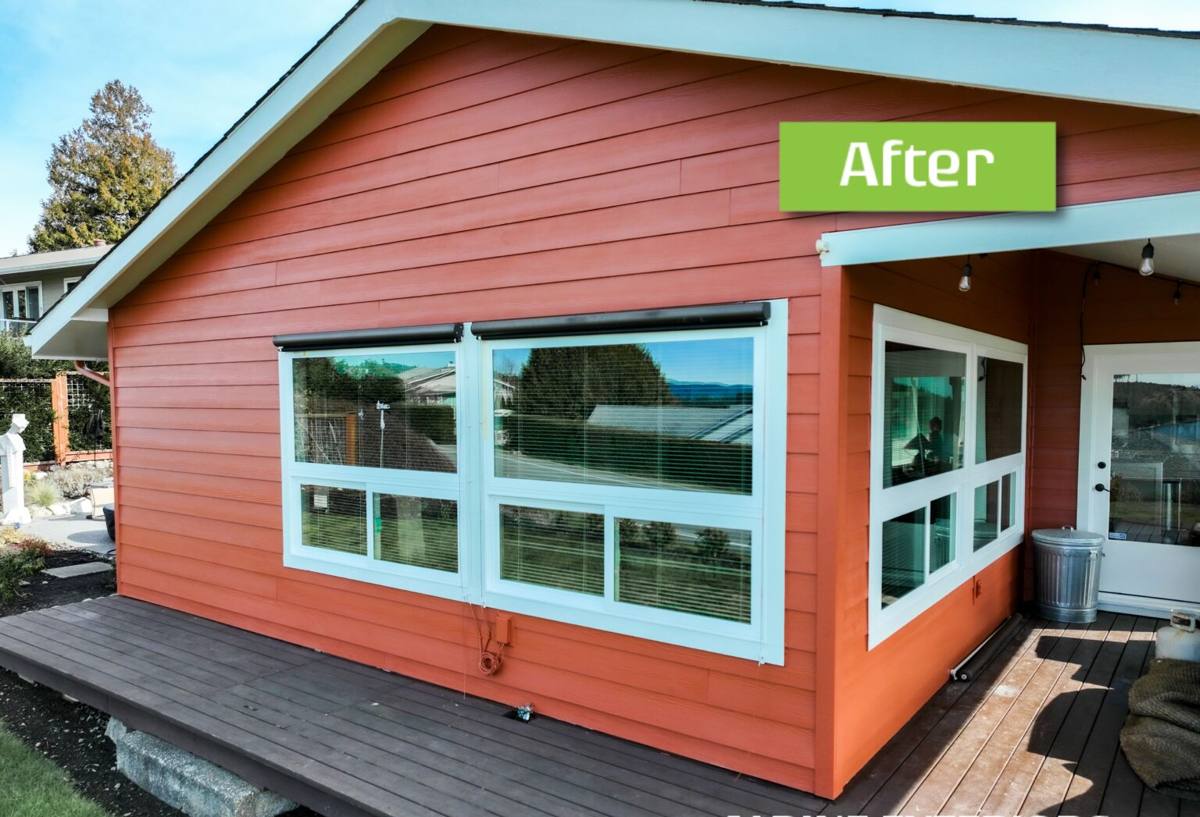
What Cherry Point's Climate Actually Does to Siding
Homes near the Cherry Point shoreline deal with a combination most inland Whatcom County properties don't see in the same intensity: salt-laden air coming off the water, driving rain that hits siding at an angle instead of falling straight down, and a moss season that can stretch across most of the fall, winter, and spring. Each of these stresses siding differently.
Salt Air
Airborne salt accelerates corrosion on anything metal — fasteners, flashing, trim screws — and it also breaks down cheap or under-cured coatings faster than plain rain does. Siding that's rated for a generic climate but not engineered for coastal exposure tends to show fading, chalking, or fastener staining years ahead of schedule.
Driving Rain
Wind-driven rain doesn't just run down a wall, it pushes against it, working its way under trim, into gaps at the battens, and behind loose caulk joints. On board and batten specifically, the vertical battens are constantly shedding water sideways across seams that a lap siding profile wouldn't even have.
Moss and Sustained Dampness
A long moss season means siding surfaces stay damp for extended stretches, especially on north- and west-facing walls that get less direct sun. Moss and algae growth isn't just cosmetic — where it takes hold on a porous or poorly sealed surface, it holds moisture against the substrate and shortens the life of everything underneath.
Where Board & Batten Fails When It's Done Wrong
Most of the board and batten problems we get called out to inspect in this area trace back to a handful of installation shortcuts, not the siding style itself:
- Battens face-nailed directly through both layers without any gap for water to escape, trapping moisture behind the panel
- No rainscreen or drainage gap behind the panel, so any water that gets in has nowhere to go but into the wall assembly
- Panel seams and batten joints caulked instead of properly flashed, which fails within a few seasons of salt and UV exposure
- Battens spaced or fastened without accounting for the wider expansion and contraction range that coastal temperature swings cause
- Bottom starter courses set too close to grade or hardscape, so splashback keeps the lowest boards wet far more than the rest of the wall
None of these are unique to Cherry Point, but the consequences show up faster here because the climate gives moisture more opportunities and more time to do damage.
The System We Actually Install
We install James Hardie fiber cement exclusively — no vinyl board and batten, no engineered wood panels, no primed spruce boards. For a batten-style profile, that means Hardie's factory-engineered panel-and-batten system: fiber cement panels with true battens installed over them in a pattern that matches the traditional board and batten look, built from a material that doesn't rot, swell, or feed moss the way wood-based products can.
Hardie's HZ5 product line is engineered specifically for the wetter, harsher climate zones of the Pacific Northwest, which includes the marine exposure this part of Whatcom County sees. The ColorPlus factory finish is baked on and warranted against fading and peeling, which matters directly here — a finish that's only rated for average UV and rain exposure doesn't hold its color the same way once salt air and constant damp are added to the equation. Fiber cement is also non-combustible, which isn't a Cherry Point-specific concern, but it's part of why we standardized on Hardie rather than any wood-based or vinyl alternative.
Why Not the Other Options
We get asked from time to time why we won't quote vinyl board and batten or an engineered wood panel system. Vinyl is inexpensive and easy to install, but it's a poor match for this climate — wind-driven rain works behind vinyl panels at the same seams that give the batten look, and vinyl doesn't hold paint if a color change is ever wanted later. Engineered wood products depend entirely on an intact factory coating to keep moisture out of the wood substrate; once that coating is compromised at a cut edge, fastener hole, or seam, the wood core is exposed to exactly the sustained dampness this area produces all winter. Fiber cement doesn't have that failure mode, which is why it's the only material we put on a home.
What a Correct Installation Involves
The difference between board and batten that lasts and board and batten that fails early almost always comes down to the details most homeowners never see once the job is finished:
| Detail | Why It Matters Here |
|---|---|
| Rainscreen / drainage gap behind panels | Gives any water that gets past the surface a path to drain and dry instead of sitting against the wall sheathing |
| Proper flashing at all seams, windows, and penetrations | Sheds wind-driven rain instead of relying on caulk, which degrades faster in salt air |
| Correct fastener type and spacing | Coastal-rated fasteners resist corrosion; wrong spacing lets panels move and crack over time |
| Batten placement and gapping per manufacturer spec | Allows for expansion/contraction and keeps water from being funneled into seams |
| Starter strip and clearance from grade or hardscape | Reduces splashback and prolongs the life of the lowest, most exposed course |
| Factory-primed and painted cut edges | Unsealed cut edges are the fastest way moisture gets into fiber cement |
Skipping any one of these doesn't necessarily cause an immediate problem — it shows up two, five, or ten years later as staining, a soft spot, or a section that needs to be pulled apart and redone. That's the trade-off with board and batten: it rewards a crew that does every seam correctly and punishes one that doesn't.
Our Process for a Cherry Point Project
1. On-Site Assessment
We walk the home and check the condition of the existing siding, sheathing, and trim, paying particular attention to north- and west-facing walls and any areas showing moss growth, staining, or soft spots — the places a long moss season and driving rain do the most damage first.
2. Moisture and Substrate Check
Before any new siding goes on, we confirm what's underneath is dry and sound. Installing new board and batten over compromised sheathing just hides a problem instead of fixing it, and on a coastal property that problem doesn't go away on its own.
3. Tear-Off or Overlay Decision
Most board and batten replacements on homes in this area are full tear-offs, since it's the only way to install a proper drainage gap and inspect the wall assembly underneath. We'll tell you plainly if your home is one of the rare cases where overlay makes sense.
4. Installation to Manufacturer Spec
Panels, battens, flashing, and fasteners go in following Hardie's published installation guide for this climate zone — not a generalized method used everywhere regardless of exposure.
5. Final Walkthrough
We check seams, caulking, trim, and touch-up paint before calling the job done, and we'll point out anything on the property — gutters, downspouts, grading — that could undermine the new siding if left unaddressed.
Why It Matters That We Already Work in Cherry Point
Siding technique that works fine in a drier inland climate can fall short right on the water. A crew that hasn't worked exposed coastal properties in Whatcom County before is more likely to default to generic spacing, generic fastener choice, and generic flashing details — the kind of shortcuts that survive an average climate but not one with regular wind-driven rain and a long moss season. Working in this area regularly also means we're familiar with the permitting expectations in Whatcom County and with how quickly moss and algae reestablish themselves on north-facing walls here, which shapes how we detail those elevations differently from the sunnier sides of the same house.
There's also a practical side to hiring local: if a question comes up after installation — a seam that needs a look, a color-match touch-up — a crew based near Blaine can get back out to a Cherry Point property without it being a special trip.
What Affects the Cost of a Board & Batten Project
| Factor | Why It Changes the Price |
|---|---|
| Tear-off vs. overlay | Full removal costs more upfront but is usually necessary for a proper drainage gap and sheathing inspection |
| Home size and wall complexity | More corners, dormers, and trim details mean more cuts, more flashing, and more labor hours |
| Batten spacing and width | Narrower spacing looks more traditional but adds material and installation time |
| Existing damage found during tear-off | Rotted sheathing or framing found once old siding comes off has to be repaired before new siding goes on |
| Trim and accessory package | Corner boards, window trim, and fascia detailing add cost but also protect the seams around them |
We give straightforward, itemized estimates rather than a single vague number, so you can see what you're actually paying for and where the money is going.
Maintaining Board & Batten in a Coastal Climate
Fiber cement is low-maintenance compared to wood, but "low-maintenance" doesn't mean "no maintenance," especially this close to the water. A short annual routine goes a long way:
- Rinse the siding once a year, focusing on north- and west-facing walls where moss and algae take hold first
- Check caulking at trim and window edges for cracking or gaps, and have any failures resealed before winter rain sets in
- Keep gutters clear so overflow isn't running down the wall face and staying against the siding
- Trim back vegetation that keeps a wall shaded and damp longer than the rest of the house
- Have any impact damage or exposed cut edges touched up promptly rather than left through a wet season
If you'd like a straightforward, no-pressure look at your home's siding and what board and batten would take in your specific situation, the estimate form below is the fastest way to get one from a crew that already knows this part of the county.