 Blaine Siding
 Storm Damage Roofing for the Cherry Point Area
Cherry Point sits right on the water north of Blaine, and that location cuts both ways. The views are part of why people live out here, but the same exposure that gives you those views also puts your roof through more than a typical inland home ever sees. Wind off the Strait of Georgia, salt-laden air, driving rain that comes in sideways during winter storms, and a moss season that never really ends all work on a roof at the same time, year after year. When a storm does real damage, the repair has to account for all of that, not just patch the hole and move on.
This page covers what storm damage roof repair looks like specifically for homes in and around Cherry Point, why the local climate changes how the work should be done, and what to expect if you call us after a bad blow.
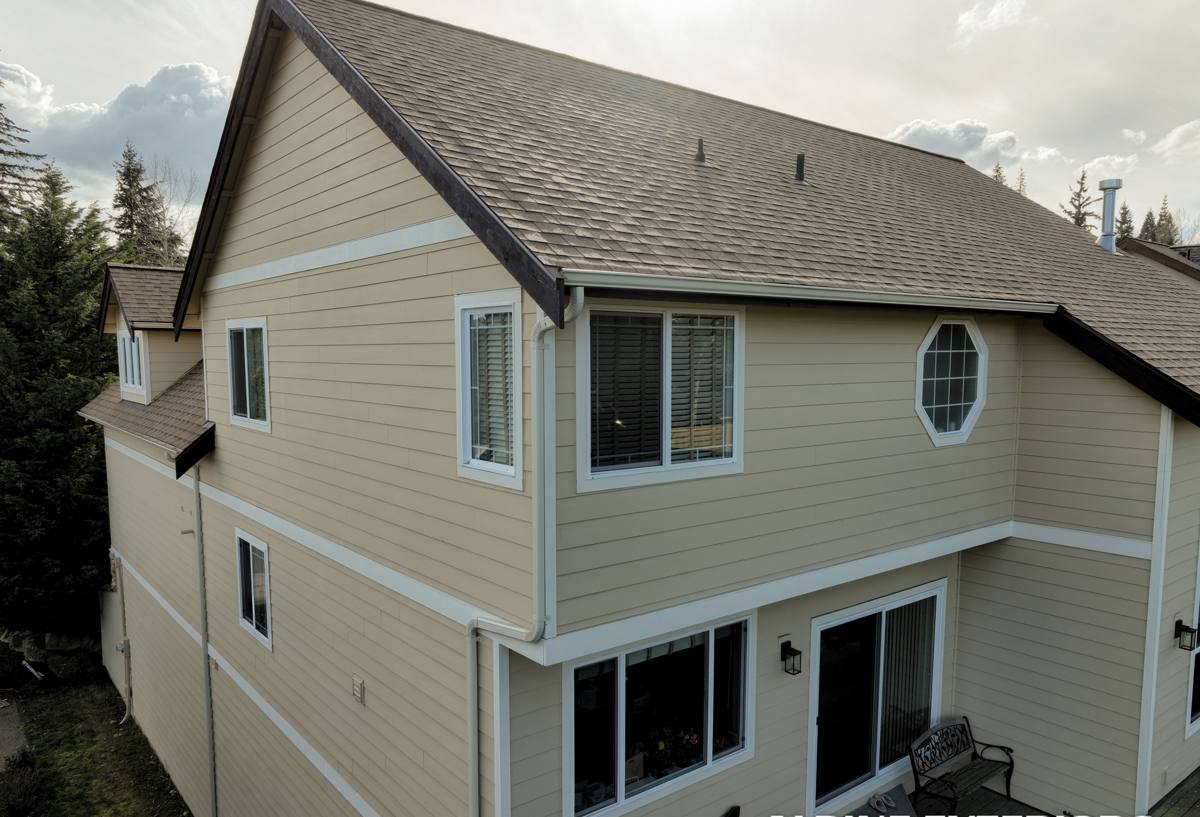
What Whatcom County Storms Actually Do to a Roof
Most of the storm damage we see out here isn't a single dramatic event. It's cumulative wind stress that finally finds a weak spot, or a heavy rain event that exposes a problem that had been building for a while. Understanding the pattern helps explain why we inspect the way we do.
Wind Damage
Sustained wind off the water lifts shingle tabs and works fasteners loose gradually before a storm ever tears something off outright. By the time you see a missing shingle or a lifted ridge cap after a windstorm, there's a good chance the surrounding roofing was already compromised. A repair that only replaces the obviously missing pieces without checking the shingles around them is a repair that will fail again in the next storm.
Wind-Driven Rain
Rain that's falling straight down is fairly forgiving of small roofing flaws. Rain that's being pushed sideways by wind is not. It finds its way under lifted shingles, around flashing that's slightly off, and into any gap that a calm-weather roof would never notice. Cherry Point's exposure to weather coming off the Strait means wind-driven rain is a bigger factor here than it is for a similar home a few miles inland, and it's the main reason storm damage in this area often shows up as interior water stains before anyone spots a problem on the roof itself.
Salt Air and Corrosion
Proximity to the water accelerates corrosion on exposed metal — flashing, fasteners, vent caps, gutter hardware. A fastener that's rusted and weakened doesn't hold as well when wind hits, which means storm damage tends to be more severe on homes closer to the water than on comparable homes further inland. When we're repairing storm damage in this area, we're also looking at whether the underlying metal components have been quietly degraded by years of salt exposure, because that affects what actually needs to be replaced versus patched.
Moss and Trapped Moisture
Whatcom County's long wet season keeps roofs damp for extended stretches, and that's exactly what moss needs to take hold. Moss doesn't just look bad — it holds moisture against the roofing material, works its way under shingle edges, and can lift shingles enough that wind gets underneath them more easily. A roof with an established moss problem is more vulnerable to storm damage than a clean one, so moss condition is something we factor into both the inspection and the repair plan.
Why Cherry Point Homes Need a Locally Aware Repair
A generic storm repair treats the roof as a standalone system. A repair done right for this area treats the roof as part of a package that includes flashing condition, ventilation, gutter performance, and moss exposure — because storm damage here rarely happens in isolation from those other factors. A crew that regularly works this stretch of Whatcom County knows which failure patterns show up on homes exposed to the Strait versus homes tucked back from the water, and that changes where we look first and what we recommend replacing versus repairing.
We also know that "close to Blaine" doesn't mean "identical to Blaine." Homes right on the water take a different beating than homes a half-mile inland, even within the same storm event. Part of doing this work honestly is not applying a one-size-fits-all fix to every property.
What a Correct Storm Damage Repair Involves
Storm damage repair is not just replacing what's visibly missing. Here's what we actually check and address:
- Full slope inspection — not just the damaged section, since wind stress often affects shingles beyond the obvious failure point
- Flashing check at chimneys, vents, valleys, and roof-to-wall transitions, where wind-driven rain most often gets in
- Decking assessment underneath any removed shingles, to catch water damage or soft spots before they're covered back up
- Fastener condition, especially on homes with more direct water exposure, where corrosion can be further along than it looks
- Underlayment integrity in the repair area, since this is the last line of defense if shingles fail again
- Gutter and drainage check, because storm damage often coincides with drainage problems that make water intrusion worse
- Moss and debris removal in the repair zone, so the fix isn't installed on top of an existing moisture problem
- Matching materials that hold up to salt air exposure, not just whatever is fastest to source
Our Process, Start to Finish
1. Inspection and Documentation
We start with a full inspection, not just a look at the obviously damaged spot. We document what we find — this matters if you're filing an insurance claim, since adjusters want to see the extent of damage, not just the worst-looking shingle.
2. Honest Assessment
We'll tell you plainly whether you're looking at a targeted repair or whether the damage points to a bigger underlying issue — an aging roof that was already near the end of its service life, for instance, where a patch is a short-term answer at best. We'd rather tell you that upfront than have you pay for a repair that needs redoing in two years.
3. Temporary Protection if Needed
If there's active water intrusion or exposed decking, we prioritize getting the area weathertight quickly, even if the full repair takes a bit longer to schedule properly.
4. The Repair
We match materials as closely as possible, address flashing and fasteners in the work area, and check ventilation isn't being blocked or altered by the repair. We don't consider a storm repair finished until the surrounding area is in as good a condition as the patch itself.
5. Follow-Up Check
Especially after larger storm events, we recommend a follow-up look once the next round of heavy weather has passed, just to confirm the repair is holding under real conditions rather than assuming it based on a dry-day inspection.
Repair vs. Replacement: How We Decide
Not every storm-damaged roof needs a full replacement, and not every roof is a good candidate for another round of patching. Here's how we weigh it:
| Factor | Favors Repair | Favors Replacement |
|---|---|---|
| Roof age | Under roughly 10-12 years, in otherwise good condition | Nearing or past typical service life for the material |
| Extent of damage | Isolated to one section or slope | Spread across multiple areas or slopes |
| Underlying decking | Solid, no rot or soft spots found | Water damage or soft decking discovered during inspection |
| Moss/moisture history | Minimal, well-maintained roof | Long-term moss buildup or repeated moisture issues |
| Prior repairs | First repair needed in a long stretch | Multiple past patches, especially in different areas |
| Fastener/flashing corrosion | Localized, easily addressed in the repair area | Widespread corrosion found across the roof |
We walk through this with you directly rather than defaulting to whichever option is more profitable for us. A lot of the time, a well-executed repair is the right call — we just want it to be the right call for the right reasons.
Insurance and Storm Claims
If your storm damage is significant enough that you're considering a claim, documentation matters. We provide detailed findings from our inspection that you can share with your insurer, including photos and a clear description of what happened and what's needed to fix it. We're not a public adjuster and we don't handle the claim itself, but a thorough, honest assessment from a local crew that has seen plenty of Whatcom County storm damage tends to carry weight with adjusters who may not be familiar with how exposure near the water affects a roof.
Simple Storm Damage Checklist for Homeowners
After a storm passes through the Cherry Point area, here's what's worth checking from the ground before calling anyone:
- Shingles or debris in the yard or gutters that shouldn't be there
- Visible gaps, lifted edges, or discoloration on roof slopes viewed from a safe distance
- New or worsening water stains on interior ceilings, especially near chimneys or vents
- Sagging or uneven sections along the roofline
- Gutters pulling away from the fascia or overflowing during rain
- Any musty smell in the attic, which can indicate moisture intrusion before it's visible elsewhere
If you notice any of these, it's worth getting a professional look sooner rather than later. Wind-driven rain in this area doesn't wait for convenient timing, and a small gap left through one more storm can turn into a much bigger repair.
Why Work With a Crew That Already Knows This Area
Roofing crews that don't regularly work near the water sometimes underestimate what salt air and constant wind exposure do to fasteners, flashing, and shingle adhesion over time. We work in Blaine and the surrounding Whatcom County coastline regularly enough to know that a repair spec that works fine inland can fall short out here. That's not a knock on general roofing work — it's just a different set of conditions that calls for a bit more attention to material choice and detail work.
If your Cherry Point-area home has storm damage, or you want a straightforward opinion on whether recent weather caused a problem worth addressing, we're happy to take a look. Reach out for a free, no-pressure estimate using the form below.