 Blaine Siding
 Building Decks for Custer's Particular Climate
Custer sits close enough to the water and open farmland around Blaine that decks here take a different kind of beating than decks built twenty miles inland. Salt-laden air moves through on a regular basis, driving rain comes in sideways more often than straight down, and the long gray stretch of fall through spring means moss and algae get a real head start on any surface that holds moisture. A deck built with inland assumptions — standard fasteners, minimal drainage planning, wood species chosen for looks over performance — tends to show its age fast out here. A deck built for Custer specifically holds up.
This page is about one job: custom deck construction for homes in and around Custer. Not a general overview of decking everywhere we work, but what actually matters when we're framing, fastening, and finishing a deck that has to survive Whatcom County's coastal-influenced weather year after year.
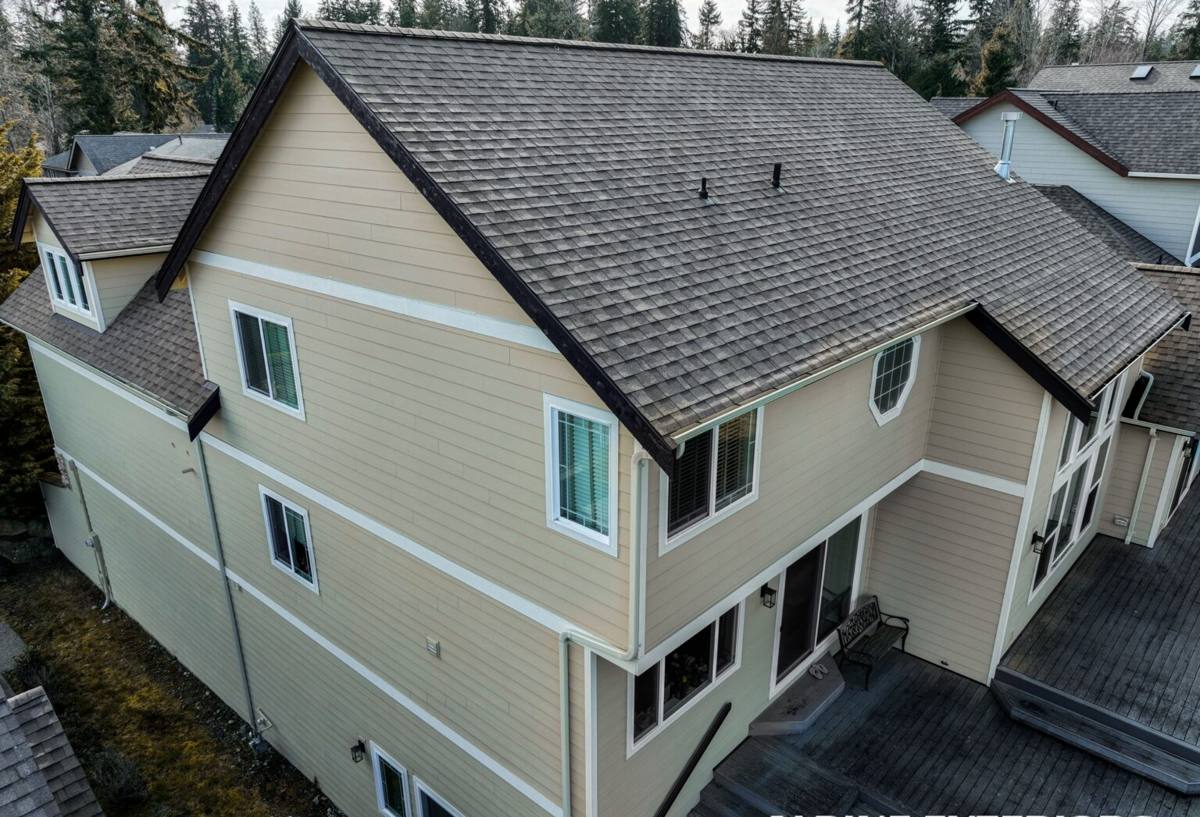
What Salt Air, Rain, and Moss Actually Do to a Deck
Each of these three factors attacks a deck differently, and understanding that is what separates a deck that lasts from one that needs early repairs.
Salt Air
Airborne salt accelerates corrosion on any exposed metal — nails, screw heads, joist hangers, railing brackets. Once a fastener starts to corrode, it weakens, stains the surrounding wood or composite, and eventually fails. This is why fastener selection isn't a minor detail on a Custer build; it's one of the first things that determines how long the structure holds together underneath a deck that still looks fine on top.
Driving Rain
Wind-driven rain doesn't just fall on a deck surface — it gets pushed sideways into ledger connections, under railing posts, and into any gap where end grain is exposed. Standing water and repeated wetting at these joints is where rot starts, almost always before it's visible from above. Drainage and flashing details matter more here than in a climate where rain mostly falls straight down.
Moss and Algae
Long wet seasons with limited direct sun give moss and algae plenty of time to establish on any decking surface that doesn't drain and dry quickly. Beyond the appearance issue, a mossy deck surface gets slick and dangerous underfoot, and moss holds moisture against the decking material itself, extending the time wood or composite stays wet after a storm.
Decking Material Options for Custer Homes
There's no single "best" decking material — there's the material that fits a given homeowner's maintenance appetite, budget, and how exposed the deck is to weather. Here's how the common options actually perform in this specific climate.
| Material | Salt Air / Moisture Behavior | Moss Resistance | Maintenance |
|---|---|---|---|
| Pressure-treated wood | Good if fasteners and flashing are corrosion-resistant; wood itself handles moisture cycling reasonably well | Needs regular cleaning and sealing to resist moss buildup | Annual cleaning, periodic sealing or staining |
| Cedar | Naturally moisture- and insect-resistant, but softer surface wears with heavy foot traffic and weather exposure | Still needs cleaning; moss will take hold if left untreated | Regular sealing to maintain color and resistance |
| Composite decking | Doesn't rot, handles moisture well, but board quality and installation drainage still matter | Surface texture varies by brand — some resist moss better than others | Periodic washing; no sealing or staining required |
| PVC / capped polymer | Fully moisture-resistant surface, best option for constant salt-air and rain exposure | Smooth, low-moss surface when properly drained | Occasional washing only |
For most Custer homeowners, the decision comes down to how much upkeep they want to do. Wood costs less up front but demands ongoing attention in this climate to actually get its full lifespan. Composite and PVC cost more initially but shift most of the maintenance burden off the homeowner's plate — which matters more here than in a drier climate, because the maintenance window (cleaning, sealing) is shorter when wet seasons run long.
What a Correctly Built Deck Requires Underneath
The decking surface is what people notice, but the framing and fastening underneath is what determines whether the deck is still safe and solid in ten or twenty years. A few specifics we hold to on every Custer build:
Fasteners and Hardware
We use corrosion-resistant, coastal-rated fasteners and hardware — stainless steel or high-grade coated hardware rated for exterior and coastal exposure — rather than standard galvanized products that are adequate inland but fall short here. This is one of those details that costs a little more and is invisible once the deck is finished, but it's the difference between hardware that lasts and hardware that starts rusting and staining within a few seasons.
Ledger Attachment and Flashing
Where a deck attaches to the house is the single most important waterproofing detail on the entire structure. Done wrong, it's a slow leak path into the house's wall framing — done right, it sheds water away from the connection entirely. We flash ledger connections properly and make sure water is directed away from the house structure, not just away from the deck surface.
Footings and Post Bases
Footing depth and post base hardware need to account for local soil and frost conditions, and post bases should keep wood posts elevated off standing water rather than sitting directly on grade. This matters anywhere, but it matters more where wet ground conditions persist for a good part of the year.
Board Spacing and Drainage
Proper gapping between deck boards lets water drain through rather than pool on the surface. Too tight, and the deck holds water and grows moss faster; too loose, and it's uncomfortable underfoot and can trap debris. We set spacing based on the specific material's expansion behavior and this region's moisture levels.
Our Process for a Custer Deck Build
- On-site assessment — we look at sun exposure, drainage patterns on the property, proximity to open water or wind exposure, and the condition of any existing structure being replaced.
- Material and layout discussion — we walk through the options above honestly, including upfront cost versus long-term maintenance, so the homeowner picks a material that fits how they actually want to live with the deck.
- Permitting — decks typically require a permit through Whatcom County depending on size and height; we handle that process as part of the job.
- Framing — proper footings, ledger flashing, and corrosion-resistant hardware throughout, built to hold up under coastal conditions rather than generic inland specs.
- Decking, railing, and finish work — installed with correct spacing and fastening for the chosen material.
- Final walkthrough — we go over basic care for whatever material was installed so the homeowner knows what upkeep, if any, is expected.
Maintenance That Actually Extends a Deck's Life Here
Whatever material is chosen, a little regular attention goes a long way in this climate. This is the basic checklist we give homeowners:
- Sweep or rinse debris off the deck surface regularly, especially in fall when leaves and organic matter accumulate and hold moisture
- Wash the surface at least once or twice a year to remove early moss and algae growth before it establishes
- Check fastener heads and railing connections annually for early signs of corrosion or loosening
- Reseal or restain wood decking on the manufacturer's recommended schedule — don't wait until it visibly needs it
- Keep gutters and downspouts near the deck clear so runoff isn't dumping extra water onto or near the structure
- Trim back vegetation that shades the deck surface and slows drying after rain
Why It Matters That We Already Work in Custer
A deck built by a crew that hasn't worked this specific area tends to default to generic specs — standard hardware, standard framing details, whatever's typical for the region broadly. A crew that already works Custer knows which details actually get tested by this location's combination of salt air, wind-driven rain, and a moss season that runs longer than most of the state. That's not a sales pitch — it's the practical reason local experience shows up in how a deck performs five and ten years out, not just how it looks on the day it's finished.
We also know the permitting expectations and typical site conditions in this part of Whatcom County, which keeps the project moving instead of hitting avoidable delays.
Getting Started
If you're planning a new deck or replacing one that's showing its age, we're happy to come take a look and talk through what makes sense for your home and how you actually want to maintain it. There's no pressure and no obligation — just an honest assessment and a straightforward estimate. Use the form below to request yours.