 Blaine Siding
 Siding Built for Custer's Coastal Whatcom County Climate
Custer sits in the stretch of northern Whatcom County between Blaine and Ferndale, close enough to the water that homes here deal with a version of Pacific Northwest weather that's a notch harder on exterior materials than what you'd find further inland. Salt-laden air drifts in off the strait, driving rain comes in sideways during winter storms, and the long stretch of gray, damp months each year keeps moss and algae in business on anything that holds moisture. Siding here isn't just a cosmetic choice — it's the layer standing between your framing and a climate that never really dries out for long.
We install James Hardie fiber cement siding exclusively, and we've done enough work in this specific corner of the county to know which failure patterns show up first: caulk joints that separate and let water track behind panels, paint that chalks and fades faster on the exposed north and west elevations, and moss taking hold in shaded, poorly ventilated wall sections. A correct installation in Custer has to account for all of that from the start, not patch it later.
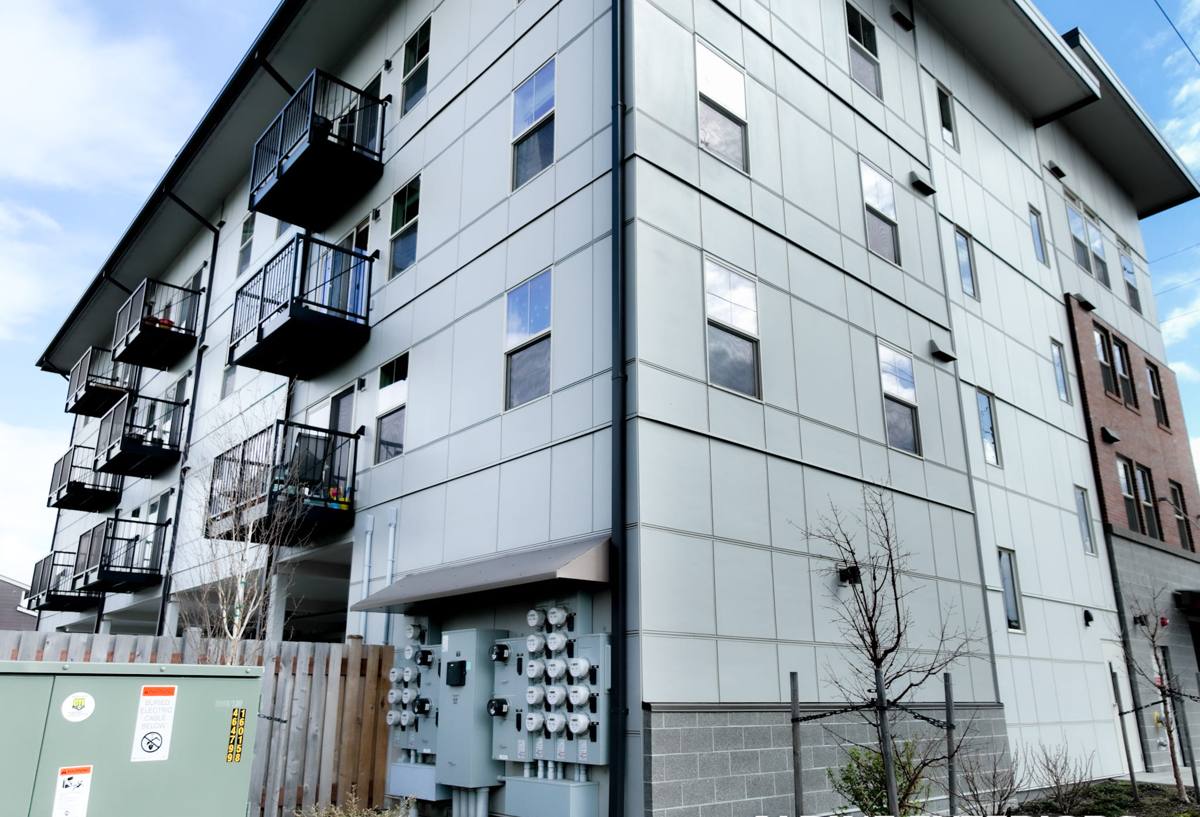
What Custer's Location Demands From Siding
Salt Air Exposure
Homes closer to Drayton Harbor and the Semiahmoo Bay shoreline take on airborne salt that accelerates corrosion of fasteners, flashing, and any metal trim components. Over years, salt exposure also breaks down lower-grade paint finishes faster than a standard inland warranty accounts for. Fiber cement itself doesn't corrode, but the fasteners and trim details around it need to be specified correctly for a coastal-adjacent environment.
Driving Rain and Wind-Driven Moisture
Storms moving through this part of the county often carry rain horizontally, which means siding faces don't just shed water downward — they take direct wind-driven moisture at seams, laps, and penetrations. Any gap in the water-resistive barrier or an under-lapped joint becomes an entry point. This is one of the most common places we find prior installation shortcuts on older homes.
Extended Moss and Algae Season
Because the region rarely gets a long, hard dry stretch, north-facing and tree-shaded walls stay damp for extended periods. That's exactly the environment moss and mildew need. Untreated wood-based and some engineered wood sidings absorb enough moisture in these conditions to feed growth at the surface, which then holds even more water against the substrate.
Why Standard Siding Specs Fall Short Here
A siding package designed for a drier climate, or installed to a generic minimum spec, tends to underperform in Custer within the first several years rather than the first several decades. The issues aren't dramatic — they're slow: a little more fading than expected, a little more moss than a homeowner further inland would see, a caulk joint that needs attention sooner than the warranty implied. None of that is necessarily the fault of the material; it's usually a mismatch between the product's design assumptions and this specific microclimate, or shortcuts in the original installation.
This is part of why we don't install vinyl, LP SmartSide, primed wood, or comparable engineered products as a matter of standard practice. We're not saying those products can't be installed correctly elsewhere — we're saying that for the moisture load and salt exposure this area sees, we'd rather stand behind one material system we trust completely than offer a menu of options with different long-term risk profiles.
James Hardie Fiber Cement: The System We Install
James Hardie siding is fiber cement — a mix of cement, sand, and cellulose fibers engineered to resist moisture absorption, hold paint finish far longer than wood-based products, and remain non-combustible. For a coastal Whatcom County property, the practical benefits are straightforward:
- It doesn't swell, rot, or delaminate when saturated repeatedly through a wet winter.
- The factory-applied ColorPlus finish is baked on under controlled conditions, which resists fading and chalking far better than field-applied paint on wood or composite products.
- It's dimensionally stable, so panels don't cup or warp the way some wood-based sidings can after years of wet-dry cycling.
- It's non-combustible, which matters for insurance considerations and overall home protection, independent of the moisture question.
- Hardie's HZ5 product line is specifically engineered for harsher, wetter climate zones — which is the more appropriate specification for a property this close to the water.
We spec the HZ5 line by default for Custer-area installations rather than a standard-zone product, because the extra margin against moisture and freeze-thaw cycling is worth it for a home in this location.
What a Correct Installation Involves
Water-Resistive Barrier and Flashing
Before a single piece of siding goes up, the wall needs a continuous, properly lapped weather barrier with flashing integrated at every window, door, and penetration — installed shingle-style so water is directed out and down, never trapped behind the plane. This is the step that determines whether the wall assembly stays dry for decades or slowly takes on hidden moisture damage.
Fastening and Clearances
Hardie panels need correct fastener type, spacing, and depth — over-driven or under-driven nails compromise both the water管理 and the finish. We also hold proper clearance between the bottom of the siding and grade, decks, patios, and roof lines, since ground-level and roof-splash moisture is one of the most common causes of premature damage regardless of material.
Caulking and Joint Treatment
Every butt joint, corner, and trim intersection needs the right sealant applied correctly — not as a cosmetic finishing touch, but as an active water-management detail. This is one of the first things to fail on a rushed installation, and one of the first things we inspect on any home we're brought in to assess.
Ventilation Behind the Cladding
A rainscreen or ventilation gap behind the siding lets any incidental moisture that does get through dry out instead of sitting against the wall sheathing. In a climate with this much sustained dampness, that airflow gap is a meaningful part of preventing rot and moss buildup at the wall assembly level, not just at the surface.
Our Process for a Custer Siding Project
- On-site assessment — we look at your home's specific exposure: which elevations take the most wind-driven rain, where shade keeps walls damp longest, and the condition of the existing wall assembly.
- Tear-off and inspection — removing old siding lets us check sheathing and framing for any moisture damage that needs addressing before new siding goes on. Covering up a wet wall is the single biggest long-term mistake in this trade.
- Weather barrier and flashing installation — done to spec, with extra attention at every penetration and elevation exposed to driving rain.
- Hardie panel installation — HZ5 product line, correct fastening, clearances, and joint treatment throughout.
- Final detailing — trim, caulking, and a walkthrough so you understand what was done and why.
Cost Factors for a Custer Siding Installation
Every home is different, but the same handful of variables drive cost on most projects in this area. Rather than quote a number that won't reflect your actual home, here's what tends to move the estimate:
| Factor | Why It Matters Here |
|---|---|
| Existing wall condition | Moisture-damaged sheathing found during tear-off adds repair scope before new siding can go on |
| Home size and elevation count | More wall area and more corners/trim details means more material and labor |
| Exposure level | Elevations facing prevailing wind and rain may warrant extra flashing detail or trim upgrades |
| Product line and color | HZ5 vs. standard zone product, and custom ColorPlus colors, affect material cost |
| Access and site conditions | Landscaping, outbuildings, and lot layout affect setup and staging time |
What to Check Before Hiring Anyone for This Work
- Do they carry proper licensing and insurance for exterior work in Washington State?
- Are they James Hardie factory-trained or certified installers, not just occasional Hardie users?
- Will they inspect and address sheathing/framing moisture issues before covering the wall, not after?
- Do they spec HZ5 or standard-zone product appropriately for your home's actual exposure?
- Can they explain their flashing and rainscreen approach in specific terms, not just "we do it right"?
- Have they worked in Custer, Blaine, or similarly exposed parts of Whatcom County before?
Why Local Experience in Custer Matters
A crew that mostly works drier, inland jobs will still build a technically fine wall — but they may not instinctively over-build the flashing at a west-facing gable, or know to push for HZ5 on a home three blocks from the water. Working repeatedly in Blaine, Custer, and the surrounding coastal parts of Whatcom County means we've seen how this specific stretch of weather ages a wall assembly over years, not just how it looks on installation day. That's the difference between siding that still looks and performs well a decade in, and siding that needed attention within the first few winters.
If you're planning a siding project in Custer, we're happy to come take a look at your home, walk you through what we'd recommend and why, and put together a straightforward, no-pressure estimate — use the form below to get started.