 Blaine Siding
 Decks in California Creek Face a Tougher Climate Than the Plans Show
A deck built to a generic spec sheet doesn't last long in California Creek. This part of Whatcom County sits close enough to tidal water that salt-laden air reaches every exposed surface, and the wet season here isn't a few storms — it's months of steady, driving rain followed by a long stretch where moss and algae have nothing but time to take hold. A deck that would hold up fine in a dry inland climate can show rot, corroded fasteners, and slick, moss-covered boards within a few seasons if it wasn't built with this specific environment in mind.
We build decks around here the way this climate demands: framing and hardware chosen for corrosion resistance, drainage details that don't rely on the sun to dry things out, and a ledger connection that protects the house itself, not just the deck. None of that shows up in a sales brochure, but it's the difference between a deck that needs real work in year five and one that's still solid at year twenty.
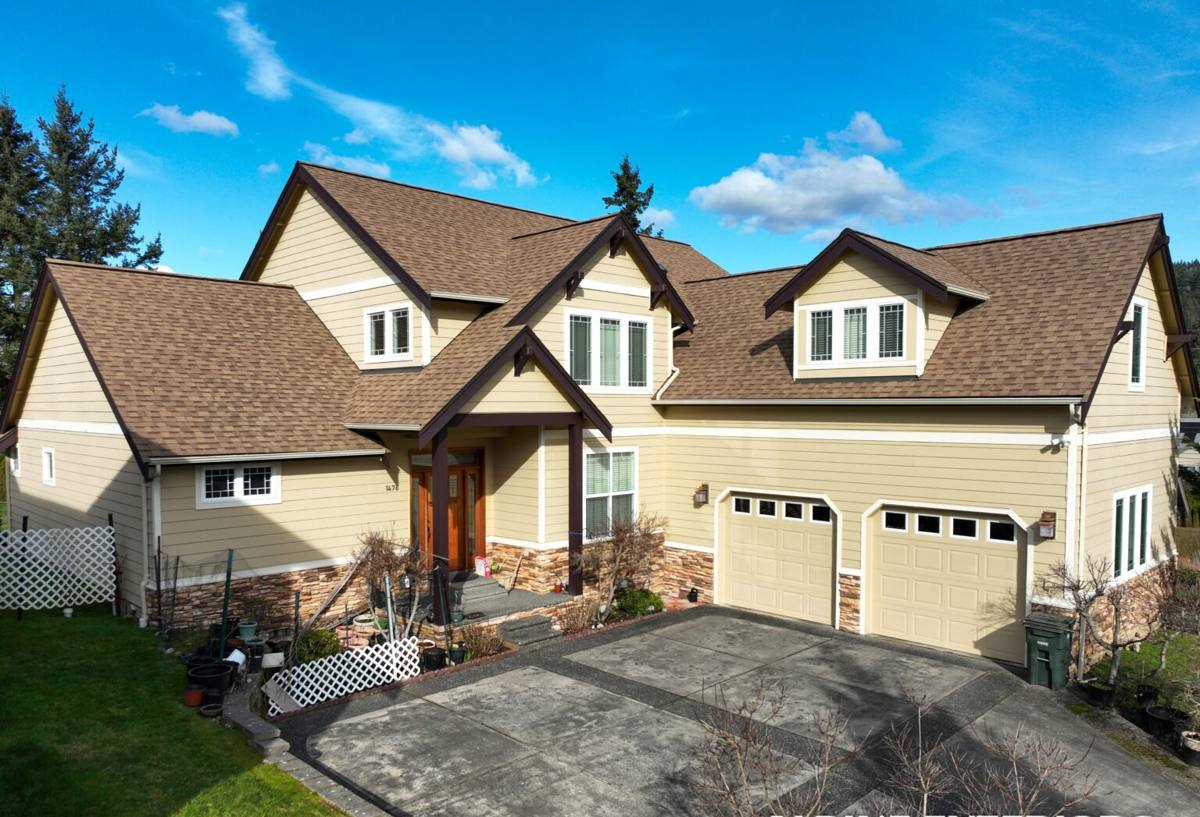
What California Creek Properties Actually Need From a Deck
Lots in and around California Creek tend to be wooded, close to tidal water, and shaded by mature trees for a good part of the day. That combination — moisture-laden air, less direct sun to dry surfaces, and organic debris from tree cover — is exactly the recipe for moss, algae, and slow wood decay. A deck design here has to account for:
- Reduced sun exposure that slows drying after rain, especially on north- or tree-shaded sides of the house
- Salt-influenced air that accelerates corrosion on any unprotected metal fastener, bracket, or railing hardware
- Debris load — needles, leaves, and moss spores — that collects in board gaps and under-deck spaces if drainage isn't planned for
- Wind exposure on open or elevated sites, which affects railing and guard design as much as framing
None of this means a deck can't be built well here — it means the details have to match the site, not a one-size-fits-all spec.
Material Choices That Actually Hold Up Here
There's no universally "right" decking material — there's the right material for this climate, this budget, and how the deck will be used. Here's how the common options actually perform in a wet, salt-influenced, moss-prone environment like California Creek.
| Material | How It Handles This Climate | Maintenance Burden | Typical Lifespan Here |
|---|---|---|---|
| Pressure-treated wood | Affordable, but end grain and fastener holes need real attention or moisture gets in | Annual cleaning and re-sealing recommended | 10–15 years with upkeep |
| Cedar | Naturally rot-resistant and handles moisture well, but greys and can host surface moss without cleaning | Periodic cleaning, optional staining | 15–20 years |
| Composite decking | Resists rot and doesn't absorb moisture, but capped boards still need cleaning to prevent surface moss and algae | Low — occasional wash-down | 25+ years |
| PVC decking | Fully synthetic, handles constant moisture with no rot risk; performs well near tidal air | Lowest — rarely more than a rinse | 25–30+ years |
We'll talk through the honest trade-offs for your project — composite and PVC cost more up front but take moss and moisture out of the maintenance equation almost entirely, which matters a lot in a spot like California Creek where a deck rarely gets a full day of direct sun to dry itself out.
Fasteners and Hardware Matter as Much as the Decking
A beautiful composite deck held together with the wrong fasteners will still fail early near salt air. We use stainless steel or coated fasteners rated for coastal/marine exposure on every deck we build in this area — not because it's required everywhere, but because standard galvanized hardware corrodes visibly faster once it's exposed to salt-influenced moisture year after year. The same goes for joist hangers, post bases, and railing brackets.
The Structure Nobody Sees Is Where Decks Actually Fail
Most deck problems don't start with the decking boards — they start underneath, where moisture gets trapped against wood that can't dry out. Three details matter more than anything else:
Ledger Flashing
Where a deck attaches to the house is the single most common failure point on any deck, anywhere, and it's also where a siding contractor's experience actually helps. Proper ledger flashing directs water away from the band joist and wall assembly instead of letting it wick behind the siding. We integrate this connection with the home's existing water management, not just the deck framing, because a poorly flashed ledger board can lead to rot inside the wall — not just under the deck.
Joist Protection
Joist tape over the top of every joist keeps fastener penetrations from becoming entry points for moisture. In a climate with this much sustained rain, skipping this step is one of the fastest ways to shorten a deck's life.
Footings Set for the Site
Footing depth and sizing need to match the soil and drainage conditions of the actual lot, not a generic minimum. Wooded, low-lying sites near water can hold moisture differently than open, well-drained ground, and footings should be set accordingly.
Drainage and Moss Prevention Are Design Decisions, Not Afterthoughts
Moss doesn't grow on a deck because the owner didn't clean often enough — it grows because water and organic debris had somewhere to sit. Board spacing, deck orientation, and under-deck drainage all affect how fast a surface dries after rain. On shaded or tree-covered lots, we pay particular attention to:
- Consistent board gapping that lets water and debris pass through instead of collecting
- Under-deck drainage systems for spaces used as covered storage or outdoor living below the deck
- Keeping decking clear of overhanging foliage where practical, since constant leaf litter accelerates both moss growth and board staining
- Recommending a realistic seasonal cleaning schedule based on the site's actual sun exposure, not a generic one
Railings, Stairs, and Code Requirements
Any deck more than a modest height above grade needs a code-compliant guard, and stair and railing details are one of the most commonly overlooked parts of a DIY or budget deck build. We build to the current code requirements that apply in Whatcom County, including guard height, baluster spacing that prevents a small child from passing through, and proper stair rise/run and handrail graspability. On windier or more open California Creek lots, we also factor wind load into railing attachment, since a railing that's just "screwed on" can loosen over time under repeated wind pressure.
How We Approach a California Creek Deck Project
Every deck starts with an honest look at the site, not a generic bid. Our process:
- On-site assessment — sun exposure, drainage patterns, tree cover, and how the deck ties into the existing house and siding
- Material and design conversation — honest trade-offs between wood, composite, and PVC based on your budget and how much upkeep you want to take on
- Permitting — we handle the Whatcom County permit process where required so the project is built to code from the ground up
- Framing and structural work — ledger flashing, joist protection, corrosion-resistant fasteners, and footings sized for the site
- Decking, railing, and finish work — installed to manufacturer specs so warranties stay intact
- Final walkthrough — we go over the maintenance the deck actually needs, not a boilerplate list
Maintenance That Actually Keeps a Coastal Deck Sound
The right maintenance schedule depends on the material and the site, but a few habits apply to almost every deck we build in this area:
- Sweep debris out of board gaps and off the surface regularly during fall and winter, when leaf and needle drop is heaviest
- Wash down composite or PVC decking at least once or twice a year to prevent surface moss and algae from taking hold
- Inspect and re-seal wood decking on the schedule the product actually calls for, not "when it looks bad"
- Check railing posts and hardware annually for looseness, especially after windy winter storms
- Clear gutters and downspouts near the deck so roof runoff isn't adding extra water to an already wet structure
Why Hiring a Crew That Already Works California Creek Matters
A deck built by someone unfamiliar with this specific stretch of Whatcom County is a deck built on assumptions — about how much sun a lot actually gets, how fast moss forms on a shaded surface, or how aggressively salt-influenced air corrodes standard hardware. We've built and repaired decks in this exact climate, which means we're not guessing at fastener specs, ledger flashing details, or drainage design — we're applying what we've already seen hold up and what we've seen fail. As a siding contractor, we also understand the wall assembly a deck ties into, which matters more than most homeowners realize when it comes to the ledger connection.
If you're planning a new deck or replacing one that's showing its age, we're happy to come take a look and talk through what your specific lot actually needs. There's no pressure and no cost to get an honest assessment — just fill out the form below to request a free estimate.