 Blaine Siding
 Why Decking Choices Are Different in Dakota Creek
Homes near Dakota Creek sit close enough to the water that the air itself works against a deck year-round. Salt-laden air off the Salish Sea corrodes fasteners and hardware faster than it does further inland, driving rain finds every gap and end-cut that isn't sealed, and Whatcom County's long, grey, wet season keeps wood surfaces damp for weeks at a stretch. That combination is exactly what turns a cheap or poorly built deck into a moss-covered, soft-boarded problem within a few seasons instead of a couple of decades.
A deck built for a dry inland climate and a deck built for Dakota Creek are not the same project, even if the materials list looks similar on paper. The difference shows up in the substructure, the fasteners, the drainage details, and the maintenance plan — not just the decking boards themselves.
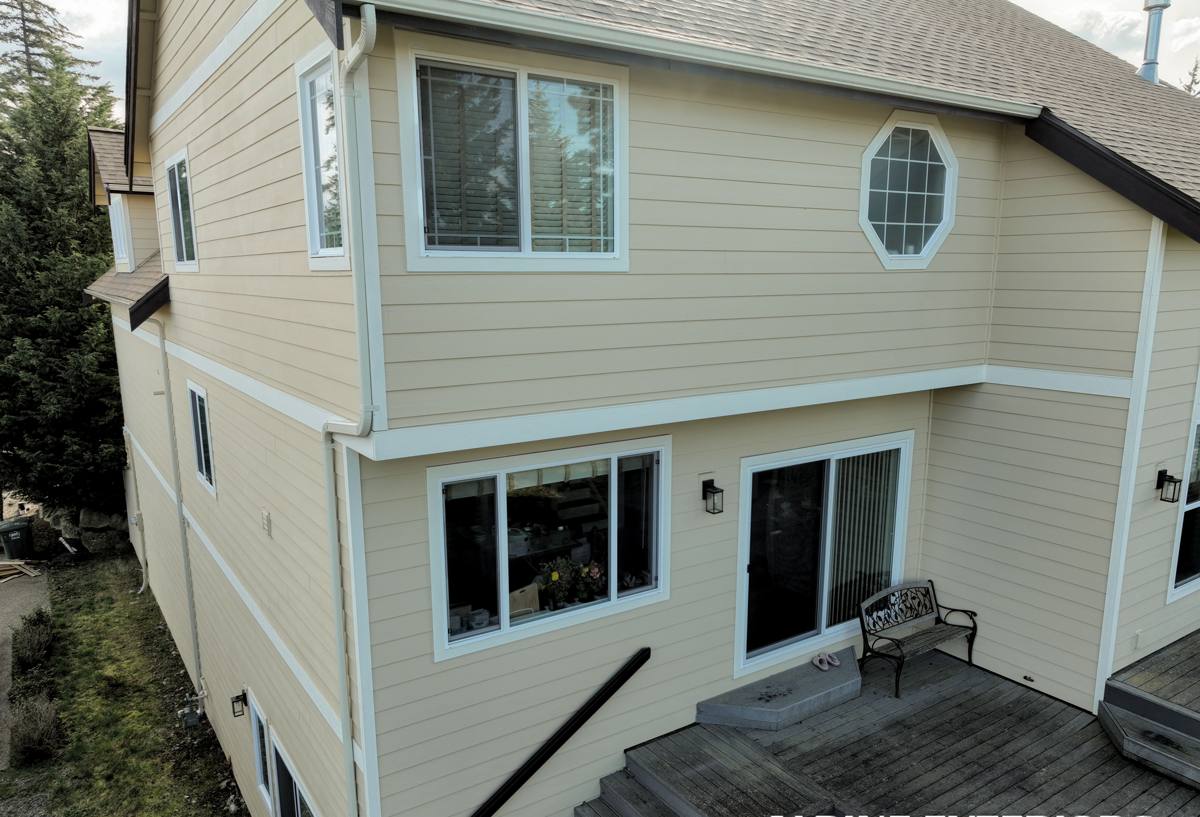
What Composite Decking Is — And Why It Handles This Climate Well
Composite decking is made from a blend of wood fiber and recycled plastic, formed into boards that don't absorb water the way solid lumber does. That single property is why it's become the default choice for a lot of Blaine homeowners: it doesn't swell, cup, or splinter from repeated wet-dry cycles, and it doesn't need to be sanded and refinished every couple of years to stay presentable.
How Composite Differs From Solid Wood
Solid wood decking is a natural material that expands and contracts with moisture, and in a climate that stays damp for months at a time, that movement never really stops. Boards cup, fasteners work loose, and end grain left unsealed pulls in water and starts to rot from the inside out. Composite boards still move slightly with temperature, but they don't wick water into the board's core the way wood does, which removes the biggest driver of rot and fastener failure in a marine climate.
Capped vs. Uncapped Composite
Not all composite is built the same. Capped composite has a plastic shell wrapped around the wood-plastic core, which is what actually keeps moisture, mold, and staining out — uncapped or lower-grade composite can still absorb some moisture at cut ends and is more prone to surface mold in a climate this wet. For a deck within reach of salt air and standing damp, we treat capped composite as the standard, not the upgrade.
What a Correct Composite Deck Installation Actually Involves
The decking boards get the attention, but most of what determines whether a deck lasts happens underneath and around them.
Substructure First: Joists, Spacing, and Ledger Attachment
Composite boards are heavier and behave differently under load than wood, so joist spacing has to match the manufacturer's specification for the board profile being used — tighter spacing than a standard wood deck is common, especially on diagonal or picture-frame layouts. Where the deck ties into the house, the ledger board attachment and flashing are the single most water-exposed connection on the whole structure. Done wrong, that's where rot starts inside a wall long before anyone notices a problem on the surface.
Fastening and Gapping for Drainage
Hidden fastener clips are the standard for a clean composite deck surface, but in a salt-air environment the clip and screw material matters — coated or stainless hardware resists corrosion that plain-steel fasteners won't survive near the water. Board-to-board gapping also has to account for local humidity and drainage, not just the manufacturer's minimum spec, so water sheets off the surface instead of sitting in the seams during our wettest months.
Railings, Fascia, and Picture-Framing
Fascia boards, railing posts, and any picture-frame border need the same moisture logic applied — end cuts sealed or capped, blocking installed where posts attach, and hardware matched to the same corrosion-resistant standard as the field fasteners. These are the details that separate a deck that looks good for one season from one that still looks good in year ten.
Composite vs. Other Decking Materials in This Climate
Every material has a legitimate place. Here's how the common options actually perform under Whatcom County's rain, salt air, and moss pressure.
| Material | Moisture / Rot Resistance | Moss & Algae Growth | Salt Air Durability | Maintenance |
|---|---|---|---|---|
| Capped Composite | High — doesn't absorb water into the core | Low with proper cleaning; textured surfaces resist buildup better than smooth | Good, especially with corrosion-resistant hardware | Occasional wash; no staining or sealing |
| Pressure-Treated Wood | Moderate; treatment slows rot but doesn't stop it | Moderate to high in shaded, damp areas | Fasteners and hardware corrode faster | Annual cleaning, periodic staining/sealing |
| Cedar | Naturally rot-resistant but still absorbs moisture | Moderate; needs airflow and cleaning to control | Weathers gray without maintenance; hardware still at risk | Regular sealing to preserve color and structure |
| PVC (Cellular) | Very high; fully synthetic, no wood fiber | Low with routine cleaning | Good | Low; can look and feel less like natural wood |
Composite sits in the middle for cost and at the top for practical, low-maintenance performance in this specific climate. Wood can still be the right call for homeowners who want that material's look and don't mind the upkeep; we'll say so honestly if that's the better fit for a given project.
Our Process for a Dakota Creek Composite Deck
- Site visit and assessment — we look at sun/shade exposure, drainage, existing structure condition, and how close the site is to salt air or standing moisture.
- Design and material selection — board profile, color, railing style, and layout, matched to the home and to what actually holds up here.
- Permit check — decks over a certain height or attached to the structure typically require a permit through the City of Blaine or Whatcom County depending on location; we handle that step rather than leaving it to the homeowner.
- Removal of the old deck, if applicable, with a check of the ledger and framing underneath for hidden rot before anything new goes up.
- Substructure build — joists, blocking, and ledger flashing sized and spaced to the composite manufacturer's spec, not generic wood-deck defaults.
- Decking installation — hidden fasteners, proper gapping, sealed or capped end cuts.
- Railings, fascia, and finishing details.
- Final walkthrough — we go over care and cleaning specific to the board manufacturer's warranty terms before we call it done.
Living With a Long Moss Season: Maintenance That Actually Matters
Composite decking is low-maintenance, not no-maintenance. In a climate that stays wet as long as ours does, a small amount of seasonal care keeps a deck looking and performing the way it should for the life of the material.
- Sweep off leaves and debris regularly, especially in fall — trapped organic matter is what feeds moss and algae growth on any decking material.
- Wash the surface a couple of times a year with a soft-bristle brush and a mild soap-and-water solution or a composite-safe deck cleaner; skip the pressure washer on close range, which can damage the cap layer.
- Keep gutters and downspouts near the deck clear so runoff isn't dumping extra water directly onto the surface or substructure.
- Trim back overhanging vegetation to let the deck get sun and airflow, which does more to control moss than any cleaner.
- Check railing posts and fastener points once a year for any sign of corrosion or movement, particularly if the deck faces open water or prevailing wind.
- Address any standing water or slow drainage under the deck promptly — that's where rot in the substructure starts, even with composite boards on top.
What Affects the Cost of a Composite Deck Here
Composite decking installed, materials and labor together, generally falls in a broad range depending on the project — rough ballpark figures across the industry run somewhere in the neighborhood of $35 to $75 per square foot, with the final number driven by several factors rather than a flat rate:
- Board tier — entry-level capped composite vs. premium composite or PVC changes material cost significantly.
- Deck height and substructure complexity — a deck requiring extensive footings, stairs, or multiple levels costs more than a simple single-level replacement.
- Site access — proximity to the water, slope, and how easily materials and equipment can reach the build site all affect labor time.
- Railing style and hardware grade — corrosion-resistant hardware and higher-end railing systems add cost but matter more here than in a drier climate.
- Tear-off and disposal of an existing deck, if the old structure needs to come out first.
We give a firm, itemized number after seeing the site — not a guess over the phone — because these factors genuinely change the price project to project.
Why Hiring a Crew That Already Works Dakota Creek Matters
A lot of what makes a deck last here isn't exotic — it's getting the ordinary details right for this specific environment: hardware grade, ledger flashing, gapping, and drainage, applied consistently instead of skipped to save time. A crew that regularly works in and around Dakota Creek and the broader Blaine area already knows what the salt air does to standard fasteners over a few winters, how moss actually behaves on different board textures locally, and what the permitting process looks like for this part of Whatcom County. That's the difference between a deck built to a generic spec sheet and one built for the conditions it will actually sit in.
It also means someone who understands your project without a long explanation — the wind exposure, the drainage patterns near the creek, the way homes in this area take on moisture differently than ones set back further inland.
If you're weighing a new composite deck or a replacement for one that's past its prime, we're happy to take a look and give you an honest, no-pressure estimate — just fill out the form below and we'll get back to you.