 Blaine Siding
 Deck Repair Built for Dakota Creek's Conditions
Decks in the Dakota Creek area of Blaine take a different kind of beating than decks twenty miles inland. You're close enough to the water that salt-laden air reaches fasteners, flashing, and any exposed metal year-round. Add Whatcom County's long stretch of driving rain each fall and winter, plus a moss season that can run from October well into spring, and you've got a structure that's constantly wet, constantly exposed to salt, and rarely gets a real chance to dry out between storms. Most deck problems we find out here aren't dramatic — they're slow, cumulative damage from moisture and salt that homeowners didn't catch early because it doesn't look urgent until it is.
This page covers what deck repair actually involves for a home in this specific area — not a generic "we fix decks" pitch, but what we've learned working on structures that sit this close to the water and get this much rain.
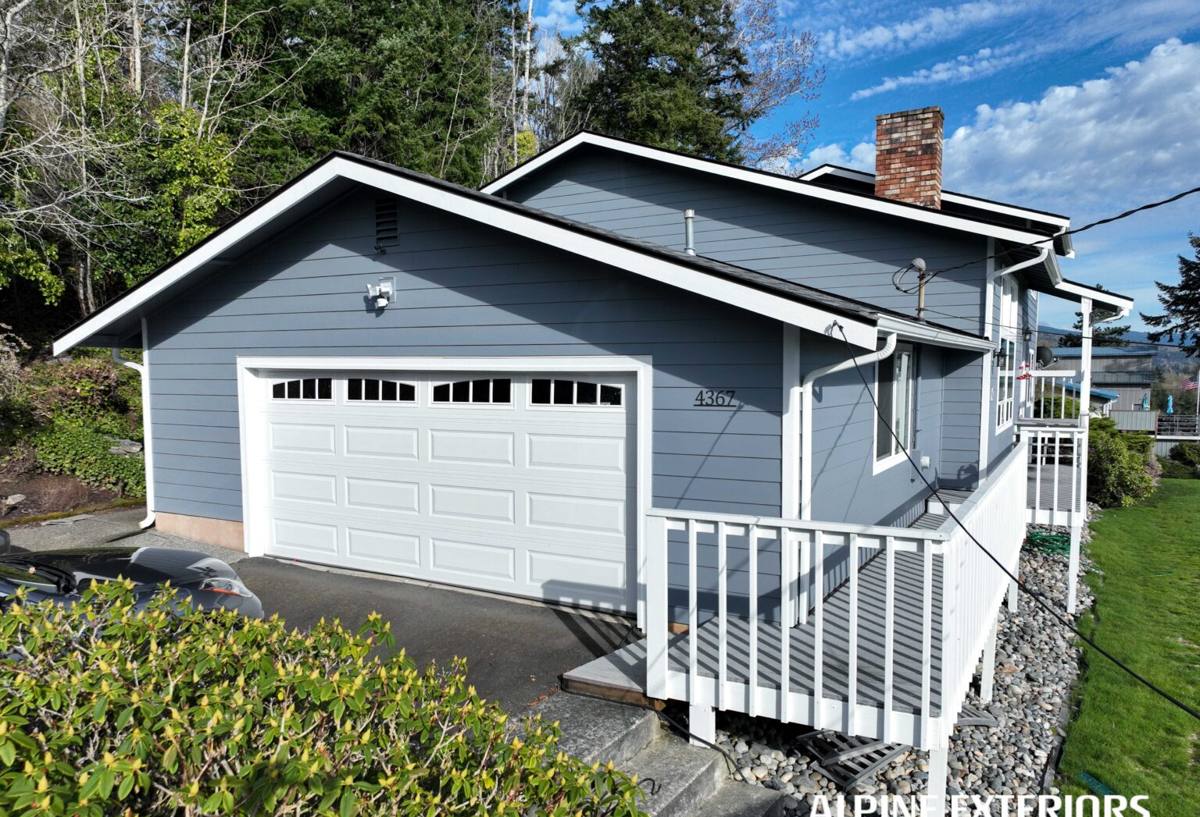
Why Dakota Creek Decks Wear Differently
Salt Air and Metal Fasteners
Salt in the air accelerates corrosion on anything metal — nails, screws, joist hangers, bolts. Once a fastener starts to corrode, it loses holding strength long before it looks obviously rusted. On a lot of the repair calls we get in this area, the decking boards themselves are still in decent shape, but the fasteners underneath have deteriorated to the point where the boards are barely attached. That's a safety issue, not just a cosmetic one.
Driving Rain and Water Intrusion
Wind-driven rain off the water doesn't just fall straight down — it gets pushed sideways into ledger connections, under flashing, and into any gap where the deck meets the house. Over time this is the single biggest cause of hidden rot we find: not the visible deck surface, but the ledger board and rim joist where the deck attaches to the house, which stays wet longer than anywhere else on the structure.
Moss, Shade, and Slow Drying
A long moss season means organic growth holds moisture against wood and composite surfaces for extended periods. Moss on a deck isn't just slippery and unattractive — it's actively keeping the surface below it damp, which speeds up rot in wood decking and can trap grit against composite boards in a way that accelerates surface wear.
What a Correct Deck Repair Actually Involves
A repair that just replaces a few obviously bad boards without checking what's underneath is a repair that fails again in a year or two. Here's what we check on every deck repair in the Dakota Creek area, regardless of how big or small the visible problem looks:
- Structural framing — joists, beams, and posts checked for soft spots, splitting, or rot, especially where they contact concrete footings
- Ledger board connection — the point where the deck attaches to the house, checked for proper flashing and signs of water intrusion behind the siding
- Fastener condition — corroded nails, screws, and joist hangers identified and replaced with corrosion-resistant hardware rated for coastal exposure
- Decking surface — individual boards assessed for cupping, splitting, soft spots, or delamination (on composite)
- Railings and guardrails — post connections and baluster attachment checked for looseness, which is often the first sign of rot in the framing below
- Stairs and stringers — a common failure point since stair stringers sit low and catch more standing water and debris
- Drainage under the deck — grading and airflow checked, since a deck built low to the ground with poor drainage will always rot faster than one with proper clearance
Common Repair Scenarios We See in This Area
| Symptom | Likely Cause | Typical Fix |
|---|---|---|
| Deck feels bouncy or springy underfoot | Undersized or rotting joists, loose fastener connections | Sister or replace affected joists, re-fasten with coastal-rated hardware |
| Dark staining or soft wood near the house | Failed or missing flashing at the ledger board | Remove affected decking, install proper ledger flashing, replace rotten framing |
| Persistent green film, slippery surface | Moss and algae growth from prolonged moisture | Clean, treat, and address the shade/drainage issue causing slow drying |
| Rust streaks around screws or nail heads | Standard fasteners corroding from salt exposure | Replace with stainless or coated coastal-grade fasteners |
| Loose or wobbly railing posts | Rot at the post base or failed post-to-frame connection | Replace rotten framing, re-anchor posts to code |
| Cupped or splitting boards | Repeated wet/dry cycling, aging wood or composite | Selective board replacement, or full resurfacing if widespread |
Repair vs. Replacement: How We Decide
Not every deck with problems needs to be torn out. The decision usually comes down to how much of the structural framing is affected versus the surface decking. If the joists, beams, and ledger connection are sound and the damage is limited to boards, railings, or fasteners, targeted repair is the honest recommendation — it costs less and the deck will perform just as well once fixed correctly. If rot has spread through multiple framing members, or the deck was undersized or improperly flashed from the start, repair becomes a patch on a bigger problem, and we'll tell you that directly rather than charging for repeated repairs on a deck that needs to be rebuilt.
As a rough guide: minor repairs (a handful of boards, fastener replacement, railing tightening) tend to run in the low hundreds to low thousands of dollars. Repairs involving ledger flashing correction or joist replacement run higher, since they involve opening up the structure. Full deck rebuilds are their own project and priced separately. We'll give you a specific number after we've actually looked at the deck — not a phone estimate.
Our Process for Dakota Creek Deck Repairs
1. On-Site Inspection
We walk the full deck — surface, framing where accessible, ledger connection, railings, and stairs — and probe any suspicious areas for soft or rotten wood. This tells us whether we're looking at a surface repair or something structural.
2. Straight Answer on Scope
You get a clear explanation of what's actually wrong, what's driving it (usually moisture, salt corrosion, or both), and what it will take to fix it properly. No upselling a rebuild when a repair will hold, and no quiet patch job when the framing needs real work.
3. Written Estimate
A specific scope and price before any work starts, so there are no surprises once we're into the job.
4. Repair with Coastal-Appropriate Materials
Corrosion-resistant fasteners and hardware, proper flashing details at the ledger, and decking materials matched to what's already there or upgraded if the homeowner wants to reduce future maintenance.
5. Walkthrough
We show you what was fixed and what to watch for going forward, since a little seasonal maintenance goes a long way toward keeping a deck out here from needing major work again.
Why It Matters That We Already Work This Area
A crew that mostly works inland doesn't always think to check ledger flashing first, or to spec fasteners rated for salt exposure, because it's not the failure mode they see most often. Working regularly in Blaine and along the Whatcom County coastline means we go into every Dakota Creek deck repair already expecting salt corrosion on hardware, already checking the ledger connection for wind-driven rain intrusion, and already accounting for a moss season that's longer here than it is a few miles inland. That's not a marketing point — it's the difference between a repair that holds and one that needs redoing in two years.
Maintaining Your Deck Between Repairs
A few habits go a long way toward stretching the life of a repaired deck in this climate:
- Clean moss and debris off the surface and between boards at least once before winter and once in spring
- Keep gutters and downspouts clear so runoff isn't pouring directly onto or under the deck
- Check railing posts and stair stringers for looseness a couple times a year — it's the earliest sign of hidden rot
- Rinse salt residue off metal hardware and railings periodically if the deck faces open water or takes direct sea breeze
- Keep plants and shrubs trimmed back from the deck so airflow can help it dry between rains
Get a Straight Look at Your Deck
If your deck in Dakota Creek is showing soft spots, rust streaks, persistent moss, or just doesn't feel as solid as it used to, it's worth having someone look before those small issues turn into structural ones. We offer free, no-pressure estimates — we'll tell you honestly whether you're looking at a simple repair or something bigger, with a clear price either way. Use the form below to get started.