 Blaine Siding
 Why Dakota Creek Homes Need Windows Built for This Climate
Dakota Creek sits close enough to the water that salt air is part of daily life, and Blaine's weather doesn't do most homeowners any favors when it comes to window longevity. You get driving rain off the Strait, long stretches of damp gray winter, and a moss season that seems to start earlier every year. All of that works against ordinary windows in ways that don't show up right away — they show up five, ten, fifteen years down the road as soft frames, fogged glass, and heating bills that keep climbing even though nothing looks obviously wrong.
Energy-efficient windows aren't just about lower utility bills, though that's a real part of it. In a Whatcom County marine climate, the bigger issue is usually moisture management. A window that's rated efficient on paper but installed or built without accounting for constant damp air and wind-driven rain will underperform fast. We look at Dakota Creek window work as a package: the glass, the frame, and the installation all have to work together against the specific conditions this area throws at a house.
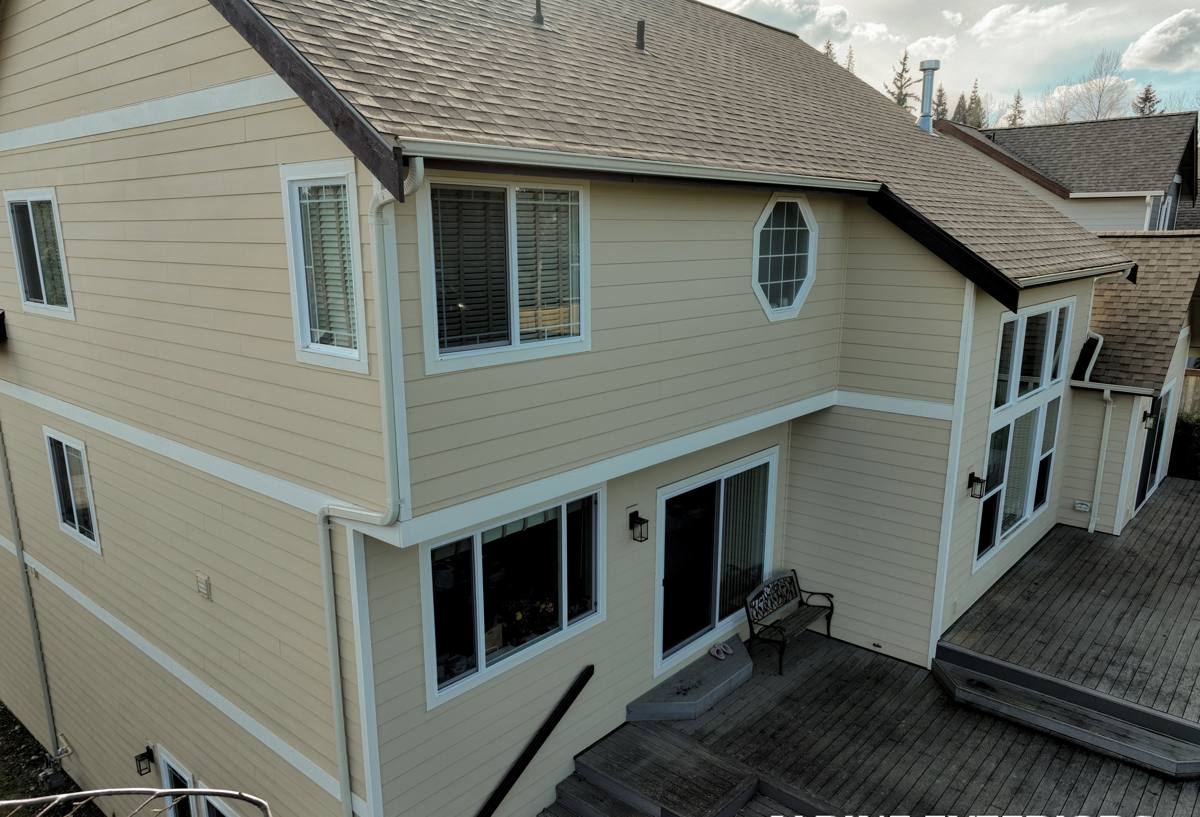
What "Energy-Efficient" Actually Means Here
It's Not Just the U-Factor Sticker
Every new window comes with an NFRC label listing U-factor and solar heat gain coefficient. Those numbers matter, but they're tested in controlled conditions — not in salt-laden wind pushing rain sideways against a west-facing wall. A window can have a great efficiency rating and still perform poorly here if the frame material, glazing seal, and installation details aren't matched to coastal exposure.
What Actually Drives Performance in Dakota Creek
- Frame material that resists moisture absorption and doesn't warp or swell with repeated wet-dry cycles
- A sealed, insulated glazing unit with an intact spacer system — this is usually the first thing to fail in coastal air
- Weatherstripping and hardware rated for corrosion resistance, not just standard-grade components
- Flashing and sealant details that shed wind-driven rain rather than just blocking still water
Get those four things right and the efficiency rating on the label actually holds up over the life of the window. Get any one of them wrong and you end up with a window that looks fine but is quietly losing its seal, fogging between the panes, or letting cold drafts in around the frame within a few years.
Signs Your Current Windows Are Losing the Battle
Most homeowners don't replace windows because one morning they suddenly stop working — it's a slow decline that's easy to write off as normal. Here's what we typically see on Dakota Creek homes when windows are past their useful life:
- Fogging or a hazy film between the panes that won't clean off (failed seal, moisture trapped inside the glass unit)
- Visible moss or algae staining building up in the sill or bottom corners of the frame
- Soft, discolored, or slightly swollen wood around the frame or trim
- Noticeable draft when standing near the window on a windy day
- Condensation forming on the inside of the glass regularly during colder months
- Windows that are hard to open, close, or latch — frames shifting slightly out of square
- A heating bill that's crept up over the past few winters without an obvious cause
Any one of these alone isn't necessarily an emergency. Several of them together, especially on the sides of the house that catch the most wind and rain, usually mean it's worth having someone take a real look rather than just patching caulk around the edges.
What a Correct Installation Actually Involves
The window itself is maybe half the job. The other half is everything around it — and in this climate, that's where most failures actually start. A rushed or careless install can make even a good window perform like a cheap one.
Before the New Window Goes In
We check the rough opening for hidden rot or moisture damage from the old window's seals. In coastal areas, it's common to find soft sheathing or framing behind a window that looked fine from the outside — if that's the case, it gets addressed before anything new goes in, not covered over.
Flashing and Water Management
This is the step that separates a window that lasts twenty-plus years from one that starts leaking in five. Proper flashing integrates with the house's weather-resistive barrier so that any water that does get past the exterior trim has a path back out, rather than getting trapped in the wall cavity. In a place with as much driving rain as Dakota Creek gets, this detail matters more than almost anything else in the job.
Sealing and Insulation
Gaps around the frame get properly insulated and sealed — not just caulked on the surface, but backed up correctly so the seal actually holds through freeze-thaw and constant humidity swings. A window that's beautifully made but sloppily sealed will still leak air and eventually moisture.
Comparing Window Frame Materials for This Climate
Homeowners often ask us to just pick "the best" window, but the honest answer depends on the specific wall, exposure, and budget. Here's how the common options generally compare for a coastal Whatcom County home:
| Frame Material | Moisture Resistance | Maintenance | Typical Lifespan | Relative Cost |
|---|---|---|---|---|
| Vinyl | Very good — won't rot or absorb moisture | Low | 20–30 years | Lower |
| Fiberglass | Excellent — very stable in wet/dry cycling | Low | 30+ years | Higher |
| Wood-clad | Good on exterior, needs interior wood upkeep | Moderate to high | 20–30 years with upkeep | Higher |
| Aluminum | Prone to condensation without thermal break | Low | 20–30 years | Moderate |
For most Dakota Creek homes, we lean toward vinyl or fiberglass because both handle constant damp exposure without the ongoing upkeep that wood trim demands in this climate. That's not a knock on wood-clad windows as a product — they can look great and perform well — it's a maintenance and moisture-exposure tradeoff we're upfront about, especially on walls that take direct weather.
Moss Season and Salt Air: The Maintenance Reality
Even the best window benefits from a little seasonal attention here. Salt air accelerates corrosion on hardware and fasteners, and moss doesn't need much of a foothold — a little organic debris sitting in a sill track over a wet winter is enough to get it started. A quick rinse and clearing of debris from tracks and weep holes once or twice a year goes a long way toward protecting the investment. We point this out to every customer, not to sell a maintenance plan, but because it's the single easiest thing a homeowner can do to keep a new window performing like new for decades instead of just the first few years.
Our Process for Dakota Creek Window Projects
1. On-Site Assessment
We walk the exterior and look at each window's exposure — south and west-facing walls that catch the most wind-driven rain often need more attention to flashing detail than more sheltered sides of the house.
2. Straightforward Recommendations
We'll tell you plainly if a window needs full replacement versus if resealing or minor repair could reasonably extend its life. We're not in the business of replacing windows that don't need it.
3. Careful Installation
Old windows come out, any hidden framing or sheathing issues get addressed, and the new unit goes in with proper flashing, insulation, and sealing — the details that actually determine how the window performs over the next twenty or thirty years of Whatcom County weather.
4. Cleanup and Walkthrough
We walk the finished work with you, operate each window, and make sure everything latches, seals, and looks right before we call the job done.
Why a Crew That Already Works Dakota Creek Matters
Window installation isn't identical everywhere. A crew used to inland or drier-climate work can still do a technically fine job and miss details that matter specifically here — flashing sequencing for wind-driven rain, hardware choices that hold up against salt air, or knowing which sides of a Dakota Creek home typically take the worst weather exposure. None of that is exotic knowledge, but it's the kind of thing you only really internalize by working houses in this specific area, season after season. That's the value of hiring locally rather than the cheapest bid from out of the area — it's fewer surprises and a job built for the conditions your house actually faces, not generic conditions.
Get a Straight Answer for Your Home
If your windows are fogging, drafty, or just old enough that you're wondering whether it's time, we're happy to come take a look and give you an honest read — no pressure, no upsell. Fill out the form below and we'll set up a free estimate for your Dakota Creek home.