 Blaine Siding
 Why Roofs Near Dakota Creek Wear Out Differently
A roof in Dakota Creek doesn't fail the same way a roof does forty miles inland. This part of Whatcom County sits right up against the marine air coming off the Strait of Georgia and the bays around Blaine, and that changes what a roof is actually up against year to year. Salt-laden air corrodes exposed metal faster, wind-driven rain finds its way under poorly lapped materials that would hold up fine in a drier climate, and the long stretch of mild, wet, low-sun months every fall through spring is exactly the kind of environment moss and moisture-loving growth thrive in.
None of that means a roof here needs to be exotic or overbuilt. It means the details — fastener choice, underlayment quality, flashing work, and ventilation — have to be right the first time, because this climate finds every shortcut eventually.
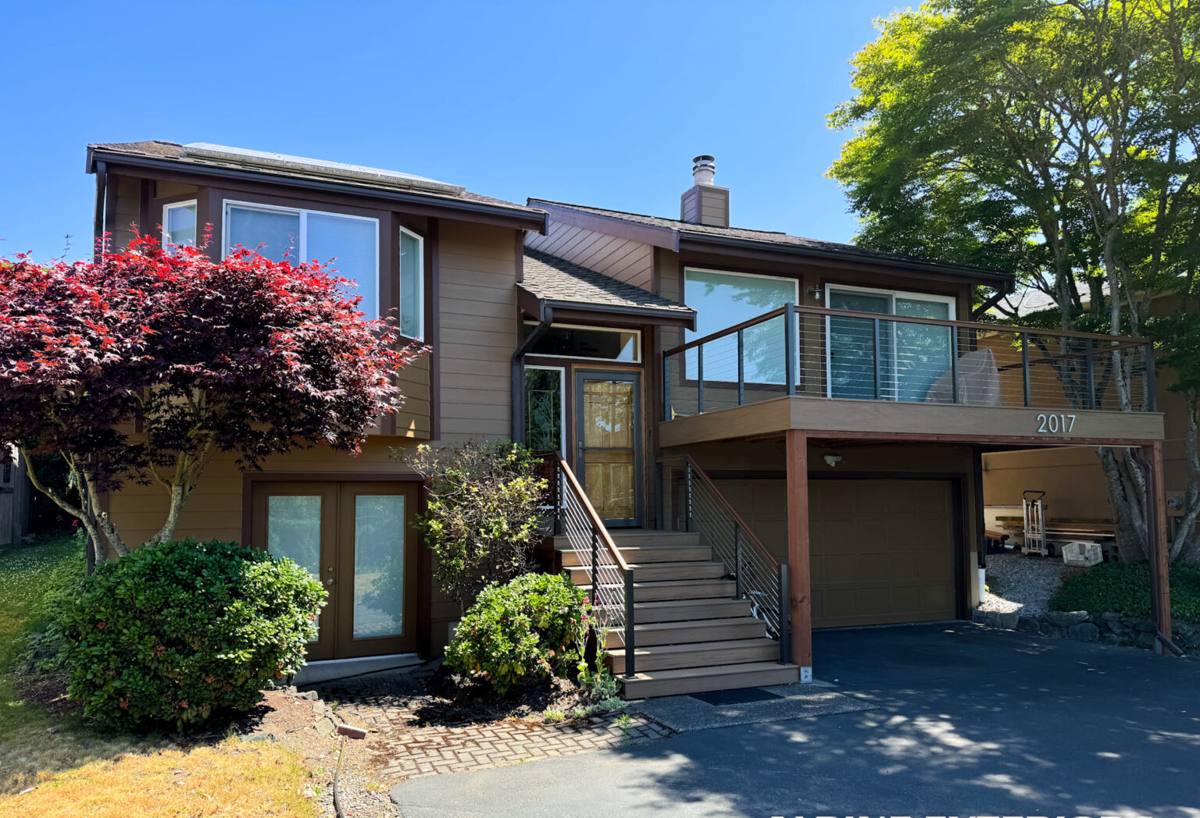
The Three Things Working Against Dakota Creek Roofs
Salt Air
Coastal salt exposure isn't as aggressive here as it is right on open ocean, but Dakota Creek homes are still close enough to tidal water that airborne salt accelerates corrosion on exposed fasteners, flashing, and metal roof panels over time. Uncoated or poorly finished metal components are where this shows up first — pitting and rust streaking well before the roof's expected service life is up.
Driving Rain
Whatcom County storms often come in sideways off the water rather than straight down. That matters because a roof can be watertight against vertical rain and still leak under wind-driven rain if the underlayment, valleys, and flashing details weren't built with that in mind. Roof-valley design, ice-and-water shield placement, and proper shingle lap all matter more here than they would in a calmer inland climate.
Moss Season
Blaine's wet, mild, shaded conditions give moss and algae a long runway — realistically several months of the year where roofs stay damp enough for growth to take hold, especially on north-facing slopes and under tree cover. Moss isn't just cosmetic. It holds moisture against the roofing material, lifts shingle edges as it grows, and shortens the life of whatever's underneath it.
Signs a Dakota Creek Roof Needs Replacement, Not Just Repair
Not every roof problem calls for a full tear-off. But there's a point where patching becomes a temporary fix on a roof that's already failing as a system. Watch for:
- Granule loss showing bare, shiny patches on asphalt shingles, especially on south- and west-facing slopes
- Shingles that are cupping, curling at the edges, or cracking when you look closely
- Moss or algae established in mats rather than light surface staining
- Soft spots or sagging when walked on, which usually points to deck damage underneath
- Daylight visible through the roof deck from the attic, or water staining on attic sheathing
- Rust streaking or corrosion around metal flashing, vents, or valleys
- A roof at or past the manufacturer's expected service life, combined with any of the above
A single issue on this list might be a repair. Two or three together, especially on a roof already fifteen-plus years old, usually means the underlying materials are failing as a system and repairs will just be chasing leaks.
What a Correct Roof Replacement Actually Involves
A roof replacement done right in this climate is not just stripping old shingles and nailing down new ones. The sequence matters:
Tear-Off and Deck Inspection
Full removal of old roofing down to the deck, because you cannot properly assess or waterproof a roof deck you can't see. Any soft, delaminated, or water-damaged sheathing gets replaced before anything new goes down — skipping this step is the single most common source of early failure.
Underlayment and Water Barrier
In a driving-rain climate, underlayment choice and placement is not a minor detail. Ice-and-water shield belongs at eaves, valleys, and around penetrations at minimum, with synthetic underlayment across the rest of the deck sized for wind-driven moisture, not just vertical rain.
Flashing
Chimneys, skylights, sidewalls, and valleys fail more often at flashing than at the field of the roof itself. New flashing, correctly lapped and sealed — not old flashing reused to save time — is where a lot of future leaks are prevented or created.
Ventilation
Balanced intake and exhaust ventilation keeps the attic space at the right temperature and moisture level, which matters for shingle life, ice buildup in cold snaps, and moisture control in a marine climate where humidity is already high most of the year. Skipping ventilation upgrades on an older home is one of the most common ways a new roof underperforms its warranty.
Final Details
Proper nailing pattern and depth, correctly sized drip edge, clean valley work, and a final inspection walk-through before cleanup and job close-out.
Choosing Materials for a Coastal Whatcom County Home
There's no single "right" roofing material for Dakota Creek — the right choice depends on the home's exposure, roof pitch, budget, and how much long-term maintenance the homeowner wants to take on. Here's how the common options actually compare in this climate:
| Material | How It Handles Salt Air & Rain | Moss Resistance | Typical Lifespan |
|---|---|---|---|
| Architectural asphalt shingle | Good, with quality underlayment and flashing | Moderate — benefits from algae-resistant granules | 25–30 years |
| Standing seam metal | Very good if properly coated and fastened; needs corrosion-rated hardware near the coast | Excellent — sheds moss easily due to steep, smooth surface | 40–60 years |
| Cedar shake | Requires more upkeep in a wet, mild climate | Poor without regular treatment — holds moisture | 20–30 years with maintenance |
| Synthetic/composite shingle | Good; resistant to moisture absorption | Moderate to good depending on product line | 30–50 years |
We don't push one material over another as a rule. We do steer homeowners away from products that carry a heavy ongoing maintenance burden in this specific climate — cedar shake, for example, looks great but demands regular treatment and inspection to keep moisture and moss from shortening its life here. That's not a knock on the product; it's a trade-off worth knowing before you commit to it.
How We Approach a Dakota Creek Roof Replacement
- On-site inspection. We walk the roof and the attic, not just the ground-level view, to assess deck condition, ventilation, flashing points, and moss or moisture damage.
- Honest scope and options. We tell you what's actually needed versus what's optional, with material options that fit your budget and exposure — no upsell padding.
- Written estimate. Clear line items so you know what's covered: tear-off, deck repair contingency, underlayment, flashing, ventilation, and material.
- Scheduled around the weather. Whatcom County's rain windows mean timing and tarping matter — we plan the tear-off and dry-in to minimize how long your deck is exposed.
- Full tear-off and rebuild. Deck repair as needed, new underlayment and flashing, correct ventilation, then the roofing material itself.
- Final walk-through. We check the finished roof with you before we consider the job done, not just after we've packed up.
Why Local Experience in Dakota Creek Actually Matters
Roofing crews who haven't worked this specific stretch of Blaine tend to underbuild for it — treating it like a generic Pacific Northwest job rather than a coastal one. A crew that's already worked roofs near Dakota Creek knows which slopes on local homes hold moss longest, which flashing details tend to fail first under wind-driven rain off the water, and how to sequence a tear-off around Whatcom County's rain patterns instead of getting caught mid-job with an open deck. That local pattern recognition is the difference between a roof that's built to spec and one that's actually built for this specific climate.
It also matters for permitting and code familiarity — knowing what the local jurisdiction expects for a reroof, and not treating that as an afterthought after the tear-off has already started.
Maintaining a New Roof Through Blaine's Moss Season
A correctly installed roof still benefits from basic upkeep in this climate. A simple annual routine goes a long way:
- Clear gutters and downspouts before the fall rains start, so water isn't backing up under the roof edge
- Trim back overhanging branches to cut down on shade and debris that feed moss growth
- Have moss growth removed properly rather than pressure-washed off, which can damage shingle granules
- Check attic ventilation isn't blocked by insulation or debris
- Have a quick visual inspection after any major windstorm to catch lifted shingles or flashing early
None of this is complicated, but skipping it is how a well-installed roof loses years off its life in a climate like this one.
Get a Straight Answer on Your Dakota Creek Roof
If you're not sure whether your roof needs a full replacement or just targeted repair, that's exactly the kind of question worth getting answered on-site rather than guessed at. We offer free, no-pressure estimates for homeowners in the Dakota Creek area — use the form below to get one scheduled.