 Blaine Siding
 Window Replacement Built for the Dakota Creek Area
Homes around Dakota Creek sit close enough to the water and the open weather coming off the Strait of Georgia that windows take a beating most inland Whatcom County houses never see. Salt-laden air, wind-driven rain that hits window frames sideways rather than straight down, and a long, damp moss season all work on window units in ways that shorten their service life if the original installation wasn't done with this specific climate in mind. Replacing windows here isn't just a cosmetic upgrade — it's a chance to correct weak points that were baked into the house years ago and to install units and flashing details that are actually suited to a coastal Blaine property.
This page focuses specifically on window replacement for Dakota Creek homes: what the climate does to windows over time, what a correct replacement job looks like, the material and glass choices that make sense here, and why working with a crew that already knows this stretch of Whatcom County matters more than it would somewhere drier and calmer.
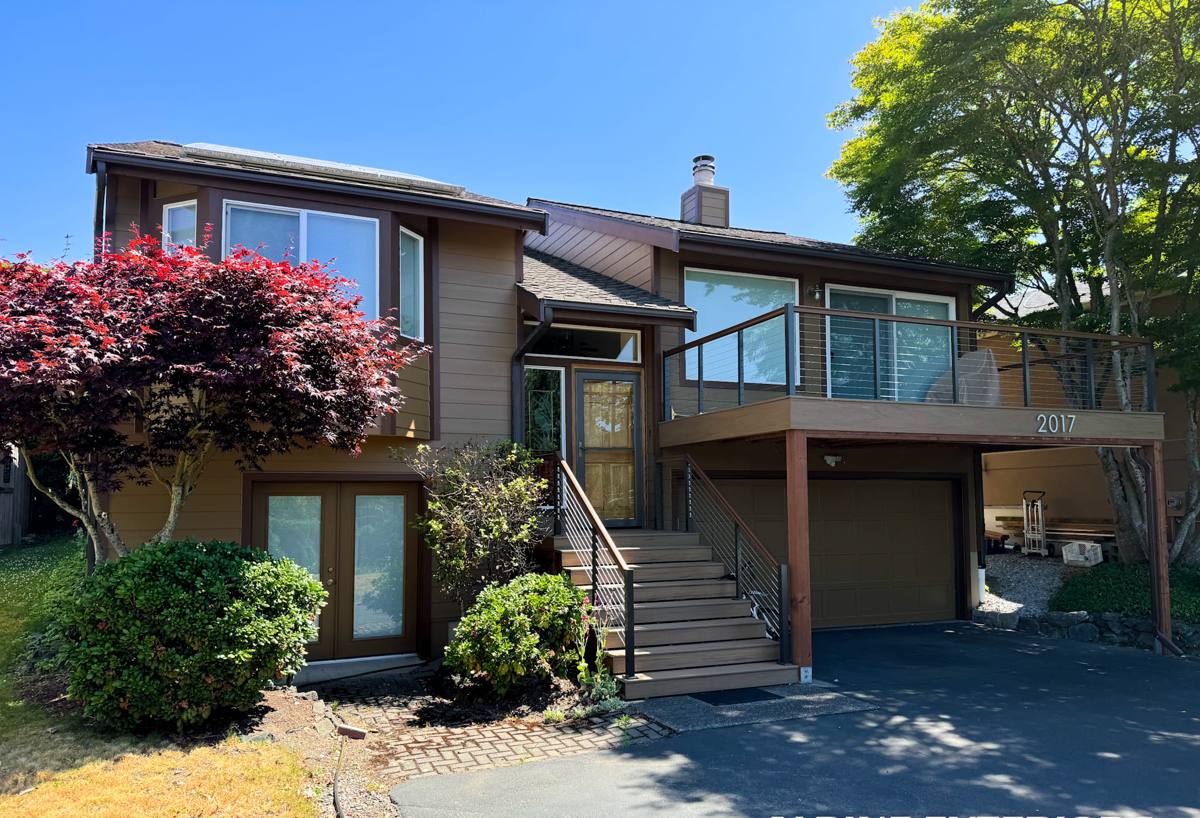
What Blaine's Climate Does to Windows Over Time
Every part of a window assembly — frame, sash, glazing, weatherstripping, and the flashing that ties it into the wall — is exposed to a specific combination of stresses near Dakota Creek that inland homes don't deal with to the same degree.
Salt Air and Corrosion
Airborne salt from the Strait accelerates corrosion on unprotected or poorly coated metal hardware — hinges, locks, balance mechanisms, and aluminum frames without adequate finishes. Over years, this shows up as stiff or failing hardware, pitting on metal surfaces, and finishes that chalk or discolor faster than the manufacturer's rated lifespan would suggest.
Driving Rain
Wind off the water doesn't just bring rain, it pushes it. Driving rain finds any gap in flashing, sealant, or a poorly shimmed frame and drives water sideways and upward into places gravity-only drainage details were never designed to handle. This is one of the most common causes of hidden rot around window openings in this area — the water intrusion happens slowly, behind the trim, long before it shows up as a stain on drywall.
Moss, Mildew, and a Long Wet Season
Whatcom County's extended damp season keeps humidity high around window openings for much of the year. Combined with limited direct sun on shaded elevations, this creates ideal conditions for moss and mildew growth on sills, sashes, and exterior trim. Wood components that aren't properly sealed or that trap moisture behind cladding are especially vulnerable to slow decay that's easy to miss until a window starts operating poorly.
Temperature Swings and Condensation
Cool, moist coastal air combined with heated interior spaces creates a strong condensation gradient on window glass and frames, especially with older single-pane or poorly sealed double-pane units. Persistent condensation on the interior side of glass is often the first visible sign that a window's insulating performance has dropped below what the home actually needs.
Signs Your Dakota Creek Home May Need Window Replacement
Not every window problem requires full replacement, but in this climate, several signs together usually mean the window system has reached the point where repair is a temporary fix rather than a real solution.
- Persistent fogging or moisture between panes of a double-pane unit (a sign the seal has failed)
- Soft or discolored wood at the sill or lower frame corners
- Windows that are difficult to open, close, or lock, especially after damp weather
- Visible corrosion or pitting on hardware, hinges, or metal frame components
- Moss or persistent green staining building up on sills or exterior trim
- Noticeable drafts or cold spots near the window even when it's fully closed
- Paint or finish that's bubbling, peeling, or chalking faster than the rest of the house's trim
- A visible gap or shifting between the window frame and the surrounding wall
If you're seeing two or more of these on the same window, it's worth having it looked at before the underlying wall framing is affected.
Choosing Window Materials for This Climate
Material choice matters more here than it would in a drier, more sheltered part of Whatcom County. The table below reflects how common window frame materials tend to hold up under salt air, driving rain, and sustained moisture — the honest trade-offs, not marketing claims.
| Material | Salt Air / Corrosion Resistance | Moisture Behavior | Maintenance |
|---|---|---|---|
| Vinyl | Good — won't corrode, minimal hardware exposure | Stable; doesn't absorb moisture or rot | Low; occasional cleaning |
| Fiberglass | Very good — dimensionally stable, resists pitting | Excellent; very low expansion/contraction | Low; holds paint and finishes well |
| Wood (unclad) | Poor on its own near salt air without diligent upkeep | Vulnerable to rot if seals or paint fail | High; regular repainting/sealing required |
| Wood-clad | Good on the exterior cladding side; interior wood still needs care | Depends heavily on cladding and flashing quality | Moderate |
| Aluminum (standard) | Fair; prone to corrosion and pitting without marine-grade coatings | Conducts cold, prone to interior condensation | Moderate to high |
We generally steer Dakota Creek homeowners toward vinyl or fiberglass frames, or well-clad wood units from manufacturers with genuinely marine-rated hardware, simply because they hold up with the least ongoing maintenance in salt-air, high-moisture conditions. Standard aluminum and unprotected wood aren't wrong choices everywhere, but they demand a level of upkeep that most homeowners here don't want to sign up for.
What a Correct Window Replacement Installation Involves
The window unit itself is only part of the job. In a climate that drives rain sideways and keeps humidity high for months at a time, the installation details around the window are what actually determine whether it stays watertight for the long haul.
Removal and Opening Inspection
Every replacement starts with removing the old unit and inspecting the rough opening — sill, jambs, and header — for hidden rot or moisture damage before a new window ever goes in. This step is non-negotiable near the water; installing a new window over compromised framing just hides the problem for a few more years.
Flashing and Weather Barrier Integration
Proper flashing tied correctly into the home's weather-resistive barrier is the single most important detail for driving-rain resistance. This means flashing tape or pan flashing at the sill, head flashing above the window, and correct shingle-style overlap so water is always directed outward and downward, never trapped behind the trim.
Sealing and Insulation
Gaps between the window frame and rough opening need to be properly insulated and air-sealed — not just caulked on the exterior face. A window can be perfectly sealed on the outside and still perform poorly if the gap behind the trim is left open to air movement and moisture.
Setting, Shimming, and Fastening
The window needs to be plumb, level, and square, shimmed correctly so it doesn't bind or sag over time, and fastened per the manufacturer's specification. A window that's slightly out of square will wear its weatherstripping and hardware unevenly, which shows up as leaks and operating problems years earlier than it should.
Exterior Trim and Finish
Exterior trim needs to be back-primed and sealed on all sides before installation, not just on the visible face, and finish caulking needs to use a product rated for the exposure the window will actually see. This is where a lot of corner-cutting happens on lower-cost jobs, and it's exactly the detail that fails first in a coastal climate.
Glass and Performance Options Worth Considering
Beyond the frame, the glass package affects both comfort and how well the window resists the condensation problems common in this climate.
- Double-pane vs. triple-pane: Double-pane with a quality Low-E coating is adequate for most Dakota Creek homes; triple-pane adds insulating value and can help further reduce interior condensation on north-facing or heavily shaded windows.
- Low-E coatings: Reduce heat loss and help keep interior glass surface temperature higher, which directly reduces the condensation this area's humidity tends to cause.
- Gas fills (argon/krypton): Improve insulating performance between panes; argon is standard and cost-effective for most residential replacements.
- Warm-edge spacers: Reduce heat transfer at the edge of the glass unit, which is often where condensation and frost first appear on older windows.
Cost Factors for Dakota Creek Window Replacement
Every home and window count is different, so we won't quote a number without seeing the actual openings, but the factors below are what genuinely move the price up or down.
| Factor | Why It Affects Cost |
|---|---|
| Frame material | Fiberglass and higher-end wood-clad units cost more upfront than vinyl but often need less maintenance long-term |
| Window size and type | Larger units, custom shapes, and operable styles (casement, awning) cost more than standard fixed or double-hung sizes |
| Existing rot or damage | Framing repair discovered during removal adds labor and material beyond the window itself |
| Flashing and siding tie-in complexity | Homes with more complex siding details require more careful, time-intensive flashing integration |
| Number of windows replaced together | Doing multiple windows in one visit typically reduces the per-window labor cost |
| Glass package | Triple-pane, upgraded Low-E, or specialty coatings add cost over a standard double-pane unit |
Our Process, From Estimate to Cleanup
1. On-Site Assessment
We look at each window individually — not just the glass, but the sill, surrounding siding, and any signs of past water intrusion — so the estimate reflects the actual condition of your home, not a generic per-window price.
2. Material and Glass Recommendation
We'll walk through frame and glass options suited to your home's exposure, being direct about which choices hold up best given how close you are to the water and what direction your prevailing weather comes from.
3. Installation
Removal, opening inspection, flashing, and setting the new units are done in sequence per window, so no opening is left exposed to weather longer than necessary.
4. Sealing and Finish Work
Exterior trim, caulking, and interior finish work are completed to match your home, with attention to the sealing details that matter most in driving rain.
5. Walkthrough and Cleanup
We walk through the finished work with you, confirm every window operates correctly, and clean up the job site before we leave.
Why Local Experience in Dakota Creek Matters
A crew that mostly works drier, more sheltered parts of Whatcom County can still install a window correctly on paper and still get the flashing and sealing details wrong for a property that takes driving rain and salt air the way homes near Dakota Creek do. Knowing which elevations of a Blaine-area home typically take the worst weather, which flashing sequences actually hold up here, and which materials are worth the extra upfront cost versus which ones just add maintenance later — that comes from doing this work in this specific area, season after season, not from a general contracting background.
If your windows are showing wear, fogging, or drafts, or you're simply planning ahead for a home near Dakota Creek, we're glad to take a look and give you a straightforward assessment. Reach out for a free, no-pressure estimate using the form below — we'll tell you honestly what your windows need, not just what's easiest to sell.