 Blaine Siding
 Why Decks Near the Peace Arch Take a Different Kind of Beating
Homes in the Peace Arch area sit close to the water — Semiahmoo Bay and Drayton Harbor are both nearby, and that proximity matters more for an outdoor deck than most homeowners realize. Salt-laden air off the water speeds up corrosion on anything metal. Driving rain off the Strait finds its way into every joint, seam, and fastener hole. And Whatcom County's long, wet moss season — often running from early fall through late spring — keeps horizontal wood surfaces damp for weeks at a stretch, even between storms.
None of this means a deck in this neighborhood is doomed. It means a deck built or repaired without accounting for the local exposure will fail faster than the same deck would in a drier, inland part of the state. We've repaired enough decks in this stretch of Blaine to know which problems show up first, and where.
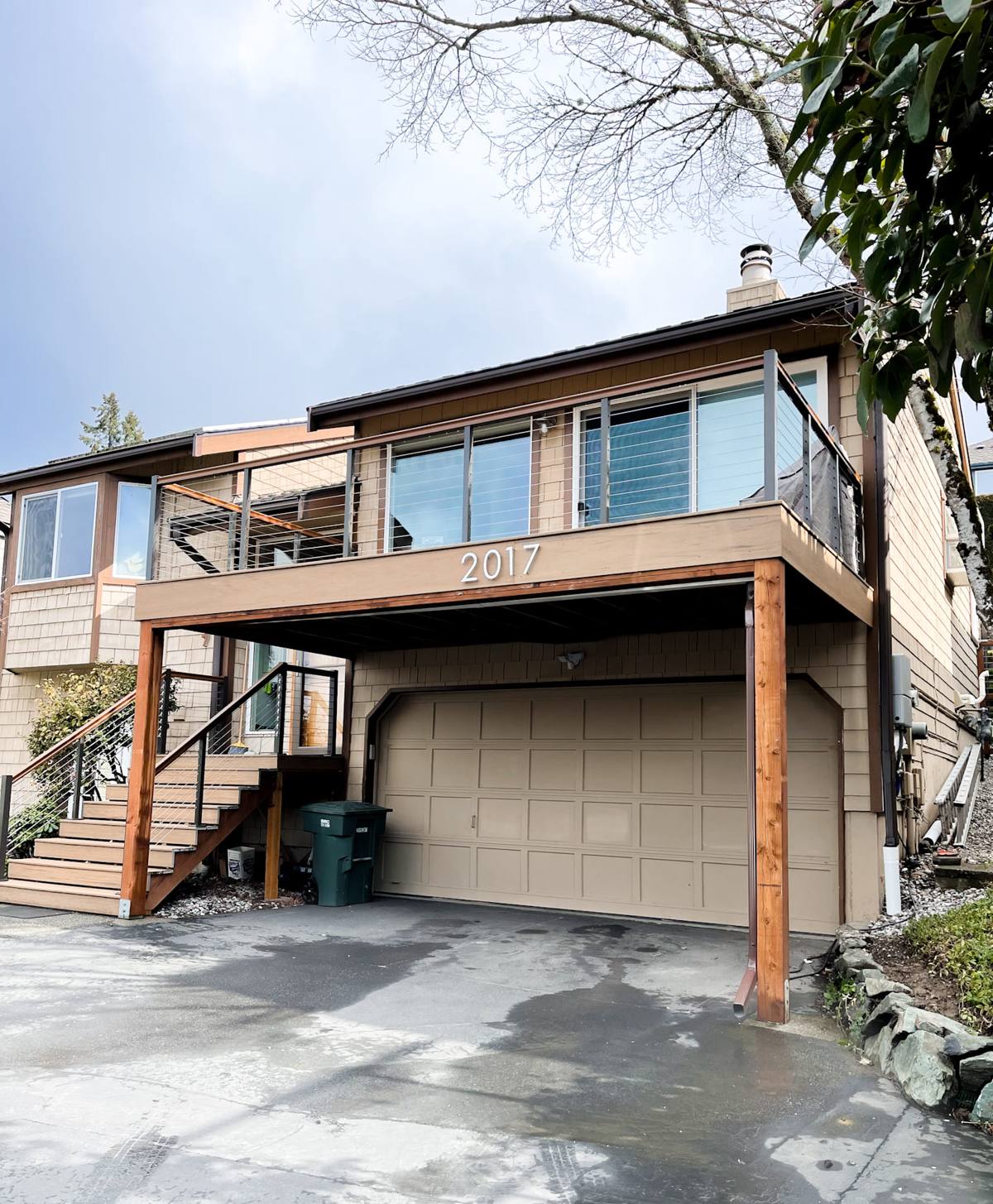
Signs a Deck in This Area Needs Repair, Not Just Cleaning
What you can usually see
Some warning signs are obvious from a walk-around. Others hide underneath the deck or under the boards themselves, which is exactly why a proper inspection has to include getting underneath the structure, not just looking at the surface.
- Boards that feel soft, spongy, or slightly springy underfoot
- Gaps opening up where the deck meets the house (the ledger board)
- Rust streaks bleeding out from screw or nail heads
- Railings or posts that wobble when you push on them
- Stairs that flex or feel loose, especially at the stringers
- Standing water that doesn't drain within an hour or two after rain
- Heavy moss or green-black algae film, especially on shaded or north-facing sections
- Nail heads that have popped up above the board surface
- Discoloration or softness at the base of posts where they meet concrete or soil
If you're seeing two or three of these, it's worth having someone look at the structure before it becomes a safety issue rather than a maintenance item.
The Repair Issues We See Most Often on Peace Arch Decks
Ledger board attachment
The ledger board — where the deck bolts to the house — is the single most safety-critical connection on any deck, and it's also the point most exposed to trapped moisture. On older decks in this area, it's common to find little or no flashing behind the ledger, or flashing that was installed but never properly lapped with the house's water-resistive barrier. Water gets behind the board, the wood stays wet far longer than it should, and the fasteners holding the deck to the house lose their grip in rotted wood. This is not a cosmetic fix — it's a structural one.
Fastener corrosion
Standard galvanized fasteners hold up fine in a lot of the country. Close to salt air, they corrode faster than most homeowners expect, and you'll see it as rust streaking down the board face before the fastener itself actually fails. Corroded fasteners lose holding strength gradually and invisibly, which is part of why a deck can look fine right up until a board or railing moves.
Joist and beam rot
The underside of a deck rarely gets looked at, but it's where a lot of the real damage happens. Debris and moss collect in the gaps between boards, hold moisture against the joists below, and rot sets in from the top of the joist downward — invisible from above and often well advanced by the time it's caught.
Moss and algae buildup
Shaded decks, or ones under tree cover, hold onto moisture the longest and grow moss the fastest. Beyond being a slip hazard, moss acts like a sponge sitting directly on the wood, keeping the surface wet for days after everything else has dried out.
Post base and footing movement
Saturated soil through the wet months, combined with occasional freeze-thaw cycles, can cause footings to heave slightly or settle unevenly over the years. The result is a post that's no longer plumb, or a deck frame that's developed a slight lean or bounce.
What a Correct Deck Repair Actually Involves
A repair that only addresses what's visible from the top often misses the problem that caused the damage in the first place. Our approach for a deck repair job includes:
- A full inspection from underneath the deck, not just the walking surface
- Probing or moisture-testing the ledger board, rim joist, and any suspect framing
- Checking whether flashing exists at the ledger and whether it's actually doing its job
- Replacing corroded fasteners with hardware rated for coastal or high-moisture exposure
- Sistering or replacing any joists and beams that have soft or rotted sections
- Re-securing the ledger with correct flashing and through-bolts or structural lag screws, not just nails
- Replacing failed decking boards while keeping sound material in place where it makes sense
- Checking guardrail height and baluster spacing against current code
- Confirming stair stringers and treads are solid and properly fastened
Repair Scope and What It Typically Costs
Every deck is different, but most repair jobs fall into one of a few categories. This gives a general sense of scope — an actual number only comes after we've been underneath your deck.
| Repair Scope | What's Typically Involved | General Cost Range | Best Fit For |
|---|---|---|---|
| Spot repair | A handful of boards, fasteners, or a loose railing section | Lower | Isolated damage, deck otherwise sound |
| Ledger and flashing correction | Removing decking near the house, adding proper flashing, re-securing the ledger | Moderate | Water staining or gaps at the house connection |
| Structural repair | Joist sistering or replacement, post/footing correction | Higher | Sagging, bounce, or movement in the frame |
| Full rebuild | New framing, decking, and railings top to bottom | Highest | Widespread rot or a deck past its practical repair life |
Repair or Replace? What We Actually Look At
The honest answer depends on how much of the structure is affected, not just how old the deck is. A 15-year-old deck with isolated ledger and fastener issues can often be repaired soundly. A deck where rot has spread through multiple joists, the ledger, and several posts is usually cheaper and safer to rebuild than to keep patching. We'll tell you plainly which category yours falls into and why, rather than defaulting to the more expensive option.
Wood vs. Composite: What Holds Up Near the Water
This comes up on almost every repair estimate near the coast, and there's no single right answer — just tradeoffs worth knowing.
Real wood decking is more affordable up front and easy to repair board-by-board, but it needs more frequent sealing or staining in this climate to keep moisture out, especially with the amount of rain and moss exposure this area sees. Composite and capped-composite decking need far less surface maintenance and resist moss staining better, but they cost more initially, and if a board is ever damaged, matching an older composite run can be harder than replacing a wood board.
What doesn't change based on decking material is the framing underneath. Whether the surface is wood or composite, the joists, beams, ledger board, and fasteners are still typically wood-framed and still need the same moisture protection and corrosion-resistant hardware. Choosing composite decking doesn't make the substructure immune to the same water and salt exposure — that part of the job matters regardless of what you walk on.
How We Approach Deck Repair Work in Peace Arch
Our process is the same whether the job is a handful of boards or a structural rebuild:
- On-site inspection of the full deck structure, including underneath and around the ledger connection
- A written explanation of what's actually failing and why — not just a list of what we'll replace
- A repair plan that prioritizes safety-critical items first (ledger, framing, footings) before cosmetic work
- Use of fasteners and flashing appropriate for this area's salt air and rain exposure, not generic hardware
- Cleanup that leaves the site the way we found it
Why Local Experience on This Stretch of Blaine Matters
A contractor who mostly works drier, inland jobs can still build a technically correct deck on paper and have it underperform here. Knowing which sides of a house hold moss longest, which ledger details actually keep water out in driving coastal rain, and which fasteners are worth the extra cost near Semiahmoo Bay and Drayton Harbor isn't guesswork — it's pattern recognition from doing this work in Whatcom County repeatedly. That's the difference between a repair that lasts and one you're calling someone about again in three years.
If you've got a deck in the Peace Arch area showing any of the signs above, we're happy to take a look and give you a straight assessment. Reach out for a free, no-pressure estimate using the form below.