 Blaine Siding
 Building New in Everson Starts With Getting the Windows Right
If you're framing a new home or outbuilding in Everson, the window install is one of the few steps in the whole build where a small shortcut turns into a permanent problem. Once siding, trim, and interior finish go up around a window, the flashing underneath it is buried for good. Everson sits inland along the Nooksack River valley in Whatcom County, which means builds here deal with their own mix of valley fog, prolonged damp, and heavy seasonal rain rather than direct salt spray off the water. But the fundamentals don't change: a new-construction window opening has to be built to shed water on the first try, because nobody is going to see the mistake again until there's a stain on the drywall.
We're a Blaine-based crew that works new construction and remodel window openings across Whatcom County, and Everson is regularly part of that route. That matters more than it sounds like — the right install sequence here isn't generic, it's shaped by what this specific region throws at a house year-round.
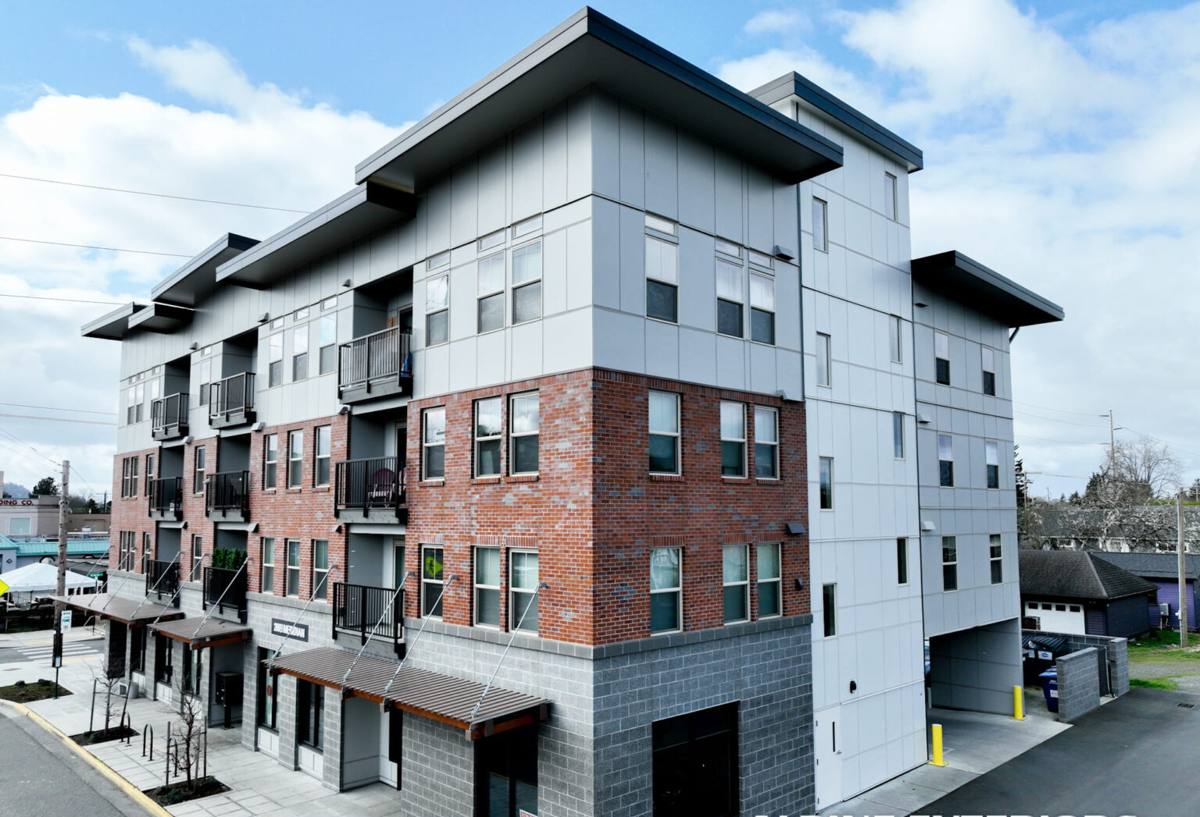
New-Construction Windows vs. Replacement Windows — Why the Difference Matters
A lot of homeowners assume a window is a window. On a new build, it isn't. New-construction windows are built with a nailing flange around the perimeter of the frame, meant to be integrated into the wall assembly before siding goes on. Replacement windows are typically flangeless, built to slide into an existing opening without disturbing the exterior finish. Installing the wrong type, or installing a flanged window the wrong way, is one of the most common sources of long-term leaks we get called out to fix.
Nail-Fin Flanged Windows and the Build Sequence
On a new build, the window install has to happen in the correct order relative to the water-resistive barrier (WRB), also called house wrap. The flange gets integrated into the WRB using a specific shingle-lap sequence — sill first, jambs next, head last — so that any water that gets behind the siding is directed down and out, never trapped behind the flange. Skip a step or reverse the order and you've built a pocket that holds water against the framing.
Working Around Your Builder's Timeline
New-construction window work also has to fit into somebody else's schedule — the framer, the WRB crew, the siding crew. We coordinate directly with builders and general contractors on timing so the rough openings are ready, the WRB is lapped correctly before we show up, and the windows are in and flashed before siding closes everything in. Rushing this stage to hit a schedule is exactly how corners get cut on flashing.
What Whatcom County's Climate Actually Demands From the Install
Whatcom County doesn't have a mild "shoulder season" the way some parts of the state do. Wet weather runs long, and the details that get treated as optional in drier climates aren't optional here.
Driving Rain and Wind-Driven Water
Storms coming off the water push rain sideways, not just down. That means a window has to resist water intrusion at the sill and jambs under wind pressure, not just shed water off the top. Sill pan flashing — a dedicated sloped pan under the window opening, separate from the housewrap lapping — is standard on our installs for exactly this reason. It gives any water that does get past the window a clear path back out instead of a place to sit.
A Long Moss and Mildew Season
The wet season here runs long enough that any organic debris — leaves, needles, wind-blown seed pollen — has months to sit against a sill or trim board and hold moisture. Moss and mildew don't cause the leak, but they're a good sign that water is sitting somewhere it shouldn't. Sill design and drip-cap detailing that keep water moving instead of pooling cut down on this significantly.
Salt Air and Coastal Exposure
Closer to Blaine and the water, salt-laden air accelerates corrosion on fasteners, hinges, and cheaper hardware finishes. Everson's inland position means less of that direct exposure, but it's still part of the regional weather system a Whatcom County crew has to know how to build for — and it's a reason we spec corrosion-resistant fasteners and hardware as a standard, not an upgrade, on installs anywhere in the county.
Flashing and Water Management: The Part That Actually Prevents Leaks
Most window failures on new builds aren't a bad window — they're a flashing sequence that was done out of order or skipped a step. This is the part of the job that's invisible once siding goes on, which is exactly why it has to be done right the first time.
- Rough opening checked for square, level, and correct dimensions before the window ever shows up
- Sill pan flashing installed with a slight outward slope, sealed at the corners
- Window set, shimmed level and plumb, and fastened per the manufacturer's flange schedule
- Jamb flashing lapped over the sill pan, head flashing lapped over the jambs (shingle-style, always working top layer over bottom)
- WRB integrated back over the flange at the head, taped and sealed at all seams
- Interior and exterior sealant joints checked — sealed where they should be sealed, and left open where the assembly needs to drain or vent
- Final water-test or visual check before siding crew is cleared to close in the opening
Picking the Right Window Product for an Everson Build
There's no single "best" frame material — it depends on budget, maintenance appetite, and how the house is being finished. For new construction in this climate, we generally steer homeowners toward vinyl or fiberglass frames over wood, mainly because of how each material handles sustained moisture exposure with minimal upkeep.
| Frame Material | Moisture Performance | Maintenance | Typical Cost Position |
|---|---|---|---|
| Vinyl | Won't rot or corrode; performs well in wet climates | Low — occasional cleaning | Most budget-friendly |
| Fiberglass | Excellent — very stable, low expansion/contraction | Low | Mid to upper range |
| Wood / Wood-Clad | Good if properly finished and maintained; vulnerable if finish fails | Higher — needs periodic refinishing/sealing | Upper range |
| Aluminum | Durable but conducts heat/cold; condensation risk in this climate | Low, but thermal performance is the tradeoff | Varies |
We're not opposed to wood or wood-clad windows — they look great and plenty of Whatcom County homes have them — but we're upfront that they come with a maintenance obligation the other materials don't. If a homeowner wants that look, we'll talk through what keeping the finish intact actually requires so there's no surprise five years in.
U-Factor and SHGC for This Climate
For energy performance, we're generally looking for a lower U-factor (better insulating value) since heating load matters more than cooling load in Whatcom County. Solar Heat Gain Coefficient (SHGC) matters less here than it would in a sunnier climate, but orientation still plays a role — south and west-facing openings can still benefit from a slightly lower SHGC glass package. Every window we install carries an NFRC label so you can see the actual rated numbers, not just a marketing claim.
Our New-Construction Window Install Process
- Rough opening walkthrough — we verify openings against the window schedule before delivery to catch framing errors early, while they're still cheap to fix
- Coordination with the WRB/wrap crew — confirming lap direction and sequencing before install day
- Sill pan and flashing installation — following the sequence above on every opening, no exceptions for time pressure
- Window setting — level, plumb, square, and fastened to the flange schedule the manufacturer specifies
- Flashing integration and sealant — head, jamb, and WRB lapped and taped, sealant placed only where the assembly is designed to be sealed
- Final check — a walk of every opening before we sign off and the siding crew closes it in
Mistakes We Watch For on New Builds
Most of what we catch on new construction isn't dramatic — it's small sequencing errors that would've caused a leak two or three years down the road.
- WRB lapped in the wrong order around the flange, directing water inward instead of out
- Sealant used in place of proper flashing instead of alongside it — caulk is not a substitute for a sill pan
- Missing or undersized sill pan flashing, especially on wider openings
- Shims left in place without being trimmed, interfering with drainage or insulation
- Fastener spacing that doesn't match the manufacturer's flange schedule, risking wind load failure
Why Hire a Crew That Already Works Everson and Blaine
A crew that mostly works drier climates can install a technically correct window and still get the sequencing wrong for what Whatcom County actually needs — because in a lot of the country, a sill pan or a specific WRB lap order is treated as a nice-to-have, not a requirement. Working this region regularly means we're not guessing at how hard it rains here, how long the wet season runs, or what happens to an opening that's flashed correctly versus one that's flashed "close enough." We also know how to coordinate with the builders, framers, and siding crews already working new construction around Everson and the rest of Whatcom County, which keeps your build on schedule instead of waiting on a subcontractor who has to learn the area first.
Cost Factors to Expect
New-construction window pricing depends on window count, size, frame material, glass package, and how straightforward the openings are to flash. Rather than quote a number that doesn't mean anything without seeing your plans, we'll walk your window schedule with you and give you a real range based on what's actually being installed — not a per-window estimate that ignores flashing complexity, access, or product tier.
If you're building new in Everson or anywhere else in Whatcom County, we're glad to walk your plans and give you a straightforward, no-pressure estimate on the window install. Use the form below to get started.