 Blaine Siding
 What Everson's Climate Does to Siding Over Time
Everson sits inland along the Nooksack River valley, east of Blaine and away from the direct salt spray you get on homes right along the water. That doesn't mean Everson siding gets an easy ride. Whatcom County's marine-influenced air still moves through the valley, and it brings the same moisture load that wears on every home in this corner of the state — long stretches of driving rain in fall and winter, heavy morning fog off the river bottom, and enough shade and humidity on north- and east-facing walls to keep moss and algae established for most of the year. Add the occasional hard freeze on top of siding that's already saturated, and you've got the recipe for cracking, delamination, and rot that shows up years before it should.
The result is that siding in Everson doesn't fail because of one dramatic event. It fails from cumulative exposure — thousands of wet-dry cycles, moss holding moisture against the wall, and fastener lines and butt joints that were never quite sealed right to begin with. A siding replacement done for this climate has to be built to shed water and dry out fast, not just look good on installation day.
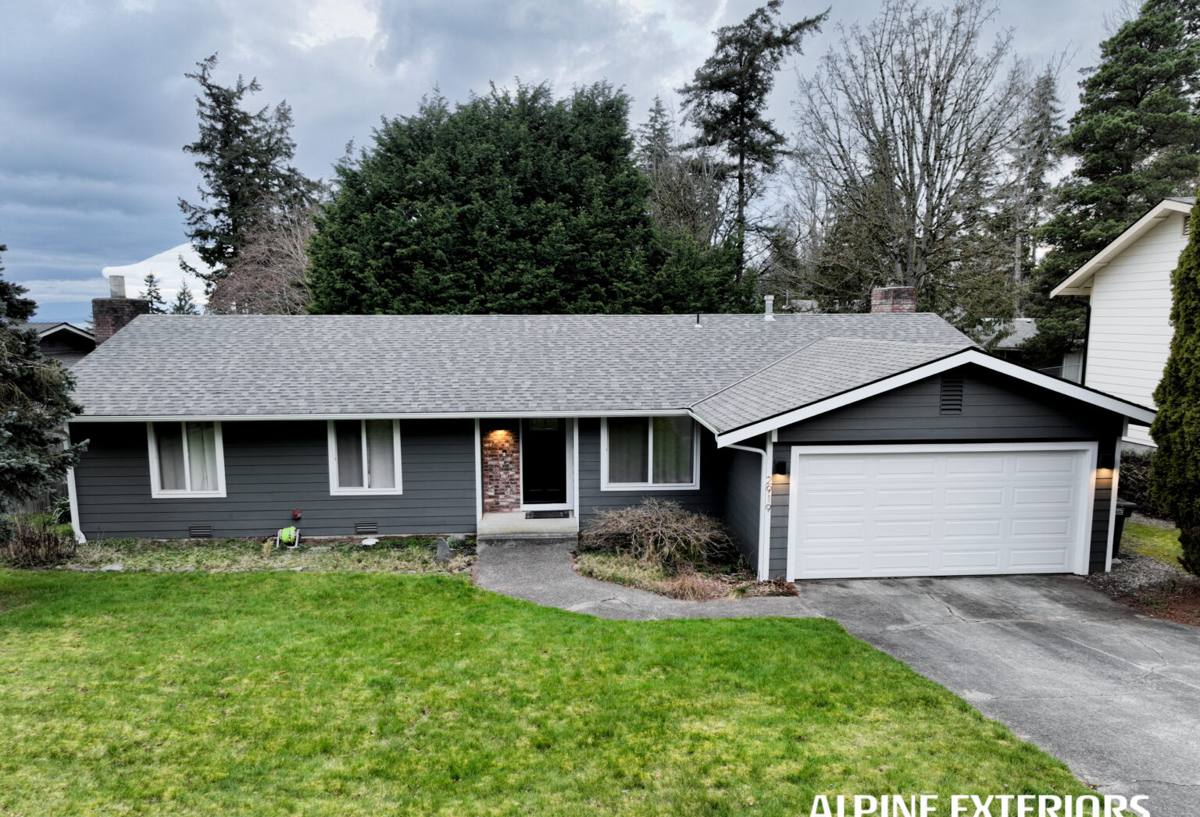
Signs an Everson Home Needs Replacement, Not Repair
Not every siding problem calls for a full tear-off. But in our experience working homes throughout Whatcom County, certain signs mean patching is throwing money at a problem that's already bigger than the surface:
- Boards that are cupping, bowing, or buckling — especially on shaded or north-facing walls
- Soft, spongy spots you can press in with a thumb, particularly near the bottom courses and around window sills
- Moss or black-green staining that keeps coming back within a season or two of cleaning
- Paint that's peeling, bubbling, or failing in the same spots every couple of years
- Visible swelling or delamination on older hardboard or engineered wood siding
- Gaps opening up at butt joints and corners as caulking dries out and shrinks
Any one of these on its own might be a repair. Several at once, or rot found once siding is pulled back, usually means the water-resistive barrier and sheathing underneath have been compromised for a while — and that's a replacement conversation, not a patch job.
What a Correct Siding Replacement Job Involves
Tear-Off and Sheathing Inspection
The work that matters most on a siding replacement happens before a single new board goes up. Once the old siding is off, the sheathing underneath needs an honest inspection — any soft or delaminated OSB or plywood gets cut out and replaced, not covered over. Skipping this step is the single most common shortcut that leads to a siding job failing early, because new siding over rotten sheathing just hides the problem for another season or two.
Water-Resistive Barrier and Flashing
A correctly built wall in this climate is a drainage plane, not a sealed box. That means a properly lapped water-resistive barrier, flashing at every window and door head, kick-out flashing where roof lines meet walls, and drainage space behind the siding so any water that does get in can run down and out instead of sitting against the sheathing. In a valley that sees as much fog and rain as Everson, this detailing is what separates siding that lasts twenty-plus years from siding that's rotting again in ten.
Fastening, Clearances, and Caulking
Fiber cement siding has manufacturer-specified nailing patterns, minimum clearances from grade, decks, and roof lines, and specific joint treatment — all of it exists to keep water from getting trapped. We fasten to those specs, keep the bottom edge clear of soil and hardscaping, and use sealants only where the manufacturer calls for them, not as a substitute for proper flashing.
Choosing the Right Material for This Climate
Homeowners in Everson usually compare the same handful of materials. Here's how each one actually behaves under the driving rain, humidity, and moss conditions common to Whatcom County:
| Material | How It Handles This Climate | Ongoing Maintenance | Typical Lifespan |
|---|---|---|---|
| James Hardie fiber cement | Non-combustible, dimensionally stable, resists moisture-driven swelling and rot when installed to spec | Occasional wash; factory ColorPlus finish resists fading and doesn't need repainting on the original schedule | 30+ years with correct installation |
| Vinyl | Won't rot, but can warp or crack in cold snaps and doesn't stop moisture from reaching sheathing behind it | Low, but hides problems developing underneath | 20–30 years, shorter with impact or heat damage |
| LP SmartSide (engineered wood) | Wood-based core is vulnerable at cut edges and joints if moisture gets in and isn't caught early | Requires attentive caulk and paint upkeep, especially at seams | Variable — heavily dependent on installation and upkeep |
| Cedar / untreated wood | Attractive but absorbs moisture readily; prone to moss growth and needs regular refinishing in this climate | High — regular staining, sealing, and moss treatment | 15–25 years without diligent maintenance |
Every one of these products has a place somewhere. But once you weigh how much moisture Whatcom County throws at a wall over a typical year, the products that depend on a perfect paint job or an unbroken vinyl surface to keep water out start looking like a maintenance commitment more than a one-time investment.
Why We Only Install James Hardie Fiber Cement
We don't install vinyl, LP SmartSide, Cemplank, Allura, primed spruce, or cedar. That's a deliberate standard, not a lack of options. James Hardie's fiber cement is non-combustible, holds its shape and color far better than wood-based or vinyl alternatives in a wet climate, and the factory-applied ColorPlus finish is baked on under controlled conditions rather than field-painted, which is where a lot of siding finishes start failing first in this region.
Hardie also builds climate-specific HZ product lines engineered for different moisture and temperature profiles across the country, which matters in a place like Everson where humidity, rain, and the occasional freeze all show up in the same year. Backed by a strong transferable warranty and a track record of holding up when installed correctly, it's the product we're comfortable putting our name behind on every job — not because it's the only siding that exists, but because it's the one we've found actually earns its keep in this climate.
Our Process, Start to Finish
Every Everson siding replacement follows the same sequence, regardless of the home's size or condition:
- Walk the exterior with you and note problem areas, drainage issues, and anything driving the need for replacement
- Check for moisture and soft spots at the most vulnerable areas — sills, corners, and low courses near grade
- Put together a written scope covering material, flashing details, and any sheathing repair contingencies
- Tear off old siding and inspect sheathing, replacing anything compromised before covering it back up
- Install water-resistive barrier, flashing, and James Hardie siding to manufacturer specification
- Walk the finished job with you and address anything on the punch list before we call it done
- Clean up the site — debris, nails, and packaging hauled off, not left for you to deal with
There's no step in that list we skip to save time, because the steps you can't see once the siding is up — sheathing condition, flashing laps, drainage space — are the ones that determine whether the job is still doing its job in fifteen years.
Why a Crew That Already Works Everson Matters
Siding done right in this part of Whatcom County isn't generic exterior work with a different address. A crew that's used to working homes in Everson and the surrounding valley already knows how much moss pressure a shaded north wall builds up, how much drainage detailing matters on a home that sits in fog most winter mornings, and where rot tends to start first on houses built to older standards. That familiarity shows up in small decisions — where to add extra flashing, how much drainage space to build in, which walls need the closest look during tear-off — that a crew unfamiliar with this specific climate might not think to make.
It also means we're not disappearing after the job wraps. We work this area regularly, so if a question comes up two years down the road, you're calling a contractor who's still around and still working nearby, not chasing down someone who did one job in the area and moved on.
If your Everson home's siding is showing its age — moss that won't stay gone, paint that keeps failing, or boards that are cupping and softening — we're happy to take a look and give you a straight answer about what it needs. Reach out for a free, no-pressure estimate and we'll walk the exterior with you and lay out exactly what a correct replacement would involve for your home.