 Blaine Siding
 Why Window Installation in Everson Isn't a Generic Job
Everson sits inland from Blaine but it doesn't escape the weather pattern that defines this corner of Washington. Pacific storm systems push through Whatcom County for months at a time, and whether a house is a mile from Semiahmoo Bay or twenty minutes up the Nooksack valley, it gets the same driving rain, the same long stretch of grey wet season, and the same conditions that grow moss on anything that holds moisture. Salt-laden air is more of a factor for homes closer to the water, but the underlying problem is the same everywhere in this county: windows here spend more of the year wet than dry.
That matters more for window installation than most homeowners realize. A window is only as good as the seal and flashing around it. Get that wrong, and it doesn't matter whether the glass is triple-pane or the frame is top-shelf vinyl — water will find the gap, and in a climate like ours it won't take long. We've installed and replaced windows on enough Everson-area homes to know exactly where builders in this region tend to cut corners, and we build every job to close those gaps, not just cover them.
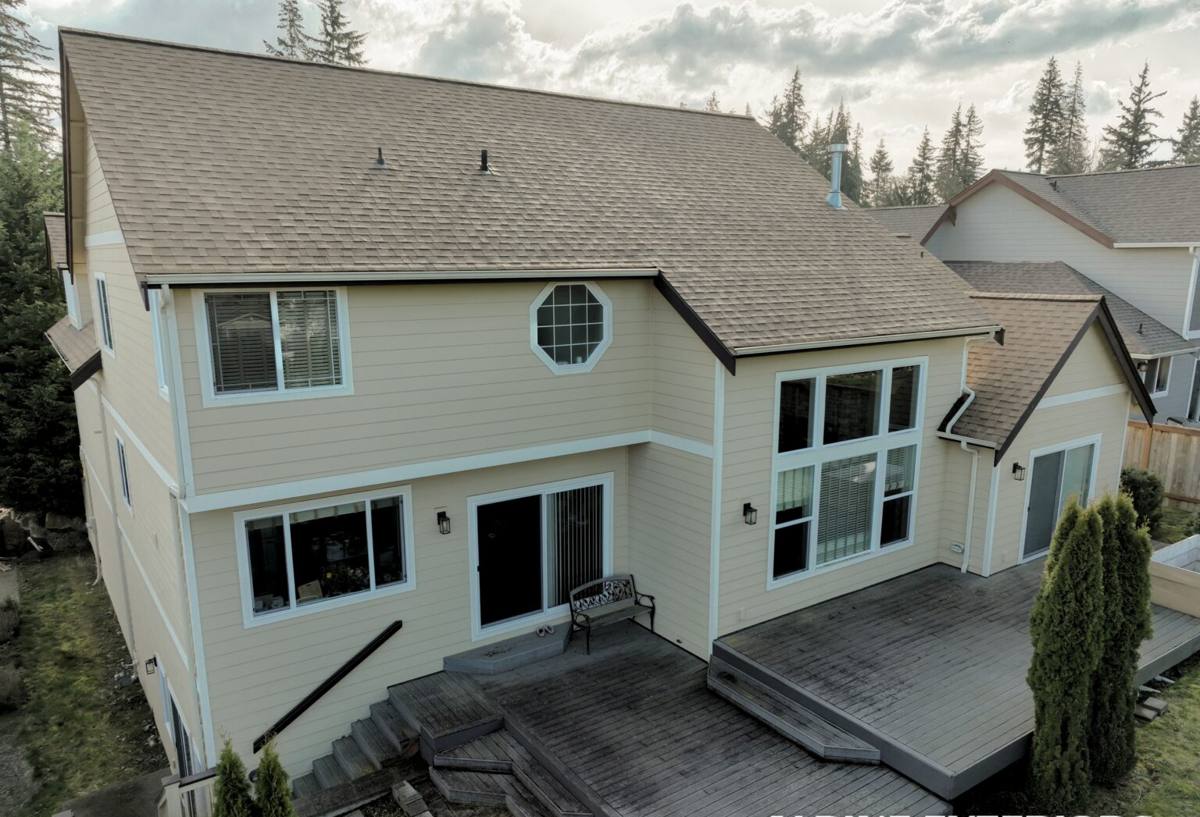
Signs Your Everson Home's Windows Are Past Due
Windows rarely fail all at once. They send warning signs for a year or two before a homeowner notices the real damage happening inside the wall. In our marine climate, catching these early saves money on sheathing and framing repairs down the line.
- Fogging or condensation between the panes — the seal on the insulated glass unit has failed
- Soft or discolored trim, sill, or drywall below a window — a sign water is getting past the flashing
- Visible moss or dark streaking on the exterior trim around the frame
- Drafts you can feel on a windy day, even with the window latched shut
- Windows that are hard to open, close, or lock — frames can warp as wood absorbs moisture
- A noticeable jump in heating costs without any other explanation
- Paint that's bubbling or peeling specifically around the window opening, not the whole wall
Any one of these on its own isn't an emergency. Several of them together, especially on the same window, usually means water has already gotten behind the frame.
What a Correct Window Installation Actually Involves
It Starts Before the Window Ever Shows Up
A proper install begins with the rough opening. We check that it's square, sound, and free of rot before anything goes in. If a previous installer skipped flashing or used the wrong tape, we find that out now — not after the new window is set and the problem is hidden again.
Flashing Is the Whole Job
In a dry climate, a mediocre flashing job might go unnoticed for a decade. In Whatcom County, it won't. We use a proper drainage plane approach: sill pan flashing to catch and direct any water that gets past the window back out, self-adhering flashing tape at the jambs and head lapped in the correct shingle-style order, and a weather-resistant barrier tied in above and behind the flashing so water is always directed down and out, never trapped behind the siding.
Sealing and Insulating the Gap
The gap between the window frame and the rough opening gets low-expansion foam or mineral wool, not just a bead of caulk. Caulk alone doesn't insulate and it's the first thing to crack when a house settles. Backer rod and sealant finish the exterior joint where it needs to flex with temperature and moisture changes.
Setting the Window Level, Plumb, and Square
A window that's out of square binds, won't lock properly, and stresses the seal over time. We shim and fasten to the manufacturer's specifications, not by eye, so the window operates correctly for its full service life.
Our Process, Step by Step
| Step | What Happens | Why It Matters in This Climate |
|---|---|---|
| 1. On-site assessment | We inspect existing windows, flashing, trim, and sheathing condition | Finds hidden water damage before it's covered up again |
| 2. Measure and order | Precise measurements for the correct window size and style | A tight, accurate fit is the foundation of a good seal |
| 3. Remove and inspect opening | Old window comes out, framing and sheathing checked and repaired as needed | Rot found early is a repair; rot found late is a rebuild |
| 4. Flash and install | Sill pan, tape, weather barrier tie-in, then window set level and plumb | This sequence is what actually keeps driving rain out |
| 5. Insulate and seal | Foam or mineral wool fill, backer rod, exterior sealant | Stops drafts and moisture without trapping water inside the wall |
| 6. Trim and finish | Interior and exterior trim reinstalled or replaced, caulked and painted | Protects the seal edges and matches the home's existing look |
| 7. Final walkthrough | Every window operated and checked with the homeowner present | Confirms smooth operation and a clean, weathertight finish |
Window Material Options for a Wet Climate
There's no single "right" window for every Everson home — it depends on budget, the age and style of the house, and how much upkeep the homeowner wants to take on. Here's how the common options actually compare for our conditions.
| Material | Moisture Performance | Maintenance | Typical Fit |
|---|---|---|---|
| Vinyl | Won't rot; performs well if installed with correct flashing | Low — occasional cleaning | Best value for most retrofit and replacement jobs |
| Fiberglass | Very stable in wet/dry cycling; holds paint well | Low to moderate | Higher-end replacements, larger openings |
| Wood-clad | Good if the cladding and flashing details are done right; interior wood still needs protection from condensation | Higher — finish and joints need periodic attention | Historic or high-end homes where interior wood look matters |
| Aluminum | Prone to condensation and thermal bridging without a thermal break | Low, but performance issues are structural, not cosmetic | We steer most homeowners away from it for this climate unless it's a thermally-broken commercial-grade product |
We're not tied to one brand or product line. We'll walk through what's actually available, explain the real trade-offs — not sales pitch language — and let you land on what fits the house and the budget. Where we do have a professional standard, it's this: any product we install has to have a track record of holding up to sustained wet weather, not just passing a lab test.
New Construction vs. Replacement Windows
New construction windows have a nailing flange and are installed before siding goes on, which gives us full access to build the flashing system in the correct order from bare sheathing outward. Replacement (or "retrofit") windows are built to fit into an existing opening with the trim and siding already in place, which is common on Everson homes that are getting windows swapped without a full siding tear-off. Both can be installed correctly, but replacement windows demand more care at the perimeter seal since we're working around existing material instead of building the drainage plane from scratch. We'll tell you honestly which approach fits your situation — sometimes pulling a section of siding to do it right is worth the extra step, and sometimes it isn't.
Why Hiring a Crew That Already Works This Area Matters
A window installer from outside the region can hang a window. What they often don't have is a feel for how Whatcom County weather actually behaves against a wall over a full year — the extended wet season, the way moss and algae take hold on north-facing and shaded elevations, and how quickly a small flashing mistake turns into a rot repair. We work in Everson and the surrounding Blaine and Whatcom County area regularly, which means we're not guessing at how a given house style or siding type will hold up. We also know that a rushed, one-day install crew moving through on a tight schedule is exactly how corners get cut on flashing details that nobody sees until the drywall is soft three years later.
We stand behind the installation itself, not just the window unit's factory warranty. If something about our work isn't right, we come back and fix it.
Living With New Windows in a Wet Climate
Even a correctly installed window benefits from basic upkeep in this climate:
- Rinse pollen, dirt, and organic buildup off tracks and sills a couple of times a year so moss and algae don't get a foothold
- Check exterior caulking annually, especially after a hard winter, and touch up anywhere it's cracked or pulled away
- Keep gutters and downspouts clear so water isn't sheeting down the wall directly over window openings
- Trim back vegetation that keeps a window shaded and damp longer than the rest of the house
- Operate every window at least a few times a season so weatherstripping doesn't set or stick
None of this is heavy maintenance — it's the same kind of seasonal attention any exterior feature needs here. The bigger difference is upfront: an installation done right the first time doesn't need much intervention at all.
What Affects Window Installation Cost
Every home is different, so we won't quote a number without seeing the job, but these are the factors that actually move the price:
| Factor | Effect on Cost |
|---|---|
| Number of windows and their size | Larger openings and higher counts scale cost directly |
| Material (vinyl, fiberglass, wood-clad) | Vinyl is typically the most budget-friendly; fiberglass and wood-clad run higher |
| Condition of the existing opening | Rot or water damage found during removal adds repair time before the new window goes in |
| New construction vs. replacement style | Full siding removal for new-construction flashing adds labor but can be worth it on an older wall |
| Trim and finish work | Matching existing exterior trim profiles or repainting adds to the scope |
| Access and home height | Second-story or hard-to-reach windows take more time and equipment |
We'd rather walk the job in person and give you a real number than throw out a broad estimate that doesn't hold up once we see the actual opening.
If your Everson home has windows that are fogging, drafty, or showing water damage — or you're planning ahead for a remodel — we're glad to come take a look. The estimate is free, there's no pressure, and you'll get a straight answer about what your windows actually need. Use the form below to get started.