 Blaine Siding
 Why Bellingham's Climate Is Hard on Exterior Siding
Bellingham sits in a part of Whatcom County where three things work against exterior siding at the same time: proximity to salt water, a long wet season that brings driving, wind-blown rain, and heavy tree canopy that keeps north-facing walls and shaded lots damp for weeks at a stretch. Any one of those is manageable. Together, they're what actually wears siding out early — not one dramatic storm, but years of siding that never fully dries between rain events.
Salt-laden air moving in off the water accelerates corrosion on fasteners and metal trim, and it degrades cheap or thin finishes faster than inland siding ever sees. Driving rain doesn't just wet the surface of a wall — under enough wind pressure it gets pushed sideways and upward, testing every seam, joint, and piece of flashing behind the siding, not just the siding itself. And moss and algae don't need standing water to take hold; they just need shade and consistent moisture, which describes a lot of Bellingham lots for a good chunk of the year.
None of this means siding is doomed here. It means the material and the installation both have to be chosen with this specific climate in mind, not a generic one.
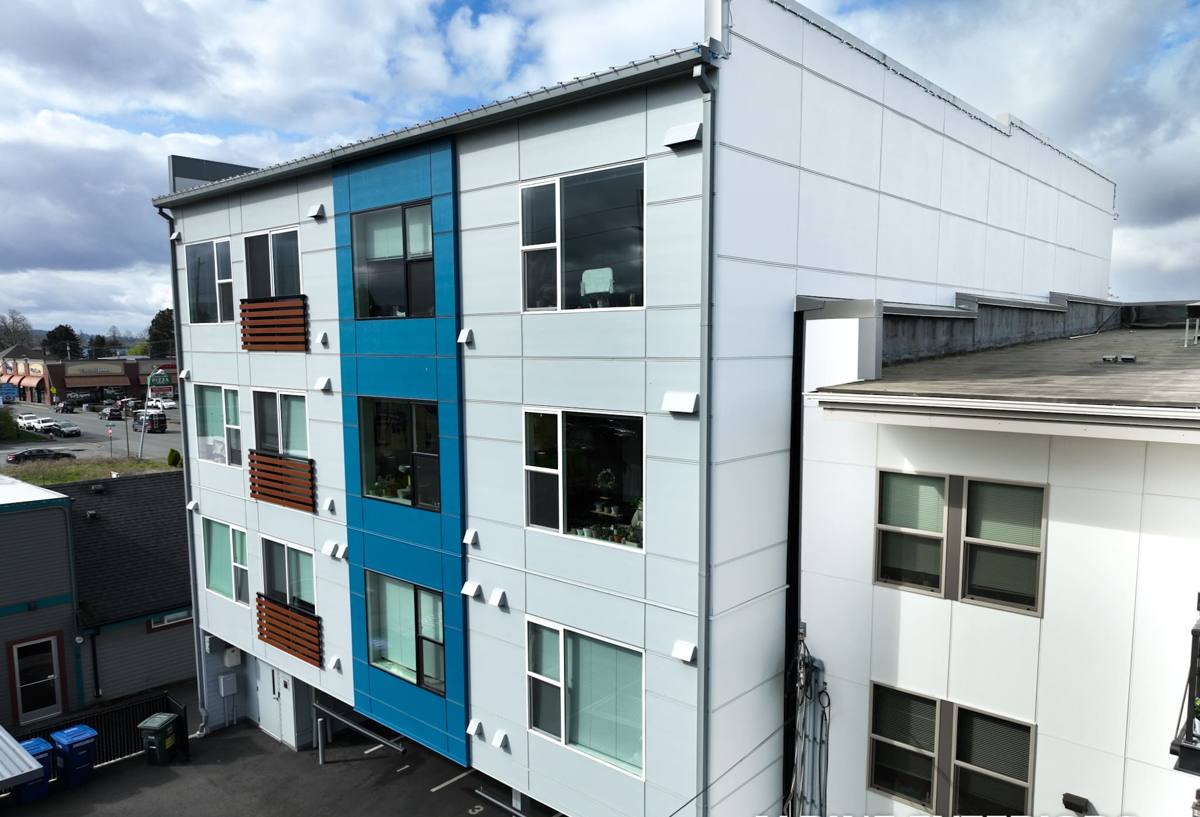
What a Correct Fiber Cement Installation Requires in This Climate
Drainage Behind the Siding, Not Just at the Surface
The siding itself is the least important line of defense against moisture in a wall assembly — what's behind it matters more. A correctly built wall gives water that gets past the siding somewhere to go: a drainage gap or rainscreen, a weather-resistive barrier installed shingle-style (upper layers over lower layers, no exceptions), and flashing at every horizontal break, window, door, and penetration. Skip any of these and the siding can look flawless for a few years while the wall behind it is quietly failing.
Clearances and Gaps
Fiber cement needs proper clearance from grade, roof lines, decks, and other horizontal surfaces where water and debris collect. It also needs expansion gaps at butt joints and trim, sealed with a quality sealant rated for the exposure — not caulked tight against another piece with no room to move.
Fastening to Manufacturer Spec
Fastener type, spacing, and placement aren't cosmetic details — they're what keeps the siding attached and keeps water from wicking in at every nail hole. In a high-wind-driven-rain area, corner blind-nailing and proper fastener embedment matter more than they would somewhere drier.
Why We Only Install James Hardie Fiber Cement
We standardized on James Hardie products rather than installing whatever a homeowner happens to ask for, and it comes down to a simple thing: we want to be able to stand behind every job we do in a climate like this one. Hardie's fiber cement is non-combustible, holds a factory-applied ColorPlus finish that's substantially more consistent and durable than field-applied paint, and comes in HZ5 formulations engineered specifically for regions with our kind of moisture exposure. The warranty structure is also transferable and backed by a large, established manufacturer — something that matters if a homeowner sells within the warranty period.
We don't install vinyl, LP SmartSide, primed wood, or cedar as a matter of standard practice. Each of those has legitimate uses elsewhere, but for the moisture load and salt exposure common around Bellingham and the rest of Whatcom County, we've chosen to put our labor and our name behind one system we know performs when installed correctly.
Hardie Product Lines That Fit Bellingham Homes
| Product | Typical Use | Why It Fits This Climate |
|---|---|---|
| HardiePlank lap siding | Most common wall siding, multiple profiles | HZ5 formulation resists moisture-related swelling and softening in wet climates |
| HardiePanel vertical siding | Modern facades, accent walls, gable ends | Fewer horizontal joints where wind-driven rain can intrude |
| HardieShingle siding | Shingle-style or Craftsman-influenced homes | Consistent factory finish holds up better than cedar shingles under constant damp/shade |
| HardieTrim boards | Corners, window/door trim, fascia | Won't rot or absorb water at end grain the way wood trim does |
Color selection matters here too. ColorPlus finishes are baked on and warranted against fading and peeling, which counts for more in a climate that keeps surfaces damp than it would somewhere dry and sunny most of the year — repainted field finishes tend to show wear at trim joints and cut edges first.
Our Installation Process
- On-site assessment. We look at existing siding condition, wall assembly, drainage, roofline interfaces, and any signs of past moisture intrusion before quoting anything.
- Tear-off and inspection. Old siding comes off and sheathing gets checked for rot or damage before anything new goes on — this is where hidden problems from years of wet exposure usually show up.
- Weather-resistive barrier and drainage plane. Installed shingle-style with a drainage gap behind the siding so any moisture that gets past the cladding has somewhere to go and dry out.
- Flashing at every transition. Windows, doors, roof-to-wall intersections, and penetrations get flashed before siding covers them, not caulked over afterward.
- Hardie installation to manufacturer spec. Correct fastener type, spacing, clearances, and expansion gaps throughout.
- Final detailing and inspection. Caulking at approved joints only, trim finished out, and a walk-through before we call the job done.
Fiber Cement vs. Other Siding in This Climate
| Factor | Fiber Cement (Hardie) | Vinyl | Untreated/Primed Wood |
|---|---|---|---|
| Moisture resistance | Engineered for wet climates (HZ5) | Doesn't absorb water, but seams can trap it | Absorbs moisture, prone to rot without upkeep |
| Moss/algae resistance | Finish resists staining better than raw wood | Can stay damp in shaded areas, promoting growth | Highly susceptible in shaded, damp spots |
| Salt air durability | Non-combustible, stable finish | Can become brittle over time in coastal exposure | Fasteners and finish degrade faster near salt air |
| Maintenance burden | Low — occasional rinse, caulk checks | Low, but repairs can be visually mismatched | High — repainting, sealing, and rot checks needed regularly |
Living With Moss Season: Maintenance That Actually Matters
Correct installation gets a siding job most of the way there, but a little homeowner upkeep goes a long way in a climate with this much shade and moisture. None of it is complicated:
- Keep gutters and downspouts clear so water doesn't sheet down the wall behind the siding at roof edges
- Trim back shrubs and trees that keep siding shaded and damp against the wall
- Rinse siding annually, especially on north-facing and heavily shaded walls, before moss gets a foothold
- Check caulking at trim and joints once a year and have any cracked or missing sealant redone promptly
- Watch the bottom few inches of siding near grade and decks — this is where splashback and debris buildup cause the earliest wear
What Affects the Cost of a Fiber Cement Siding Project
Every Bellingham home is different, so we don't quote from a formula, but the main cost drivers are consistent: total square footage, whether old siding needs to be removed versus sided over (which isn't something we recommend on top of failing substrate), the amount of trim and accent detail, the siding profile chosen, and whether there's underlying sheathing or moisture damage to address once old siding comes off. A straightforward single-story home with sound sheathing costs meaningfully less than a multi-story home with extensive trim work or hidden rot to repair first — which is exactly why an honest on-site assessment matters more than a phone quote.
Why Hiring a Crew That Already Works Bellingham Matters
A contractor who works around Bellingham and the rest of Whatcom County regularly already knows which walls take the worst of the driving rain, where salt air exposure is more of a factor, and which lots stay shaded and damp long after a storm has cleared elsewhere. That's not something you can fully substitute with a spec sheet — it shapes decisions about drainage details, flashing, and even where extra care is warranted on a given home. A crew with local experience is also more likely to be familiar with the permitting and inspection expectations in the area, which keeps a project moving instead of stalling on paperwork.
Ready to Talk About Your Siding?
If your home's current siding is showing moss staining, soft spots, or finish failure, or you're planning ahead for a replacement, we're happy to come take a look and walk you through what a correct James Hardie installation would involve for your specific home. The estimate is free, there's no pressure, and you'll get a straight answer about what your siding actually needs.