 Blaine Siding
 Building Decks for Grandview's Climate
Grandview sits close enough to the water and to Blaine's marine weather patterns that decks here take a beating most inland Whatcom County properties never see. Salt-laden air corrodes hardware faster than manufacturers' generic warranty language accounts for. Driving rain off Boundary Bay and the Strait finds its way into ledger connections and end grain that a calmer climate would leave alone. And the long, wet moss season that runs from fall through spring turns any flat, shaded, or poorly drained deck surface into a slip hazard and a maintenance headache. A deck built to a generic spec sheet will show these problems within a few seasons. A deck built for this specific stretch of coastline won't.
This page covers what a deck actually needs to hold up in Grandview, what a correct build looks like from footings to fasteners, and how our process works when you call us for an estimate.
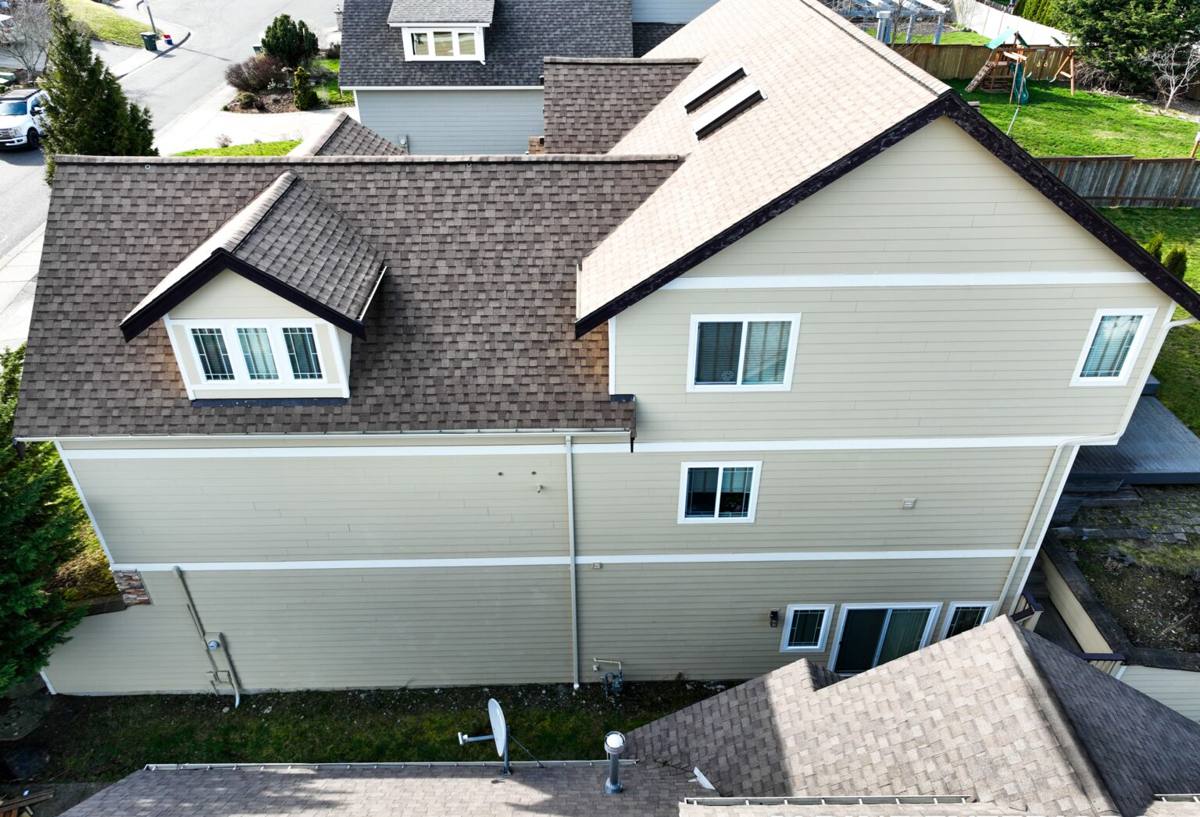
What Grandview Homes Need From a Deck
Moisture Management First
Every deck failure we get called out to fix traces back to water sitting somewhere it shouldn't. In this climate that means ledger boards that weren't properly flashed against the house, joists without protective tape over the top edge, and decking boards installed tight with no room to shed water or dry out between rains. None of these are visible problems on day one — they show up as rot, soft spots, and failed fasteners two to five years later.
Corrosion Resistance
Salt air accelerates corrosion on any hardware that isn't rated for it. Standard galvanized fasteners and brackets can start showing rust streaks and pitting well ahead of schedule this close to the water. Stainless steel costs more up front and is the right call for anything structural or anything exposed to weather.
Moss and Algae Control
Shaded, low-airflow decks in this region grow moss and algae on the surface, and on wood decking that moss holds moisture against the boards, which speeds up rot underneath the green film. Good deck design — proper board spacing, joist layout that allows airflow underneath, and material choice — makes a real difference in how much moss you're scrubbing off every spring.
What a Correct Deck Build Involves
A deck is a structure, not a surface. The parts nobody sees are the parts that determine whether it lasts fifteen years or thirty-plus.
Footings and Framing
Footings need to be sized and set to local frost and soil conditions, not just poured to the minimum a plan calls for. Framing lumber should be rated for ground contact where it's close to grade, and every joist should get a protective tape or coating over the top cut edge — this is the single most skipped step we see on decks that were "fine" for a few years and then weren't.
Ledger Board Flashing
Where the deck attaches to the house is the highest-risk connection on the whole structure. It needs metal flashing integrated correctly with the house's existing water-shedding layers — housewrap, siding, or trim — so water is directed out and away rather than behind the ledger and into the wall framing. This is exactly the kind of detail a siding-literate crew gets right, because we're used to thinking about how water moves across an entire wall assembly, not just the deck attachment point.
Fasteners and Hardware
Every bracket, hanger, bolt, and screw should be rated for exterior and, in a salt-air location like Grandview, stainless steel or a marine-grade coated fastener rather than standard galvanized. Mixing metals (for example, aluminum railing hardware against steel fasteners) invites galvanic corrosion and should be avoided or properly isolated.
Decking Surface
Board spacing, direction, and material all affect how well a deck sheds water and resists moss. Tight-fit installations trap debris and moisture between boards; proper gapping lets water and airborne salt rinse through instead of sitting.
Decking Material Comparison for This Climate
| Material | Moisture Behavior | Moss/Algae Resistance | Maintenance | Rough Cost Range |
|---|---|---|---|---|
| Pressure-treated pine | Absorbs and releases moisture; prone to cupping/checking if not sealed | Low — needs regular cleaning and sealing to resist growth | Annual cleaning, re-sealing every 1-2 years | Lowest |
| Cedar | Naturally moisture-resistant but still needs sealing near the coast | Moderate — natural oils help but salt air shortens the benefit | Sealing every 1-2 years, periodic cleaning | Mid |
| Capped composite | Does not absorb water into the core; surface cap resists staining | Good — smooth cap sheds moisture and cleans easily | Occasional washing, no sealing | Mid-High |
| PVC decking | Fully synthetic, does not absorb moisture at all | Best — nothing for moss to root into | Occasional washing only | Highest |
There's no single right answer for every Grandview home. A lower-maintenance material makes sense for a deck you don't want to be out re-sealing every spring; a wood deck can be the right call on a budget as long as you go in understanding the maintenance commitment that comes with this climate. We'll walk through the real trade-offs for your specific deck rather than pushing one material as a default.
Hardware and Fasteners: Why We're Particular About This
We don't treat fastener selection as an afterthought on a Grandview job. Structural connectors, joist hangers, and any hardware within regular reach of salt air get spec'd in stainless or a coating rated for coastal exposure, even when it costs more than the standard galvanized option. The reasoning is simple: replacing a corroded structural bracket means tearing into a finished deck, and that's a far more expensive repair than paying the difference for the right hardware the first time.
Our Process
- On-site assessment — we look at drainage, sun/shade exposure, existing ledger attachment (if replacing a deck), and soil conditions before quoting anything.
- Design and material selection — we talk through decking material, railing style, and layout based on how you'll actually use the space and how much upkeep you want to take on.
- Permitting — most new decks and many rebuilds in Whatcom County require a permit; we handle that process as part of the job rather than leaving it to you to sort out.
- Build — footings, framing, ledger flashing, decking, and railing, in that order, with inspection points built into the schedule.
- Final walkthrough — we go over the finished deck with you, including what maintenance to expect given the material you chose.
Deck Maintenance Checklist for Grandview Homeowners
- Sweep debris off the deck surface regularly, especially in fall when leaves and needles accumulate and trap moisture
- Clean moss and algae off the surface as soon as it appears rather than letting it establish
- Check and re-seal wood decking on the schedule appropriate to the product — don't wait until it looks obviously weathered
- Inspect the ledger board connection annually for any signs of water staining or separation from the house
- Look at visible fasteners and hardware once a year for rust streaks or corrosion, particularly on railing posts and stair stringers
- Keep gutters and downspouts near the deck clear so roof runoff isn't dumping extra water onto or under the structure
- Trim back vegetation that's shading the deck and keeping it damp longer than the rest of the yard
Cost Factors on a Deck Build
| Factor | Why It Moves the Price |
|---|---|
| Deck size and height | Larger decks and multi-level decks require more footings, framing, and railing |
| Decking material | Ranges from treated wood to premium PVC, with a real spread in material cost and long-term maintenance |
| Ledger vs. free-standing | Free-standing decks need additional footings and framing since they don't attach to the house |
| Railing style | Cable, glass, and composite railing systems cost more than standard wood or metal baluster railing |
| Site access and grade | Sloped lots or difficult equipment access add labor time |
| Permit and inspection requirements | Larger or elevated decks may trigger additional engineering or inspection steps |
Why a Crew That Already Works Grandview Matters
A deck built by a crew that only occasionally works this stretch of Whatcom County is more likely to spec generic hardware, skip the extra flashing detail, or underestimate how fast moss establishes on a shaded deck here. We work in Grandview and the surrounding Blaine area regularly, which means we're not guessing at how the salt air, rain patterns, and moss season here actually affect a deck over time — we're building around known conditions, not a textbook version of coastal Washington.
It also means faster response if something needs attention after the build. We're not driving in from out of the area for a warranty check or a maintenance question.
Get a Free Estimate
If you're planning a new deck or need to replace one that's showing its age, we're happy to come take a look and give you an honest assessment of what it needs — no pressure, no obligation. Fill out the form below and we'll get in touch to schedule a time.