 Blaine Siding
 Why Grandview Homes Take a Different Kind of Beating
Grandview sits close enough to the water that homes here deal with a combination most inland siding jobs never have to plan for: salt-laden air off the bay, wind-driven rain that hits siding sideways instead of straight down, and long stretches of the year where shade, moisture, and cool temperatures line up to grow moss on anything that holds damp. None of these are exotic problems for Whatcom County. They're just constant, and constant is what wears siding out early when the wrong product or a rushed install gets put on a house.
Salt air accelerates corrosion on fasteners, trim, and any metal flashing that isn't detailed correctly. Driving rain finds every gap in a butt joint, a poorly caulked window trim, or a siding course that wasn't lapped enough. And moss doesn't just look bad — it holds moisture against the wall assembly for months at a time, which is exactly the condition that rots wood-based siding and delaminates lower-grade composites. A siding job in Grandview isn't just about picking a good material. It's about picking the right material and installing it in a way that accounts for what this specific stretch of coastline does to a house year after year.
Why We Install Only James Hardie
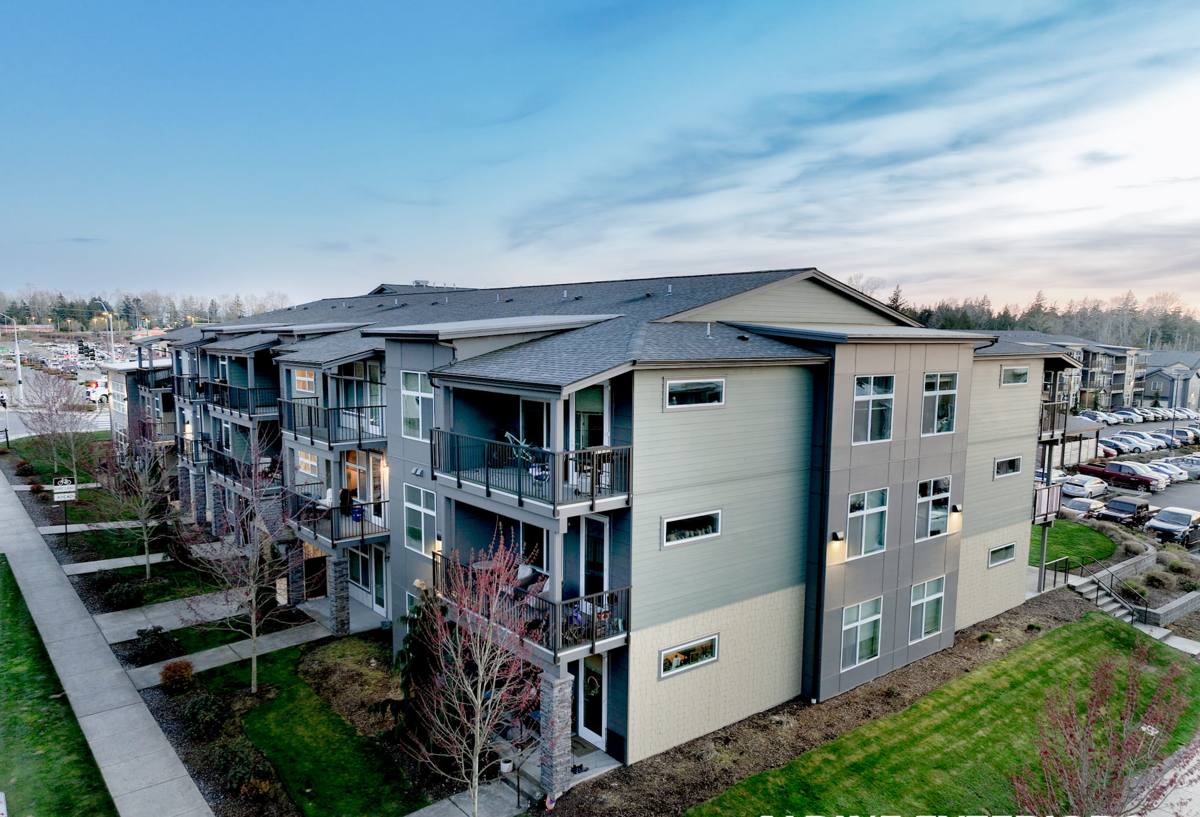
We standardized on James Hardie fiber cement for every home we side, including every house we work on in and around Grandview. It's not the cheapest board on the market, and we're upfront about that. But it's non-combustible, it doesn't swell or rot the way wood-based products can when they stay wet, and it holds a factory-baked ColorPlus finish that doesn't rely on field-applied paint to keep water out over the long run. In a climate that keeps siding damp for large parts of the year, that combination matters more than it does somewhere dry.
We don't install vinyl, LP SmartSide, Cemplank, Allura, primed spruce, or cedar, and we won't quote those products even if a homeowner asks for them by name. That's not a knock on every homeowner who has one of those products on their house now — plenty perform fine when installed and maintained well. It's a decision about what we're willing to put our name on, given what we see coastal Whatcom County weather do to lower-tolerance materials over ten and twenty years. Wood-based siding needs a maintenance commitment that's hard to keep up with in a wet climate. Vinyl can warp, fade, and crack at fastener points, and it doesn't hold paint if a homeowner wants to change the color later. James Hardie is engineered specifically for climates like this one, and that's the product we stand behind.
The HZ5 Product Line
James Hardie makes climate-specific versions of its siding, and the Pacific Northwest falls into the HZ5 engineered zone — formulated for higher moisture exposure and freeze-thaw cycling compared to the HZ10 line used in drier, milder regions. For a Grandview home, that means the board itself is manufactured to handle sustained damp conditions, not just a coat of paint working overtime to compensate for a board that wasn't built for it.
What a Correct James Hardie Installation Actually Involves
The board is only part of the system. Most siding failures we get called out to inspect aren't failures of the material — they're failures of installation detail. James Hardie publishes specific installation requirements, and in a salt-air, high-rainfall environment, following them precisely isn't optional.
Weather Barrier and Flashing
A correctly built wall behind the siding includes a weather-resistant barrier, properly lapped and taped seams, and flashing at every horizontal transition — window heads, door tops, roof-to-wall intersections, and any deck or porch ledger. Driving rain will find any shortcut here, and once water gets behind the siding plane, fiber cement's durability advantage doesn't help you.
Clearance and Fastening
James Hardie specifies minimum clearances from grade, roofing, decks, and other horizontal surfaces so water has somewhere to go instead of wicking up into the board's cut edges. Fasteners need to be corrosion-resistant and driven to the manufacturer's specified depth and spacing — over-driven or under-driven nails are one of the most common defects we find on homes that were sided by crews unfamiliar with the product.
Caulking and Joint Treatment
Butt joints, trim intersections, and penetrations need to be treated with the right sealant, applied correctly, not just caulked over as a catch-all. In a climate where UV exposure is lower but moisture exposure is higher than average, joint failures show up as staining and eventually as rot in the sheathing behind the board — not as an immediate, obvious problem, which is part of why it gets missed by crews that aren't paying close attention.
Our Process for a Grandview Job
- On-site assessment: we look at existing siding condition, sheathing and moisture issues, moss and algae buildup, and any trim or flashing that needs attention before new siding goes on.
- Product and color selection: we walk through the HZ5 panel and lap siding options and ColorPlus finish choices that fit the home and the neighborhood.
- Written estimate: a clear scope covering removal, any sheathing repair, weather barrier, flashing details, and the siding install itself — no vague allowances.
- Removal and prep: old siding comes off, sheathing gets inspected and repaired where needed, and the weather-resistant barrier goes on correctly before a single new board is hung.
- Installation to spec: flashing, clearances, fastening, and joint treatment done to James Hardie's published requirements, not shortcuts based on habit.
- Final walkthrough: we go over the finished job with the homeowner before we consider it done.
Comparing What Grandview Homeowners Actually Face
| Factor | Why It Matters in Grandview | How James Hardie Addresses It |
|---|---|---|
| Salt air exposure | Accelerates corrosion on fasteners and trim, degrades weaker finishes faster | ColorPlus factory finish resists fading and cracking; installed with corrosion-resistant fasteners |
| Driving rain | Wind-driven rain pushes water into joints, laps, and trim that aren't detailed correctly | Fiber cement doesn't absorb and swell like wood-based boards when water reaches the surface |
| Extended moss season | Shaded, damp wall sections stay wet longer, encouraging moss and algae growth | Non-organic composition doesn't feed rot the way wood fiber products can when kept damp |
| Long-term color retention | Field-painted siding needs repainting on a maintenance cycle to keep water out | Baked-on ColorPlus finish is warrantied separately and doesn't depend on repainting to perform |
Living With Siding in a Salt-Air, Moss-Prone Environment
Even the right product installed correctly still needs basic upkeep. Fiber cement dramatically reduces the maintenance burden compared to wood, but it isn't a walk-away-forever product. A short annual routine keeps a Grandview home's siding performing the way it's supposed to:
- Rinse siding with a garden hose or low-pressure wash once or twice a year to clear salt residue and organic buildup before it takes hold
- Keep gutters clear so overflow doesn't run down the siding face and stay wet against it
- Trim back vegetation and tree cover that keeps sections of the wall shaded and damp longer than the rest of the house
- Check caulking at trim, windows, and joints every couple of years and have gaps resealed before water gets behind the board
- Look for moss or algae starting in shaded corners and address it early rather than letting it establish
- Watch for any staining below flashing or trim, which usually signals a detail that needs attention rather than a siding problem
Why a Crew That Already Works Grandview Matters
James Hardie siding performs the way it's designed to only when it's installed by people who understand the specific conditions it's going into. A crew that's worked houses in and around Blaine already knows how exposed a given lot is to wind off the water, which sides of a house hold moss longest, and where flashing details tend to get missed on homes in this area. That local pattern recognition is the difference between a siding job that looks fine at handoff and one that's actually built to hold up through another twenty years of this coastline's weather.
We also only carry one product line, which means there's no incentive to steer a homeowner toward whatever has the best margin that month. Every estimate we write for a Grandview home is built around the same standard: James Hardie, installed to spec, with the flashing and moisture details this climate actually requires.
If you're planning a siding project in Grandview, we're glad to come take a look and put together a straightforward, no-pressure estimate — just fill out the form below.